
Why Smart Plant Choices Transform Retaining Walls
Best plants for retaining walls? The top performers include cascading varieties like creeping phlox and dichondra ‘Silver Falls’, erosion-fighting groundcovers such as sedum and creeping juniper, plus drought-tolerant winners like helichrysum and native grasses that thrive in challenging wall conditions.
Quick Answer: Top Retaining Wall Plants
– Cascading: Creeping phlox, trailing rosemary, golden creeping jenny
– Erosion control: Creeping juniper, sedum varieties, creeping thyme
– Drought-tolerant: Helichrysum, lampranthus, lomandra
– Flowering: Black-eyed susan, scaevola, clematis
– Edible: Creeping thyme, trailing strawberry, culinary rosemary
– Native/deer-resistant: Switchgrass, little bluestem, hellebores
Your retaining wall doesn’t have to be just a functional necessity. With the right plant choices, it becomes a living landscape feature that controls erosion, manages water runoff, and creates stunning visual appeal year-round.
The challenge? Retaining walls create unique growing conditions. They get reflected heat from hard surfaces, have restricted root zones, and experience faster drainage at the top while collecting moisture at the base. Success means matching plants to these microclimates.
Whether you want cascading blooms spilling over stone edges, hardy groundcovers preventing soil erosion, or fragrant herbs within arm’s reach, the right plants transform your wall from purely functional to beautifully integrated with your landscape.
I’m Kyle Nix, owner of Nix Landscaping in Fishers, Indiana, and I’ve helped countless homeowners find the best plants for retaining walls that thrive in our regional climate while delivering both beauty and function. Through years of hands-on experience, I’ve learned which varieties handle our soil conditions, weather patterns, and the unique challenges that retaining wall environments present.

Why Planting on Retaining Walls Matters
Your retaining wall might look sturdy, but without the right plants, it’s fighting an uphill battle against Mother Nature. Smart plant choices transform your wall from a simple barrier into a living protection system that works 24/7 to safeguard your property.
The Hidden Power of Root Systems
When you choose the best plants for retaining walls, you’re essentially hiring thousands of tiny workers. Plant roots create an underground web that grabs onto soil particles and holds them tight. This natural anchoring system prevents the kind of erosion that can undermine even the most well-built walls.
During heavy Indiana rainstorms, bare soil washes away fast. But groundcovers like sedum and creeping thyme act like living sponges, slowing down water flow and giving it time to soak in rather than rush off. This runoff management protects not just your wall, but your neighbor’s property too.
Creating Your Own Climate Zone
Here’s something most homeowners don’t realize: retaining walls are heat magnets. Stone, concrete, and metal surfaces can push temperatures up by 10-15 degrees, creating challenging growing conditions.
Strategic planting changes this completely. Through transpiration (basically plant sweating), your green wall creates cooler micro-zones that make your outdoor spaces more comfortable. It’s like having natural air conditioning that never needs a repair call.
Less Work, More Beauty
Nobody wants to spend weekends pulling weeds, but that’s exactly what happens with unplanted retaining walls. Dense groundcover plantings naturally crowd out weeds by stealing their sunlight. This biological approach to weed suppression can cut your maintenance time by up to 70%.
The result? Maintenance reduction that gives you more time to actually enjoy your landscape instead of constantly working on it.
Boosting Your Investment
Well-planted retaining walls don’t just look better – they add real value to your property. They transform utilitarian structures into attractive landscape features that create the impression of an established, mature garden. This aesthetic softening makes even new construction feel like it’s been thoughtfully designed for years.
Supporting Local Wildlife
Your planted retaining wall becomes a highway for beneficial insects, birds, and butterflies. Native species create biodiversity corridors that support our local ecosystem. When you see bees visiting your wall plantings or birds nesting nearby, you know you’ve created something special.
For detailed information on how plants prevent soil loss, check out this scientific research on erosion control.
Best plants for retaining walls?
Best plants for retaining walls? – Cascading Showstoppers
Nothing transforms a stark retaining wall quite like plants that spill gracefully over the edges, creating that stunning “waterfall of blooms” effect that makes neighbors stop and stare. These cascading beauties do double duty—they soften those harsh hardscape lines while adding the kind of vertical drama that makes your landscape feel professionally designed.
Creeping phlox steals the show every spring with its carpet of pink, purple, or white flowers that can trail up to 20 inches over your wall. This tough performer thrives in zones 5-9 and creates such a spectacular display in March and April that people will slow down just to admire it. Just keep an eye on its enthusiasm—this vigorous grower can quickly claim more territory than you planned if left unchecked.
For pure drama, nothing beats dichondra ‘Silver Falls’ with its silvery foliage that truly looks like flowing water cascading down your wall. While it’s only hardy in zones 10-12, gardeners everywhere grow it as an annual because the effect is simply breathtaking. The silvery leaves create stunning contrast against dark stone or concrete, and unlike some aggressive spreaders, it stays well-behaved.
Trailing rosemary gives you the best of both worlds—gorgeous blue flowers, aromatic foliage that releases fragrance when you brush against it, and fresh herbs for your kitchen just steps away. This Mediterranean native actually loves the challenging conditions at the top of retaining walls, thriving in that well-drained soil and reflected heat that makes other plants struggle.

Golden creeping jenny brings year-round sunshine with its bright chartreuse foliage that glows even in partial shade. The coin-shaped leaves (that’s why it’s also called moneywort) create beautiful contrast against stone walls, and it’s tough enough for zones 4-9. For delicate charm, bacopa offers tiny white or purple flowers that bloom continuously through summer, perfect for softening formal wall designs with its fine-textured, gentle cascading habit.
Wave petunias are the workhorses of the cascading world, spreading up to four feet and blooming their hearts out all season long. These trailing annuals come in every color imaginable and require almost no maintenance once established—perfect for homeowners who want maximum impact without the fuss.
Best plants for retaining walls? – Erosion-Control Groundcovers
While the cascading plants get all the attention, these are the true heroes of retaining wall plantings. Their job isn’t just to look pretty—they’re working hard below ground, sending out root systems that bind soil particles together and prevent erosion that could undermine your wall investment.
Creeping juniper forms an almost impenetrable mat that laughs at weeds, drought, and harsh weather. This North American native handles zones 3-9 with ease and provides year-round green structure even when everything else has gone dormant. Once established, you can basically forget about it—no watering, no fussing, just reliable performance year after year.
The sedum family includes some of the toughest plants on earth, storing water in their fleshy leaves like little green camels. Varieties like ‘Autumn Joy’ and ‘Dragon’s Blood’ actually prefer the rocky, well-drained conditions that retaining walls provide. Many offer bonus seasonal color changes and attract pollinators, proving that practical doesn’t have to mean boring.
Creeping thyme releases the most delightful fragrance when you walk on it or brush against it, plus it produces tiny purple or white flowers. Hardy in zones 4-9, this low-growing groundcover spreads 12-18 inches wide while staying just 6-12 inches tall—perfect for filling gaps between stones or covering wall tops without blocking views.
From Australia comes westringia ‘Mundi’, a tidy performer that maintains its 40-50cm height and 1.5m spread without any pruning from you. Its small white flowers and grey-green foliage handle reflected heat and cramped root zones like champs. Myoporum ‘Yareena’ creates an ultra-low living carpet at just 10cm height, spreading to 1m with succulent-like leaves that shrug off drought conditions.
For areas where moisture collects at the base of walls, liriope ‘Isabella’ forms neat grass-like clumps with purple flower spikes that add vertical interest. Its evergreen foliage provides structure year-round, making it perfect for defining the transition between your wall and lawn.
| Plant Name | Spread (ft) | Root Depth | Zones | Maintenance |
|---|---|---|---|---|
| Creeping Juniper | 6-8 | Shallow | 3-9 | Very Low |
| Sedum | 1-3 | Very Shallow | 3-10 | Very Low |
| Creeping Thyme | 1-2 | Shallow | 4-9 | Low |
| Westringia ‘Mundi’ | 5 | Moderate | 8-11 | Very Low |
| Liriope ‘Isabella’ | 4-5 | Moderate | 6-10 | Low |
Low-Maintenance & Drought-Tolerant Winners
If you’re looking for plants that deliver maximum impact while asking for minimum help, these drought-tolerant champions are your answer. Native plants can require up to 50% less water and maintenance compared to non-native species, making them perfect for busy homeowners who want beautiful results without weekend slavery to the garden hose.
Helichrysum petiolare, known as licorice plant, creates the most stunning silvery cascade against darker wall materials. Its drought tolerance and heat resistance make it absolutely perfect for those harsh wall-top conditions where the sun beats down and reflects back up. The soft, felted foliage adds an almost magical quality that makes people want to reach out and touch it.
The lampranthus family brings South African toughness with brilliant daisy-like flowers in vibrant oranges, pinks, and purples. These succulents actually thrive in hot, dry conditions that would stress other plants, making them ideal for xeriscape designs where water conservation is a priority.
Lomandra ‘Katie Belles’ forms attractive grass-like clumps that add height and gentle movement to wall plantings. This Australian native’s drought tolerance and virtually zero maintenance requirements make it perfect for busy homeowners who want professional-looking results without professional-level upkeep.
Eremophila ‘Blue Horizon’ handles reflected heat better than almost any other plant, producing small blue flowers while maintaining its prostrate form without any pruning help from you. Its spreading habit makes it excellent for covering large wall areas efficiently.
Aussie flat bush grows just 30-50cm tall with 1m spread, tolerating poor soils and extreme conditions while providing year-round coverage. Its compact growth habit prevents the overcrowding issues that can plague narrow planting strips along retaining walls.
Sempervivum, or hens and chicks, create living tapestries in wall crevices and shallow soil pockets. These rosette-forming succulents are virtually indestructible once established and propagate naturally by producing “chicks” around the mother plant, gradually filling available space without any help from you.
For comprehensive water-wise landscaping principles, explore our garden maintenance tips and review the latest research on drought-wise landscapes.
Flowering Color Pops & Pollinator Magnets
Transform your retaining wall into a pollinator superhighway with flowering plants that provide nectar and pollen throughout the growing season. These colorful performers add seasonal interest while supporting local ecosystems and creating the kind of movement and life that only comes from visiting butterflies, bees, and hummingbirds.
Black-eyed susan brings that classic prairie charm with bright yellow flowers and dark centers that seem to glow against stone walls. This tough native perennial reaches 2-3 feet tall and blooms from summer through fall, attracting butterflies and beneficial insects while handling acidic, well-drained soil with ease. Once established, it’s drought-tolerant and virtually maintenance-free.
Aromatic aster saves its show for late summer and fall when many other plants are calling it quits. Reaching 1-3 feet in height, this native produces clouds of small purple flowers that monarch butterflies absolutely love during their fall migration. Your wall becomes a crucial stopover point in their incredible journey south.
Scaevola ‘Purple Fusion’ brings unique fan-shaped flowers in purple tones that you won’t see anywhere else in your landscape. This Australian native’s flat growth habit means less trimming and maintenance for you, while its drought tolerance makes it perfect for challenging wall conditions.
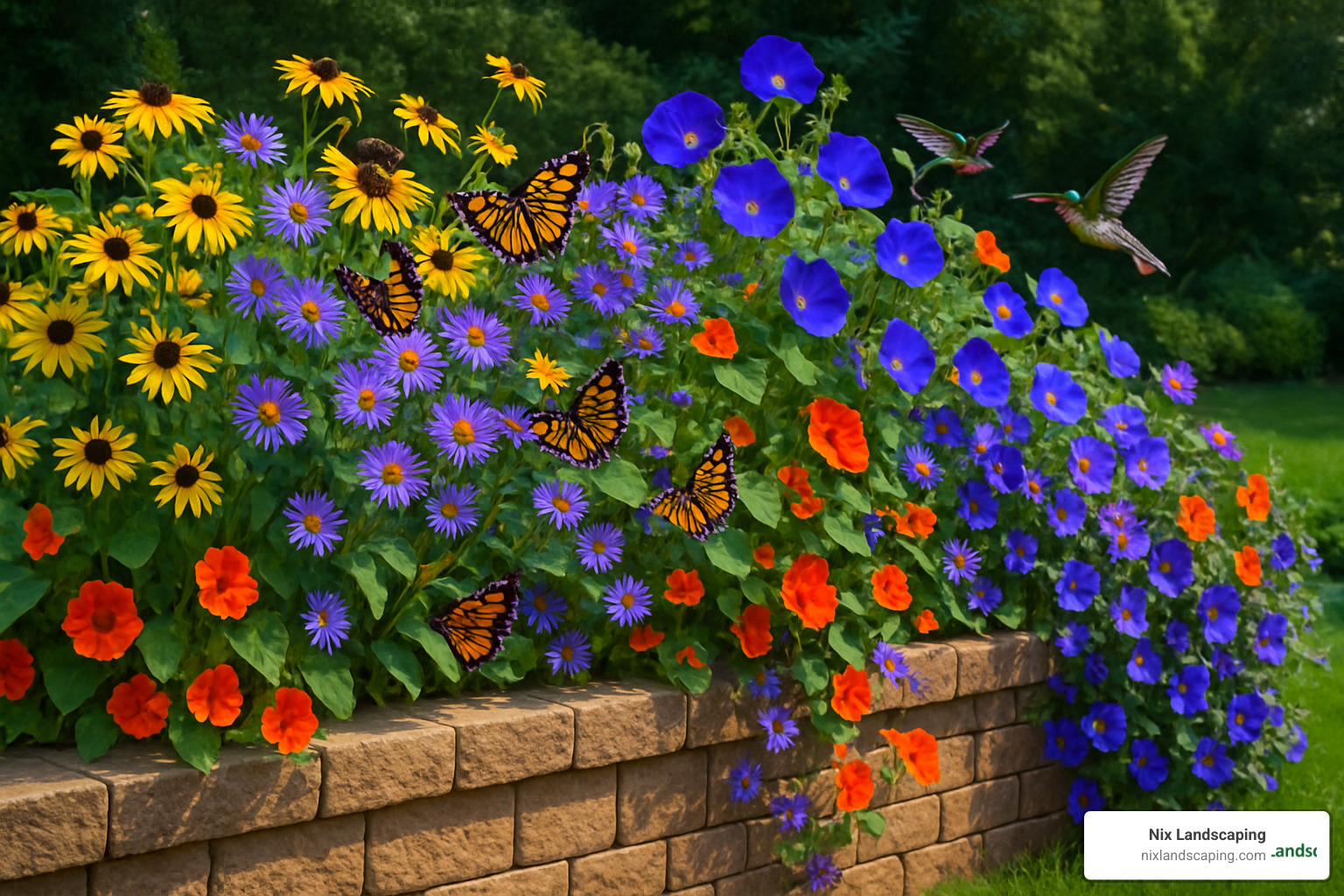
Clematis earns its title as “queen of climbers” with spectacular blooms in purple, pink, white, or blue that can cover tall retaining walls. Many varieties produce fluffy seed heads that add late-season texture and interest long after the flowers fade. Choose compact varieties for smaller walls to keep things in proportion.
Nasturtiums provide edible flowers in brilliant oranges, reds, and yellows that attract hummingbirds with their trumpet-shaped blooms. These fast-growing annuals offer quick coverage for new walls, and both flowers and leaves add peppery flavor to salads. Morning glory vines can grow 1-10 feet tall, providing rapid coverage with their trumpet-shaped flowers that open each morning to greet the day. Just monitor their spread—these enthusiastic growers can be a bit too helpful if left unchecked.
Edible, Herb & Fragrant Choices
Why settle for just pretty when you can have pretty and delicious? These edible and aromatic plants transform your retaining wall into a functional garden that engages all your senses while providing fresh ingredients for your kitchen just steps from your back door.
Creeping thyme does triple duty as groundcover, fragrance source, and herb garden. While it’s more ornamental than the culinary thyme you’d use for heavy cooking, its leaves still add subtle flavor to dishes. The real bonus is that delightful fragrance released every time you brush against it or step on it—it’s like having a natural air freshener built into your landscape.
Trailing strawberry varieties can cascade beautifully over wall edges while producing sweet, juicy fruit throughout the season. Choose day-neutral varieties for continuous production rather than just one big harvest. The white flowers and bright red berries add ornamental value that rivals purely decorative plants, plus you get the satisfaction of picking your own berries for breakfast.
Dwarf blueberry cultivars work wonderfully on larger retaining walls, giving you spring flowers, summer fruit, and absolutely brilliant fall color that rivals any ornamental shrub. They prefer acidic soil and consistent moisture, making them ideal for the base of walls where water naturally collects. The fruit production is just a bonus—these plants earn their keep on looks alone.
Mint can be wonderfully fragrant and useful, but it needs to be contained in wall pockets or planters to prevent it from taking over your entire landscape. Once properly contained, you can enjoy varieties like spearmint, peppermint, or chocolate mint for different flavor profiles and fragrances.
Culinary rosemary, both upright and trailing varieties, provides year-round fragrance, blue flowers that pollinators adore, and fresh herbs for cooking. This Mediterranean native actually thrives in the well-drained conditions that retaining walls provide, making it one of the most successful dual-purpose plants you can choose.
Creating sensory gardens with fragrant and edible plants adds layers of enjoyment to your outdoor space that go far beyond simple visual appeal. For more inspiration on incorporating edibles into your landscape design, check out our residential landscaping ideas.
Deer-Resistant & Native Superstars
In areas where deer treat your landscape like their personal salad bar, choosing plants they typically avoid ensures your retaining wall plantings stay intact and beautiful. Native species offer the added benefits of supporting local wildlife while requiring significantly less maintenance once they’re established in their natural environment.
Switchgrass forms upright clumps that add vertical interest and graceful movement to wall plantings while deer walk right past it. This native prairie grass develops deep root systems that provide excellent erosion control, and its seed heads provide winter interest plus food for birds long after other plants have gone dormant.
Little bluestem offers fine texture and absolutely gorgeous fall color ranging from orange to deep burgundy that rivals any ornamental shrub. This native grass stays compact enough for smaller retaining walls while its drought tolerance ensures you won’t be dragging hoses around for maintenance.
Diervilla, or northern bush-honeysuckle, produces small yellow flowers that attract beneficial pollinators while remaining completely unpalatable to browsing deer. It tolerates poor soils and partial shade, making it versatile enough for various wall locations and exposures.
Hellebores effectively deter deer (they’re poisonous to mammals) while providing some of the earliest flowers of spring in shades of white, pink, purple, and green. These tough perennials prefer partial shade and consistent moisture, making them perfect for the base of north-facing walls where conditions stay cooler and moister.
Blunt-toothed mountain mint produces aromatic foliage that deer actively avoid while attracting clouds of beneficial insects with its small white flowers. Its spreading habit provides excellent groundcover while supporting local ecosystems—it’s like having a native plant nursery built into your retaining wall.
Regional native grasses like fox sedge and prairie dropseed offer texture, movement, and wildlife value while requiring minimal maintenance once established. Deer rarely browse grasses heavily, making native bunch grasses a reliable choice for deer-prone areas.
For detailed information on native plant benefits and their role in local ecosystems, review our scientific research on native plants.
Design & Placement Tips for Every Sun and Soil
Creating a thriving retaining wall garden starts with understanding your unique site conditions. After years of installing best plants for retaining walls throughout central Indiana, I’ve learned that success comes down to matching the right plants to the right spots—and that means doing your homework first.
Reading Your Wall’s Sun Story
Your retaining wall experiences dramatically different conditions from top to bottom and throughout the day. I always recommend spending a full day observing how sunlight hits different sections of your wall before selecting plants.
Full sun areas (6+ hours of direct light) typically occur at the top and on south or west-facing walls. These spots get intense heat and reflected light, making them perfect for Mediterranean herbs like rosemary, drought-loving sedums, and native prairie plants.
Partial shade zones (3-6 hours of filtered light) often develop where trees cast shadows or on east-facing walls. These moderate conditions suit a wider range of plants, including hellebores, some groundcovers, and many flowering perennials.
Full shade areas (less than 3 hours of direct sun) appear at the base of tall walls or on north-facing exposures. These cooler, moister spots welcome ferns, hostas, and other shade-loving species.
Here’s the crucial part: walls create their own weather. The reflected heat from stone, concrete, or block can make your wall’s microclimate feel like it’s in a zone warmer than your actual USDA rating. Here in Fishers, we’re zone 6a, but the top of a south-facing stone wall might feel more like zone 7.
Building the Perfect Growing Environment
The secret to long-term success lies in proper soil preparation. I’ve seen too many beautiful plantings fail because someone skipped this critical step.
Start with a drainage layer of 2-4 inches of coarse gravel at the bottom. Retaining walls can create both drought conditions at the top and waterlogged soil at the base, so proper drainage prevents root rot while allowing excess water to escape.
Your soil mix should be 2 parts quality topsoil to 1 part compost. This combination provides nutrients while maintaining the good drainage that most retaining wall plants need. I also recommend adding bone meal for phosphorus and water-retention crystals to help plants through dry spells.
Root barrier cloth installed behind your soil prevents erosion while still allowing water to drain. This simple step can extend the life of your planting and protect your wall’s structural integrity.
Creating Natural Plant Layers
Think of your retaining wall as having three distinct planting zones, each with its own personality and needs.
The top tier handles the harshest conditions—intense sun, reflected heat, and fast drainage. Keep plants here low and drought-tolerant, typically 6-18 inches tall. Sedums, creeping thyme, and trailing rosemary thrive in these challenging spots.
The middle section offers more moderate conditions and can support medium-sized groundcovers and perennials ranging from 1-3 feet tall. This is where black-eyed susans, switchgrass, and many flowering species perform beautifully.
The base tier collects moisture and often receives some shade from the wall itself. Taller plants of 3-6 feet work well here, including lomandra, larger native grasses, and moisture-loving perennials.
Smart Spacing for Long-term Success
Proper spacing prevents overcrowding while ensuring good coverage. Groundcovers should be spaced according to their mature spread—typically 12-24 inches apart. Perennials need 18-36 inches between plants, while shrubs require 3-6 feet of space.
It’s better to start with fewer plants spaced correctly than to overcrowd and create competition for resources.
| Sun Exposure | Top of Wall | Middle Section | Base of Wall |
|---|---|---|---|
| Full Sun | Sedum, Thyme, Rosemary | Black-eyed Susan, Switchgrass | Lomandra, Eremophila |
| Partial Shade | Heuchera, Ajuga | Astilbe, Ferns | Hellebores, Hosta |
| Full Shade | Moss, Small Ferns | Pachysandra, Vinca | Astilbe, Caladium |
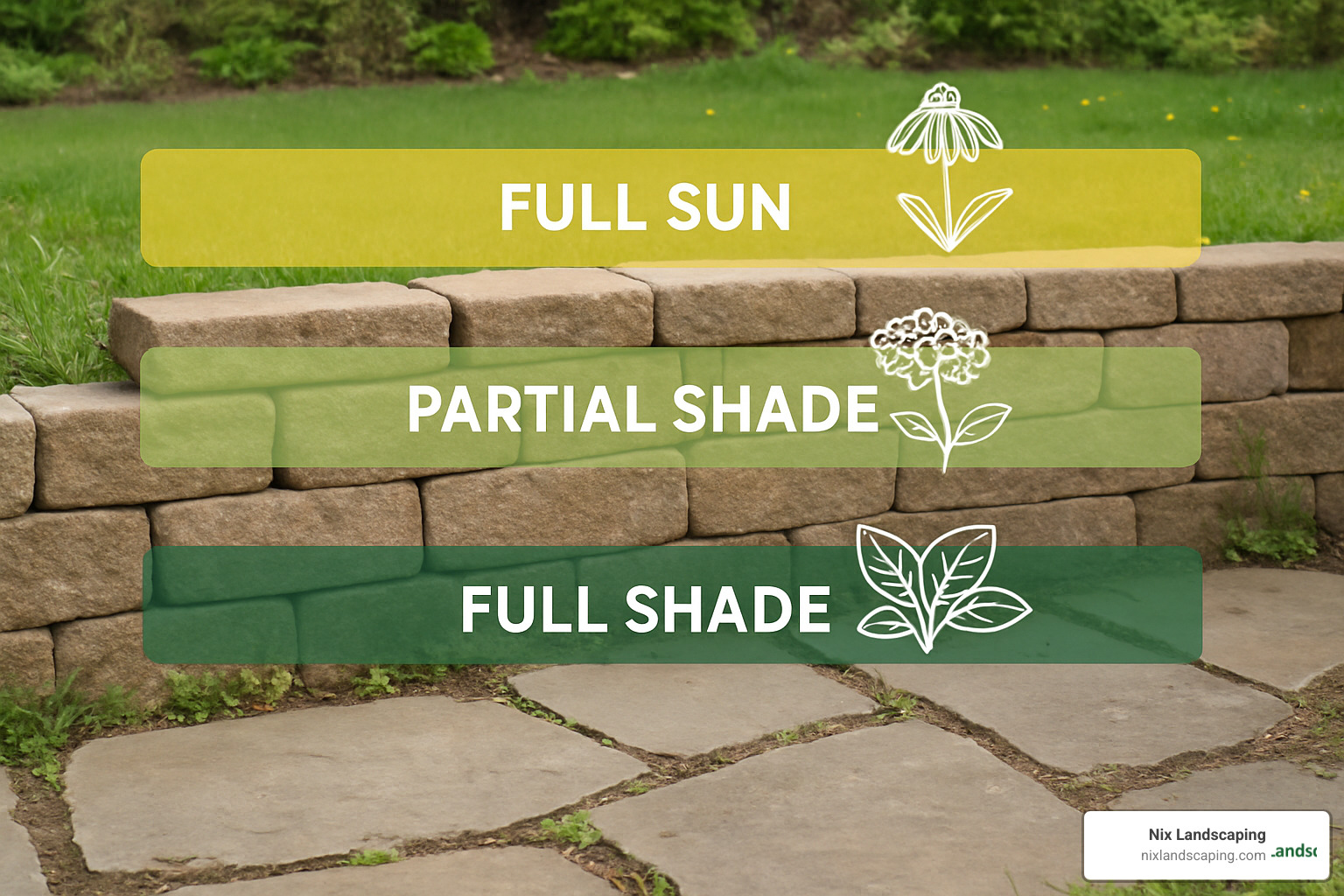
The key is working with your wall’s natural conditions rather than fighting them. When you match plants to their preferred growing environment, maintenance becomes minimal and your retaining wall transforms into a thriving landscape feature.
For comprehensive design ideas that work with retaining walls, explore our backyard landscape ideas.
Planting & Maintenance Best Practices
Getting your best plants for retaining walls established properly makes the difference between a thriving landscape feature and a constant maintenance headache. Through years of installing wall plantings here in Fishers, I’ve learned that success comes down to three things: proper soil preparation, smart irrigation, and staying ahead of maintenance needs.
Soil Amendment and Preparation
The biggest mistake I see homeowners make is skimping on soil preparation. Your retaining wall plants will live in this soil for years, so it’s worth doing right the first time.
Start with quality topsoil—never use subsoil or fill dirt in planting areas. We mix 2 parts screened topsoil with 1 part aged compost, then add bone meal at 2 pounds per 100 square feet. This combination provides excellent drainage while retaining enough moisture for plant establishment.
Water-retention crystals are a game-changer for retaining wall plantings. These polymer granules absorb water during irrigation and slowly release it during dry periods. Follow package directions carefully—a little goes a long way, and too much can actually harm plants.
Smart Irrigation Solutions
Hand-watering retaining wall plants gets old fast, especially when you’re dealing with multiple tiers and hard-to-reach spots. Drip irrigation conserves water by delivering moisture directly to plant roots, reducing surface runoff and evaporation.
For retaining walls, we install a main supply line along the wall top with individual emitters for each plant or plant group. Timer controls ensure consistent watering schedules, while pressure-compensating emitters guarantee even water distribution from top to bottom.
The beauty of drip irrigation is that it adapts as your plants grow. You can easily add or relocate emitters as plantings mature and spread.
Fertilization That Actually Works
Retaining wall environments can be tough on plants, so proper nutrition is crucial. Use slow-release fertilizer at planting time to provide steady nutrition throughout the growing season. These granules break down gradually, feeding plants for 3-6 months depending on the formulation.
Avoid quick-release fertilizers in wall plantings. They can burn plants in the challenging conditions of reflected heat and limited soil volume. The slow-and-steady approach wins every time.
Seasonal Maintenance That Prevents Problems
Staying ahead of maintenance needs keeps your wall plantings looking their best while preventing small issues from becoming big problems.
Spring brings pruning of winter damage, fresh mulch application, and irrigation system checks. This is also the perfect time to divide overgrown perennials and fill any gaps that developed over winter.
During summer, monitor for drought stress even with irrigation systems in place. Deadhead spent flowers to encourage continued blooming, and keep an eye on aggressive spreaders that might overtake their neighbors.
Fall maintenance includes cutting back perennials, planting new additions while soil is still warm, and preparing tender plants for winter. This is also when we do most of our plant additions—fall planting gives roots time to establish before next summer’s heat.
Winter protection for marginally hardy plants can extend your plant palette. Simple burlap screens or frost cloth can help borderline plants survive our Indiana winters.
Mulching for Long-Term Success
Apply 2-3 inches of organic mulch around plants, keeping it away from plant stems to prevent rot. Shredded hardwood bark works well for most situations, while pine needles are perfect for acid-loving plants like blueberries. For Mediterranean plants like rosemary and thyme, gravel mulch provides better drainage.
Fresh mulch annually keeps weeds suppressed and soil moisture consistent. It also breaks down over time, continually improving your soil structure.
Protecting Your Investment
Structural monitoring should be part of your annual routine. Inspect your retaining wall for signs of movement, cracking, or drainage issues. Address problems promptly to prevent plant loss and structural damage.
Root management starts with choosing plants with non-invasive root systems. Avoid large trees and shrubs with aggressive roots near the wall structure. The plants we’ve recommended are all wall-safe, but always monitor for any unexpected growth patterns.
If you notice any root-related issues or drainage problems, address them immediately. Small fixes now prevent expensive repairs later.
For professional installation and maintenance services, learn about our affordable retaining wall options and explore scientific research on drainage solutions.
Creative Improvements: Planters, Lighting & Hardscape Pairings
Your planted retaining wall doesn’t have to stop at just plants. With some creative thinking, you can transform a basic functional wall into a stunning landscape centerpiece that works day and night, through all seasons.
Vertical Pocket Planters for Maximum Impact
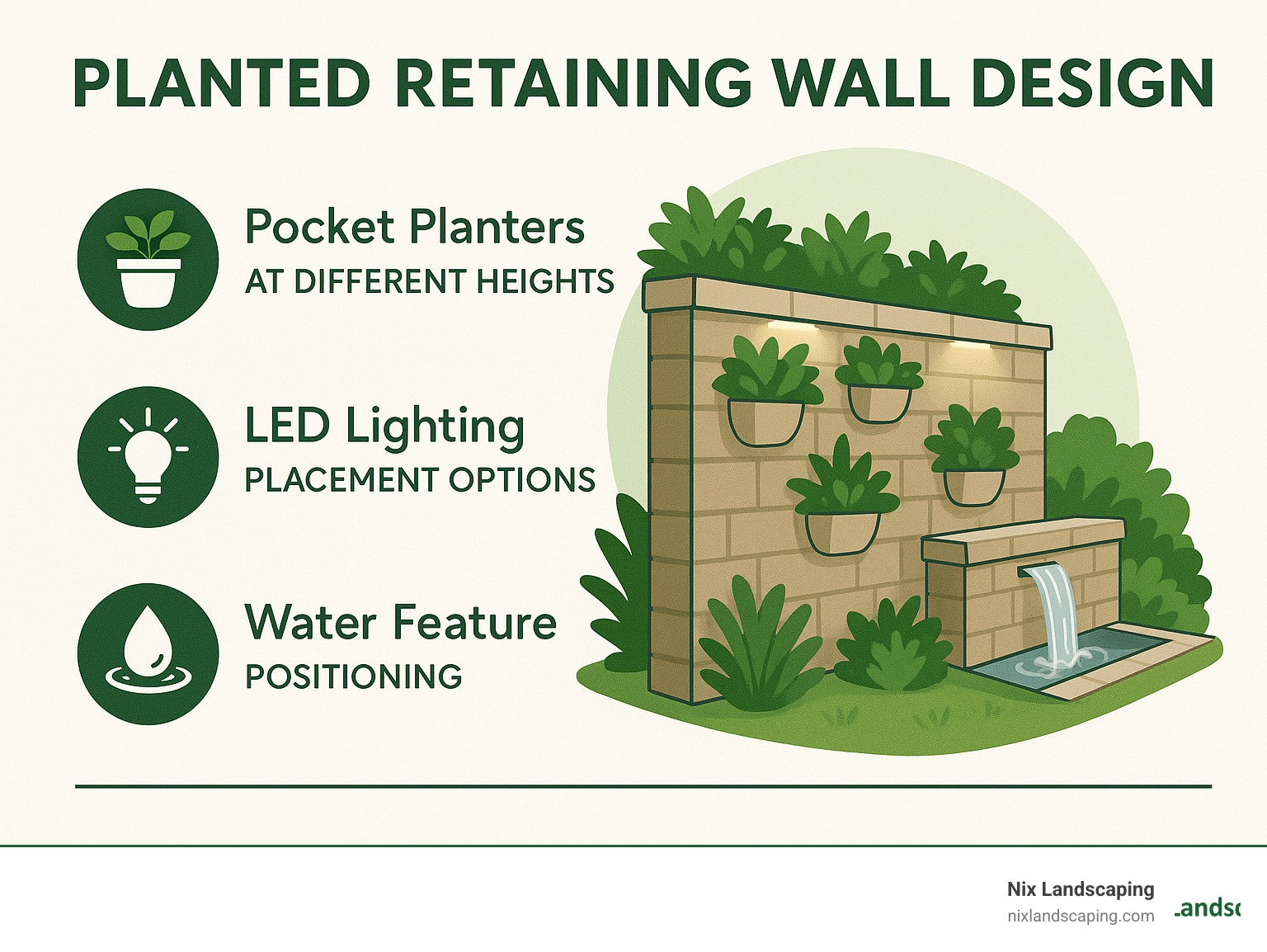
Built-in pocket planters are game-changers for retaining walls. We design custom pocket systems that give you organized growing zones while solving the challenge of limited planting space. These vertical pocket planters accommodate different plant sizes and root requirements, include built-in drainage systems, and allow easy access for maintenance and harvesting.
The beauty of pocket planters is how they create visual rhythm along your wall length. You can group herbs together in one section, dedicate another area to cascading flowers, and use deeper pockets for small shrubs. It’s like having multiple garden beds stacked vertically.
Wicker Baskets for Cottage Garden Charm
For homeowners who love that relaxed, cottage garden feel, wicker baskets mounted at varying heights create instant character. We include moisture-retaining liners and choose plants with mixed heights for depth and visual interest.
This approach works particularly well for herb gardens where you want easy access for harvesting. Imagine reaching for fresh basil or thyme right from eye-level baskets while you’re grilling dinner on the patio.
Corten Steel Edging for Modern Appeal
Weather-resistant corten edging creates those clean, contemporary lines that make your plantings look intentional and professionally designed. The rust-colored patina complements both stone and concrete walls while providing durable plant containment that actually gets more beautiful as it ages.
Decorative Rock Integration
Decorative rock serves double duty as natural planters and drainage improvement. River rock, decomposed granite, and crushed stone add texture while keeping Mediterranean plants happy with the excellent drainage they crave. Plus, rocks never need watering or pruning.
Wall Lighting That Extends Your Garden Hours
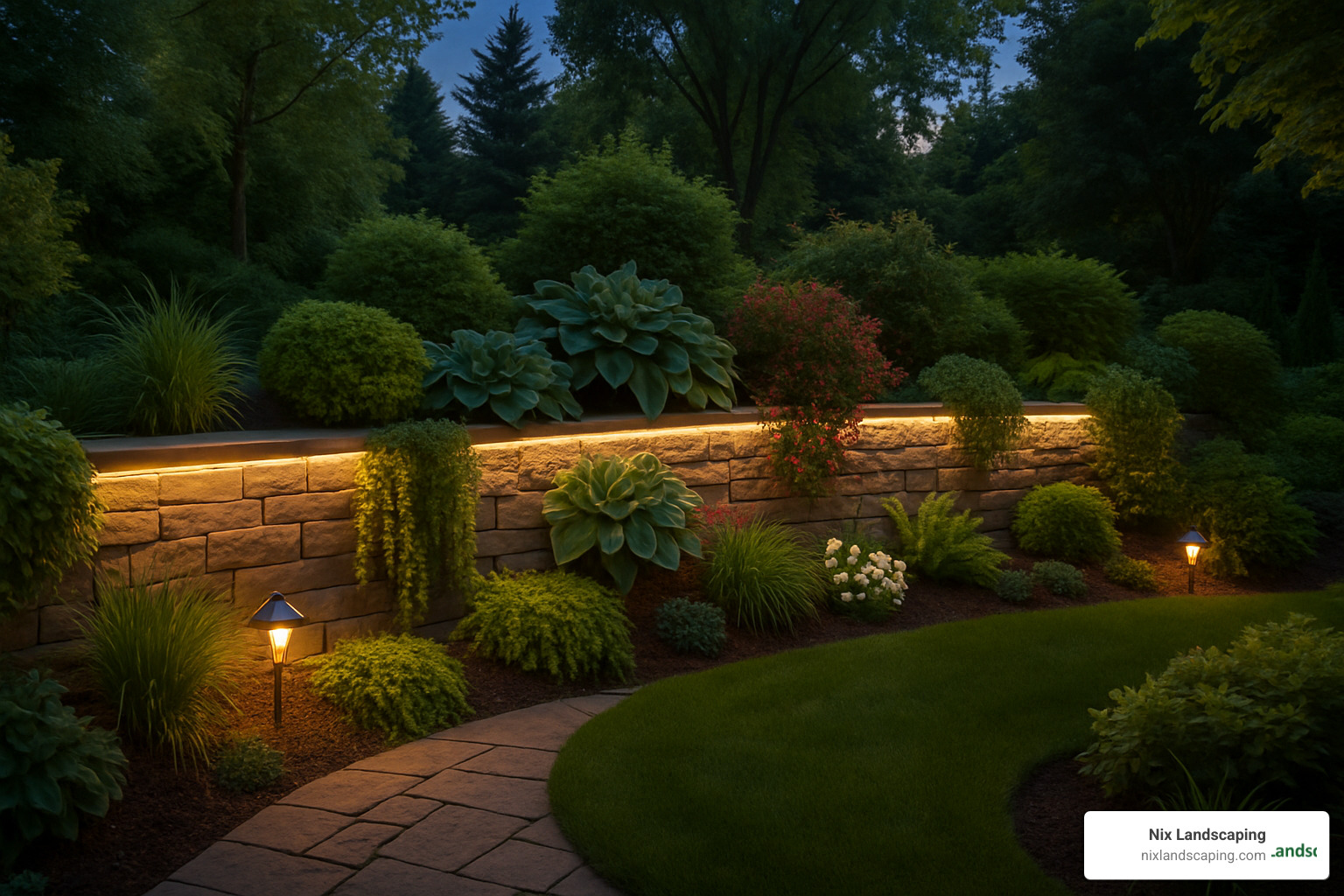
Strategic wall lighting transforms your planted retaining wall into evening entertainment. Top lighting with LED strips along wall caps highlights those gorgeous cascading plants we talked about earlier. Facade lighting positioned at the wall base creates dramatic shadows that make even simple groundcovers look like landscape art.
Small accent spotlights can showcase your favorite feature plants or seasonal displays. There’s something magical about sitting outside on a summer evening with your planted wall softly illuminated, maybe with the fragrance of night-blooming jasmine or evening primrose drifting over.
Water Feature Integration for Ultimate Drama
Combining retaining walls with water features creates the kind of landscape drama that makes neighbors stop and stare. Small fountains, bubbling rocks, or recirculating streams add that soothing sound of moving water while providing moisture for your plants during dry periods.
The combination of flowing water and cascading plants creates a natural, almost wilderness feel that’s surprisingly easy to maintain once established.
Seating Ledges That Bring You Closer
Wide wall caps can double as casual seating ledges, bringing people closer to fragrant plants and creating intimate garden spaces. Add cushions or built-in planters behind seating areas for comfort and privacy. It’s the perfect spot for morning coffee surrounded by the scent of rosemary and lavender.
For inspiration on combining walls with water features, visit our retaining wall with water feature gallery.
Frequently Asked Questions about Retaining Wall Plants
Do plant roots damage retaining walls?
The short answer is no—when you choose the right plants. Best plants for retaining walls? Those with shallow, fibrous root systems that actually help your wall rather than hurt it.
Plants like sedum, creeping thyme, and most groundcovers develop root-safe species characteristics. Their roots spread horizontally rather than driving deep, creating a living net that holds soil in place. Think of them as nature’s erosion control system working alongside your wall.
The plants to avoid? Large trees and aggressive shrubs planted too close to your wall. Willows, poplars, and some maples send out moisture-seeking roots that can eventually find their way into wall joints or behind the structure. I’ve seen what happens when a homeowner plants a weeping willow five feet from their retaining wall—it’s not pretty, and it’s expensive to fix.
We always install barrier fabric as insurance when clients want larger plantings near their walls. This breathable material lets water and nutrients through while gently redirecting roots away from the structure. It’s like putting up a “wrong way” sign for plant roots.
Annual inspection takes just a few minutes but can save thousands in repairs. Walk your wall each spring, looking for new cracks, bulging, or plants that suddenly seem stressed. Catching problems early means simple solutions instead of major reconstruction.
How do I choose plants for different sun exposures?
Here’s where many homeowners get frustrated—they pick beautiful plants that simply can’t handle their wall’s unique conditions. The key is understanding that retaining walls create their own weather patterns.
Full-sun vs shade isn’t just about hours of sunlight. A south-facing stone wall in July can feel like an oven, with temperatures 15-20 degrees hotter than the surrounding garden. That’s why Mediterranean herbs like rosemary and lavender thrive there—they’re used to intense heat and reflected light.
Heat reflection turns your wall into a solar collector. Light-colored concrete and stone bounce sunlight back onto plants, creating what we call “double exposure.” Plants experience direct sun from above and reflected heat from the wall surface. It’s like putting them under a magnifying glass.
Micro-zones develop even within a single wall. The top might be blazing hot and bone dry, while the base stays cool and collects moisture from runoff. I often recommend drought-tolerant succulents for wall tops and moisture-loving ferns for the base of the same structure.
East-facing walls get gentle morning sun followed by afternoon shade—perfect for plants that need some sun but can’t handle all-day intensity. West-facing walls get the brutal afternoon heat that only the toughest plants can survive.
Can I mix edible and ornamental plants on one wall?
Absolutely! Some of my favorite wall designs combine herbs, vegetables, and ornamental plants into living tapestries that feed both the eye and the dinner table.
Companion grouping makes this work beautifully. I’ll cluster Mediterranean herbs like rosemary, thyme, and oregano in the hottest, driest spots, then add ornamental grasses and flowering perennials with similar needs nearby. The result looks intentional, not random.
Harvest access drives the design more than most people realize. There’s no point planting fresh herbs where you need a ladder to reach them. I place frequently harvested plants like basil and parsley in easy-reach zones, while ornamental spillers can cascade from higher, harder-to-reach areas.
Irrigation balance becomes crucial when mixing plant types. Herbs often prefer drier conditions while leafy vegetables need consistent moisture. That’s where zoned drip irrigation earns its keep—different plants get exactly the water they need without compromise.
Many edible plants are surprisingly beautiful. Trailing strawberries offer white flowers, red fruit, and gorgeous fall color. Purple-flowered rosemary attracts bees while providing fresh herbs. Even lettuce varieties come in colors and textures that rival ornamental plants.
The bonus? Your retaining wall becomes a conversation starter. Guests love finding that the beautiful cascading plant is actually oregano they can pinch and taste. It turns a functional wall into an interactive garden experience.
Conclusion
Your retaining wall can become so much more than just a functional necessity—it can be the crown jewel of your landscape where engineering meets artistry. The best plants for retaining walls we’ve explored together create living masterpieces that work as hard as they look beautiful.
Think about it: cascading dichondra ‘Silver Falls’ flowing like a waterfall over stone edges, while deep below, the roots of creeping juniper quietly bind soil particles together, preventing erosion with every season that passes. Meanwhile, aromatic herbs like trailing rosemary provide fresh ingredients for your kitchen while their Mediterranean toughness laughs at reflected heat and challenging growing conditions.
Function truly meets beauty when you choose plants that solve real problems while creating visual magic. Those erosion-fighting groundcovers like sedum and creeping thyme aren’t just pretty faces—they’re working 24/7 to protect your property investment. The drought-tolerant natives such as switchgrass and little bluestem support local wildlife while requiring minimal water and maintenance once established.
What makes me most excited about planted retaining walls is their year-round personality. Spring brings the cheerful blooms of creeping phlox, summer showcases the dramatic cascades of wave petunias, fall delivers the purple clouds of aromatic aster, and winter reveals the strong bones of evergreen junipers and colorful sedums. Your wall literally changes with the seasons, offering new findies throughout the year.
Soil security happens naturally when plant roots create underground networks that hold everything together. It’s like having thousands of tiny anchors working around the clock—far more effective and certainly more attractive than any purely engineered solution.
The wildlife support aspect never gets old either. When you include pollinator-friendly plants, your retaining wall becomes a highway for bees, butterflies, and birds. You’re not just improving your property—you’re contributing to the health of our local ecosystem here in Fishers and beyond.
Every retaining wall tells a different story based on its sun exposure, soil conditions, and the homeowner’s vision. That’s why our personalized design solutions at Nix Landscaping start with understanding your specific site and goals. We’ve learned through years of experience that cookie-cutter approaches simply don’t work when you’re dealing with the unique microclimates that retaining walls create.
The magic happens when everything comes together—the right plants in the right spots, properly prepared soil, and consistent care. What starts as a purely functional structure evolves into a living landscape feature that actually gets better with age. Unlike hardscape elements that show wear over time, planted walls develop character, maturity, and deeper beauty with each passing season.
Whether you’re working with a modest residential wall or planning something more ambitious, the principles we’ve covered will guide you toward success. Choose plants that match your conditions, prepare the soil properly, and be patient as your vision unfolds.
Ready to transform your retaining wall from basic to breathtaking? Let’s work together to create something truly special that reflects your style while thriving in Indiana’s unique climate. Our experience with local growing conditions, combined with our commitment to understanding exactly what you want to achieve, ensures your retaining wall becomes a source of pride and joy for years to come.
For comprehensive solutions that seamlessly blend retaining walls with beautiful plantings, explore our retaining walls services. Trust Nix Landscaping for a seamless, green retaining-wall makeover that delivers both immediate wow factor and lasting beauty that grows better with time.

