
Why Understanding Brick Walkway Cost Matters for Your Home Investment
When you’re considering a brick walkway cost for your home, you’re looking at an investment that typically ranges from $9 to $20 per square foot installed. Here’s what you need to know:
Quick Cost Overview:
- Average total cost: $720 – $4,660 for a standard 20×4 foot walkway
- Material costs: $4 – $7 per square foot
- Labor costs: $5 – $13 per square foot
- Brick pavers: $2 – $6 per square foot for materials alone
- Professional installation: $50 – $100 per hour
A brick walkway creates that classic charm and curb appeal that never goes out of style. But the price can vary dramatically based on your choices – from basic clay bricks to premium pavers, simple straight paths to intricate herringbone patterns.
The reality is that most homeowners underestimate the total cost because they focus only on the brick price. What they miss are the hidden expenses: site preparation, base materials, labor complexity, and those little extras that add up fast.
I’m Kyle Nix, owner of Nix Landscaping in Fishers, Indiana, and I’ve guided hundreds of homeowners through the brick walkway cost planning process over the years. My experience has shown me that understanding all the cost factors upfront helps families make smarter decisions and avoid budget surprises.
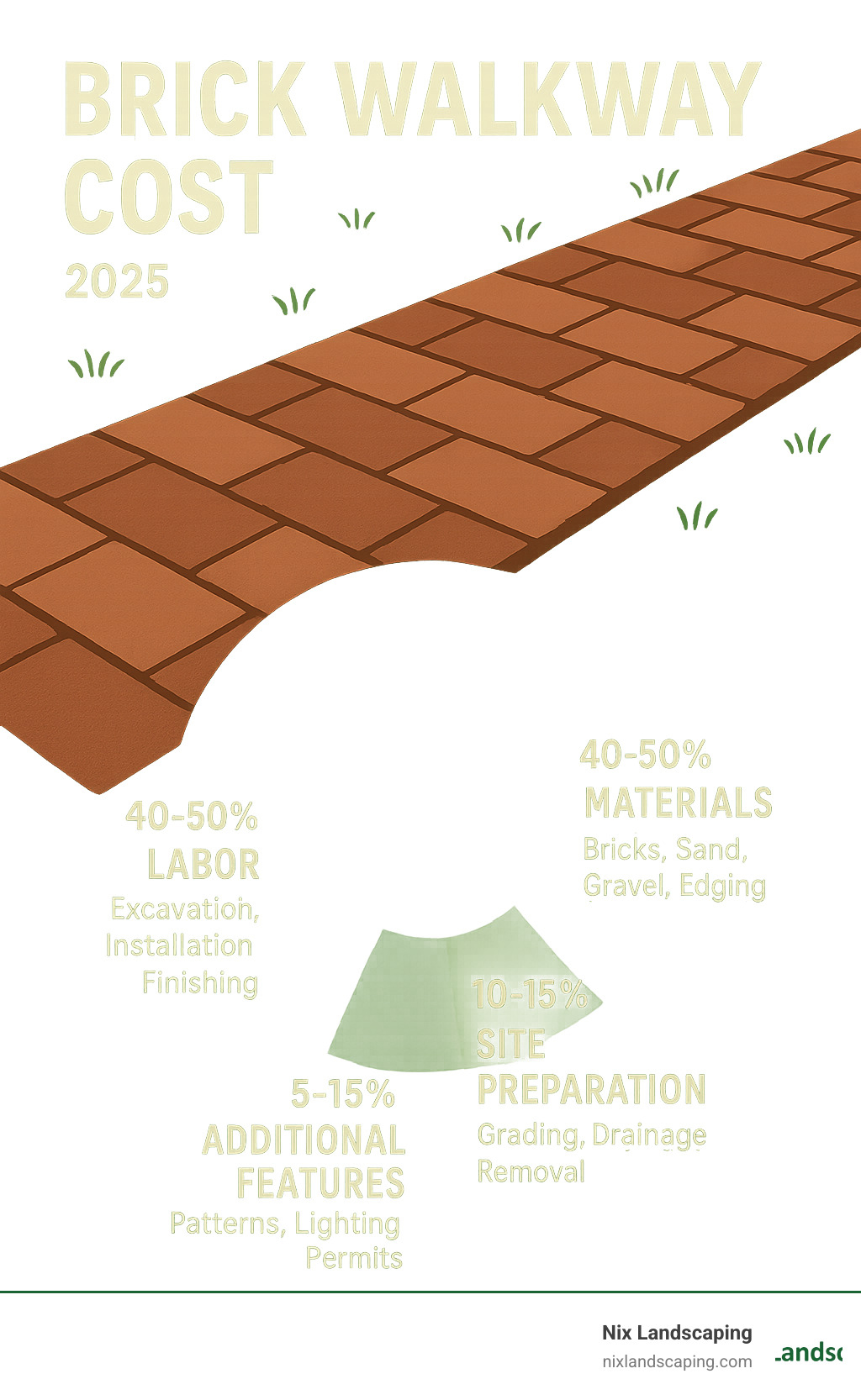
The Average Brick Walkway Cost Breakdown
When planning your dream walkway, understanding the brick walkway cost is crucial for making smart decisions. The national average sits between $9 and $20 per square foot, but here’s what that really means for your project.
A typical 20-by-4-foot brick walkway will run you anywhere from $720 to $4,660. That’s quite a range, isn’t it? The wide spread comes down to your material choices, design complexity, and site conditions.
At Nix Landscaping, we break down every project into three main cost buckets: materials (usually 40-50% of your total), labor (35-45%), and site preparation (10-15%). Understanding each piece helps you budget effectively and avoid those dreaded surprise costs that can derail a project.
The key to smart budgeting? Looking beyond just the brick price tag. Those beautiful pavers are just one part of creating a walkway that’ll last decades and boost your home’s value.
More info about Hardscape services
Understanding the Material Costs for Your Brick Walkway
Let’s start with the star of the show – your actual bricks. Brick pavers typically cost between $2 and $6 per square foot, but the type you choose makes a huge difference in both cost and character.
Clay bricks are the classic choice that never goes out of style. These beauties cost $2 to $6 per square foot and offer that warm, timeless look that complements any home. They’re incredibly durable too – we’re talking 50+ years of life with proper installation.
Concrete pavers give you more design flexibility at a friendly price point. They can mimic natural stone or traditional brick, and you’ll find them in every color imaginable. These typically run $2 to $4 per square foot for materials.
For a premium look, thin brick veneers work beautifully over existing concrete surfaces. They’re literally slices of real brick, giving you authentic character at around $3 to $5 per square foot.
Recycled bricks bring rustic charm and often cost less than new materials. Just factor in some extra time for cleaning and sorting if you go this route.
But here’s what many homeowners forget – bricks are just the beginning. Your walkway needs a solid foundation to prevent settling, cracking, and weeds popping through.
Base materials include crushed stone or pea gravel ($15-$75 per cubic yard) for stability and drainage. Leveling sand ($15-$50 per cubic yard) creates that perfectly flat surface for your pavers.
Don’t skip the landscape fabric either. At about $1.50-$2 per square foot, it’s your best defense against weeds. Edging restraints keep everything locked in place, while polymeric sand (around $30 for a 40-pound bag) fills the joints and prevents shifting.
Calculating Labor and Installation Brick Walkway Cost
Here’s where craftsmanship meets cost. Professional installation is where your investment really pays off, and it typically accounts for the biggest chunk of your brick walkway cost.
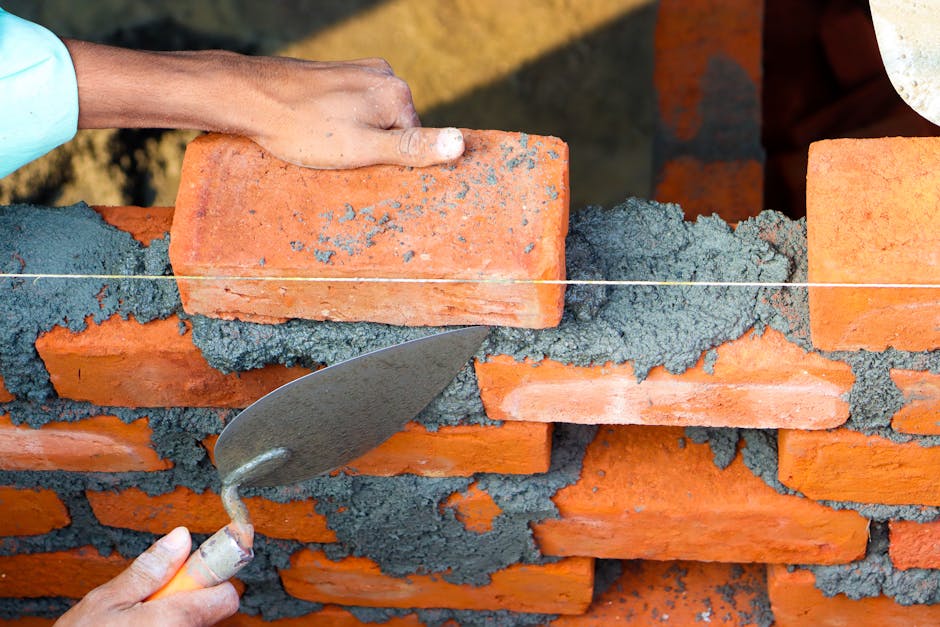
Professional installer rates range from $6 to $11 per square foot, though complex projects can push that to $13 per square foot. When you break it down by time, skilled crews charge $50 to $100 per hour. These figures align with national averages for skilled masons, which you can explore further through resources like the Bureau of Labor Statistics.
The skill level makes a massive difference in your final result. A simple straight path might seem straightforward, but getting proper drainage, perfect alignment, and joints that won’t shift takes real expertise. We’ve seen too many DIY projects that looked great for six months before problems started showing up.
Regional price differences are real too. Here in Fishers, IN, complete installation typically runs $13-$18 per square foot. Coastal areas with higher living costs can bump that up by 15-20%.
What you’re really paying for isn’t just laying bricks – it’s years of experience knowing how to handle challenging soil, create proper slopes for drainage, and build something that’ll still look amazing decades from now.
Factoring in Site Preparation
Before we lay a single brick, the real work begins underground. Site prep might not be glamorous, but it’s absolutely critical for a walkway that won’t disappoint you later.
Excavation involves digging out your walkway area to the right depth – typically 6-8 inches for the base materials. This runs $2-$5 per square foot depending on your soil conditions and how much dirt we’re moving.
Grading ensures water flows away from your home instead of pooling on your beautiful new walkway. Proper grading costs $0.08 to $2 per square foot, but it’s insurance against water damage and ice problems.
If you’re replacing an old walkway, removal and disposal add $0.30 to $0.50 per square foot. Here in central Indiana, we often deal with clay-heavy soil that expands and contracts with moisture. Addressing these soil conditions might add $2-$4 per square foot, but it prevents major headaches later.
Sometimes we need to install drainage solutions like French drains, especially if your yard doesn’t naturally shed water well. These run $5-$15 per linear foot but can save your walkway from frost heaving and settling issues.
Don’t forget about accessibility either. If we can’t get equipment close to your project site, hand-carrying materials can increase labor costs by 15-25%.
Key Factors That Influence Your Final Price
Beyond the basic materials and labor, several other factors can significantly impact your final brick walkway cost. These are the details that turn a simple path into a personalized statement, but they also come with a price tag.
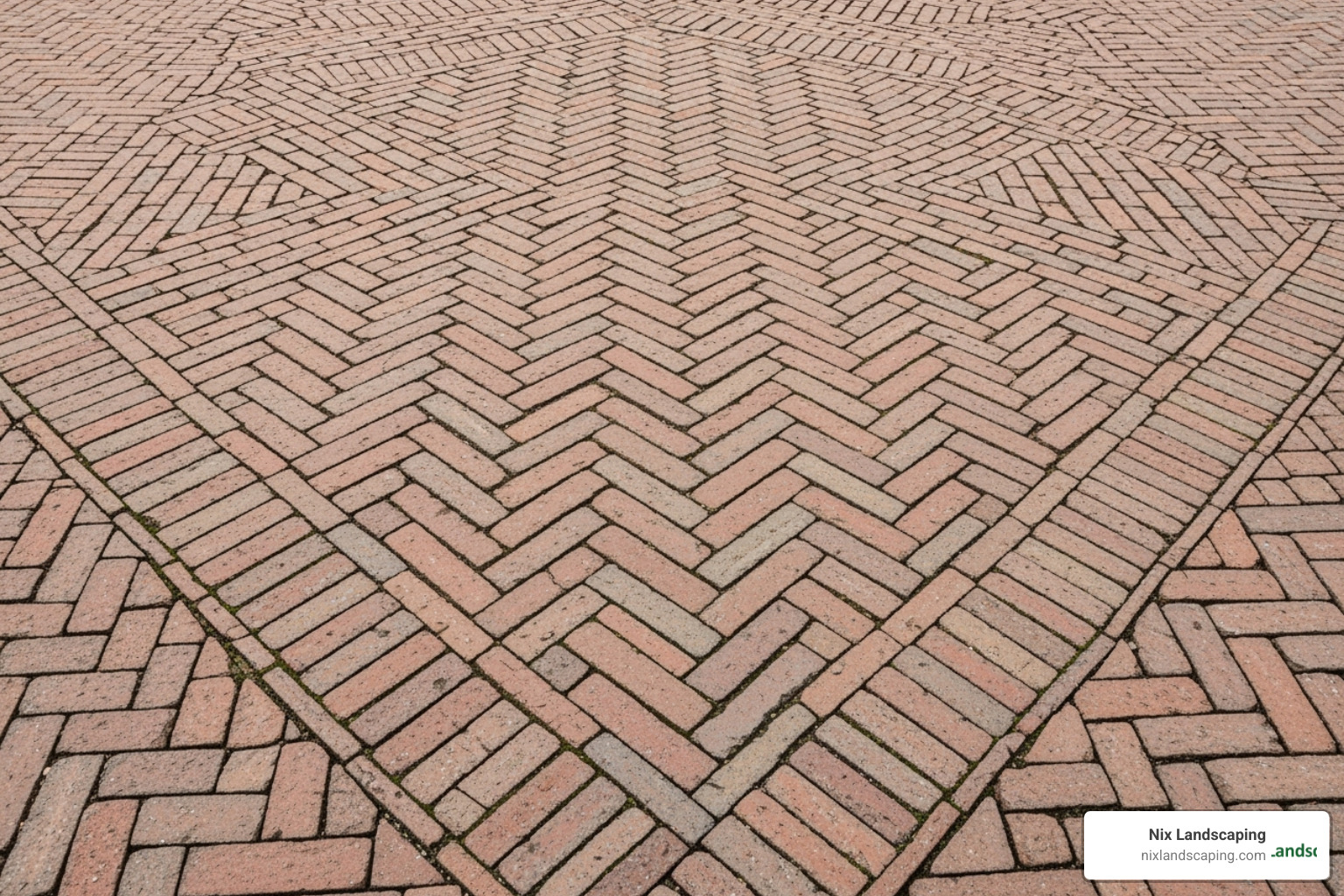
Think of it like ordering a car – the base model has one price, but adding custom paint, premium wheels, and a sunroof changes the game entirely. The overall project scope, the level of customization you desire, and even your geographic location all play a role in what you’ll ultimately pay.
Walkway Size and Complexity
The most obvious factor affecting your brick walkway cost is size. More square footage means more materials and labor, which directly increases your total investment. While the average cost of $9 to $20 per square foot stays consistent, a 20′ x 4′ walkway might run around $1,160, while a 70′ x 4′ walkway could hit $4,060.
But here’s where it gets interesting – complexity matters even more than size. Straight paths are your most budget-friendly option, typically running $10-$15 per square foot installed. They’re efficient to lay and require minimal cutting or special planning.
Curved paths, on the other hand, are where artistry meets craftsmanship. These flowing designs require meticulous cuts, specialized tools, and significantly more time. Expect to pay $15-$25 per square foot for curves – but the visual impact can be absolutely stunning.
Intricate patterns like herringbone or basketweave designs add another layer of complexity. While a simple running bond pattern is straightforward to install, these decorative layouts are much more labor-intensive. They can add 10-15% more to your labor costs and often require up to 15% more material due to increased cuts and waste. The result, though, is a walkway that truly stands out.
Steps and stairs present their own unique challenges. If your walkway needs to steer elevation changes, you’re looking at specialized construction, additional materials, and more complex labor. Each step requires careful engineering to ensure proper drainage and stability.
I’ve seen homeowners fall in love with highly complex designs, only to be surprised by the associated costs. My advice? Balance your aesthetic dreams with your budget. Sometimes a simpler design executed perfectly can be just as stunning as an intricate pattern.
Additional Features and Permits
Once you’ve settled on the basic layout, you might consider features that improve both beauty and functionality. These custom elements add to your overall brick walkway cost, but they can truly make your path one-of-a-kind.
Built-in lighting transforms your walkway from a daytime feature to an evening showpiece. Low-voltage LED lights improve safety while creating beautiful ambiance. This involves additional costs for fixtures, wiring, and specialized installation.
Borders and accents define your walkway and add visual interest. A contrasting border, often called a “soldier course,” or incorporating accent bricks with different colors or textures can add about $2-$5 per linear foot. These details might seem small, but they make a big difference in the final appearance.
Engraved bricks offer a truly personal touch. Some homeowners choose to have bricks engraved with names, dates, or special messages. It’s a unique feature that adds character and meaning to your walkway.
Now, let’s talk about the less exciting but equally important topic of permits. Permit fees can range from $50 to $200 for most residential brick walkway projects. Here in Fishers, permits generally start around $200. You’ll typically need a permit if your walkway connects to public sidewalks, alters drainage patterns, includes electrical components like lighting, or incorporates steps above a certain height.
Local regulations vary significantly, so always check with your local planning department before starting work. Skipping a required permit can lead to fines, project delays, or even demands to remove your beautiful new walkway. Trust me, it’s much easier to get the paperwork sorted upfront than deal with complications later.
Brick vs. Other Hardscape Options: A Cost and Value Comparison
When you’re weighing your options for that perfect walkway, brick isn’t the only player in the game. You’ve got concrete, natural stone, and various other pavers all vying for your attention – and your budget. Each option brings its own personality to the table, along with different brick walkway cost considerations, long-term value, and maintenance requirements.
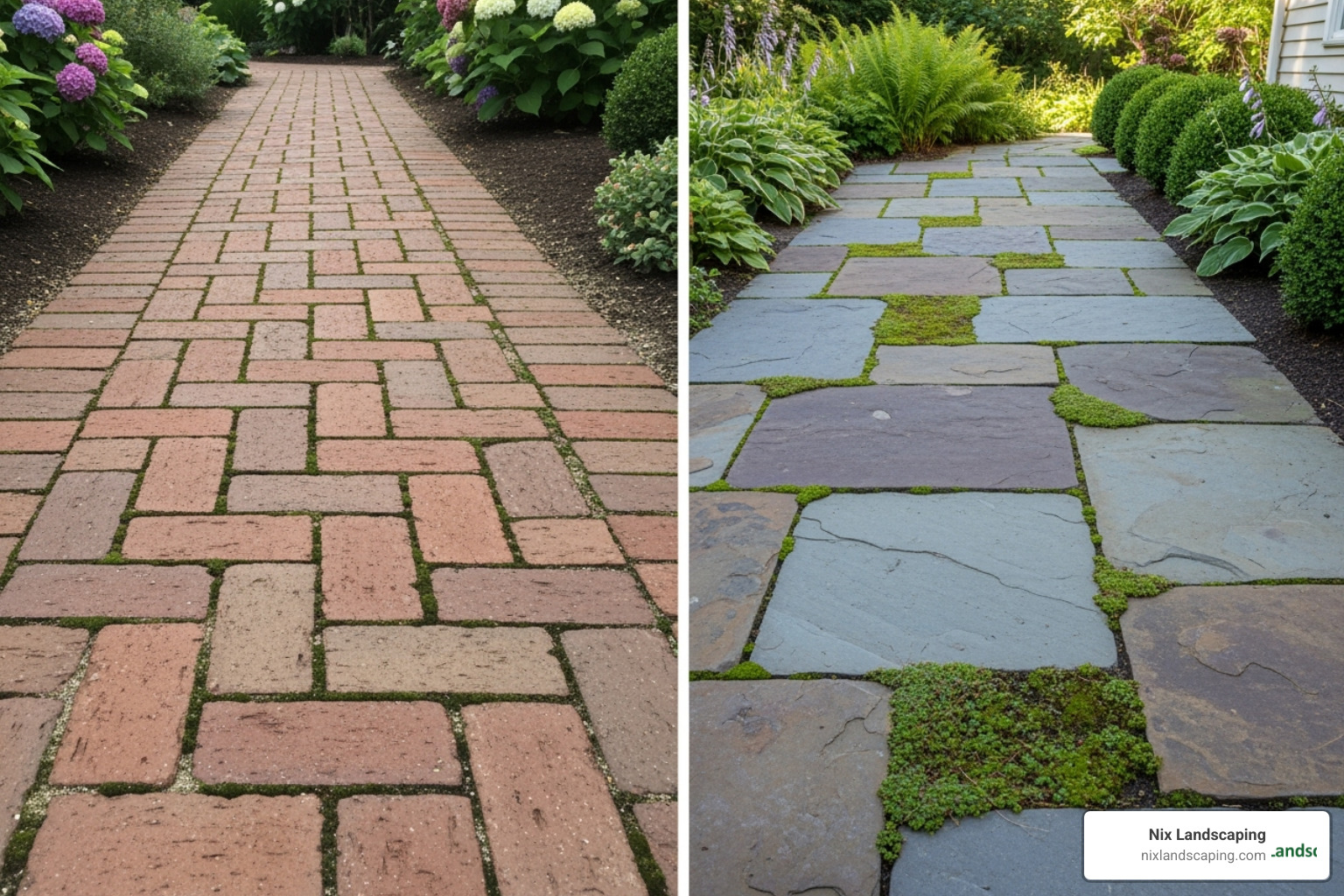
Here’s what I’ve learned after years in this business: while concrete might look like the bargain option upfront, it often becomes the expensive choice down the road. Pavers, including brick, tend to be the smarter long-term play. When concrete cracks – and it will – you’re looking at replacing entire sections. With pavers, you simply pop out the damaged piece and slide in a new one.
The real beauty of brick and stone pavers lies in their repairability. I can’t tell you how many concrete walkways I’ve seen that look terrible after just a few harsh Indiana winters. Meanwhile, properly installed brick walkways from decades ago still look fantastic with minimal upkeep.
Brick vs. Stone Pavers
Let’s talk numbers and see how brick stacks up against stone pavers. Both are excellent choices, but they serve different needs and budgets.
| Feature | Brick Pavers | Stone Pavers |
|---|---|---|
| Cost | $10 – $20 per square foot (installed) | $12 – $50 per square foot (installed) |
| Lifespan | 20 – 50+ years (clay brick 50-100 years) | 100+ years |
| Maintenance | More upkeep (weed control, leveling, joint sand replacement) | Low maintenance, durable, less prone to shifting |
| Aesthetics | Classic, warm, traditional charm; versatile patterns (herringbone, basketweave) | Unique, natural variations; timeless, rustic, sophisticated |
Stone pavers definitely command a higher brick walkway cost initially, but they’re practically indestructible. Natural stone like slate can handle anything Mother Nature throws at it and still look gorgeous a century later. That’s serious value when you think about it as a once-in-a-lifetime investment.
But here’s where brick really shines: versatility and charm. Brick gives you that warm, welcoming feel that never goes out of style. Whether you choose a simple running bond or get fancy with herringbone patterns, brick adapts to virtually any home style. Plus, individual brick replacement is straightforward and affordable – something you can’t say about a cracked stone slab.
In my experience here in Fishers, both materials handle our freeze-thaw cycles well when properly installed. The choice often comes down to your budget and the specific look you’re after.
DIY vs. Professional Installation
I get it – the idea of saving money by tackling a brick walkway cost project yourself is tempting. Those YouTube videos make it look pretty straightforward, right? Let me share some reality from the trenches.
A DIY approach on a typical 35′ x 4′ walkway might save you around $2,978 in labor costs. That sounds great until you factor in the hidden costs of going solo. You’ll need to rent specialized equipment like plate compactors and brick cutters. More importantly, you’ll invest 3-4 full weekends of back-breaking work – and that’s assuming everything goes perfectly.
Here’s what really concerns me about DIY brick installations: the potential for costly mistakes. I’ve been called to fix more DIY walkways than I care to count. Poor base preparation, inadequate compaction, or improper drainage can turn your money-saving project into an expensive do-over. Often, fixing a failed DIY installation costs more than professional installation would have originally.
Professional installation brings expertise that’s hard to put a price on. We understand how Indiana’s clay soil behaves, we know exactly how deep to excavate for our climate, and we have commercial-grade equipment that ensures proper compaction. When you hire Nix Landscaping, you’re not just paying for labor – you’re investing in decades of experience and a workmanship warranty that protects your investment.
The time factor alone makes professional installation worth considering. What takes us a few days with a skilled crew could consume your evenings and weekends for months. Your time has value too.
Frequently Asked Questions about Brick Walkway Costs
Over the years at Nix Landscaping, we’ve noticed that homeowners ask similar questions when they’re planning their brick walkway cost budget. Let me share the answers to the most common ones we hear.
How can I reduce the cost of my brick walkway?
I get it – everyone wants to make their dollar stretch further! The good news is there are several smart ways to keep your brick walkway cost reasonable without sacrificing quality.
Simplifying your design is one of the biggest money-savers. A straight walkway costs significantly less than one with curves, and choosing a basic running bond pattern instead of intricate herringbone or basketweave can save you 10-15% on labor costs. Those fancy patterns look amazing, but they require more time and precision to install.
Material choices make a huge difference too. Standard red clay bricks or concrete pavers that mimic brick will cost much less than premium natural stone options. You can still get that classic brick look without the premium price tag.
If you’re handy and have some free weekends, handling prep work yourself can reduce costs. Things like clearing vegetation, hauling away debris, or even doing some of the initial excavation can save on labor. Just remember – the base preparation is absolutely critical, so don’t cut corners there.
Consider phased installation if you’re planning a large project. Install the main pathway first, then add extensions or decorative elements later when your budget allows. This spreads the cost over time while still giving you a functional walkway right away.
How long will a brick walkway last?
This is one of my favorite questions because the answer really shows the value of a quality brick walkway! With proper installation, you’re looking at 25 to 50 years of beautiful, functional service. High-quality clay brick pavers can even last up to 100 years – imagine that kind of return on investment!
The climate impact here in Fishers, IN is something we always consider. Our freeze-thaw cycles can be tough on hardscaping, but a well-installed brick walkway with proper base preparation and drainage handles these conditions beautifully.
Proper installation is absolutely key to longevity. That’s why we emphasize things like adequate base depth, proper compaction, and correct drainage slopes. Skip these steps, and even the best bricks won’t perform as they should.
Your maintenance routine plays a big role too. Regular cleaning, occasional sealing, and replenishing the jointing sand when needed will keep your walkway looking great and performing well for decades. The beauty of brick is that individual pavers can be replaced if damaged – try doing that with a cracked concrete slab!
How many bricks do I need for a walkway?
Here’s a straightforward calculation that takes the guesswork out of ordering materials. For standard 4-inch by 8-inch bricks, you’ll need about 4.5 bricks per square foot.
First, measure your walkway area by multiplying length times width to get your total square footage. Then multiply that number by 4.5 to get your brick count.
Here’s the important part – always order 10% extra. This isn’t just a contractor trying to sell you more materials! You’ll need extras for cuts around curves or edges, there’s always some breakage during installation, and having a few spare bricks for future repairs is incredibly valuable. Trust me, trying to match brick color and texture years later can be nearly impossible.
For example, if your walkway is 80 square feet, you’d need about 360 bricks, plus 36 extra (10% more), for a total order of around 400 bricks. It’s always better to have a few left over than to stop work because you’re short!
Your Perfect Path Starts with a Plan
When you step back and look at everything we’ve covered, investing in a brick walkway isn’t just about creating a path from point A to point B. It’s about making a statement that says “welcome home” every single day. The brick walkway cost might seem like a significant investment upfront, but when you consider the decades of beauty, functionality, and increased home value it provides, it becomes clear why so many homeowners choose this timeless option.
Understanding all the cost factors – from materials and labor to site preparation and design complexity – puts you in the driver’s seat. No more surprises, no more budget overruns, just informed decisions that align with your vision and your wallet.
Here’s what makes a brick walkway such a smart investment: durability that lasts 25 to 50+ years, easy individual brick repairs instead of replacing entire sections, and that classic charm that never goes out of style. Compare that to concrete that cracks and needs full replacement after 20-30 years, and the math starts to make a lot of sense.
The long-term benefits extend beyond just the walkway itself. A well-designed brick path creates incredible curb appeal, often becoming the focal point that ties your entire landscape together. It’s the kind of improvement that makes neighbors stop and take notice, and potential buyers remember your home when they’re making decisions.
At Nix Landscaping, we’ve helped hundreds of families in the Fishers area turn their walkway dreams into reality. Every project starts with understanding your specific needs, your budget, and your vision. We believe the best results come from collaboration – your ideas combined with our expertise and local knowledge of Indiana’s unique soil and climate conditions.
Whether you’re dreaming of a simple straight path with classic red bricks or an elaborate curved design with intricate patterns and built-in lighting, we’ll walk you through every decision and help you understand exactly where your investment is going. No surprises, just transparent communication from start to finish.
Ready to create your perfect path? Let’s start with a conversation about your vision and a detailed, personalized estimate that breaks down every aspect of your brick walkway cost.

