
Why Proper Brick Walkway Maintenance Makes All the Difference
Brick walkway maintenance is key to preserving your home’s curb appeal and protecting your investment. A well-maintained brick walkway can last 50-100 years, while neglected paths can develop safety hazards and costly damage.
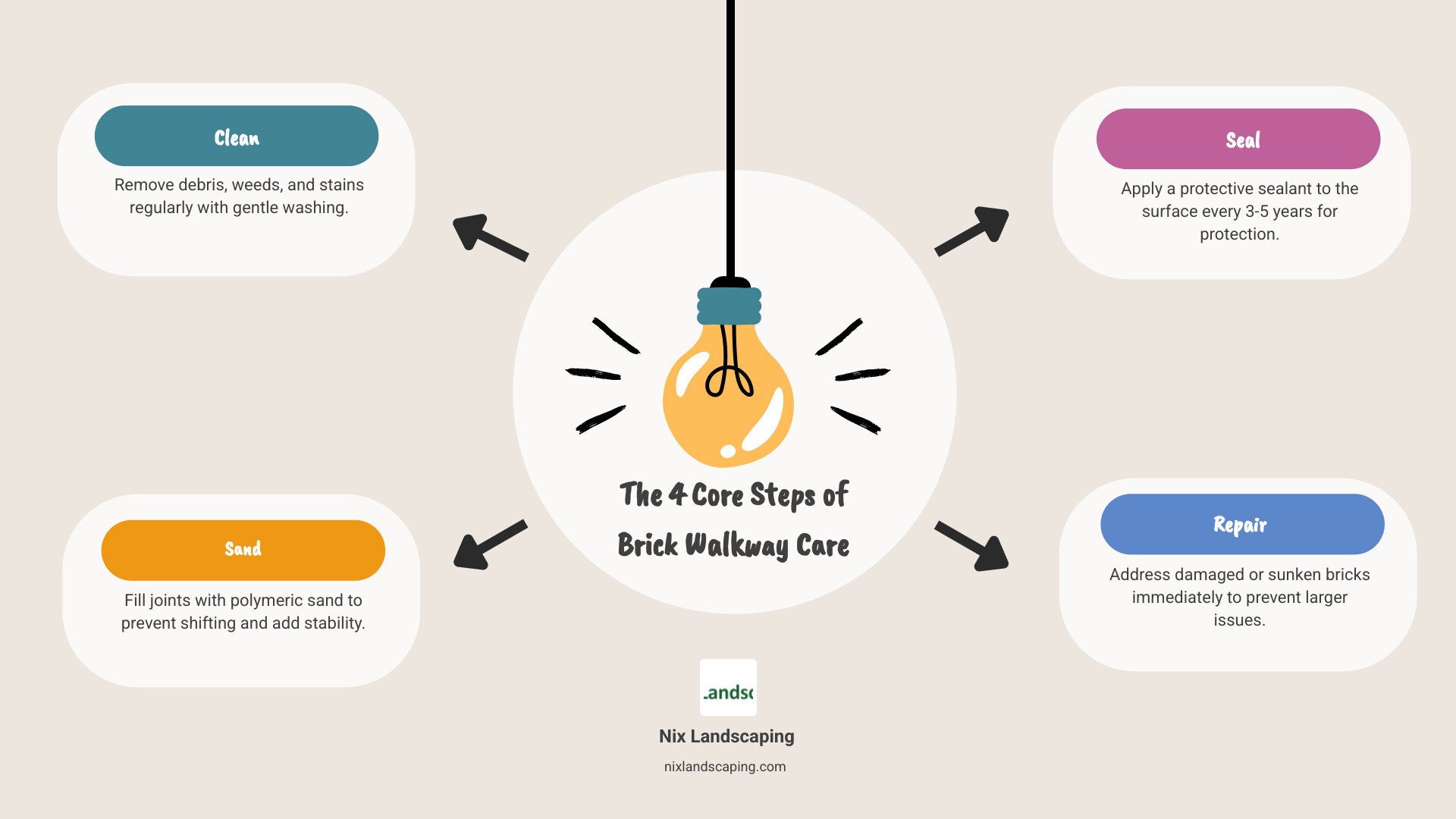
Essential maintenance involves four core steps:
- Clean: Remove debris, weeds, and stains.
- Sand: Fill joints with polymeric sand to prevent shifting.
- Seal: Apply a protective sealant every 3-5 years.
- Repair: Address damaged or sunken bricks promptly.
Brick walkways require minimal upkeep compared to other materials. However, simple routine care prevents major problems that can cost thousands to fix. Common tasks include weekly sweeping, annual joint sand replenishment, and prompt repairs.
With proper maintenance, restoration costs can stay under $2,000, compared to over $13,000 for a complete replacement. Some brick pavers are still in service after 200 years—a testament to their durability when cared for.
I’m Kyle Nix, owner of Nix Landscaping, and my experience in Fishers has shown that consistent brick walkway maintenance is the most cost-effective way to preserve the beauty and safety of your outdoor paths.
Reading the Signs: When Your Brick Walkway Needs Attention
Learning to read the signals your walkway sends is the heart of good brick walkway maintenance. Watch for these common issues:
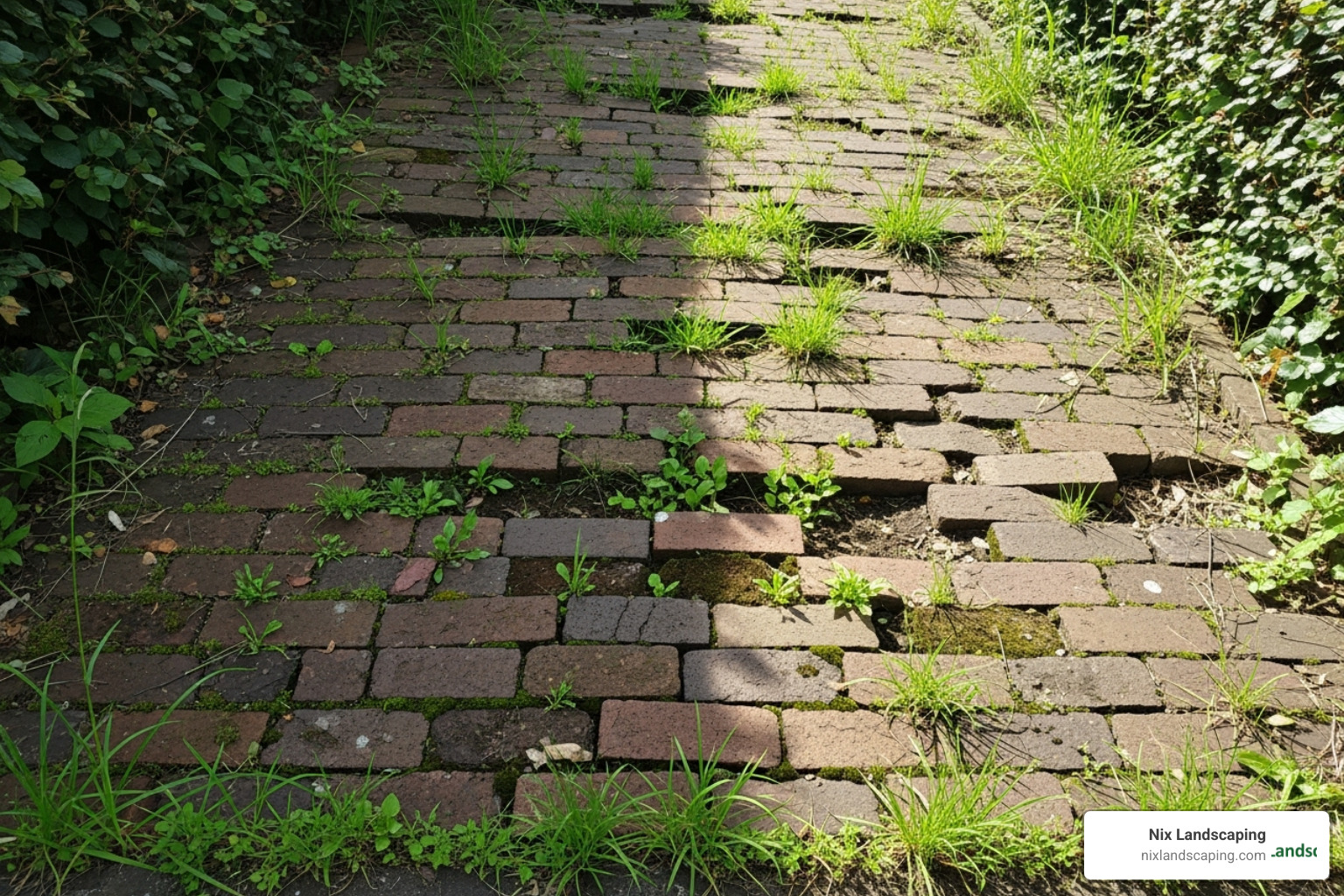
- Sunken or raised bricks: These are a major red flag, creating tripping hazards and areas where water can pool.
- Loose or wobbly pavers: When bricks shift underfoot, it indicates a problem with the foundation, likely due to lost joint sand.
- Cracked or broken bricks: Heavy loads or harsh weather can cause even tough bricks to break.
- Weed and moss growth: These invaders hold moisture, push sand out of joints, and weaken your walkway’s structure.
- Stains and discoloration: Oil, rust, or mildew can make a structurally sound walkway look neglected.
- Wide or empty joints: Gaps where sand used to be are a serious sign of instability. Joint sand locks the entire system together.
- Water pooling: This indicates a drainage failure, which can erode the foundation and worsen other problems.
Identifying the Root Cause
Fixing visible problems is only half the battle. Understanding the root cause is essential for a lasting solution.
- Poor drainage: When water can’t escape, it saturates the base materials and washes away support. Proper drainage is everything.
- Freeze-thaw cycles: Here in Fishers, we know this problem well. Water gets into joints, freezes, expands, and pushes bricks apart, leaving gaps and loose pavers when it thaws.
- Tree root intrusion: The roots of nearby trees can push up from below, creating an uneven surface.
- Base failure: An improperly prepared or compacted base during installation will eventually lead to settling.
- Age and wear: Even well-built walkways show their age. The good news is that a brick walkway is fairly easy to repair when you catch problems early.
At Nix Landscaping, our hardscape solutions address not just the symptoms but the underlying causes.
The Core of Upkeep: Cleaning and Weed Prevention
Regular cleaning is the foundation of effective brick walkway maintenance, preventing small issues from becoming expensive problems. The process focuses on debris removal, weed control, and stain cleaning to keep your walkway healthy and beautiful.
Essential Steps for Routine Brick Walkway Maintenance
Consistency is more important than intensity. A few minutes of regular attention will keep your walkway looking fantastic.
- Sweep or blow off debris: Do this regularly to prevent organic matter from breaking down and staining the joints.
- Pull weeds: Manual removal or gentle organic herbicides are best for long-term brick walkway maintenance, as harsh chemicals can damage bricks.
- Use mild cleaning solutions: A mixture of dish soap and warm water works for most situations. For tougher stains, try a solution of white vinegar and water.
- Scrub with a stiff-bristle brush: Use firm, steady pressure to remove stubborn spots.
- Rinse thoroughly: Use a garden hose at normal pressure to wash away dirt and cleaning solution residue.
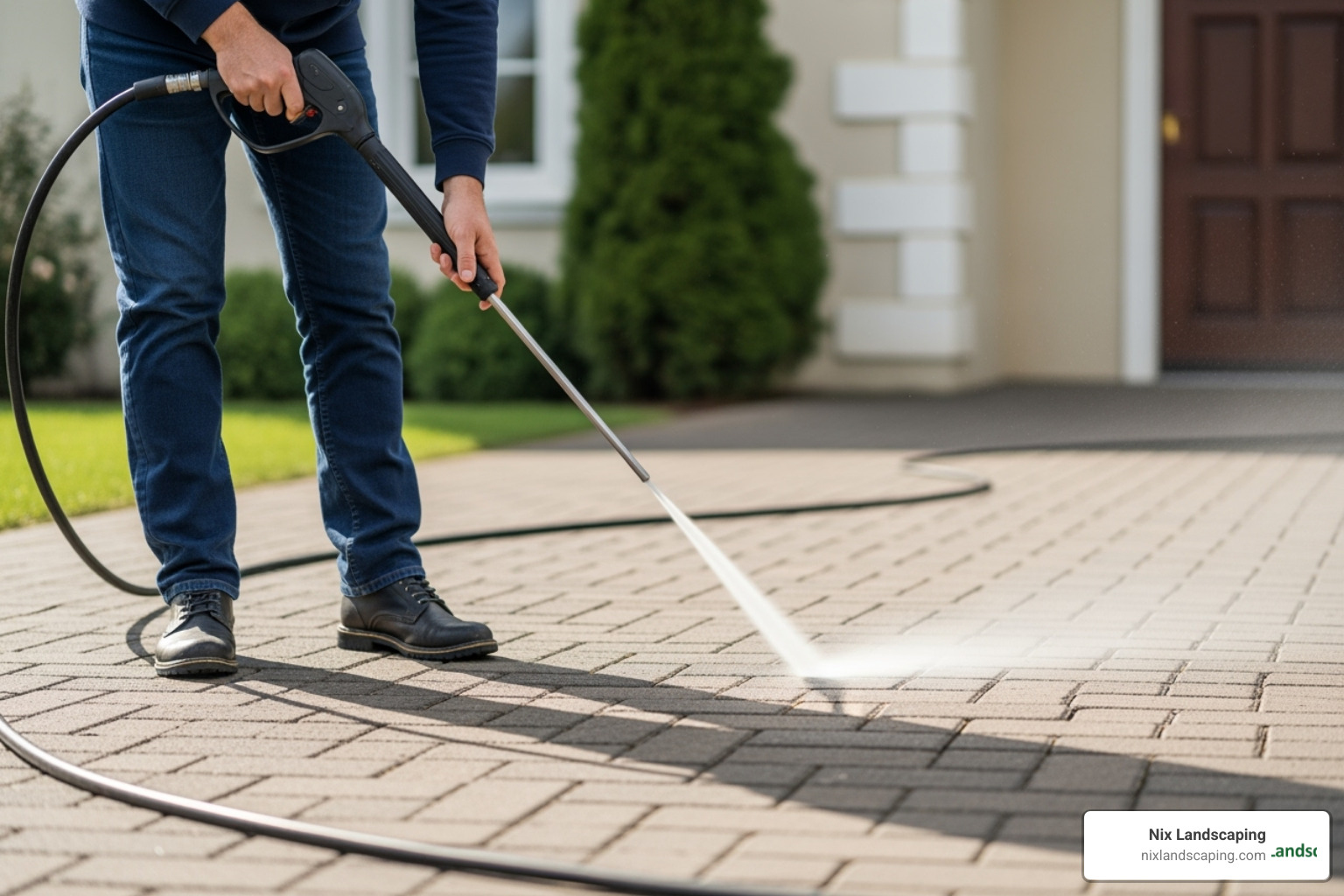
- Use pressure washers with care: High-pressure settings can blast away joint sand and chip bricks. If you use one, stick to low pressure with a wide fan tip.
How to Prevent Weed Growth in Your Brick Walkway
The secret to weed prevention is making your walkway an inhospitable environment for them.
- Use Polymeric Sand: This is a game-changer. It contains binders that harden when wet, creating a solid barrier that prevents weed growth and ant infestations.
- Ensure Joint Stabilization: When joints are full and stable, there’s no room for weeds to take root.
- Sweep Regularly: This removes weed seeds before they have a chance to settle and sprout.
- Maintain Proper Drainage: Most weeds love moisture. A properly sloped walkway allows water to run off, keeping the surface drier and less appealing to weeds.
For professional help creating a weed-resistant walkway, explore our patio and paving services.
Advanced Brick Walkway Maintenance: Repair vs. Restoration
When damage goes beyond surface-level issues, you must choose between repair and restoration. The right choice depends on the extent of the damage.
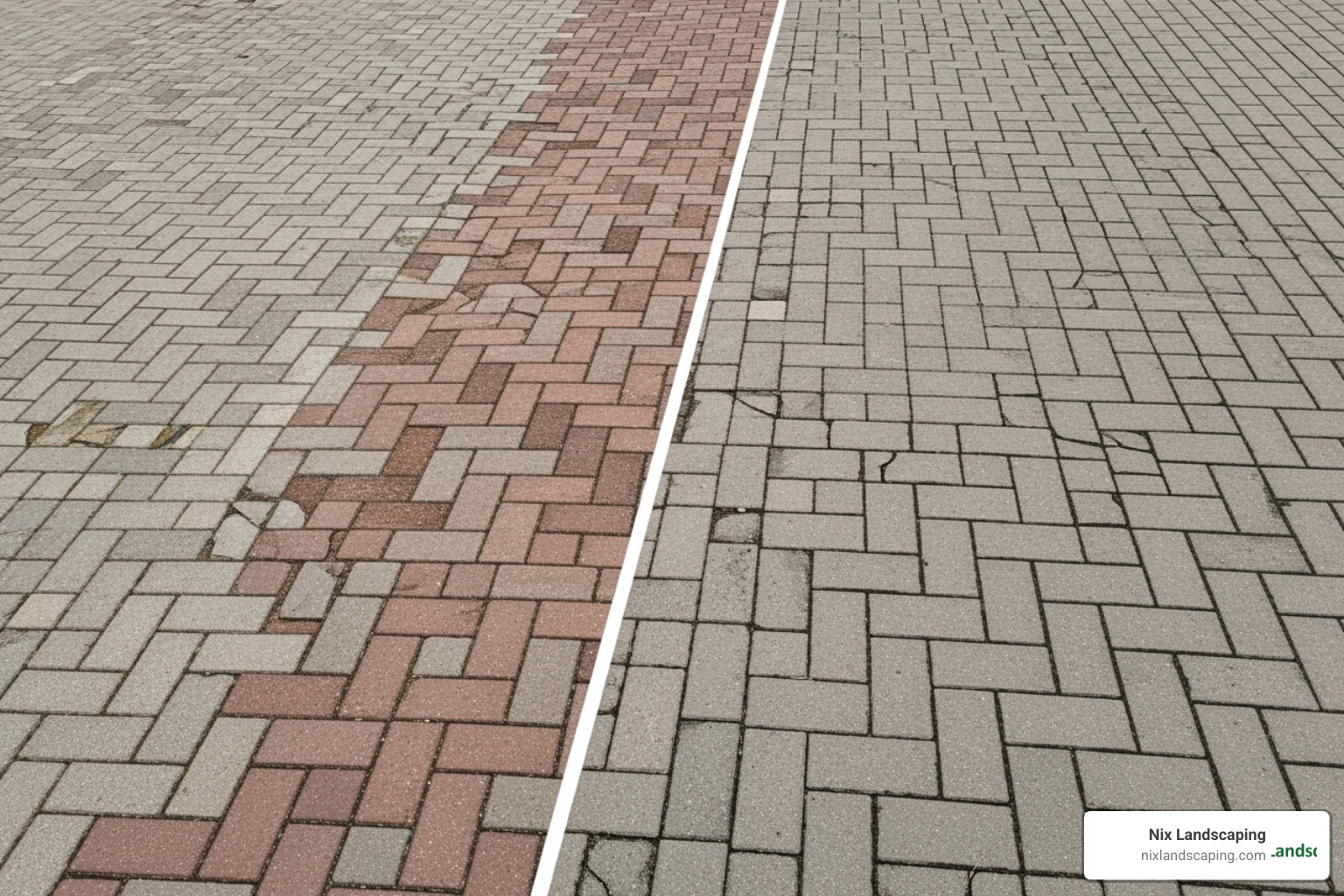
Repairing individual bricks or leveling sunken areas works well for isolated problems. However, a full restoration process—lifting all bricks, fixing the foundation, and re-laying them—is often more cost-effective for widespread issues. While a new walkway can cost over $13,000, restoration is often under $2,000, preserving the character of your existing brick pavers. See how this compares to a new paver walkway installation cost.
Minor Repairs: The Quick Fix
For small, contained issues, minor repairs can be a good DIY project.
- Spot leveling: Lift settled bricks, adjust the sand base, and tap them back into place with a rubber mallet.
- Replacing cracked bricks: This is straightforward if you can find matching bricks. New bricks can stand out if they don’t match the weathered look of the originals.
- Filling small gaps: Sweep fresh joint sand into gaps to solve minor stability issues.
While these repairs are suitable for handy homeowners, achieving professional results can be tricky without the right tools and experience.
Full Restoration: Bringing Your Walkway Back to Life
For widespread damage, full restoration can transform your walkway.
- Lift all pavers: The first step is to lift all pavers, setting aside reusable bricks.
- Re-grade the base: We excavate and re-grade the area to ensure proper drainage, then lay down a fresh, compacted base of crushed stone and stone dust. This is critical for long-term stability.
- Compact the foundation: Using professional equipment like plate compactors, we create a rock-solid base that won’t shift.
- Re-lay the bricks: We carefully position each brick and sweep polymeric sand into the joints for maximum stability.
Restoration is necessary for widespread sinking, extensive damage, or major drainage problems. Our custom patios showcase what’s possible when restoration is done right.
Proactive Care: Sealing, Sanding, and Seasonal Tips
Proactive brick walkway maintenance is easier than waiting for problems to arise. Once your walkway is clean and repaired, sealing and maintaining joint sand are the keys to long-lasting beauty.
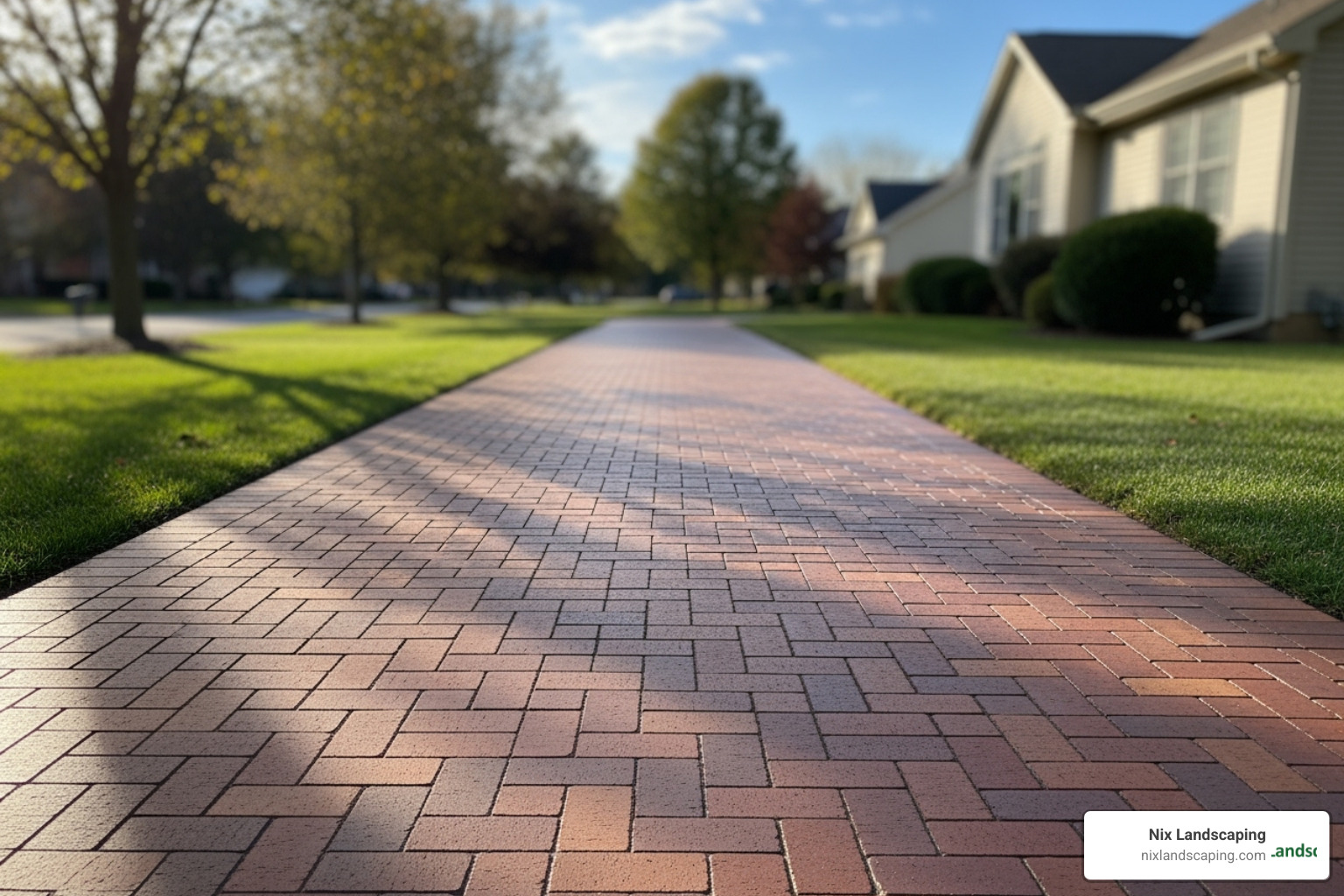
These steps create a protective barrier against stains, weather, and weeds. For joint sand, polymeric sand is the clear winner over regular sand due to its binding agents that lock pavers in place and deter weeds.
The Benefits of Sealing Your Brick Walkway
Sealing your walkway is one of the best investments you can make in its longevity.
- Stain Protection: A good sealer prevents spills from soaking in, making cleanup easy.
- UV Resistance & Color Improvement: Sealing protects bricks from fading in the sun, keeping their colors vibrant.
- Easier Cleaning: Dirt and grime wash away more easily from a sealed surface.
We recommend sealing every 3-5 years, especially in Fishers, where our freeze-thaw cycles are harsh. You can choose between a matte vs. gloss finish based on your preference. Our residential and commercial hardscaping services include professional sealing for the best protection.
Seasonal Brick Walkway Maintenance for Year-Round Beauty
Adapt your maintenance routine to the seasons to keep your walkway safe and beautiful.
- Spring: Inspect for any shifting or settling caused by winter’s freeze-thaw cycles. Sweep fresh polymeric sand into any new gaps.
- Summer: With increased outdoor activity, sweep weekly and clean up spills immediately.
- Fall: Leaf removal is critical. Decomposing leaves stain bricks, clog drainage, and create a medium for weeds. Sweep regularly.
- Winter: Ensure joints are filled and the surface is sealed to defend against ice damage. For ice melt precautions, use sand for traction or a paver-safe de-icing product to avoid chemical damage.
When to Call the Professionals
While DIY projects can be satisfying, some brick walkway maintenance tasks are best left to professionals to avoid turning a manageable repair into a costly problem.
It’s time to call for help when you see:
- Widespread sinking or heaving: When large sections are uneven, it usually points to major base failure or drainage issues that require specialized equipment to fix.
- Major drainage problems: If water is pooling, especially near your home’s foundation, it’s a serious issue. We can assess drainage patterns and create solutions to protect your walkway and your home.
- Extensive damage: Multiple cracked, broken, or severely shifted bricks often require a full restoration with professional-grade tools and experience.
- Lack of time or tools: Life gets busy, and not everyone has access to compaction equipment or the desire to spend a weekend wrestling with pavers. We’re here to handle the heavy lifting.
The biggest reason to call a professional is to ensure a long-lasting result. We understand the challenges of Indiana’s freeze-thaw cycles and local soil conditions. Our team has the experience to do the job right the first time, saving you money in the long run.
Ready to get your walkway back in top shape? Our walkway paver contractors offer free estimates and can provide a clear plan of action to make your outdoor spaces beautiful and functional again.
Frequently Asked Questions about Brick Walkways
Here are answers to some of the most common questions we hear about brick walkway maintenance.
What type of sand is best for filling the joints between bricks?
The best choice is polymeric sand. Unlike regular sand, it contains a polymer binder that activates with water. This creates a firm, durable joint that provides superior weed prevention, deters ants, and resists being washed away by rain. This locking mechanism keeps pavers stable for much longer. For proper application, sweep it into dry joints and then lightly mist with water to activate the binder.
How does winter weather affect brick walkways?
In Fishers, freeze-thaw cycles are the biggest threat. Water seeps into joints, freezes, and expands with enough force to cause heaving and shifting. When the ice thaws, bricks can settle unevenly, creating tripping hazards. Repeated cycles can also erode the base material. The best defense is ensuring your walkway has proper drainage and sealed joints to keep water out.
Can I use a pressure washer to clean my brick walkway?
Yes, but use it with caution to avoid damage. The biggest risks are removing joint sand and chipping brick edges. If you use a pressure washer, follow these safety tips:
- Use low pressure settings (under 1500 PSI).
- Use a wide fan tip (40-degree or wider).
- Keep the nozzle at least 12-18 inches from the surface.
When used correctly, a pressure washer is great for removing deep-set dirt and mildew. However, use it sparingly. When in doubt, call a professional to clean your walkway safely.
Conclusion
Brick walkway maintenance is about protecting your investment and ensuring a safe, beautiful entrance to your home. With simple routines like sweeping, managing weeds, and using polymeric sand, you can preserve your walkway for decades. A well-cared-for brick path can last for centuries.
The forgiving nature of brick means that repairs are often simple and cost-effective. A restoration costing under $2,000 is far better than a full replacement that could exceed $13,000. The key is to address small issues before they become big problems and to call for help when a project is beyond your scope.
At Nix Landscaping, we understand the challenges of Indiana’s climate and have the expertise to restore and maintain your hardscapes. We’re passionate about helping you create functional, beautiful outdoor spaces that you can be proud of.
Ready to give your brick walkway the care it deserves? Transform your outdoor space with our expert paving services and find what’s possible when professional expertise meets your vision.

