
Why Choosing Retaining Wall Color Matters for Your Home’s Appeal
Choosing retaining wall color is a critical decision for your outdoor space. The right color transforms a functional structure into a stunning focal point, boosting your home’s curb appeal and property value. A poor choice, however, can make your yard feel disconnected.
Key factors to consider include your home’s exterior, existing landscape elements, wall size, and environmental conditions. Gone are the days of plain gray concrete; modern options are vast, but this makes the choice more challenging.
A well-chosen color creates harmony between your home and landscape. As Kyle Nix, owner of Nix Landscaping in Fishers, Indiana, I’ve seen how the best color choices balance aesthetics with practical considerations like maintenance and longevity, ensuring a look you’ll love for years.
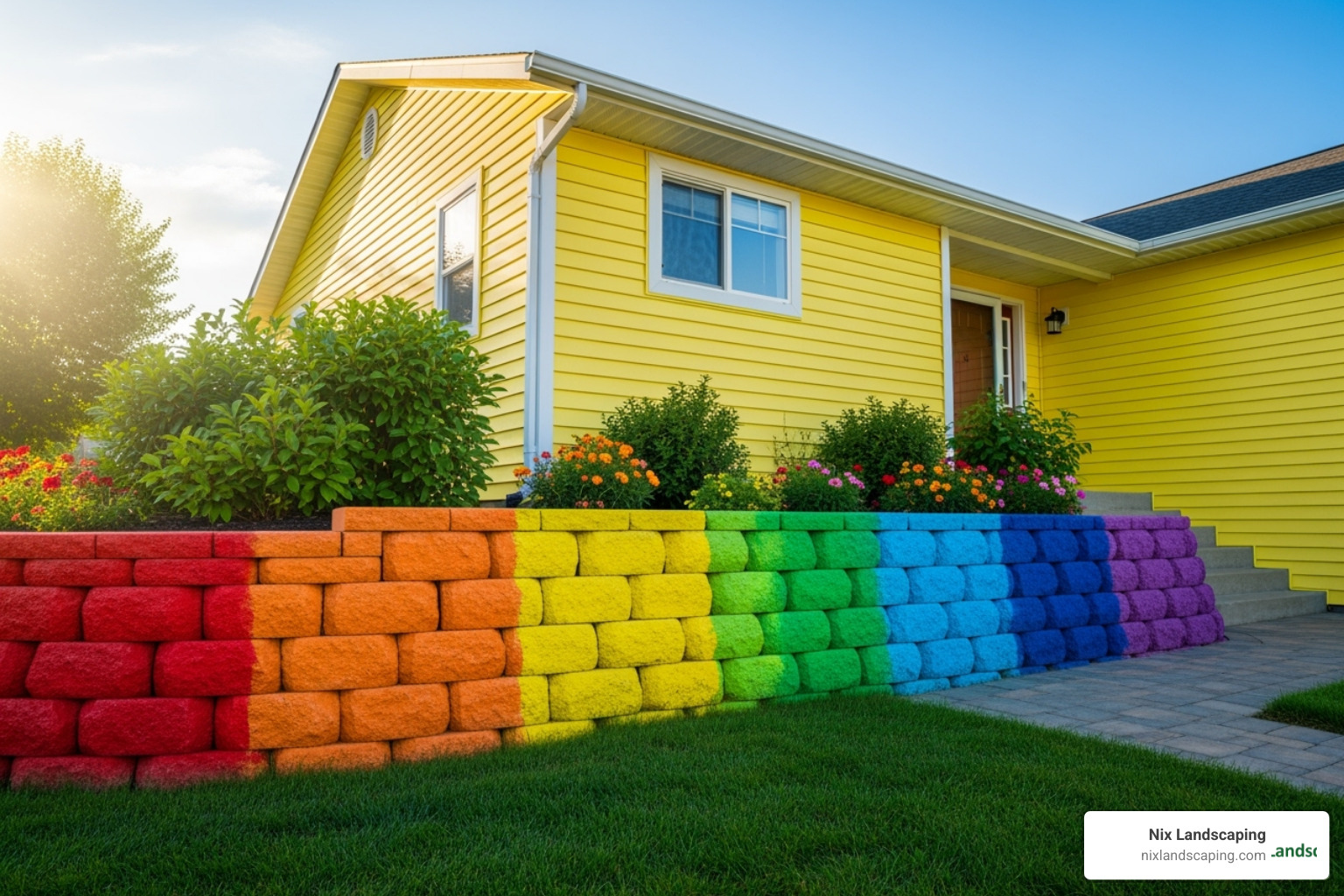
Basic Choosing retaining wall color? terms:
- Affordable retaining wall options?
- Retaining wall ideas for backyard?
- Retaining wall with water feature?
The Psychology of Color in Your Landscape
Color does more than just look pretty; it creates emotional responses and can make spaces feel larger or more intimate. The same principles of color theory that designers use indoors apply to your outdoor space when choosing retaining wall color.
Color harmony is key. Your wall color should harmonize with your home’s exterior, hardscape, and plantings. To create the right mood, consider your goals. Soft earth tones and muted grays can create a serene atmosphere, while warmer terracotta tones can energize an entertaining space.
You must also decide if the wall will be a focal point or a background element. A neutral wall acts as a clean canvas, making colorful flowers pop. Conversely, a multi-colored or bolder wall can add visual interest to a landscape dominated by green foliage.
Lighter colors can make small yards feel more spacious by making walls seem to recede. Darker colors bring elements forward, making a large yard feel cozier.
For more insights on how these design principles work together, check out our comprehensive guide on hardscape design.
Popular Retaining Wall Color Palettes
Today’s homeowners have a wide spectrum of colors available. Current trends lean toward timeless choices that mimic nature.
- Earth tones like tans and browns feel organic and established, mirroring sandy beaches or rich soil.
- Neutral grays like charcoal and pewter offer a modern, sophisticated look that complements nearly any home style.
- Warm tones such as terracotta and reds create a Mediterranean or rustic feel, providing a stunning contrast with green plants.
- Blended and variegated colors combine different shades in single blocks, creating depth and texture that mimics natural stone. These blends break up monotony while maintaining a natural appearance.
Neutral vs. Bold: A Balancing Act
Should you play it safe with neutrals or make a statement with bold colors? The answer depends on your goals and the wall’s prominence.
Neutral colors are timeless, versatile, and have better resale value. They work with any architectural style and landscaping choice. The main downside is that a very uniform, plain gray can sometimes feel too commercial or fade into the background.
Bold colors create stunning focal points that reflect your personality. A rich terracotta wall can be a dramatic backdrop for an entertaining area. However, bold colors come with risks. They can be overwhelming on large walls, look dated in a few years, and may not appeal to future buyers.
For larger walls, we typically recommend timeless neutrals or subtle blends. For smaller accent walls, there’s more room to experiment with bolder choices.
Key Factors for Choosing Retaining Wall Color?
Choosing retaining wall color isn’t a guessing game. By focusing on a few key principles, you can make a choice that improves your entire property.
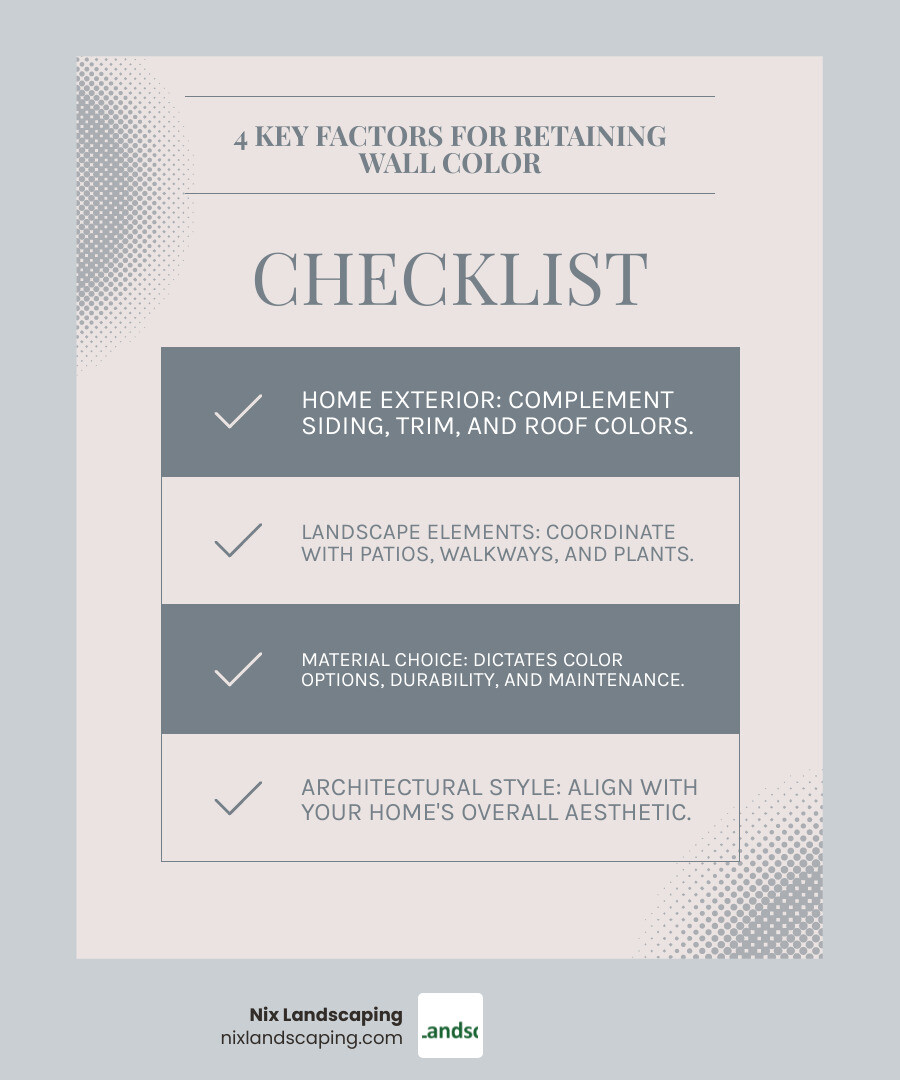
Start with your home’s exterior color. Your siding, trim, and roof create a palette that your wall should complement or contrast. Your home’s architectural style also matters; a modern home can handle bolder choices, while a traditional home may suit classic earth tones. Also consider existing hardscapes like patios and walkways to ensure a cohesive look. Finally, think about the wall’s size and scale. Large, terraced walls often look best with subtle colors, acting as supporting players rather than the main event.
Complement or Contrast: Creating a Cohesive Look
Deciding whether your wall should blend in or stand out is a key step. Both approaches can yield stunning results.
- Matching for harmony creates a seamless, established look. This works well when matching the wall to house brick or patio pavers. In this case, plants are essential for adding visual interest.
- Contrasting for definition can be stunning. A charcoal wall against warm brick siding, for example, creates natural boundaries and turns the wall into a design feature.
- Color blends offer the best of both worlds, mimicking natural stone and tying together different colors from your home and landscape.
For more creative ideas, check out our retaining wall ideas for backyard guide.
Considering Environmental and Regional Factors
In Indiana, our weather dramatically impacts how a color looks and ages.
Sunlight and shade can make the same color look completely different. Observe your wall’s location throughout the day before deciding. Rain also changes the look, making blocks appear darker, and local minerals can even tint concrete over time.
In dustier areas, darker colors hide dirt better. If your wall gets significant rain runoff, lighter colors might show less staining. Understanding your microclimate helps predict how a color will age.
Above all, timeless beats trendy. Classic colors maintain their appeal and protect your investment. A choice that looks great for decades is always better than one that feels dated in five years. For ideas on plants that thrive in our local conditions, explore our guide to plants for rock gardens.
How Material Choice Dictates Your Color Options
Your retaining wall material is the canvas for your color choice, determining the available palette and long-term appearance. When choosing retaining wall color, we always discuss materials first.
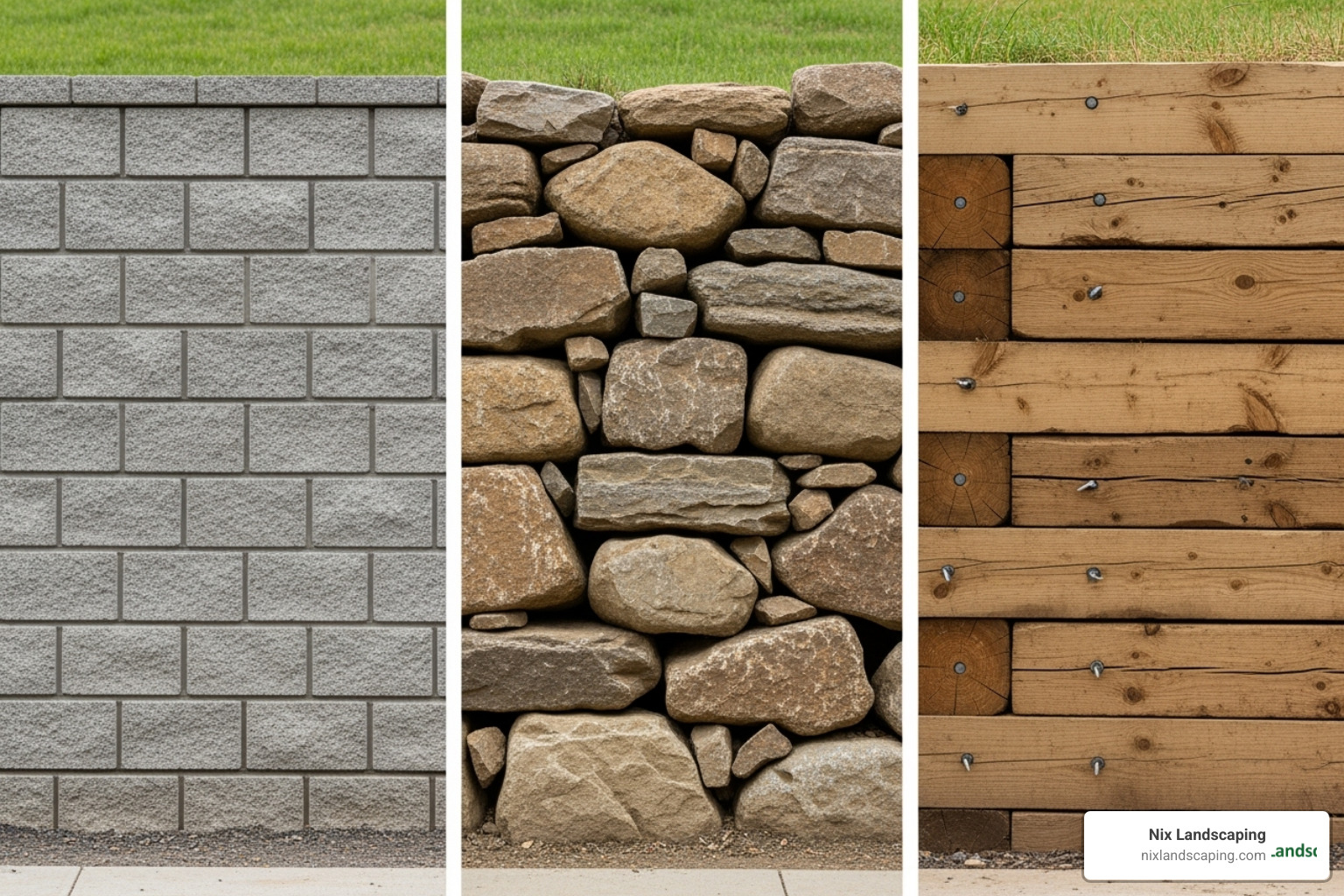
Concrete blocks offer the most flexibility, like a full paint palette. Natural stone comes with gorgeous colors chosen by nature, but your options are limited to what the earth provides. Wood offers a warm, organic feel but is restricted to stain and paint colors suitable for outdoor use. Each material also differs in color durability and maintenance, which is crucial for long-term satisfaction.
Concrete Blocks: The Most Versatile Choice
For the most color options, concrete blocks are the answer. Modern manufacturing provides a huge range of possibilities.
- Integral color means the pigment is mixed into the concrete, so the color goes all the way through the block. Chipping won’t reveal a different color underneath.
- Multi-colored blocks blend different shades within each unit, creating a natural, rustic appearance that mimics real stone without the high cost.
- Post-installation staining offers flexibility to match existing structures or achieve custom colors. Professional stains penetrate the block and last much longer than paint.
We generally advise against painting concrete retaining walls. Moisture from the soil can cause paint to blister and peel, creating a constant maintenance issue. For more ways to improve your wall’s appearance, see our guide to retaining wall finishing options.
Natural Stone, Wood, and Other Materials
While concrete is versatile, other materials offer unique character.
Natural stone provides colors and patterns created over millions of years. The inherent variations are part of its charm, but you are limited to the colors of the specific stone type, from cool grays to warm reds.
Wood retaining walls offer natural warmth but have limited color options, mostly variations of brown stains. Wood also requires the most maintenance, with stains needing regular reapplication. The structure itself may only last about 10 years.
Poured concrete can be colored integrally or stained, offering a sleek, modern look that works well in contemporary landscapes, though some find it plain compared to textured blocks or stone.
| Material | Color Options | Durability | Maintenance |
|---|---|---|---|
| Concrete Block | Extensive – integral colors, stains, multi-color blends | Excellent – can last indefinitely | Low – occasional cleaning |
| Natural Stone | Limited to stone type – but naturally beautiful variations | Excellent – permanent color, extremely durable | Very low – color never fades |
| Wood | Limited to stain colors – mostly brown variations | Good – but needs replacement every 7-10 years | High – regular staining/painting required |
Practical Tips for Making the Final Decision
You’ve explored the theory; now it’s time to make your final choice. Choosing retaining wall color becomes real when you work with physical samples. Rushing this step is the biggest mistake homeowners make, so take your time to avoid years of regret.
The Importance of Physical Samples for Choosing Retaining Wall Color?
My number one rule: never choose a color from a screen or brochure. Digital colors are inaccurate, and even manufacturer batches can vary. What truly matters is how the color looks in your specific environment.
Get physical samples of your top two or three choices. Place them where the wall will be and observe them for at least a week. Look at them in bright sun, deep shade, and at different times of day. See how they look when wet. This simple test is invaluable.
Also, consider how colors look when dirty. In the Fishers area, dust and mud are a reality. Darker colors tend to hide dirt better, while lighter shades might show every speck.
Don’t Forget the Green: Integrating Plants
Your retaining wall will be surrounded by plants, and this relationship is crucial to the final look.
Large walls need softening with greenery. Cascading plants, climbing vines, or shrubs can transform a stark barrier into a living garden feature. Smart landscaping can provide the visual interest you need.
Consider foliage colors when choosing your wall color. A dark charcoal wall makes bright green or golden foliage pop, while a warm tan wall might be perfect for plants with silver or blue-green leaves.
If your garden is full of colorful flowers, a neutral wall provides a calm backdrop that lets the blooms shine. If your plantings are more subdued, a multi-colored or textured wall can add needed interest. The wall color needs to work with the changing seasons.
For plant recommendations that thrive in Indiana and complement retaining walls, see our guide on the best plants for retaining walls.
Frequently Asked Questions about Choosing Retaining Wall Color?
After completing hundreds of retaining wall projects in Fishers, IN, I’ve found that the same questions often come up. Here are answers to the most common concerns about choosing retaining wall color.
Can I change the color of my retaining wall later?
Yes, you can change the color, but some methods are better than others. Staining is the best option for concrete walls. It penetrates the block for a natural, durable finish that won’t peel. The main limitation is that you can generally only go darker, not lighter.
Painting is challenging for retaining walls. Moisture from the soil behind the wall often causes paint to bubble and peel, leading to constant maintenance. For a major change, cladding with stone veneer is a more intensive and costly option.
For professional help, learn about our retaining wall staining services.
What color retaining wall has the best resale value?
For the best return on investment, choose a color with broad appeal. Timeless neutrals are your safest bet. Grays, tans, and earth tones provide a sophisticated backdrop that allows potential buyers to envision their own style.
A wall color that creates a cohesive design with your home always adds value, as it demonstrates quality and care. Avoid overly trendy or personal colors, which can date your property and deter buyers.
Should a small wall and a large wall be different colors?
This is a great design question. The key is understanding how wall size affects color choice.
Large or terraced walls are dominant features and benefit from simple, classic colors that complement the home without overwhelming the landscape. The impressive scale and engineering can be the focus.
Smaller accent walls, like those for a garden bed, can handle bolder colors or more intricate blends. They can become charming focal points without dominating the space.
You can use colors from the same family for all walls to create unity while respecting the different roles each wall plays. For more on wall construction, see our guide to retaining wall height regulations.
Your Perfect Retaining Wall Awaits
By now, you’re equipped to make a confident decision when choosing retaining wall color. The perfect color is a result of thoughtfully considering your home, landscape, and long-term vision. A well-chosen color creates a seamless flow that improves curb appeal and property value.
Before you decide, remember to:
- Consider the big picture: How does the color fit with your home and existing hardscapes?
- Think long-term: Choose timeless colors that won’t look dated.
- Get physical samples: View them on-site in different lighting conditions.
- Factor in your environment: Consider how sun, shade, and rain will affect the color.
- Integrate with landscaping: Plan for plants that will complement and soften the wall.
The value of professional guidance cannot be overstated. At Nix Landscaping, we’ve helped countless homeowners in Fishers, IN, create cohesive outdoor spaces that reflect their style and maximize their home’s value. We provide creative solutions custom to your vision and budget.
Ready to build the perfect retaining wall that truly complements your home? Explore our expert retaining wall services and let us help you bring your vision to life.

