
Changing Business Spaces with Strategic Outdoor Design
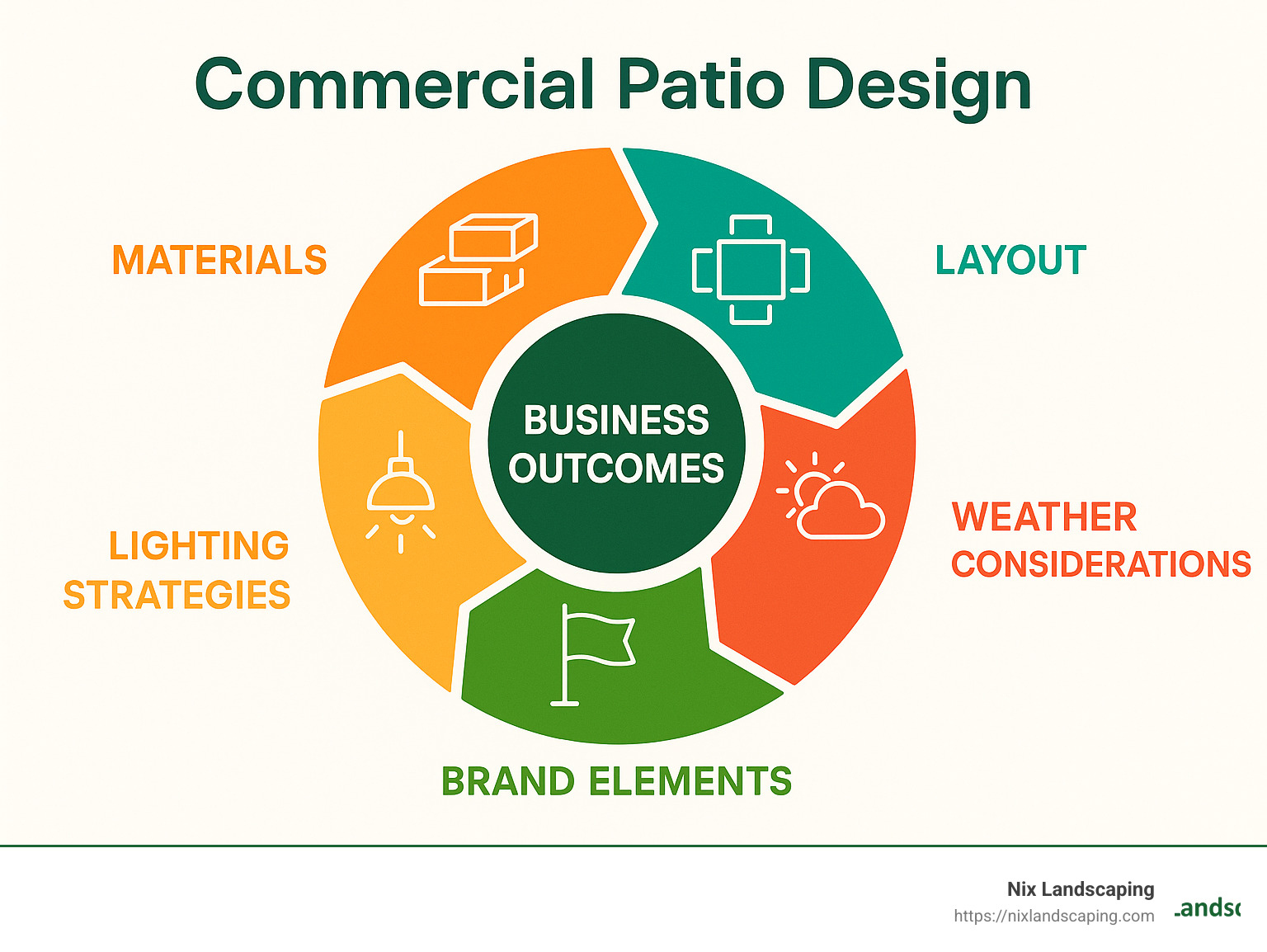
Commercial patio design is the strategic creation of outdoor spaces for businesses that balances aesthetics, functionality, and brand identity to attract customers and increase revenue. Here’s what makes effective commercial patio designs:
- Durable Materials: Commercial-grade pavers, concrete, or composite decking that withstand high traffic
- Functional Layout: Strategic seating arrangements with clear traffic flow and multiple use zones
- Weather Adaptability: Features like covers, heaters, and shade structures for year-round use
- Brand Integration: Design elements that reflect your business identity and improve customer experience
- Lighting Strategy: Layered lighting for ambiance, safety, and extended evening use
Creating an effective outdoor space isn’t just about placing tables outside. A well-designed commercial patio can significantly impact your bottom line, with industry research showing that 35% of businesses with outdoor seating attribute more than 40% of their daily sales to these spaces.
The ideal commercial patio serves as an extension of your indoor brand experience while providing practical benefits that keep customers comfortable and engaged. Whether you’re designing a restaurant dining area, a hotel lounge, or a retail rest space, the principles remain consistent: create an inviting environment that improves the customer journey.
I’m Kyle Nix, owner of Nix Landscaping, and I’ve transformed numerous commercial spaces throughout Fishers with custom patio designs that maximize both aesthetic appeal and business functionality, combining my expertise in commercial patio design with innovative solutions that create memorable outdoor environments.
Commercial patio design word roundup:
– Backyard patio ideas
– landscaping patio contractors
– patio installation services
The Essential Elements of Commercial Patio Design
Creating a commercial patio isn’t as simple as putting some tables and chairs outside. Trust me, I’ve seen businesses try this approach and wonder why their outdoor space sits empty while competitors’ patios overflow with happy customers. At Nix Landscaping, we take a more thoughtful approach to commercial patio design, considering all the elements that make outdoor spaces both beautiful and profitable.
“Contrary to popular belief, creating a profitable commercial outdoor patio goes beyond setting up a few tables outside,” notes Kyle Nix. “It requires thoughtful planning and integration of key design elements that improve both form and function.”
Before we even sketch a design, we need to understand how you’ll use your space. Will customers primarily dine there? Are you hosting events? Do you want a quiet retreat where people can escape the indoor bustle? Your answers guide our entire approach.

Durability isn’t optional in commercial settings. Unlike your backyard patio that might host weekend gatherings, your business patio faces constant use, weather exposure, and yes, sometimes abuse. We select materials and furniture that can handle hundreds of visitors weekly while maintaining their appearance.
Functionality directly impacts your bottom line. A well-designed patio maximizes seating without creating a cramped experience, creates clear pathways for servers to steer efficiently, and incorporates practical amenities that improve customer comfort. When customers are comfortable, they stay longer and spend more.
Aesthetics go beyond just “looking nice” – they create an atmosphere that reflects your brand identity and attracts your ideal customers. Your outdoor space should feel like a natural extension of your indoor experience, not a disconnected afterthought.
Weather considerations are especially important here in Fishers, where we experience everything from hot summers to snowy winters. Incorporating elements like retractable awnings, outdoor heaters, and strategic windbreaks can transform your patio from a seasonal space to a year-round profit center.
Our Commercial Hardscaping Service specializes in balancing these elements to create patios that become valuable business assets rather than expensive decorations.
Materials That Stand the Test of Time
Choosing materials for your commercial patio design requires balancing beauty, durability, and budget. The right choices will serve your business for years, while poor selections can lead to costly repairs and disappointed customers.
Pavers offer incredible versatility and durability for commercial settings. Available in countless colors, shapes, and textures, they create distinctive patterns that can complement any architectural style. Typically costing between $10-$25 per square foot installed, they provide excellent value because of their longevity and easy repairs.
“When selecting pavers for commercial applications, we recommend interlocking systems that resist shifting and settling under heavy foot traffic,” explains Kyle Nix. “The beauty of pavers is that individual units can be replaced if damaged without disturbing the entire patio.”
Concrete remains a popular and cost-effective option at approximately $6-$15 per square foot installed. Modern concrete has evolved far beyond the basic gray slab you might imagine. With stamping, staining, and texturing techniques, we can create surfaces that mimic more expensive materials while maintaining concrete’s legendary durability.
Natural stone provides best elegance and character, though at a premium price of $15-$30 per square foot installed. Materials like bluestone, limestone, and granite withstand decades of use while developing a beautiful patina that actually improves with age. For upscale establishments looking to make a lasting impression, natural stone communicates permanence and quality.
Composite decking has gained popularity in commercial settings for good reason. While the initial investment exceeds some alternatives, the minimal maintenance requirements and extended lifespan make it economically sound long-term. Unlike wood, composite materials resist fading, staining, and scratching without requiring regular sealing or staining.
At Nix Landscaping, our Landscaping Patio Contractors partner with commercial clients to select materials that satisfy both aesthetic vision and practical needs. We consider Indiana’s climate, safety requirements like slip resistance, heat absorption properties (crucial for barefoot areas), maintenance demands, and environmental impact.
Investing in quality materials upfront helps you avoid costly repairs while maintaining an attractive appearance that continues drawing customers year after year. The right materials don’t just last – they age beautifully.
Creating Functional Layouts for Commercial Spaces
The layout of your commercial patio can make or break its success. I’ve seen gorgeous patios sit empty because customers couldn’t comfortably steer the space, while simpler designs thrive because they just work better. At Nix Landscaping, we approach commercial patio design with careful attention to how people actually use spaces.
Traffic flow is the invisible architecture of your patio. We create pathways that allow servers to move efficiently while guests steer comfortably. “A common mistake we see is overcrowding tables to maximize capacity, which ultimately creates a chaotic experience for both customers and staff,” notes Kyle Nix. “We find the sweet spot where capacity meets comfort.”
Zoning transforms a flat patio into a dynamic experience. By dividing your space into purposeful areas, we create different atmospheres and functions within the same patio. Dining zones provide appropriate spacing for meals, while lounge areas with comfortable seating encourage lingering conversations. Bar sections facilitate quick service and social interaction, while semi-private spaces offer intimacy for special occasions or quieter gatherings.
Accessibility isn’t just about meeting legal requirements – it’s about welcoming all potential customers. The Americans with Disabilities Act sets specific standards for commercial spaces, including 36-inch minimum pathway widths, stable surfaces for wheelchairs, appropriate slope limitations, and proper table heights. We integrate these requirements thoughtfully rather than treating them as afterthoughts, creating spaces that feel inclusive rather than awkwardly accommodating.
Multi-purpose areas maximize your return on investment. A space that serves casual dining during lunch might transform for evening cocktails or weekend entertainment. We help you plan for this flexibility with modular elements and adaptable layouts that change with your business needs.
Seating arrangements should reflect your business model. A coffee shop benefits from a mix of solo work spots and conversational groupings, while a fine dining establishment might prioritize privacy and comfort. “We often recommend incorporating a mix of seating types,” explains Kyle Nix. “Some customers prefer traditional tables and chairs, while others might gravitate toward lounge seating or bar-height options. This diversity creates visual interest while accommodating different preferences.”
Our Outdoor Living Space Design services help businesses create patios that function as effectively as they look beautiful. We consider practical elements like server stations, outdoor storage solutions, heating and cooling placement, natural gathering points, and smooth transitions between indoor and outdoor spaces.
A thoughtfully planned layout creates spaces that improve customer experiences while supporting efficient operations – a powerful combination that drives both satisfaction and profitability. The best commercial patios feel intuitive to customers while making business operations smoother, creating a win-win that keeps tables full and reviews glowing.
10 Innovative Commercial Patio Design Ideas to Attract Customers
Looking to transform your business’s outdoor space? A well-designed commercial patio can dramatically increase foot traffic and boost your bottom line. At Nix Landscaping, we’ve helped dozens of businesses throughout Fishers create outdoor spaces that don’t just look amazing—they actually drive revenue.
“The right patio design can become your business’s secret weapon,” says Kyle Nix. “We’ve seen clients increase their seasonal revenue by up to 40% after redesigning their outdoor spaces with these innovative approaches.”
Let’s explore ten proven commercial patio design concepts that can help your business stand out and create memorable customer experiences.
1. Industrial-Inspired Outdoor Spaces
Industrial design elements bring an urban, contemporary feel that appeals particularly to younger demographics. These spaces feature raw materials and structural elements that create a distinctive aesthetic.

Consider incorporating exposed beams that showcase structural elements rather than hiding them. The warehouse aesthetic, with its open ceilings and visible ductwork, creates an authentic urban vibe. Metal accents like steel railings, iron light fixtures, and aluminum furniture add industrial character while providing exceptional durability for commercial use.
Concrete elements serve both aesthetic and practical purposes in industrial designs. Polished concrete floors, concrete planters, and even concrete furniture pieces create a cohesive look while standing up to heavy use.
For inspiration, look at Manuela restaurant’s industrial vibe, where they’ve masterfully balanced raw industrial elements with warm touches to create an inviting atmosphere.
2. Tropical Paradise in Any Climate
Who doesn’t want to feel like they’re on vacation? Tropical-inspired patios create an exotic getaway feel that customers love, even in the heart of Indiana.
The key to this design is lush greenery that creates a sense of abundance. Large-leafed plants like monstera, banana trees, and palms instantly transport guests to tropical destinations. Exotic plants with dramatic flowers or unusual forms serve as conversation pieces while reinforcing the tropical theme.
Water features add both visual interest and soothing sound. Even small fountains or water walls can create that resort-like atmosphere. Choose natural materials like bamboo, rattan, and teak to complete the look while providing the durability needed for commercial settings.
Check out Coppa Club’s tropical atmosphere for a masterclass in creating an exotic escape in an urban environment.
3. Minimalist Commercial Patios
Sometimes less truly is more. Minimalist designs create a sense of calm and sophistication that appeals to customers seeking respite from visual clutter.
Focus on clean lines in both architectural elements and furniture. Avoid ornate details in favor of simple, geometric forms. A neutral color palette of whites, grays, blacks, and earth tones creates a timeless backdrop that won’t quickly feel dated.
Incorporate natural textures through materials like smooth concrete, weathered wood, or honed stone to add warmth and prevent the space from feeling sterile. Accept open space rather than filling every corner—this breathing room is what creates the minimalist feel.
For an excellent example of minimalist commercial design done right, look at Eden-Roc Bar’s minimalist design, which demonstrates how simplicity can create sophisticated luxury.
4. Plant-Focused Patio Designs
Biophilic design—incorporating nature into built environments—isn’t just trendy; it’s backed by research showing that proximity to plants reduces stress and increases happiness.

Vertical gardens maximize greenery without sacrificing floor space. These living walls create dramatic backdrops while improving air quality. Strategic container arrangements allow for flexibility and seasonal changes. Mix container sizes, heights, and plant varieties for visual interest.
Plan for seasonal plantings that keep your patio looking fresh throughout the year. In Indiana’s climate, this might mean spring bulbs, summer perennials, fall grasses, and winter evergreens. Green walls can serve as privacy screens between seating areas while reinforcing the natural theme.
Aba restaurant’s plant paradise shows how abundant greenery can transform a commercial space into an urban oasis that keeps customers coming back.
5. All-Weather Commercial Patio Solutions
In the Midwest, weather can be unpredictable. Businesses that want to maximize their patio investment need designs that work year-round.
Covered structures like pergolas, pavilions, or retractable awnings provide essential protection from precipitation. These can be designed to complement your building’s architecture while creating usable space regardless of weather.
Heating elements extend your patio season well into fall and early spring. Options include overhead infrared heaters, tabletop units, or built-in fire features that double as focal points. For summer comfort, incorporate cooling systems like overhead fans, misters, or even air conditioning in fully enclosed spaces.
Retractable roofs offer the ultimate flexibility, allowing open-air enjoyment in good weather and protection when needed. While more expensive initially, they maximize the usability of your investment.
Canon East Sacramento’s year-round patio demonstrates how thoughtful weather planning can create a space that’s comfortable and profitable in any season.
6. Interactive and Engaging Patio Spaces
Today’s customers crave experiences, not just products or services. Interactive patios can increase dwell time and encourage repeat visits.
Create game areas with options like oversized chess, cornhole, or bocce courts that encourage friendly competition. Entertainment zones with screens for sporting events or outdoor movie nights can transform your patio into a destination.
Communal seating arrangements foster social interaction among guests. Long tables, fire pit circles, or conversation nooks encourage mingling and create a lively atmosphere. Incorporate experiential elements like DIY food stations, interactive art, or photo opportunities that guests will want to share on social media.
Pinewood Social’s interactive patio has mastered this approach with its bowling lanes, swimming pool, and game areas that keep customers engaged for hours.
7. Lighting Strategies for Commercial Patios
Lighting does more than just illuminate—it creates atmosphere and extends usable hours for your commercial patio.

String lights create an instant festive atmosphere that photographs beautifully. Their warm glow flatters both the space and your customers. Pendant fixtures make a design statement while providing focused light over tables or bars. Choose weather-rated fixtures designed specifically for outdoor use.
Uplighting on architectural features or plants creates drama and dimension after dark. This indirect lighting adds depth to your space. Create an ambient glow through lanterns, candles, or hidden LED strips that wash walls with soft light.
The right lighting is crucial for mood setting, allowing your space to transition from day to evening use. Dimmable systems offer flexibility to adjust the atmosphere throughout service.
For inspiration, look at Gran Eléctrica’s lighting design, which transforms their patio into a magical space after sunset.
8. Small Space Commercial Patio Design
Don’t have much square footage? Even compact patios can make a big impact with the right design approach.
Use vertical elements like living walls, trellises, or tall planters to draw the eye upward and create the illusion of more space. Choose multi-functional furniture pieces that can serve different purposes, such as benches with hidden storage or tables that can be reconfigured.
Create optical illusions through mirrors, reflective surfaces, or strategic lighting that make the space feel larger than it is. Focus on space maximization techniques like built-in seating along walls or corners, which requires less clearance than freestanding furniture.
Bar Siena’s small patio design demonstrates how a compact footprint can still deliver a memorable outdoor experience when thoughtfully designed.
9. Branded Outdoor Environments
Your patio should be an extension of your brand, creating a cohesive experience from indoors to outdoors.
Incorporate your color schemes into furniture, cushions, planters, or accent pieces. This creates visual continuity with your interior spaces. Consider subtle logo integration through custom furniture, decorative elements, or even paver patterns.
Develop themed elements that reflect your business concept or values. A farm-to-table restaurant might showcase edible gardens, while a sports bar could feature team memorabilia. Maintain consistent aesthetics between indoor and outdoor spaces to reinforce brand recognition.

These branded touches help create a distinctive environment that customers associate specifically with your business.
10. Outdoor Bar and Kitchen Installations
Bringing food and beverage service directly to your patio can significantly improve operational efficiency and customer satisfaction.
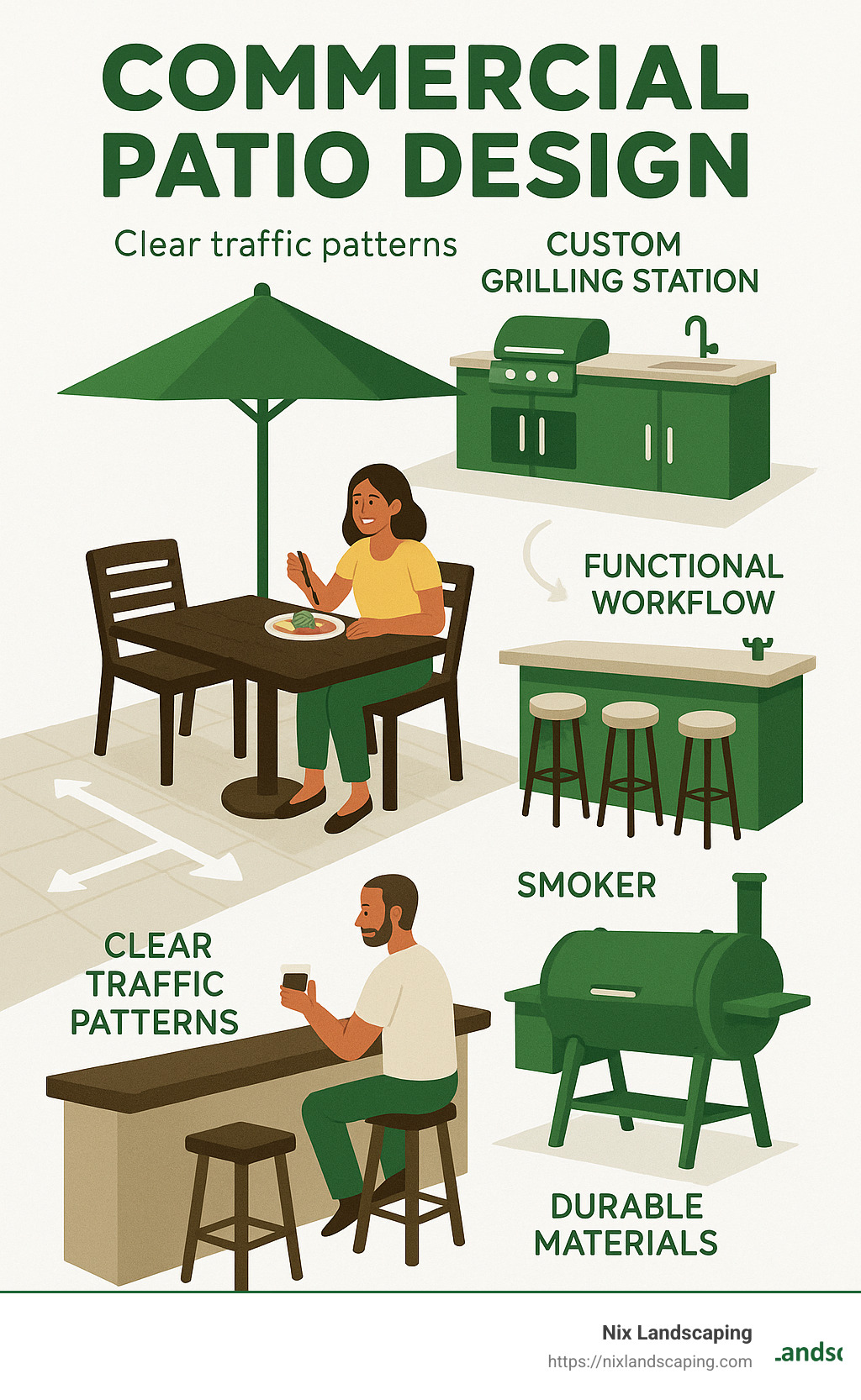
Design efficient service stations with refrigeration, storage, and preparation areas that minimize staff trips indoors. Include appropriate cooking equipment like pizza ovens, grills, or smokers that can become part of the entertainment.
Create inviting bar seating that encourages interaction between bartenders and guests. This social dynamic improves the customer experience. Plan for a logical functional workflow that allows staff to serve customers efficiently, even during peak times.
Fia restaurant’s outdoor bar exemplifies how integrating food and beverage service into the patio design can create a seamless experience for both customers and staff.
At Nix Landscaping, we understand that the perfect commercial patio design balances aesthetic appeal with practical business needs. Our team can help you assess which of these innovative approaches would work best for your specific business goals and location in Fishers or the surrounding areas.
1. Industrial-Inspired Outdoor Spaces
There’s something undeniably cool about an industrial-inspired commercial patio design. This style has taken the outdoor dining world by storm, especially in urban areas where businesses want to create a vibe that feels both edgy and inviting.
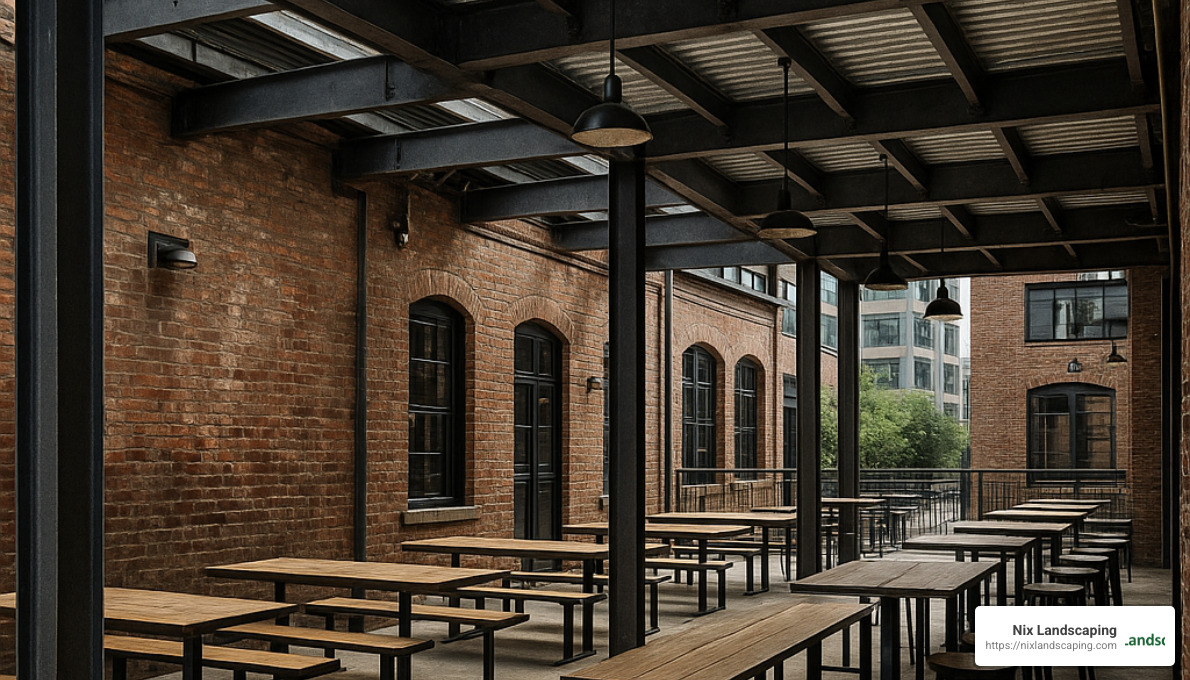
When I walk into a space with exposed beams overhead and feel the texture of concrete beneath my feet, there’s an immediate sense of authenticity that’s hard to match. These industrial elements tell a story – they don’t hide the bones of a building; they celebrate them.
“Breweries and urban cafes absolutely thrive with this aesthetic,” says Kyle Nix. “We’ve seen customers literally stop in their tracks when they spot an industrial patio that stands out from the cookie-cutter designs around town.”
What makes these spaces so magnetic? It starts with metal accents that bring character and edge. Think weathered steel planters, metal-framed furniture, or even repurposed machinery parts that serve as conversation-starting art pieces. These elements create visual interest while nodding to manufacturing heritage.
The foundation of industrial style often includes concrete elements that are both practical and stylish. Today’s concrete isn’t just gray and boring – we can polish it, stain it, or embed decorative elements to create one-of-a-kind surfaces that stand up to heavy commercial use while looking fantastic.
Look up in a well-designed industrial patio and you’ll likely see exposed beams or structural elements that most designs would hide away. These overhead features draw the eye upward, creating a sense of spaciousness while adding architectural interest that feels honest and unpretentious.
Lighting makes or breaks an industrial space. Warehouse-inspired fixtures like metal pendants, cage lights, and Edison bulb string lights create a warm glow that softens the harder elements. When the sun sets, these lights transform a daytime café into an intimate evening destination.
Many of our clients in Fishers are particularly drawn to the sustainability aspect of industrial design. Using reclaimed materials like salvaged wood or repurposed industrial elements gives these spaces environmental credibility while adding genuine character that can’t be manufactured.
If you’re looking for inspiration, check out Manuela restaurant’s industrial vibe in Los Angeles. They’ve masterfully balanced raw industrial elements with comfort, creating a patio that honors the building’s manufacturing past while delivering a thoroughly modern dining experience.
At Nix Landscaping, we love helping local businesses create industrial-inspired patios that strike that perfect balance – spaces that feel edgy and distinctive without sacrificing the comfort that keeps customers lingering (and ordering another round). The industrial aesthetic gives you permission to be bold with your outdoor space, creating something memorable that stands out in a sea of the expected.
2. Tropical Paradise in Any Climate
There’s something magical about stepping onto a commercial patio and feeling instantly transported to a tropical getaway—even when you’re in the heart of Fishers, Indiana. Creating this escape-like atmosphere has become one of our most requested commercial patio design styles, and for good reason: it works in virtually any climate while delivering a memorable customer experience.
Lush greenery forms the backbone of any tropical-inspired patio. We carefully select plants that create that jungle-like feeling while being practical for our Midwest climate. Cold-hardy varieties of palm, banana plants with dramatic foliage, and the striking forms of bird of paradise can transform an ordinary space into something extraordinary. For many of our Fishers clients, we use a mix of permanent plantings and containerized specimens that can be relocated during our colder months.
“One of my favorite projects was for a local restaurant where we created what customers now call ‘the jungle corner,'” shares Kyle Nix. “We used strategic plantings to create a sense of findy and privacy. Even though it’s just off a busy street, once you’re seated, you could be in Bali or Costa Rica rather than central Indiana.”
Water features bring tropical designs to life in a way few other elements can. The gentle sound of flowing water not only masks traffic noise but triggers that psychological shift that helps customers truly unwind. We’ve incorporated everything from dramatic cascading walls to simple table fountains, depending on the space and budget.
Natural materials reinforce the tropical vibe while standing up to commercial wear and tear. Bamboo screening creates privacy with an exotic feel, while furniture crafted from teak or rattan adds authentic character. These materials develop a beautiful patina over time, actually improving with age—a rare quality in commercial settings where durability is paramount.
The color story of a tropical patio deserves special attention. While verdant greens provide the foundation, strategic pops of vibrant color create energy and visual interest. Imagine deep ocean blues in upholstery, fiery oranges in flowering plants, or sunny yellows in accent pieces. These colors don’t just look beautiful—they actually influence customer mood and behavior, potentially increasing dwell time and average checks.
For inspiration, look at what the Coppa Club near London’s Tower Bridge has accomplished. Despite England’s notoriously gray climate, they’ve created a transportive tropical experience that draws crowds year-round. Their creative use of structures, textiles, and plantings demonstrates that tropical vibes can thrive anywhere with thoughtful design.
The business advantages of a tropical-themed patio extend beyond aesthetics. These spaces tend to generate significant social media attention, with customers eager to share their “getaway” experience. They also create strong emotional connections—customers associate your business with feelings of relaxation and escape, building loyalty that goes beyond typical transaction-based relationships.
At Nix Landscaping, we understand that creating a tropical paradise in Fishers requires balancing exotic appeal with practical considerations. We carefully select materials that can withstand our seasonal changes, design drainage systems that prevent issues during heavy rains, and create maintenance plans that keep your tropical oasis looking lush without overwhelming your staff.
The result? A commercial patio that doesn’t just look different—it feels different, creating an experience your customers will return for time and again.
3. Minimalist Commercial Patios
There’s something incredibly refreshing about a well-executed minimalist commercial patio design. When businesses often compete with more-is-more approaches, minimalist outdoor spaces offer a breath of fresh air that sophisticated customers increasingly appreciate.
When we create minimalist patios for our Fishers clients, we focus on the principle that sometimes what you leave out matters more than what you put in. These spaces tell a story of intentional restraint, where every element serves both form and function.
“I’ve noticed that our clients who choose minimalist designs often have the clearest vision of their brand identity,” says Kyle Nix. “They understand that a thoughtfully designed simple space can speak volumes about their business values and aesthetic priorities.”
Clean lines form the backbone of minimalist patio designs. You’ll see this in geometric furniture arrangements, straightforward pathways, and architectural elements that create visual harmony without fussy details. The effect is immediately calming – something your customers will feel even if they can’t quite put their finger on why.
The neutral color palette of these spaces – typically whites, blacks, grays, and earth tones – creates a timeless backdrop that won’t look dated next season. This restraint in color doesn’t mean boring! Instead, it allows texture and form to take center stage, and makes any strategic color choices all the more impactful.
Natural textures are the secret ingredient that prevents minimalist patios from feeling cold or sterile. We often incorporate elements like raw wood tabletops, smooth concrete flooring, or brushed metal accents. These materials celebrate their inherent beauty rather than disguising it with unnecessary treatments.
Perhaps the most valuable aspect of minimalist design is its accept of open space. Rather than cramming every square foot with furniture or decorative elements, minimalist patios incorporate breathing room. This negative space becomes a design element itself, making areas feel larger and more peaceful – a luxury your customers will appreciate.
The Eden-Roc Bar at Hotel du Cap-Eden-Roc in France perfectly exemplifies this approach. Their patio features simple, high-quality furnishings against a neutral backdrop, allowing the stunning natural setting to become the star of the show. The result feels effortlessly neat rather than trying too hard.
For Fishers businesses, minimalist patio designs offer practical advantages beyond aesthetics. They’re typically easier to maintain than more elaborate designs, age gracefully without looking dated, and create flexible spaces that can adapt to different uses throughout the seasons. Perhaps most importantly, the uncluttered backdrop allows your food, drinks, or services to stand out as the main attraction.
At Nix Landscaping, we help local businesses develop minimalist commercial patios that find the perfect balance between aesthetic restraint and practical functionality. The result? Spaces that feel sophisticated without pretension – contemporary yet timeless – where your customers can truly relax and focus on what matters: enjoying what your business offers.
4. Plant-Focused Patio Designs
There’s something magical about stepping into a green oasis in the middle of a busy commercial area. Plant-focused commercial patio design creates exactly this kind of transformative experience, surrounding customers with lush greenery that does far more than just look pretty.

“I’ve seen customers physically relax when they step onto a plant-rich patio,” says Kyle Nix. “It’s not just in my imagination either – research consistently shows that being surrounded by plants reduces stress, improves mood, and even improves creativity. These are exactly the feelings businesses want their customers to experience.”
Vertical gardens have revolutionized what’s possible in commercial spaces with limited square footage. These living walls transform ordinary building facades into extraordinary living art installations. A blank wall suddenly becomes your most distinctive feature, drawing eyes and social media posts alike. We’ve helped several Fishers businesses install vertical garden systems ranging from simple trellis structures supporting climbing vines to sophisticated modular panels with integrated irrigation.
Container arrangements offer incredible flexibility for businesses that need to occasionally reconfigure their spaces. We typically recommend larger containers for commercial settings – they create more visual impact, require less frequent watering, and can accommodate more substantial plants. Grouping containers of varying heights creates natural visual flow and interest, guiding customers’ eyes through your outdoor space.
The magic of seasonal plantings is the way they keep your patio feeling fresh and new throughout the year. In Indiana, where we experience all four seasons distinctly, we work with businesses to develop planting schedules that ensure visual interest year-round. Spring bulbs give way to summer perennials, followed by dramatic fall foliage and winter evergreens. This approach gives customers something new to find with each visit, encouraging return business throughout the changing seasons.
Green walls serve as natural dividers that do double duty – they’re both beautiful and functional. Unlike solid partitions that can make spaces feel smaller, planted dividers create semi-transparent boundaries that maintain openness while defining distinct areas. They’re particularly effective at absorbing noise in busy commercial settings, creating pockets of relative quiet where conversations can flow more easily.
Take inspiration from Aba restaurant in Chicago, which has masterfully incorporated Mediterranean-inspired greenery throughout their patio. Their thoughtful plant design doesn’t just improve aesthetics – it reinforces their entire brand concept, creating an immersive experience that transports diners to another place entirely.
For Fishers businesses considering a plant-focused patio, we recommend thinking about climate-appropriate plant selection first and foremost. Plants that thrive in our local conditions require less maintenance and replacement, improving your bottom line. Automatic irrigation systems are also worth considering – they ensure your green investment stays healthy even during hectic business periods when manual watering might be overlooked.
Don’t forget about lighting integration! Thoughtfully placed lighting that highlights your plants after dark extends their visual impact into evening hours, when many businesses see their highest traffic. And finally, consider how plants can naturally zone your space, creating intuitive divisions between different functional areas of your patio.
At Nix Landscaping, we help businesses develop plant-focused patios that strike the perfect balance between lush aesthetics and practical considerations. The result? A space that feels alive and dynamic while remaining manageable for commercial operations – and irresistible to customers.
5. All-Weather Commercial Patio Solutions
The unpredictable Indiana weather doesn’t have to limit your business potential. Smart commercial patio design can transform your outdoor space from a fair-weather gamble into a year-round profit center. Here in Fishers, where we experience everything from sweltering summers to snowy winters, creating adaptable outdoor environments has become essential for businesses looking to maximize their investment.
“I’ve seen too many business owners watch their beautiful patios sit empty for months because they didn’t plan for our Midwest seasons,” says Kyle Nix. “The most successful commercial spaces we design are those that can pivot with the weather, keeping customers comfortable whether it’s July or January.”
Covered structures form the backbone of any all-weather patio. Permanent roofs provide reliable protection but lack flexibility, while retractable awnings and canopies offer the best of both worlds—shelter when needed and open-air dining when conditions are perfect. Many of our Fishers clients prefer structures that complement their building’s architecture while providing practical protection against rain, snow, and intense summer sun.
When temperatures drop in fall and winter, effective heating elements become crucial. Overhead infrared heaters work wonderfully in commercial settings because they warm people and objects directly without wasting energy heating the surrounding air. Fire features like tables, pits, or decorative walls serve double duty—providing both warmth and creating a cozy atmosphere that draws customers even on chilly evenings. For higher-end establishments, in-floor heating systems offer invisible comfort, while portable propane heaters give businesses flexibility to reconfigure spaces as needed.
Summer in Indiana brings its own challenges with humidity and heat. Overhead fans create refreshing air movement while helping keep insects at bay—a must for food service patios. Misting systems have become increasingly popular, capable of dropping ambient temperatures by 10-20 degrees through evaporative cooling. Thoughtfully positioned shade structures protect guests during peak sun hours, while some enclosed or semi-enclosed patios even incorporate portable air conditioning units for maximum comfort during heat waves.
The gold standard in all-weather solutions is the retractable roof. Though more costly upfront, these systems offer best versatility, allowing spaces to transform completely based on weather conditions. On beautiful spring days, customers enjoy blue skies overhead; when rain threatens, staff can quickly deploy coverage without disrupting service.
Canon East Sacramento provides an excellent example of all-weather design done right. Their patio seamlessly transitions between seasons with an integrated approach to covering, heating, and lighting that allows year-round operation regardless of conditions outside. Their thoughtful design has transformed what could have been a seasonal space into a consistent revenue generator.
For Fishers businesses considering an all-weather patio investment, we recommend starting with a thorough climate analysis. Understanding local weather patterns helps prioritize which elements will provide the greatest return. Many clients benefit from a phased implementation approach, adding weather adaptation features gradually as budget allows.
Selecting multi-functional elements maximizes your investment—pergolas that support both shade canopies and mounted heaters, for example. And don’t overlook the importance of weather-resistant materials for all furnishings and fixtures. Even the most beautiful patio furniture becomes a liability if it can’t withstand prolonged outdoor exposure.
Finally, develop clear operational procedures for your staff. The best-designed all-weather patio still requires human management—someone needs to deploy awnings before the rain hits or activate heaters as evening temperatures drop.
At Nix Landscaping, we specialize in creating commercial patios that work as hard as you do, regardless of what Mother Nature throws our way. Our all-weather designs balance aesthetic appeal with practical functionality across seasons, ensuring your outdoor space remains a valuable business asset year-round.
6. Interactive and Engaging Patio Spaces
Creating interactive and engaging commercial patio design isn’t just about aesthetics—it’s about crafting spaces where customers actively participate rather than passively sit. These dynamic environments encourage people to stay longer, spend more, and create memories that keep them coming back.
“I’ve watched businesses transform their revenue potential just by making their patios more interactive,” shares Kyle Nix. “When customers have something to do beyond just eating or drinking, they tend to order that extra round or appetizer almost without thinking about it.”
Game areas have become a standout feature in successful commercial patios across Fishers. Whether it’s the satisfying clack of cornhole boards, the strategic contemplation over giant chess pieces, or the friendly competition on a bocce court, games create natural social connections. These activities don’t just entertain—they break down barriers between strangers and create the kind of spontaneous community that makes a business feel special.
Entertainment zones take engagement to the next level. I’ve helped design patios with built-in projection screens for movie nights, small stage areas for acoustic performers, and even interactive digital art installations that change with the seasons. These features transform ordinary patios into destination venues that draw crowds specifically for the experience, not just the food or drinks.
Communal seating arrangements naturally foster the connections that keep customers engaged. There’s something magical about how a shared fire pit circle or a long harvest table can turn strangers into friends by the end of an evening. These thoughtfully designed seating configurations create micro-communities within your space, where conversations flow more naturally and experiences are enriched through shared moments.
The most memorable patios engage multiple senses simultaneously. Imagine textured walkways that create different sensations underfoot, aromatic herb gardens that release their scent when brushed against, or interactive lighting that responds to movement or sound. These multisensory elements create deeper, more memorable experiences that customers want to revisit and share.
Pinewood Social in Nashville brilliantly demonstrates this approach. Their patio isn’t just a place to eat—it’s a social playground featuring vintage bowling lanes, a dipping pool, and various gaming areas alongside traditional dining spaces. This multi-dimensional environment appeals to different interests and encourages customers to make a day of their visit rather than just stopping by for a meal.
For Fishers businesses looking to create more interactive patios, balance is key. Not every customer wants high-energy engagement all the time. Creating distinct zones that accommodate different moods and preferences ensures your space appeals to a broader audience. Consider how your interactive elements will operate in different weather conditions too—what works in summer might need adaptation for our Indiana winters.
At Nix Landscaping, we approach interactive commercial patio design by first understanding your brand identity and customer base. The bowling alley that works perfectly for a casual brewpub might feel out of place at an upscale wine bar. We help you select interactive elements that reinforce your unique business concept while creating the engaging atmosphere that today’s customers increasingly expect.
The right interactive elements transform a patio from somewhere customers visit into somewhere they experience. And in today’s competitive market, those experiences are what build the emotional connections that keep people coming back season after season.
7. Lighting Strategies for Commercial Patios
Strategic lighting is a cornerstone of successful commercial patio design, changing spaces from day to night while creating atmosphere, ensuring safety, and extending usable hours. Well-executed lighting design can dramatically improve the customer experience while increasing the profitability of outdoor spaces.

“Lighting is often underestimated in patio design,” explains Kyle Nix. “It’s not just about visibility—it’s about creating mood, highlighting design elements, and guiding the customer experience as natural light fades.”
When the sun sets, your commercial patio doesn’t have to shut down. In fact, with thoughtful lighting, evening hours can become your most magical—and profitable—time of day. String lights have become something of a signature in modern patio spaces, and for good reason. These versatile lights create a canopy of warm illumination that instantly transforms ordinary spaces into something special. We’ve helped Fishers businesses install everything from geometric patterns to simple perimeter outlines, always using commercial-grade weatherproof fixtures that stand up to Indiana’s varied climate.
Pendant fixtures do double duty in commercial spaces. Hanging at various heights above tables or gathering areas, they provide focused light exactly where you need it while creating visual interest and depth. I always recommend marine-grade metals and sealed components for our local weather conditions—these fixtures need to look beautiful for years, not just a single season.
There’s something almost theatrical about uplighting. When we position lights at ground level to illuminate trees, architectural features, or textural walls from below, the entire character of a space changes. Modern LED uplights offer incredible flexibility, with options for changing colors to match seasons, holidays, or special events. One restaurant client uses subtle color shifts throughout the evening to signal the transition from happy hour to dinner service—a small touch that adds to the overall experience.
Ambient glow at the customer level creates intimacy and warmth. Table lamps, illuminated planters, and lanterns bring light down to where people gather, making faces glow and food look appetizing. These smaller light sources complement overhead lighting while creating pockets of intimacy within larger spaces.
The real magic happens when all these lighting elements work together in layers that can be adjusted throughout the evening. I always recommend installing multiple lighting circuits with dimming capabilities so staff can easily transition from the brighter light needed for early evening dining to the more intimate atmosphere that encourages guests to linger over dessert and drinks.
Gran Eléctrica in Brooklyn showcases this layered approach beautifully. Their patio combines string lights overhead, subtle uplighting on historic brick walls, and flickering candles at each table. The result feels both festive and intimate—exactly the kind of atmosphere that keeps tables full until closing time.
For Fishers businesses looking to improve their patios with effective lighting, I suggest starting with a comprehensive lighting plan that considers both the practical and aesthetic aspects of your space. Invest in commercial-grade fixtures designed specifically for outdoor use in our climate—they’ll cost more initially but save money in the long run. Consider smart controls that allow easy adjustment as daylight hours change seasonally, and always plan for easy maintenance access.
At Nix Landscaping, we help businesses develop lighting strategies that transform commercial patios from day to night, creating environments where customers naturally want to linger. The right lighting doesn’t just illuminate your space—it extends your revenue-generating hours while creating the kind of memorable atmosphere that brings people back again and again.
8. Small Space Commercial Patio Design
When it comes to small outdoor areas, commercial patio design becomes an exciting creative challenge. Limited square footage doesn’t have to mean limited potential – in fact, some of the most charming and profitable commercial patios I’ve created at Nix Landscaping have been compact spaces that pack a big punch.
“I’ve found that small patios often become the most sought-after spots in a business,” I tell clients. “There’s something inherently cozy and intimate about a well-designed small space that customers naturally gravitate toward.”
The secret to successful small patio design lies in thinking vertically. When horizontal space is at a premium, the walls and airspace above become valuable real estate. Living walls covered in lush plants create a stunning visual focal point while leaving your floor space free for tables and chairs. Wall-mounted lighting fixtures eliminate the need for floor lamps that eat up precious space. Even simple vertical elements like tall, narrow planters draw the eye upward, creating the illusion of a larger area.
Furniture selection makes all the difference in small commercial patios. I always recommend multi-functional pieces that work twice as hard – benches with hidden storage underneath, tables with adjustable heights that transition from dining to lounge use as the day progresses, or modular pieces that can be reconfigured to accommodate different group sizes. For really tight spaces, wall-mounted or folding elements can be tucked away during slower periods, opening up the floor for movement.
The psychology of space perception plays a fascinating role in small patio design. Strategic optical illusions can make even the tiniest patio feel more expansive. Mirrors placed to reflect greenery or lighting create the impression of extended space. Using consistent flooring that flows uninterrupted throughout the area eliminates visual breaks that can make a space feel chopped up. Transparent elements like glass dividers maintain openness while still defining separate areas.
Every square inch counts in small commercial patios. I often recommend corner seating arrangements that transform often-wasted space into cozy nooks. Built-in perimeter seating eliminates the need for chairs that pull out and block pathways. Overhead installations – from string lights to hanging plants – add visual interest without consuming valuable floor space.
Bar Siena in Chicago offers a perfect example of small space mastery. Their compact patio feels intimate rather than restricted thanks to clever vertical plantings, built-in bench seating along the perimeter, and thoughtful overhead elements that create a distinct sense of place without crowding guests.
For our Fishers business clients working with limited outdoor areas, I always suggest starting with a clear priority list. What’s the primary function of your patio? Is it mainly for dining, socializing, or a mix of both? Once priorities are established, we can create a cohesive design language that reduces visual clutter – too many different styles, colors or materials will make a small space feel chaotic.
Scale matters tremendously in small spaces. Furniture that’s proportional to the area prevents the cramped feeling that comes from oversized pieces. Clear boundaries – whether through subtle level changes, planters, or lighting – help define the patio as a distinct space without closing it off from its surroundings.
Flexibility is particularly valuable in small commercial patios. Lightweight, movable elements allow staff to reconfigure the space as needed – opening up for larger parties or creating more intimate arrangements during quieter periods.
At Nix Landscaping, we specialize in changing spatial limitations into design opportunities. Our approach to small commercial patio design focuses on creating intimate environments with distinct character – the kind of spaces customers seek out specifically because they offer something special that larger patios can’t match. Through thoughtful design, even the smallest outdoor area can become a significant asset to your business, enhancing both customer experience and your bottom line.
9. Branded Outdoor Environments
Creating branded outdoor environments through commercial patio design allows businesses to extend their identity beyond interior spaces, reinforcing brand recognition and creating cohesive customer experiences. A thoughtfully branded patio serves as both a functional space and a three-dimensional expression of your business personality.
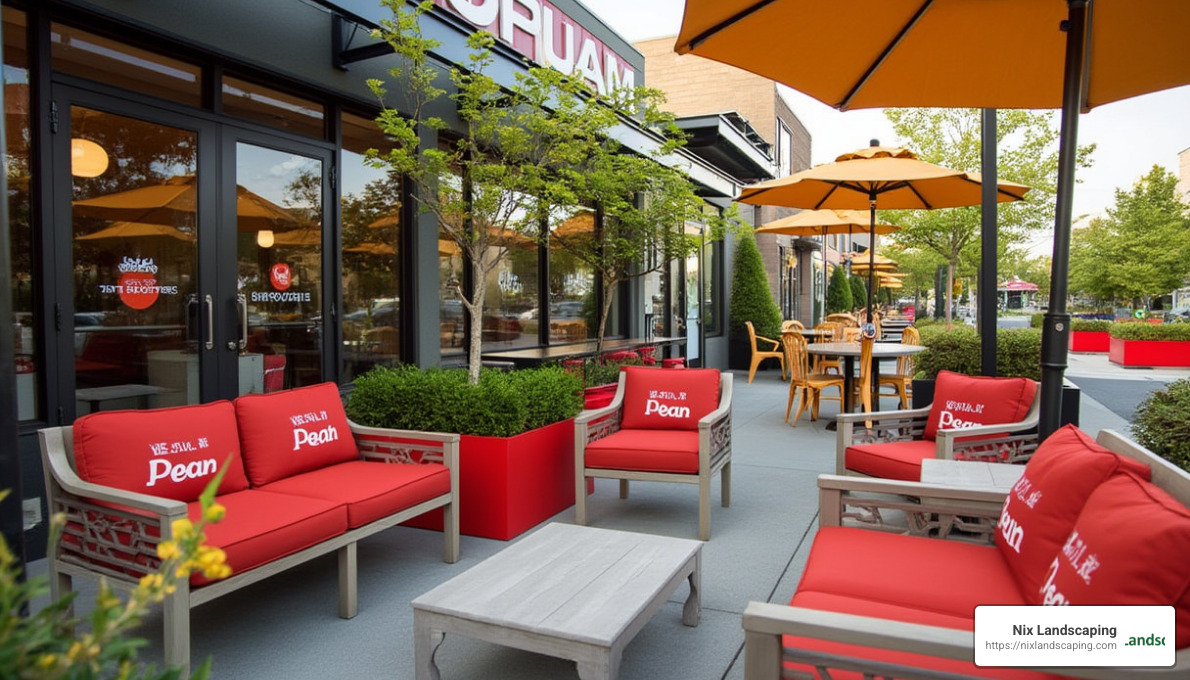
“Your patio should tell the same story as the rest of your business, just in an outdoor setting,” explains Kyle Nix. “When done well, branded outdoor spaces feel authentic rather than overtly promotional—they immerse customers in your brand experience.”
Color schemes provide one of the most straightforward ways to bring your brand outdoors. I’ve seen businesses transform simple patios into memorable spaces simply by thoughtfully incorporating their signature colors through furniture, cushions, and planters. One Fishers restaurant we worked with used their distinctive blue throughout their patio—from the umbrellas to the chair cushions—creating an instantly recognizable space that customers now associate with their brand. We always recommend weather-resistant fabrics that won’t fade under Indiana’s summer sun, preserving your brand colors season after season.
Logo integration doesn’t need to feel like a billboard to be effective. Some of our most successful projects incorporate logos in ways that feel natural and finded rather than imposed. A local brewery we worked with had their craftsman create custom metal table bases with their logo subtly worked into the design—noticeable enough for brand recognition but neat enough to feel like a design element rather than advertising. For other clients, we’ve designed custom planters with embossed logos or incorporated brand elements into privacy screens that divide different patio sections.
Your patio should also reflect your themed elements that tell your brand story. A family-owned Italian restaurant in Fishers wanted their patio to evoke memories of Tuscany—so we incorporated wine barrel planters, terracotta pots with herb gardens, and pergolas draped with grape vines. These elements weren’t randomly chosen decorations; they were thoughtful extensions of the restaurant’s heritage and menu focus.
Consistent aesthetics between your indoor and outdoor spaces creates a seamless experience for customers. The transition should feel natural, with complementary materials, similar design motifs, and architectural details that carry through from inside to outside. This doesn’t mean they need to be identical—outdoor spaces should accept their natural qualities—but they should feel like they belong to the same brand family.
At Nix Landscaping, we’ve found that the most successful branded patios balance clear identity with authentic experience. A patio that’s too heavily branded can feel artificial, while one with no brand elements misses valuable opportunities to reinforce your business identity.
For businesses in Fishers looking to create branded outdoor environments, we recommend starting with a conversation about your brand values and personality. Understanding the emotional response you want to evoke helps us design spaces that communicate your identity without saying a word. The materials, plants, lighting, and layout all become subtle ambassadors for your brand.
Your patio is a living advertisement for your business—one that customers actually enjoy spending time in. When designed thoughtfully, it becomes a space where people want to linger, take photos to share on social media, and return to again and again. That’s marketing you can’t buy with traditional advertising.
10. Outdoor Bar and Kitchen Installations
Outdoor bar and kitchen installations can transform an ordinary commercial patio into a dynamic space that captivates customers while boosting your bottom line. These functional showpieces do more than just extend your service capabilities—they create focal points that entertain guests and streamline operations.
“When we add outdoor service elements to a commercial patio, we’re not just designing a pretty space—we’re creating a revenue engine,” says Kyle Nix. “A well-designed outdoor bar or kitchen eliminates the constant indoor-outdoor shuffle for staff while giving customers something interesting to watch.”
The heart of any outdoor culinary space is its service stations—strategic outposts that keep your staff efficient and your customers happy. Rather than forcing servers to trek back and forth to an indoor bar, these stations bring everything needed for seamless service right to the patio. Smart designs include dedicated areas for drink preparation, food finishing, and essential storage that keeps items within easy reach.
Cooking equipment adds both function and theater to your outdoor space. There’s something undeniably appealing about watching a chef work a wood-fired pizza oven or hearing the sizzle of a grill. These live-cooking elements create sensory experiences that customers remember and return for. In Fishers, we’ve helped businesses install everything from simple grilling stations to elaborate outdoor kitchens with multiple cooking surfaces.
Bar seating deserves special attention in your commercial patio design. These areas naturally become social hubs where customers can interact with bartenders and each other. When designing these spaces, we focus on durable materials like sealed granite or specialized outdoor-rated surfaces that can withstand Indiana’s seasonal weather changes while maintaining their appearance.
Behind the visual appeal lies the crucial element of functional workflow. An outdoor kitchen or bar must operate efficiently despite being separated from your main facilities. This means carefully planning staff movement patterns, ensuring adequate storage, and installing proper utilities including water, electricity, and drainage. Without this operational foundation, even the most beautiful outdoor bar will struggle to function effectively.
Fia restaurant in Santa Monica offers an excellent example of outdoor culinary design done right. Their patio features a wood-fired cooking area where guests can watch chefs prepare dishes mere feet from their tables. This interactive element doesn’t just produce delicious food—it creates entertainment that improves the overall dining experience.
For Fishers businesses considering adding cooking or bar elements to their commercial patio design, there are several important considerations. Local health department regulations often have specific requirements for outdoor food preparation. Weather protection becomes essential for both equipment and supplies. And seasonal planning is crucial in our climate, where outdoor cooking areas might need modifications or temporary closures during extreme weather.
At Nix Landscaping, we approach outdoor bar and kitchen installations holistically, bringing together design professionals and operational experts to create spaces that look beautiful while functioning flawlessly. We help you steer local codes, select appropriate commercial-grade equipment, and integrate these elements seamlessly into your overall patio design.
The result? A space that doesn’t just serve your customers—it impresses them, engages them, and keeps them coming back for the unique experience only your business can provide.
Maximizing ROI with Commercial Patio Design
When it comes to business investments, few additions can match the return potential of a thoughtfully designed outdoor space. A strategic commercial patio design isn’t just a beautiful extension of your business—it’s a revenue-generating asset that can significantly boost your bottom line.
The numbers tell a compelling story. According to the National Restaurant Association, “Outdoor dining represents a significant proportion of business for restaurants that offer it. Thirty-five percent of operators that offer outdoor seating say it accounts for more than 40% of their average daily sales. Fifteen percent of operators say it represents more than 70% of their daily sales.”
I’ve seen this in our work around Fishers. When we help businesses expand their footprint outdoors, the impact is often immediate and substantial. “We’ve helped businesses in Fishers increase their seating capacity by 30-50% through strategic patio design,” I often tell clients. “This expansion typically comes at a fraction of the cost of interior renovations.”
But the benefits go well beyond just adding more tables. A well-designed patio effectively extends your business season. Here in Indiana, where weather can be unpredictable, thoughtful integration of heating elements, cooling systems, and weather protection can add 3-4 months of outdoor viability annually. That’s a third more operational time from the same square footage!
The customer experience transforms as well. People simply stay longer in comfortable, engaging outdoor environments. When patrons linger, they naturally order additional items—another drink, a dessert they might have skipped, or an appetizer to share. These seemingly small additions can significantly increase your average check size over time.
Many businesses also find they can implement premium pricing for outdoor seating. Customers often willingly pay more for the experience of dining or relaxing outdoors, particularly in well-designed environments. This premium might be subtle—perhaps reflected in slightly higher menu prices for outdoor seating—or more direct through minimum spending requirements for prime outdoor tables during peak times.
For Fishers businesses considering a commercial patio investment, I recommend starting with a thorough cost-benefit analysis that considers both immediate returns and long-term value. Prioritize design elements that directly impact revenue generation, and if budget constraints exist, consider phasing implementation, focusing first on elements with the highest ROI.
Don’t forget to collect customer feedback once your patio is operational. This input helps you refine the outdoor experience and maximize satisfaction. Tracking performance metrics will also help you quantify the impact of your outdoor space on overall business results, making it easier to justify future improvements.
At Nix Landscaping, we design commercial patios that do more than just look beautiful—they contribute meaningfully to your business success. We balance aesthetic considerations with practical business objectives, ensuring your outdoor space delivers substantial returns on investment year after year.
Balancing Aesthetics and Profitability
Creating a beautiful patio that doesn’t make financial sense is just as problematic as building a purely functional space that fails to attract customers. The most successful commercial patio designs find that sweet spot where visual appeal and business performance meet.
“Beautiful but impractical patios quickly become financial burdens,” I often remind our clients. “Conversely, purely utilitarian spaces fail to attract customers seeking memorable experiences. The magic happens when you create visually appealing environments that also function efficiently and stand up to commercial use.”
This balance begins with smart material choices. We often recommend concrete pavers that mimic the look of natural stone at a fraction of the cost, or composite decking that provides the warmth of wood without the ongoing maintenance headaches. For vertical surfaces, manufactured stone veneer can deliver the premium look of natural stone without the structural requirements and expense of the real thing.
Maintenance considerations dramatically impact your long-term profitability. Every hour your staff spends maintaining the patio is time not spent serving customers. Every dollar spent on repairs is money that could have gone to your bottom line. That’s why we focus on self-cleaning surfaces that shed dirt and resist staining, modular elements that allow for easy replacement of damaged components, and accessible mechanical systems that simplify inevitable repairs.
Sometimes spending more upfront makes perfect business sense. While premium materials may have higher initial costs, their extended lifespan and reduced maintenance needs frequently result in lower lifetime expenses. For commercial settings, we typically recommend commercial-grade furniture specifically designed for high-traffic environments and marine-grade hardware that won’t corrode after a season or two outdoors.
Visual appeal remains essential despite these practical considerations. Customers are drawn to spaces that offer aesthetic pleasure and photo-worthy moments. Architectural lighting creates ambiance while improving safety, and seasonal plantings refresh the space’s appearance throughout the year, giving customers new experiences with each visit.
Our Commercial and Residential Lawn Care services help maintain the appearance of your commercial patio, ensuring it continues to attract customers while operating efficiently. Regular maintenance preserves both the beauty and functionality of your space, protecting your initial investment.
For businesses in Fishers looking to strike this balance, I recommend establishing clear priorities based on your business objectives and customer expectations. Make strategic investments in high-visibility elements while economizing on less noticeable components. Consider operational impacts of your design decisions—how will they affect staff efficiency and customer turnover? And whenever possible, create flexible spaces that can adapt to different uses and seasonal needs.
At Nix Landscaping, we design commercial patios that satisfy both your aesthetic vision and financial requirements, creating outdoor spaces that improve your brand while contributing positively to your bottom line.
Compliance and Accessibility in Commercial Patio Design
Creating a stunning commercial patio isn’t just about aesthetics and profitability—it’s also about ensuring everyone can enjoy your space safely and comfortably. Navigating compliance and accessibility requirements might seem daunting, but when done thoughtfully, these considerations actually improve your commercial patio design rather than constrain it.
“Compliance shouldn’t be an afterthought or a reluctant concession,” I always tell our clients. “When integrated thoughtfully from the beginning, accessible design creates better spaces for everyone while avoiding costly retrofits or potential legal issues.”
The Americans with Disabilities Act (ADA) establishes minimum standards that commercial outdoor spaces must meet. These include accessible routes with minimum widths of 36 inches and appropriate turning radiuses for wheelchairs, stable and firm surfaces that accommodate mobility devices, and appropriate table heights and clearances. Maximum slopes are also regulated—generally 1:20 for accessible pathways or 1:12 for ramps with handrails.
Here in Fishers, local regulations often extend beyond these federal requirements. You’ll need to consider noise ordinances that might restrict sound levels or hours of operation, setback requirements from property lines, and landscaping mandates for screening or environmental considerations. There may also be lighting restrictions to prevent light pollution or neighbor disturbance, and occupancy limitations based on available facilities.
Permit considerations should be addressed early in your design process. Depending on your specific patio plans, you might need building permits for structural elements like pergolas, electrical permits for lighting, plumbing permits for water features, health department approvals for food service areas, or liquor license extensions for serving alcohol outdoors. Tackling these requirements proactively helps avoid costly delays or revisions.
True accessibility goes beyond checking regulatory boxes. Inclusive design creates genuinely welcoming environments for all customers. Consider incorporating multi-level seating options that accommodate different preferences and needs, clear wayfinding through intuitive design, and sensory considerations that address sound, light, and texture for neurodivergent individuals. Flexible spaces that can adapt to different needs and group configurations benefit everyone, not just those with disabilities.
Safety standards must be maintained throughout your commercial patio. Adequate lighting for safe navigation after dark, clearly marked level changes to prevent trips and falls, and proper guardrails where required by code are essential elements. Don’t forget fire safety provisions including appropriate clearances and access, and weather-related safety measures addressing snow, ice, or heavy rain—particularly important here in Indiana.
For businesses in Fishers implementing commercial patio designs, I recommend consulting with compliance experts early in the planning process. Document all regulatory requirements affecting your specific location, and incorporate accessibility from the initial concept rather than trying to adapt later. Train your staff on accessibility features and accommodations, and regularly review your compliance as regulations and business needs evolve.
At Nix Landscaping, we help businesses steer this complex landscape of regulatory requirements while creating beautiful, functional outdoor spaces. Our approach integrates compliance seamlessly into the design process, ensuring your commercial patio is not only legally sound but genuinely welcoming to all your customers.
Frequently Asked Questions about Commercial Patio Design
What are the most durable materials for high-traffic commercial patios?
When it comes to commercial patio design, durability isn’t just nice to have—it’s essential. High-traffic commercial spaces need materials that can take a beating while still looking great year after year.
Concrete pavers stand out as workhorses in the commercial world. These manufactured units pack impressive strength—typically between 8,000-12,000 psi—which is significantly stronger than poured concrete. I love recommending these to my Fishers clients because if one gets damaged, you can replace just that piece rather than redoing the entire surface.
“For commercial applications in Fishers, we often recommend concrete pavers with a minimum thickness of 2-3/8 inches,” I tell clients. “This provides excellent durability while still giving you plenty of creative options through different colors, textures, and patterns.”
Natural stone is another fantastic option if you’re looking for something that will truly stand the test of time. Materials like granite and bluestone have been used in commercial settings for centuries—and for good reason. Yes, they cost more upfront, but when you amortize that cost over decades of use, the value becomes clear.
Composite decking has been a game-changer for commercial spaces in recent years. It gives you that warm, natural wood look without the headaches of actual wood. Modern composites resist fading, staining, and scratching, and they shrug off Indiana’s humidity without developing mold. For busy commercial spaces, look specifically for high-density formulations with commercial warranties.
Your furniture choices matter just as much as your flooring. For commercial settings, I always point clients toward powder-coated aluminum frames that won’t rust, marine-grade stainless steel hardware, and solution-dyed acrylic fabrics with solid warranties against fading. These materials might cost more initially, but they won’t need replacing nearly as often as residential-grade alternatives.
Of course, even the most durable materials need some TLC. Regular cleaning, occasional sealing for stone and concrete, checking and tightening hardware, and addressing small issues before they become big problems—these simple maintenance steps will extend the life of your commercial patio significantly.
How can businesses create year-round commercial patio spaces?
Creating a year-round patio in Fishers might sound ambitious given our varied weather, but with thoughtful commercial patio design, it’s absolutely achievable. Businesses that successfully extend their outdoor season gain a significant edge over competitors who close their patios when temperatures drop.
Covered structures form the foundation of any year-round strategy. Permanent roofs offer complete protection from rain and snow, while pergolas with retractable canopies give you flexibility to open up during beautiful weather and button down when storms roll in. I’ve seen great success with adjustable louver systems that can transition from open-air to fully protected in minutes.
“The most effective year-round patios incorporate layered protection,” I often explain to clients. “Think of it like dressing for Indiana weather—you need options you can add or remove as conditions change throughout the day.”
Heating elements are critical for extending your season into fall and winter. Infrared heaters work wonderfully in outdoor settings because they warm people and objects directly rather than trying to heat the air (which would just blow away). Fire features pull double duty by providing both warmth and ambiance—guests love gathering around a fire pit or outdoor fireplace when temperatures drop. For premium spaces, heated floors provide consistent comfort from below.
Weather protection goes beyond just overhead coverage. Strategic windbreaks can make a 40-degree day feel much warmer by blocking those cutting Indiana winter winds. Rain curtains can be deployed during sudden showers, and proper drainage prevents puddles from forming when the storm passes. Snow management becomes important for winter operation—having a plan for clearing access paths and maintaining safe surfaces is essential.
The best year-round patios evolve with the seasons. Consider modular furniture that can be reconfigured as needed, seasonal plantings that look great regardless of the month, and adjustable lighting that compensates for early winter sunsets. Your space should maintain a consistent aesthetic throughout these changes so it always feels intentional and well-designed.
At Nix Landscaping, we’ve helped numerous Fishers businesses transform their patios from three-season afterthoughts into year-round profit centers. The key is thoughtful planning that addresses our specific local climate challenges while maintaining the inviting atmosphere that draws customers outdoors in the first place.
What is the average return on investment for a well-designed commercial patio?
The return on investment for a well-designed commercial patio can be truly impressive, though it varies depending on several factors. Understanding the potential returns helps businesses make informed decisions about these significant outdoor investments.
The most direct return comes through increased revenue. Industry data tells a compelling story: 35% of businesses with outdoor seating attribute more than 40% of their daily sales to these spaces. Even more impressive, 15% of operators say their outdoor areas generate more than 70% of daily sales. These aren’t small numbers!
To put this in perspective, for a restaurant doing $1 million in annual sales, a patio contributing 40% represents $400,000 in revenue. When you consider that most commercial patios in Fishers cost between $50,000-$150,000 to create, the math becomes very attractive.
“We’ve seen businesses in Fishers achieve full ROI on their patio investments within 1-3 years,” I share with clients considering this upgrade. “The businesses that see the fastest returns are those that commit to quality design, train their staff specifically for outdoor service, and incorporate features that extend their outdoor season beyond just summer months.”
Beyond direct revenue, well-designed patios create a powerful customer attraction effect. In today’s social media-driven world, distinctive outdoor spaces become destinations in themselves. I’ve watched businesses transform their customer base after adding a thoughtfully designed patio, drawing people who specifically seek out unique outdoor experiences.
Property value improvement represents another form of return that businesses sometimes overlook. Commercial properties with established, well-designed outdoor spaces typically command higher resale or lease values. This appreciation provides long-term returns that extend beyond immediate operational benefits.
Many businesses also find they can implement premium pricing for their outdoor spaces. When you create an exceptional environment that customers specifically request, modest price increases or minimum spending requirements for patio seating become acceptable to consumers, further enhancing your returns.
At Nix Landscaping, we focus on maximizing ROI through strategic design choices. This means optimizing seating capacity while maintaining comfort, selecting materials that balance initial investment with long-term durability, and incorporating weather adaptations that extend your usable season. We can even help with phased implementation plans that allow businesses to manage their budget while maintaining design integrity.
The bottom line? A well-executed commercial patio isn’t just an expense—it’s an investment that pays dividends in multiple ways, often for decades to come. In Fishers, where outdoor dining opportunities have traditionally been limited, the businesses that create exceptional outdoor environments gain a significant competitive advantage that translates directly to their bottom line.
Conclusion
The journey through commercial patio design shows us it’s far more than just placing tables outside—it’s a strategic business decision that can transform your customer experience and boost your bottom line. As we’ve explored together, the most successful outdoor commercial spaces blend beauty with practicality.
Think of your commercial patio as the outdoor ambassador for your brand. When designed thoughtfully, it welcomes customers into an experience that feels consistent with your indoor space while offering something special that can only be enjoyed outside.
The numbers don’t lie—businesses with well-designed outdoor spaces often see dramatic results. When 35% of operators report that outdoor seating accounts for more than 40% of their daily sales, it’s clear that patios aren’t just nice-to-have amenities; they’re profit centers that deserve serious investment.
“I’ve seen how the right outdoor space can completely change a business’s trajectory,” says Kyle Nix. “Customers today are looking for experiences, not just products or services. A thoughtfully designed patio creates memorable moments that keep people coming back.”
The secret to patio success lies in balancing several key elements. Aesthetic appeal draws customers in initially, while functional design ensures they stay comfortable. Durable materials withstand our Indiana weather and heavy commercial use, while adaptable features let you maximize your outdoor season beyond just summer months. Throughout it all, brand integration ties everything together into a cohesive experience.
For Fishers businesses considering a commercial patio project, I recommend starting with a clear vision of what you want that space to accomplish. Are you looking to increase capacity? Create a distinctive atmosphere? Provide a different experience from your indoor space? Your answers will guide every design decision that follows.
Weather planning deserves special attention in our area. Indiana gives us beautiful days, but also challenging ones. Thoughtful design can extend your patio season significantly, turning what might be a 3-month asset into a 9-month revenue generator with the right heating, cooling, and weather protection strategies.
Professional design makes all the difference in commercial patio projects. At Nix Landscaping, our Patio Installation Services bring expertise that helps avoid costly mistakes while maximizing both the immediate impact and long-term value of your investment.
Whether you’re creating a cozy café patio or an expansive restaurant terrace, the principles remain the same—design for both beauty and function, plan for all seasons, and create spaces where people genuinely want to spend time. When you do that successfully, your patio becomes more than just additional seating—it becomes a destination in itself.
Commercial patio design represents one of the smartest investments a business can make in today’s experience-focused marketplace. It expands your capacity, strengthens your brand, and creates the kind of memorable environments that turn first-time visitors into regular customers. And in business, that’s always a beautiful thing.

