
Understanding Your Retaining Wall Investment
The cost of retaining wall installation? typically ranges from $3,500 to $9,400, with a national average of $6,300. Here’s a quick breakdown:
| Cost Metric | Price Range | Average |
|---|---|---|
| Per Square Foot | $20-$53 | $33 |
| Per Linear Foot | $40-$300 | $170 |
| 50-foot Wall | $4,000-$10,000 | $7,000 |
| Material Only (DIY) | $4-$20/sq ft | $12/sq ft |
When you’re staring at that sloped area in your yard or noticing soil erosion after heavy rains, a retaining wall might be the solution you need. But before picking up the phone to call a contractor, understanding what drives these costs can save you thousands.
Retaining walls do more than just hold back earth – they create usable space, prevent erosion, and can dramatically improve your property’s curb appeal. Whether you’re looking at a simple garden wall or a complex tiered system, the price tag varies widely based on materials, height, length, and site conditions.
I’m Kyle Nix, owner of Nix Landscaping in Fishers, Indiana, and I’ve installed hundreds of retaining walls across central Indiana, giving me insight into the cost of retaining wall installation? factors that impact your bottom line.

Quick look at Cost of retaining wall installation?:
– Affordable retaining wall options?
– How to build retaining walls?
– Retaining wall with water feature?
Cost of Retaining Wall Installation? 2025 Snapshot
Let’s talk real numbers for 2025. The cost of retaining wall installation? is sitting at a national average of about $6,300, but your actual price could swing quite a bit depending on your specific project needs.
When contractors quote your retaining wall, they’ll typically use one of two measuring approaches:
| Wall Height | Cost Per Linear Foot | Cost Per Square Foot |
|---|---|---|
| 3 feet | $40-$150 | $20-$53 |
| 4 feet | $50-$200 | $20-$53 |
| 6 feet | $60-$250 | $20-$53 |
| 8+ feet | $100-$300+ | $20-$53 |
Notice something interesting? Square foot pricing stays pretty steady regardless of height, while linear foot pricing jumps significantly as walls get taller. That’s because taller walls need more engineering, stronger foundations, and often permit approvals – all adding to your bottom line.
Average Project Sizes & Budgets
If you’re trying to ballpark your project cost, here’s what typical walls run (based on a standard 4-foot height):
A modest 10-foot wall might cost between $400-$2,000 for basic materials, or up to $3,600 for premium options. On the other end, a substantial 100-foot wall could range from $4,000 for simple materials to a whopping $36,000 for high-end finishes.
Most of our clients fall into one of three budget tiers:
Economy tier projects ($40-$80 per linear foot) use practical materials like pressure-treated wood or basic concrete blocks. Mid-range projects ($80-$150 per linear foot) incorporate better materials and some decorative elements. For those wanting something truly special, premium projects ($150-$300+ per linear foot) feature natural stone, complex designs, and extras like built-in lighting or water features.
Cost Trends Since 2020
Your dollar doesn’t stretch quite as far as it used to in the retaining wall world. According to research from Harvard’s Joint Center for Housing Studies, outdoor projects like retaining walls have seen price increases of 15-25% since 2020.
Why the jump? Labor costs have climbed 20-30% as skilled tradespeople become harder to find. Material prices have been on a roller coaster, with some (like pressure-treated lumber) spiking over 40% during certain periods. Add in higher fuel costs for delivering those heavy materials and increased permit fees from municipalities, and you’ve got a perfect storm of price pressures.
The good news? Even with these increases, retaining walls remain one of the smartest landscape investments you can make, typically returning 70-150% of their cost in property value – not to mention solving erosion issues and creating usable outdoor space that wasn’t there before.
For more details on getting the most bang for your buck, check out our guide to Affordable Retaining Wall Options and the latest Scientific research on home-improvement spending.
What Drives Your Final Price Tag
When it comes to understanding the cost of retaining wall installation?, knowledge truly is power. Let’s walk through the key factors that will shape your budget – knowing these ahead of time can save you from sticker shock when the quotes start coming in.
Wall Height and Length
Size matters – a lot! Your wall’s dimensions are the foundation of your pricing:
The taller your wall, the exponentially higher your costs. Once you cross that 4-foot threshold, you’re entering a new cost territory. Why? Taller walls need deeper foundations, thicker materials, and often professional engineering to ensure they don’t come tumbling down.
Length works a bit differently. While longer walls naturally require more materials, there’s a silver lining – many contractors offer better rates for longer projects since their setup costs and equipment are already on-site. It’s like buying in bulk at the grocery store!
Site Complexity and Accessibility
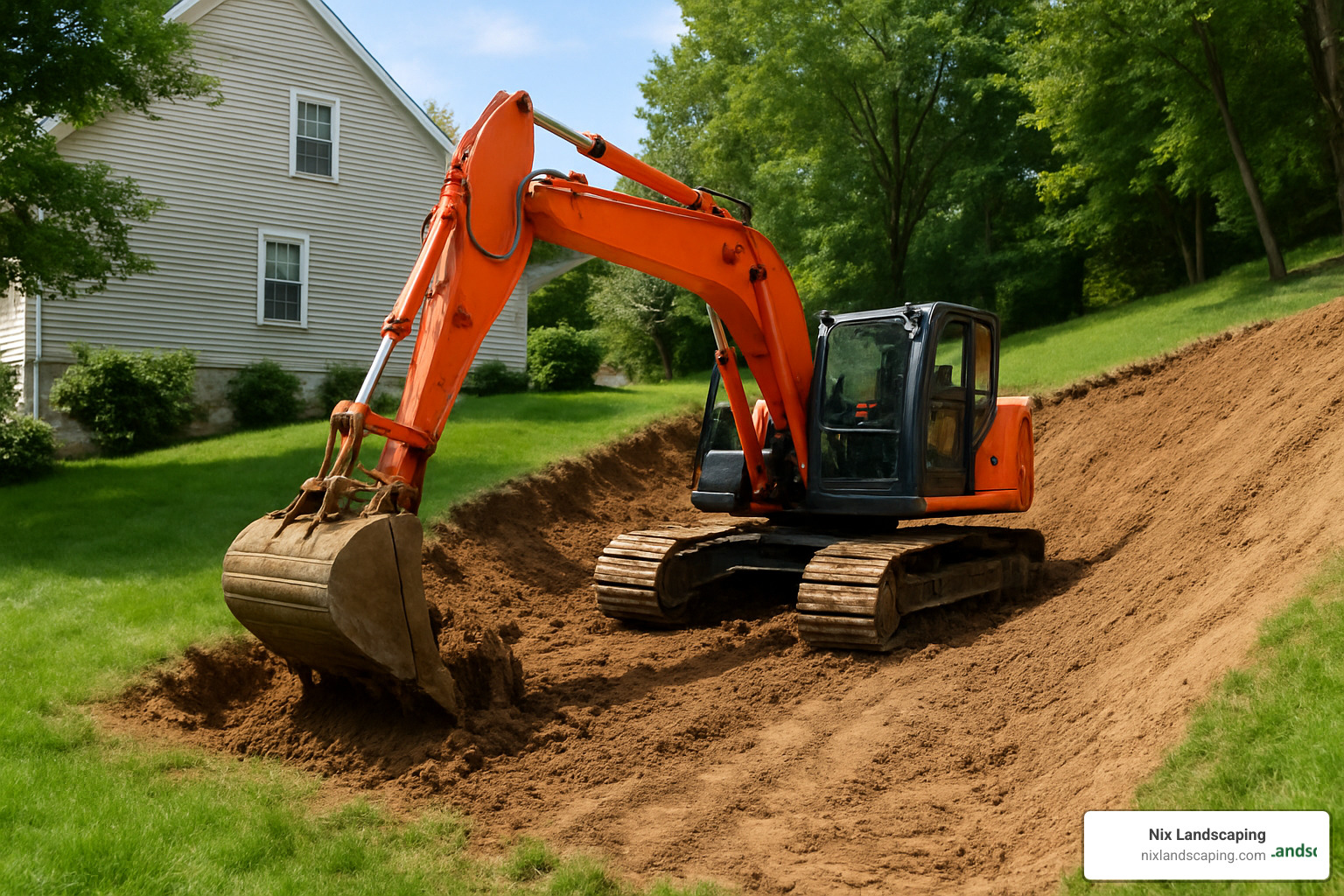
Your property’s unique features can dramatically impact your bottom line. That beautiful sloped yard? It might require extensive excavation work. Those gorgeous mature trees? Working around them takes time and precision.
We’ve seen site preparation in Fishers ranging from $900 for straightforward jobs to over $3,000 for challenging terrain. Rocky soil can turn a simple dig into a time-consuming endeavor, while clay soils (common in central Indiana) often demand additional drainage solutions.
Access issues are particularly costly – if heavy equipment can’t reach your site, you’re looking at a lot more manual labor. This alone can increase your costs by up to 50%!
Drainage Solutions
I can’t stress this enough: good drainage isn’t optional – it’s essential. Without proper water management, even the most beautiful wall becomes a ticking time bomb.
Proper drainage typically adds $10-$30 per linear foot to your project. This includes gravel backfill, perforated drain pipe, filter fabric, and weep holes. Every dollar spent on drainage is an investment in your wall’s longevity. In our Indiana climate, with freeze-thaw cycles and heavy spring rains, skimping on drainage is a recipe for disaster.
Permits and Engineering
The paperwork portion of your cost of retaining wall installation? varies by location and project size:
Most municipalities require permits for walls over 3-4 feet tall, typically costing $50-$450. Larger walls need engineering plans, which can range from $350 for simple designs to $4,000 for complex systems. In Fishers specifically, we typically budget $1,000-$2,500 for permitting and engineering on standard residential projects.
Some jurisdictions also require soil reports for larger walls, which can add $7,000-$9,000 to commercial or large residential projects. These requirements aren’t just bureaucratic hoops – they help ensure your wall is safe and built to last.
Seasonal Timing
Timing your project can impact your wallet more than you might think. Winter installations often cost 10-15% more due to frozen ground and slower work pace. Spring and fall represent peak demand, which can mean premium pricing from busy contractors.
On the flip side, scheduling during slower periods (typically late fall through winter) might score you an off-season discount. At Nix Landscaping, we’re often able to offer more competitive pricing during these quieter months.
Hidden Extras That Add Up
The sneaky costs that surprise many homeowners include demolition work ($10-$20 per square foot to remove existing structures), waterproofing ($2-$10 per square foot), and material delivery charges ($30-$100 per truckload).
Don’t forget debris disposal – hauling away excavated soil and old materials typically costs $125-$225 per cubic yard. These “extras” can quickly add thousands to your project if not accounted for in your initial budget.
For more budget-friendly approaches, our guide to affordable retaining wall options provides several creative solutions.
Cost of Retaining Wall Installation? vs. Repairs & Rebuilds
Sometimes you’re facing a decision between fixing an old wall or starting fresh. Minor repairs for small cracks or loose blocks typically run $400-$1,065, while moderate issues like drainage problems might cost $1,500-$5,000 to address.
Major structural repairs can quickly reach $5,000-$15,000, and at that point, a complete rebuild ($30-$70 per square foot) often makes more financial sense. Specialized repair techniques like helical piers ($2,100-$3,000 each) or tiebacks ($2,200-$3,000 each) add significant costs but may be necessary for certain situations.
When we evaluate existing walls at Nix Landscaping, we always provide a clear comparison between repair and replacement costs so you can make the most informed decision for your property and budget.
Material Matters: Cheapest to Premium Walls
The material you choose has the most significant impact on both the upfront cost of retaining wall installation? and the long-term value of your investment. Let’s explore your options from most affordable to premium:
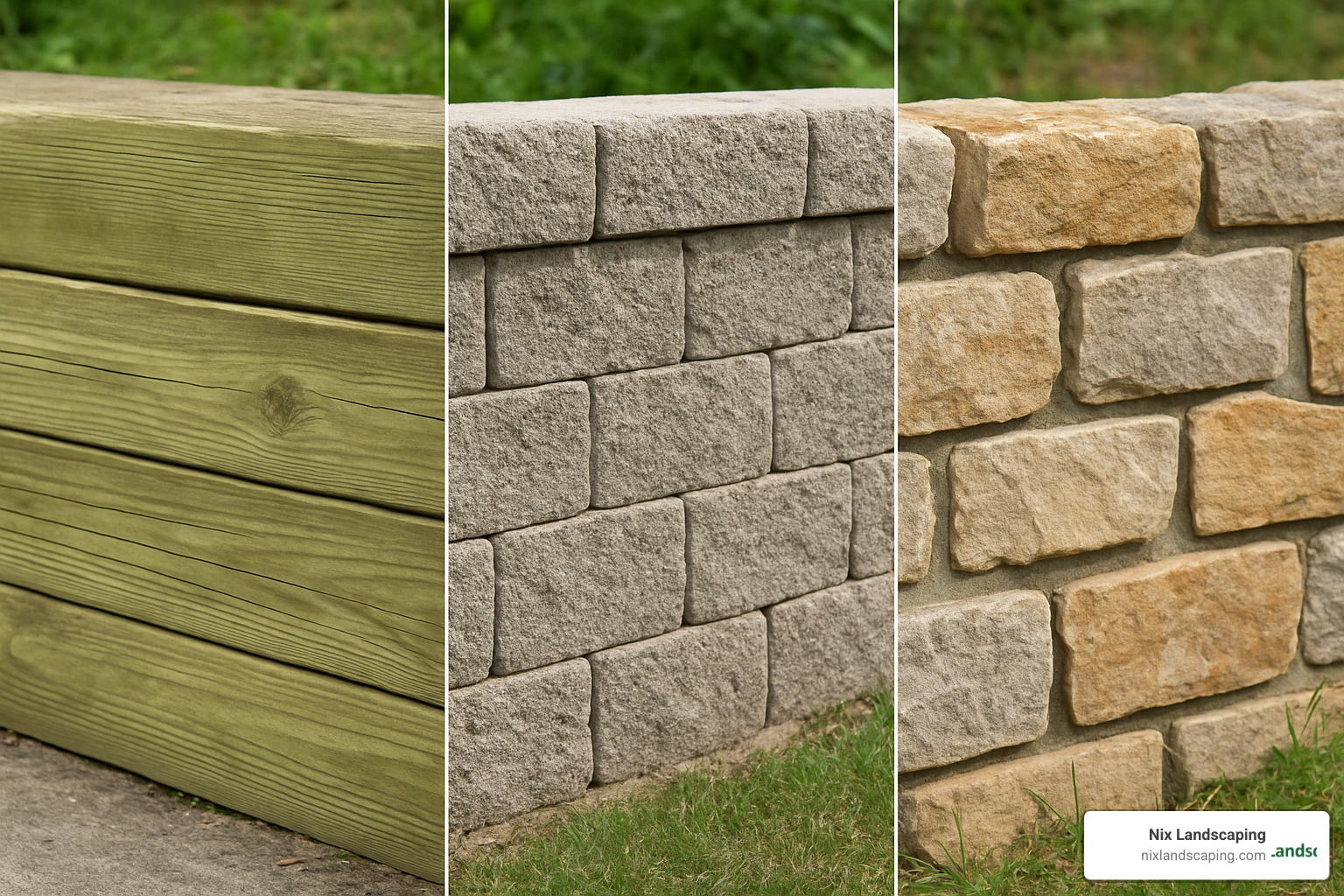
Economy Materials ($10-$40 per square foot)
When budget is a primary concern, several materials offer solid performance without breaking the bank. Pressure-treated wood ($13-$35/sq ft) provides a natural look that blends beautifully with garden settings. It’s perfect for DIY enthusiasts and works well for walls under 3 feet, though keep in mind its 10-20 year lifespan and need for regular maintenance.
If you’re looking for something maintenance-free, vinyl retaining walls ($10-$15/sq ft) resist insects and rot for up to 50 years. While they can look somewhat artificial, they’re incredibly lightweight and perfect for decorative borders where structural demands are minimal.
For a more rustic approach, gabion walls ($10-$40/sq ft) offer excellent drainage and quick installation. These wire cages filled with stone create a distinctive look that works wonderfully in natural settings, especially near water features or in areas prone to flooding.
Mid-Range Materials ($15-$60 per square foot)
Moving up in price and durability, concrete blocks/CMU ($14-$39/sq ft) provide exceptional strength and consistency. While plain blocks might look utilitarian, they create perfect foundations for adding veneer later or for structural walls where function trumps form.
Interlocking concrete blocks ($17-$53/sq ft) have revolutionized DIY retaining walls. Their tongue-and-groove design eliminates the need for mortar, making them accessible for homeowners with basic skills. I’ve installed countless walls using these blocks for Fishers residents who love their versatility and wide range of colors and textures.
For a touch of nostalgia, railroad ties ($14-$37/sq ft) create charming, rustic borders. While their 10-15 year lifespan is relatively short, they’re easy to work with and perfect for garden terraces. Just be aware that older ties may contain chemicals that can leach into soil.
Premium Materials ($25-$150+ per square foot)
When longevity and aesthetics are paramount, natural stone ($25-$85/sq ft) reigns supreme. With proper installation, stone walls last 100+ years while adding significant property value. The timeless beauty of limestone, granite, or fieldstone creates a statement that can’t be matched by manufactured materials, though it does require skilled masons for installation.
Brick retaining walls ($20-$45/sq ft) offer classic elegance that complements traditional architecture beautifully. Their century-plus lifespan makes them a worthy investment, especially for formal gardens or heritage properties. The rich colors and texture of brick develop character over time that manufactured materials simply can’t replicate.
For challenging sites with space constraints, steel/I-beam walls ($42-$137/sq ft) provide extraordinary strength with minimal thickness. While primarily used in commercial applications, they’re increasingly popular for residential properties with severe slopes or heavy loads.
Environmentally conscious homeowners might consider rammed earth walls ($25-$50/sq ft), which use compacted soil mixtures to create naturally insulating structures. While requiring specialized knowledge to install, these walls offer unparalleled sustainability and a distinctive aesthetic that connects your landscape to the surrounding environment.
Longevity & Maintenance by Material
The true cost of retaining wall installation? extends far beyond initial construction. Wood walls might save money upfront but require $200-$500 in annual maintenance and typically need replacement within 10-20 years. Contrast this with natural stone, which might cost more initially but needs minimal care and lasts generations.
Concrete blocks strike a nice middle ground, needing only periodic sealing every 3-5 years at $100-$300 annually while lasting 50-100 years. Steel walls demand regular attention to prevent rust, costing $200-$400 yearly in maintenance but providing 20-40 years of service.
The right choice depends on your long-term plans. Are you improving a forever home or preparing to sell? At Nix Landscaping, we help our Fishers clients balance immediate budget concerns with long-term value. Many homeowners improve their walls with carefully selected plantings—check out our guide to best plants for retaining walls for inspiration.
Cost of Retaining Wall Installation? Per Material Type
To help you budget accurately, here’s what you can expect to pay per square foot, including both materials and professional installation:
Wood and vinyl sit at the affordable end of the spectrum, with wood/timber walls costing $13-$40/sq ft and vinyl options running $10-$15/sq ft. Mid-range choices include concrete blocks at $14-$39/sq ft and interlocking blocks at $17-$53/sq ft.
For premium installations, brick walls run $20-$45/sq ft, while poured concrete costs $24-$58/sq ft. Natural stone represents the high-end at $25-$85/sq ft, with steel/I-beam walls commanding $42-$137/sq ft for their specialized engineering.
DIY enthusiasts can substantially reduce these costs by eliminating labor expenses, though the trade-off comes in time investment and the learning curve required for proper installation. For materials guidance, you might find helpful information from suppliers like Home Depot’s concrete and masonry section, though nothing replaces professional advice for structural walls.
DIY vs. Pro Installation & Regional Pricing
One of the biggest decisions affecting the cost of retaining wall installation? is whether to tackle it yourself or hire professionals. Let’s break down the comparison:
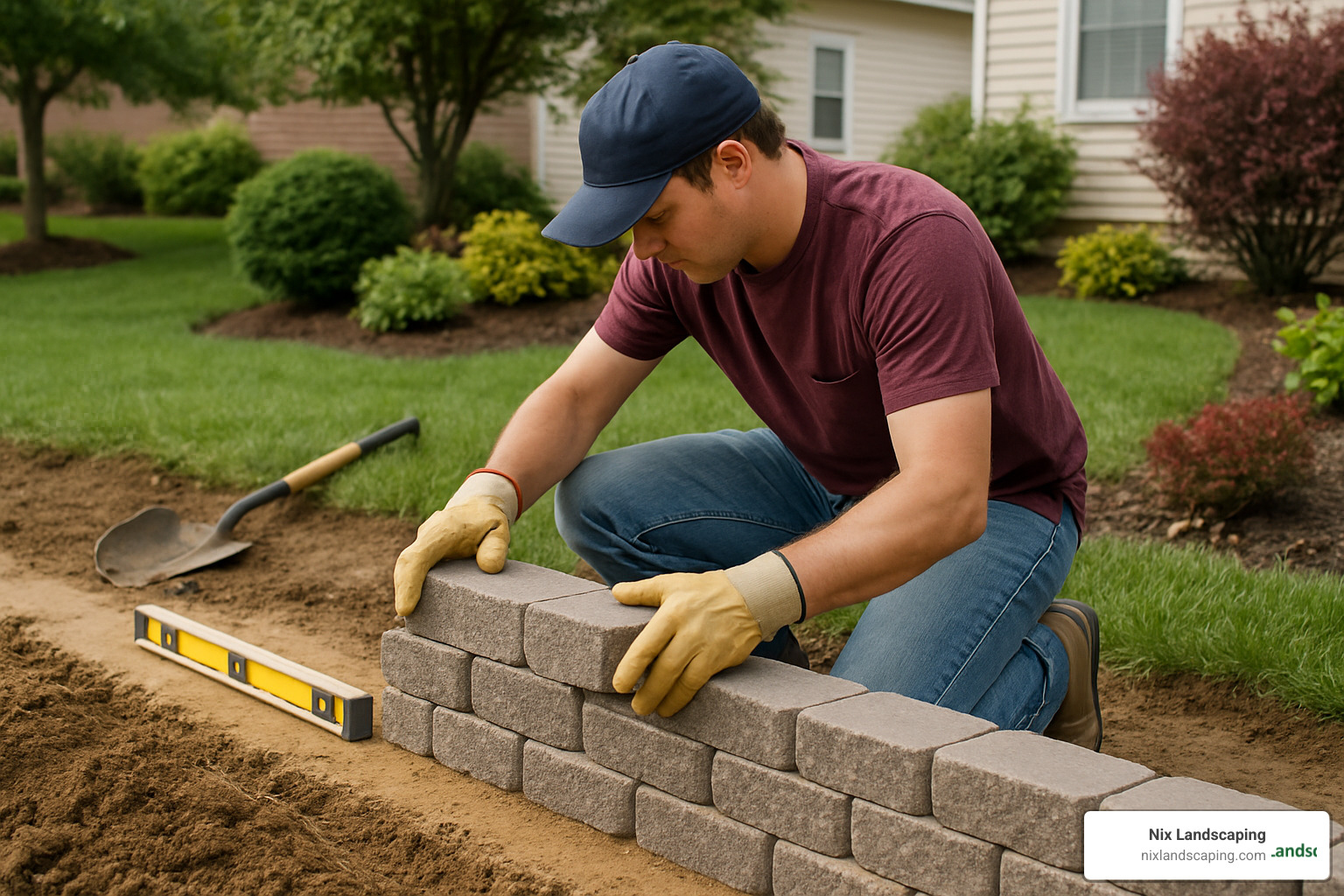
DIY Cost Breakdown
When you go the DIY route, you’ll typically spend between $4-$20 per square foot just on materials. That’s a significant savings compared to professional installation, but there’s more to consider than just the blocks or timbers.
You’ll need to factor in equipment rental costs of $150-$300 per day for items like compactors and mini-excavators. Don’t forget the basic tools you’ll need – levels, shovels, and tampers can add another $100-$300 to your budget. The biggest investment might actually be your time – most DIY retaining wall projects take anywhere from a weekend to over a week depending on size and complexity.
All told, going DIY typically costs about 40-60% of what you’d pay a professional. That’s a substantial savings, but it comes with some real challenges. Proper base preparation requires technical knowledge that many homeowners don’t have. Drainage issues – the number one cause of wall failure – can be tricky to get right. And if your wall is over 3-4 feet tall, you’ll likely need permits and engineering plans anyway.
I’ve seen plenty of DIY walls that looked great for a season or two, then started to lean or crack because of improper installation. Those mistakes often lead to expensive repairs or complete rebuilds down the line.
Professional Installation Costs
When you hire pros like our team at Nix Landscaping, you’re typically looking at labor costs of $10-$30 per square foot or $40-$80 per hour. This includes all the equipment needed for the job, plus our design expertise to ensure your wall is both beautiful and functional.
Professional installation also comes with peace of mind – we typically offer 1-5 year warranties on workmanship, and we can complete most residential projects in just 1-3 days. That’s a lot less time than you’d spend as a weekend warrior!
Where you live significantly impacts these costs. Here in the Midwest (including our home base in Fishers, IN), you’ll generally pay about 10-20% below the national average. If you were on the Northeast or West Coast, you’d be looking at prices 15-30% higher than average. Rural areas tend to be 5-15% cheaper than their regional averages, while urban centers run 10-20% more expensive.
According to Bureau of Labor Statistics data, mason and landscape worker wages in our Indianapolis metro area are approximately 7% below the national average. That’s good news for our clients, as it helps keep our pricing competitive while still allowing us to employ skilled craftspeople.
When DIY Makes Sense
Despite the challenges, there are definitely situations where DIY is a reasonable choice. If your wall will be under 3 feet tall, you’re working with relatively flat, accessible terrain, and you’re using interlocking blocks designed for DIY installation, you might be a good candidate for the DIY approach.
Experience matters – if you’ve tackled similar projects before, you’ll have a better sense of the challenges. Equipment access is also crucial – having the right tools makes all the difference. Time availability is another consideration – rushing through a wall installation almost always leads to problems.
Even if you decide to DIY, I’d recommend consulting with a professional about drainage and structural considerations. At Nix Landscaping, we’re happy to offer consultation services to guide DIY enthusiasts. Sometimes a one-hour consultation can save you days of frustration and thousands in potential repairs.
Hiring Pros the Smart Way
For walls over 3 feet or projects with complex sites, professional installation is almost always the wiser choice. But how do you make sure you’re getting the best value?
Start by getting multiple bids – aim for 3-5 quotes from reputable contractors to understand the market rate. Check credentials carefully – look for MCAA or NCMA certifications and read local reviews. Always request itemized contracts that break down all costs including materials, labor, and permits.
Verify insurance before anyone starts work – legitimate contractors will have liability insurance and worker’s compensation. Don’t skip checking references – ask to see similar completed projects in your area. Make sure you understand the warranty terms, including what’s covered and for how long.
Finally, establish a clear payment schedule – never pay the full amount upfront. A typical schedule might include a deposit, a payment when materials are delivered, and final payment upon satisfactory completion.
For more information about our professional hardscape services in Fishers and surrounding areas, visit our hardscape services page.
Maintaining Value After Installation
The cost of retaining wall installation? is just the beginning of your investment journey. Think of your new wall as a long-term relationship – with proper care, it’ll serve your property faithfully for decades while continuing to look beautiful.
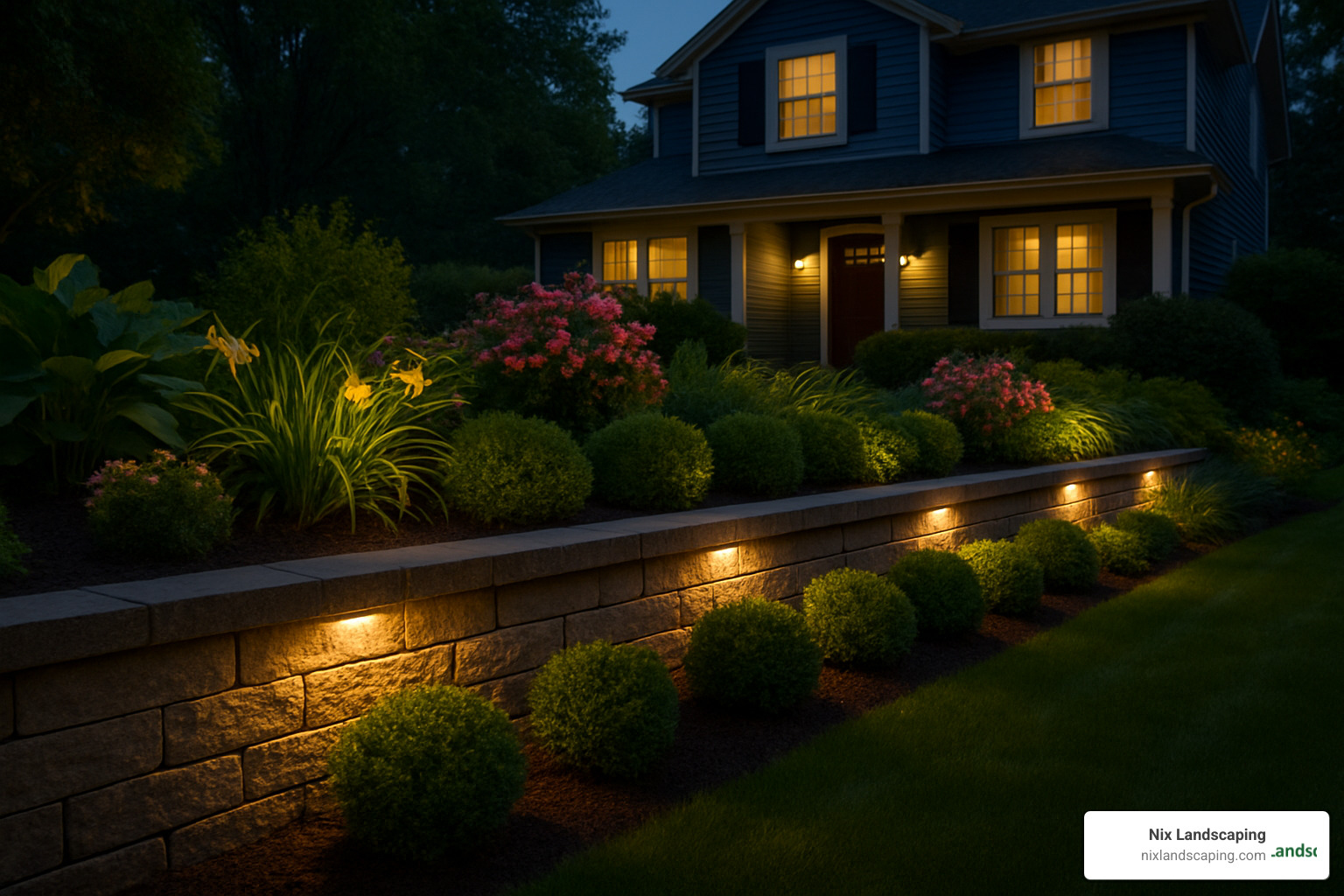
Long-Term Value Considerations
That wall you’re investing in isn’t just holding back soil – it’s actually boosting your property value by up to 15% when thoughtfully designed and maintained. I’ve seen homeowners delighted by the multiple returns their walls provide: erosion control that prevents thousands in potential property damage, usable space creation that expands outdoor living areas, and improved curb appeal that makes neighbors stop and stare (in a good way!).
Beyond the visible benefits, a quality retaining wall provides flood prevention by managing water runoff and offers structural support that protects your home’s foundation. Here in Indiana, where we experience everything from spring downpours to winter freeze-thaw cycles, these protective qualities matter tremendously.
Many homeowners don’t realize that insurance companies often recognize well-built retaining walls as risk-mitigation features. If your property sits in a flood-prone or erosion-susceptible area, that wall might even help lower your insurance premiums – just another way it keeps paying you back year after year.
Budgeting for Annual Upkeep
Like any worthwhile investment, your retaining wall needs some TLC to maintain its value. I recommend setting aside a small maintenance budget that includes:
Annual inspections cost practically nothing if you do them yourself, or around $150-$200 if you’d prefer professional eyes. I tell my clients to walk their walls after winter and again after heavy rain events – you’re looking for any leaning, bulging, or cracking that wasn’t there before.
Wall cleaning keeps things looking fresh and costs about $0.50-$2 per square foot if you hire it out. Many homeowners handle this task themselves with a garden hose or gentle pressure washer.
Sealing needs vary by material – concrete and certain stones benefit from resealing every 3-5 years at $2-$4 per square foot. This prevents water penetration and extends your wall’s life significantly.
Drainage maintenance is absolutely critical but often overlooked. Plan on $100-$300 annually to ensure weep holes stay clear and drainage pipes remain functional. Trust me on this one – I’ve seen beautiful walls fail simply because water couldn’t escape properly.
Don’t forget about vegetation control ($100-$200 annually) to keep invasive roots from compromising your wall’s structure. While plants can beautifully complement a retaining wall, certain aggressive species can cause serious damage if allowed to grow too close.
When small issues do arise, addressing them promptly with minor repairs ($200-$600) prevents them from becoming major headaches later. At Nix Landscaping, we’ve saved clients thousands by catching and fixing small problems before they escalated.
Alternatives & Upgrades to Traditional Walls
Sometimes managing the cost of retaining wall installation? means thinking creatively about your slope solutions or considering upgrades that add both function and beauty.
Instead of one tall wall, terraced gardens create visual interest with multiple smaller walls while often reducing overall construction costs. Many of our Fishers clients love how terracing creates natural planting areas that showcase colorful perennials.
For gentle slopes, reinforced soil slopes using geotextiles can provide stability without the cost of a full retaining wall. Living walls that incorporate soil-stabilizing plants offer an eco-friendly alternative that literally grows more beautiful each year.
If you’re looking for a rustic, natural appearance, timber crib walls or strategic boulder placement can manage erosion while creating a distinctive landscape feature that looks like it’s always been part of your property.
When it comes to enhancing your wall’s value, consider upgrades that serve double duty. Integrated seating transforms a utilitarian wall into a gathering space. Landscape lighting (typically $500-$2,000) dramatically extends your outdoor enjoyment hours while highlighting your wall’s texture and contours after dark.
For the ultimate wow factor, nothing beats water features ($1,500-$5,000+) incorporated into retaining walls. The sound of cascading water creates a peaceful atmosphere that turns your backyard into a retreat. We’ve created stunning combinations for homeowners throughout central Indiana – you can see examples in our guide to retaining walls with water features.
Planting pockets built into walls allow vegetation to soften hard edges, while decorative caps or veneers add a finished, upscale look that complements your home’s architecture. These thoughtful additions transform a functional necessity into a distinctive landscape feature you’ll enjoy for years to come.
Frequently Asked Questions about Retaining Wall Costs
How long will my wall last?
One of the most common questions I hear from homeowners in Fishers is about longevity. The truth is, your retaining wall’s lifespan largely depends on two factors: what it’s made of and how well it was installed.
Wood or timber walls typically serve you well for 10-20 years when properly treated and maintained. They’re like the family sedan of retaining walls – reliable but not forever.
Concrete block walls are the workhorses of the retaining wall world, offering 50-100 years of service with proper installation. Think of them as the reliable family home that serves generations.
Natural stone walls are the heirlooms of landscaping – 100+ years isn’t uncommon. I’ve worked on properties where stone walls have stood since the early 1900s, still strong and beautiful.
Brick walls offer similar century-plus durability, though they’ll need periodic repointing to keep them in top shape.
Vinyl walls generally last 20-50 years, depending on the quality and sun exposure.
I can’t stress this enough – proper drainage is absolutely crucial regardless of material. A well-drained wall can last decades longer than one where water builds up behind it. It’s like the difference between a house with a good roof versus one that leaks!
Do retaining walls add value?
Absolutely! Retaining walls are one of those rare home improvements that combine practicality with aesthetic appeal. They typically boost your property value by up to 15%, making them a solid investment.
Beyond just dollars and cents, the real value comes in how they transform your property. That steep, unusable slope suddenly becomes a flat, functional yard for the kids to play. That eroding hillside transforms into a beautiful terraced garden. And that plain backyard? Now it has dimension and character that makes your neighbors stop and stare.
The return on investment for well-designed retaining walls ranges from 100-200%, which is why I often recommend them to homeowners looking to improve both property value and usability. They’re particularly valuable in hilly areas of Fishers where maximizing usable yard space is at a premium.
What permits and engineering do I need?
Navigating permits can feel intimidating, but I’ve guided hundreds of Fishers homeowners through this process. Here’s what you need to know:
For walls under 3-4 feet tall, you’re usually in the clear – most jurisdictions don’t require permits for these smaller projects. Think of them as the “weekend warrior” category of walls.
Once you go over 4 feet, you’ll typically need building permits, which run about $50-$450 depending on your location and project scope.
For walls over 6 feet, be prepared to hire an engineer to create proper plans ($350-$2,000+). These taller walls need professional calculations to ensure they can handle the significant earth pressure they’ll face.
Walls supporting structures (like a driveway or building) always require engineering regardless of height – safety first!
If your wall will be near property lines, you might need surveys and additional approvals to avoid neighborly disputes down the road.
And for walls in flood zones, expect additional regulations designed to protect both your property and the watershed.
Here in Fishers specifically, walls over 4 feet typically require permits, and those over 6 feet need engineered plans. I always recommend checking with our local building department before starting any retaining wall project – it’s much easier to get permits first than to deal with a stop-work order later!
At Nix Landscaping, we handle the permit process for our clients, taking the headache out of this important but sometimes confusing step in the cost of retaining wall installation? equation.
Conclusion
Understanding the cost of retaining wall installation? isn’t just about numbers—it’s about recognizing the value this investment brings to your property. From preventing erosion to creating beautiful outdoor spaces, a well-built retaining wall does far more than just hold back soil.
At Nix Landscaping in Fishers, Indiana, we’ve seen how retaining walls transform problematic slopes into stunning landscape features. Our clients are often surprised by how these structures solve drainage issues while simultaneously enhancing their property’s curb appeal and functionality.
While the initial investment might range from $3,500 to $9,400 for an average project, the long-term benefits typically outweigh these costs. A properly installed retaining wall can increase your property value by up to 15%, prevent thousands in potential erosion damage, and create usable outdoor space where there was once just an unusable slope.
The key is finding the right balance between budget and quality. Cutting corners on materials or skimping on proper drainage might save money upfront but often leads to costly repairs down the road. That’s why we take time to understand your specific needs, soil conditions, and aesthetic preferences before recommending solutions.
Maintenance plays a crucial role in maximizing your wall’s lifespan. Simple annual inspections, periodic cleaning, and addressing small issues before they become major problems can extend your wall’s life by decades—turning a good investment into a great one.
Whether you’re considering a simple garden wall or a complex multi-tiered system, we’re here to help steer the options and find solutions that work for your landscape and budget. Our team brings years of experience in central Indiana’s unique soil and climate conditions to every project we undertake.
Ready to solve your slope challenges with a beautiful, functional retaining wall? We’d love to help. Contact Nix Landscaping today for a free, no-obligation consultation and estimate. We’ll walk your property together, discuss your vision, and provide honest recommendations custom to your specific needs.
For more information about our comprehensive retaining wall services, visit our retaining walls page.