
Why Exterior House Lights Transform Your Home’s Appeal
Exterior house lights do more than just illuminate your property; they create curb appeal, improve safety, boost security, and extend your outdoor living spaces.
Essential exterior house lights include:
- Wall sconces for welcoming entrance lighting
- Path lights to guide visitors safely
- Spotlights to highlight architecture and landscaping
- Step lights to prevent falls on stairs
- Post lights for ambient lighting at entrances
- Flood lights for broad security lighting
The most popular finish is black, and the most common style is traditional. Quality fixtures are typically wet-rated for durability and use energy-efficient LED technology.
Modern exterior lighting layers different fixtures to create stunning visual effects and improve functionality. A proper lighting plan can highlight architecture, create garden ambiance, and ensure safety.
As Kyle Nix, owner of Nix Landscaping in Fishers, Indiana, I’ve seen how expertly designed exterior house lights can transform a property’s beauty and function after sunset.
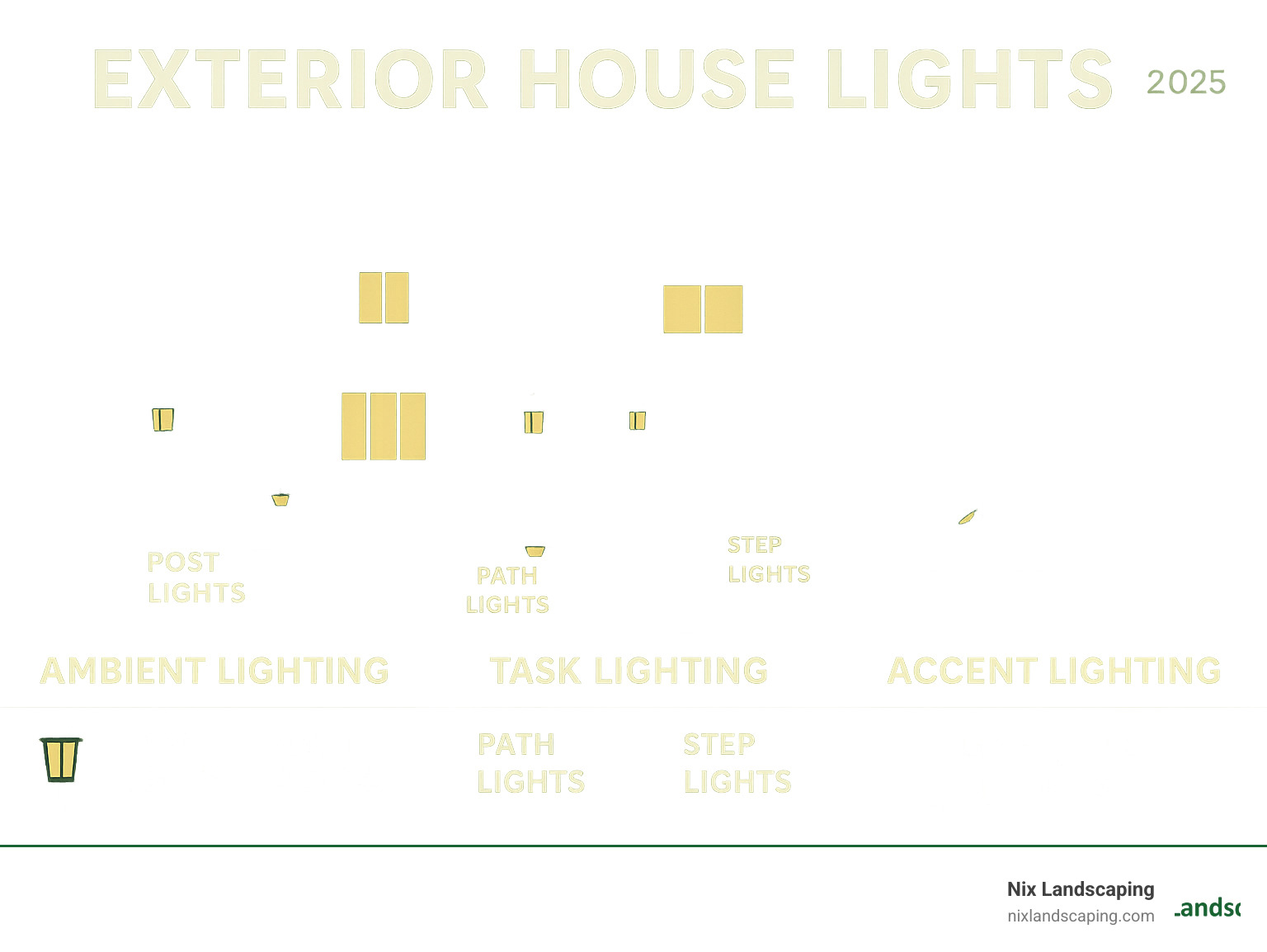
Terms related to exterior house lights:
The Triple Threat: Boosting Curb Appeal, Safety, and Security
Exterior house lights are a triple threat, simultaneously making your property more beautiful, safer, and more secure.
Boosting Curb Appeal and Enhancing Architecture
Exterior lights transform your home into a stunning showcase after dark. Strategic uplights turn architectural features like columns and unique rooflines into dramatic focal points, creating striking shadows and emphasizing details. Wall sconces and post lights create a welcoming glow, signaling that your home is warm and well-cared-for. Landscape lighting can also turn your garden into a nighttime wonderland, illuminating trees and shrubs. For more inspiration, explore our Patio Lighting Ideas.
Enhancing Safety and Visibility
Proper exterior house lights prevent accidents by turning potential hazard zones into safely lit pathways. Path lights guide visitors along walkways, while post lights illuminate larger areas like driveways. Step lights are a critical safety feature, ensuring every stair on a porch or deck is clearly visible to prevent falls. Good lighting eliminates dark corners, which is especially important if you have children or pets playing outside in the evening.
Improving Home Security
A well-lit home deters potential intruders who prefer to operate in darkness, making exterior lighting a key security investment. Bright lighting around entry points and windows makes your home a less appealing target. Motion-activated lights, such as floodlights, are particularly effective. The sudden burst of light can startle unwanted visitors and alert you to activity. By eliminating dark spots, you remove potential hiding places around your property.
Extending Outdoor Living Spaces
With thoughtfully placed exterior house lights, your patios, decks, and gardens become inviting outdoor rooms for evening relaxation and entertaining. String lights, recessed lights, and lanterns can create the perfect ambiance for late dinners or quiet conversations. Strategic accent lighting in the garden creates an enchanting atmosphere, making it a destination after dark. Good lighting makes nighttime entertaining effortless, extending your enjoyment of your outdoor spaces. For dramatic visual impact, consider uplighting your home’s exterior, as shown in these 17 Inspiring Examples Of Exterior Uplighting On Houses.
A Buyer’s Guide to Outdoor Lighting Fixtures
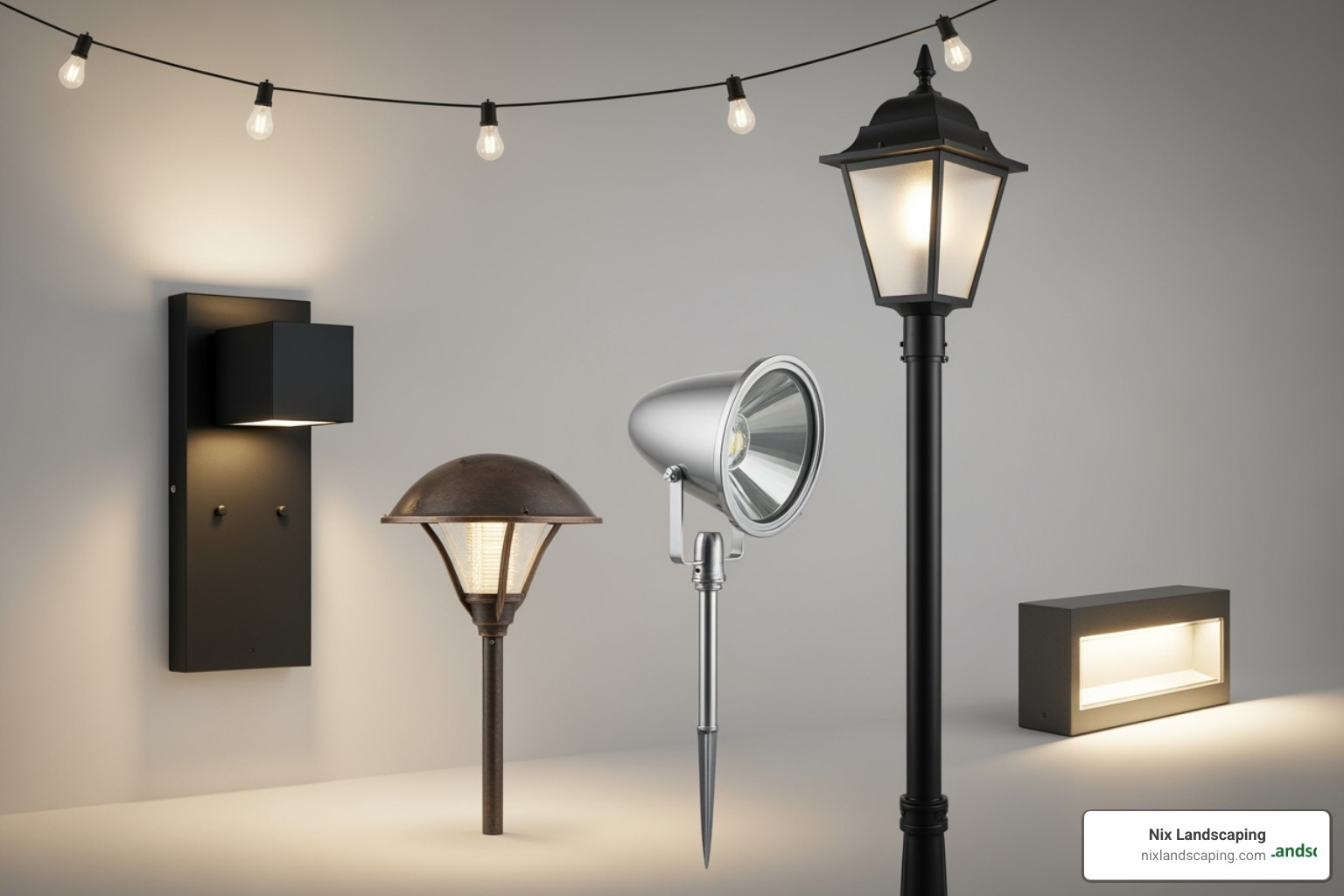
Choosing exterior house lights can be overwhelming. This guide covers fixture types, styles, finishes, and technical details to help you select the perfect lighting.
Types of Fixtures for Every Need
Different areas of your home’s exterior have unique lighting needs. Here are the main types of exterior house lights:
- Wall Lights & Sconces: Mounted on exterior walls near entryways and garages, they provide a welcoming glow.
- Post Lights: Ideal for areas away from the house, like driveways and garden edges, casting a general light.
- Path Lights: Guide guests safely along walkways with a soft, gentle light.
- Step & Deck Lights: Designed for stairs and decks, they prevent trips and add a sleek look.
- Uplighting & Spotlights: These fixtures highlight architectural details or trees. Uplights shine light upwards from the ground, while spotlights offer a focused beam to draw attention to a specific feature.
- Flood Lights: Casting a wide, powerful beam, they are ideal for illuminating large areas or for security, often paired with motion sensors.
Popular Styles and Finishes for Exterior House Lights
The style and finish of your lights should complement your home. While traditional style is very popular, other options include Modern/Contemporary, Farmhouse, Industrial, and Craftsman.
The finish also makes a big impact. Black is the most popular finish, but Bronze, Silver/Nickel, and White are also common choices. For durability, look for materials like rust-resistant Aluminum (a very common choice), durable Brass, or corrosion-resistant Steel and Stainless Steel. Composite materials are also a tough, weather-resistant option.
Understanding Light Output: Lumens, Kelvin, and CRI
Understanding the light itself is crucial for achieving the right effect.
- Lumens: This measures a light’s brightness. More lumens mean a brighter light. It’s a measure of output, unlike wattage, which measures energy use.
- Kelvin (K): This measures the light’s color temperature. Lower Kelvin numbers (2700K-3000K) produce a warm, yellowish light, ideal for creating an inviting atmosphere. Higher Kelvin numbers (4000K-5000K) produce a cooler, bluish light, better for security and visibility.
- Color Rendering Index (CRI): This indicates how well a light source reveals the true colors of objects. For exterior house lights, a CRI over 80 is recommended to ensure landscaping and architectural colors look their best.
Smart & Durable: Choosing the Best Exterior House Lights
After settling on aesthetics, consider the technical aspects that make your exterior house lights efficient, durable, and convenient.
Energy-Efficient and Eco-Friendly Options
Energy-efficient exterior lights save money and reduce environmental impact. LED technology is the top choice, using up to 85% less energy and lasting for 30,000 to 50,000 hours. This means fewer bulb changes and significant long-term savings. Energy Star certified fixtures meet strict efficiency guidelines. Many outdoor systems also use low-voltage power (typically 12 volts), which is safer for DIY installation and highly efficient, especially with LED bulbs. Check out our Outdoor LED Strip Lighting Ideas for efficient options.
Weather-Ready Fixtures Built to Last
Durability is essential for exterior house lights, which must withstand the elements. Look for UL or ETL listings, which certify that a product meets safety standards.
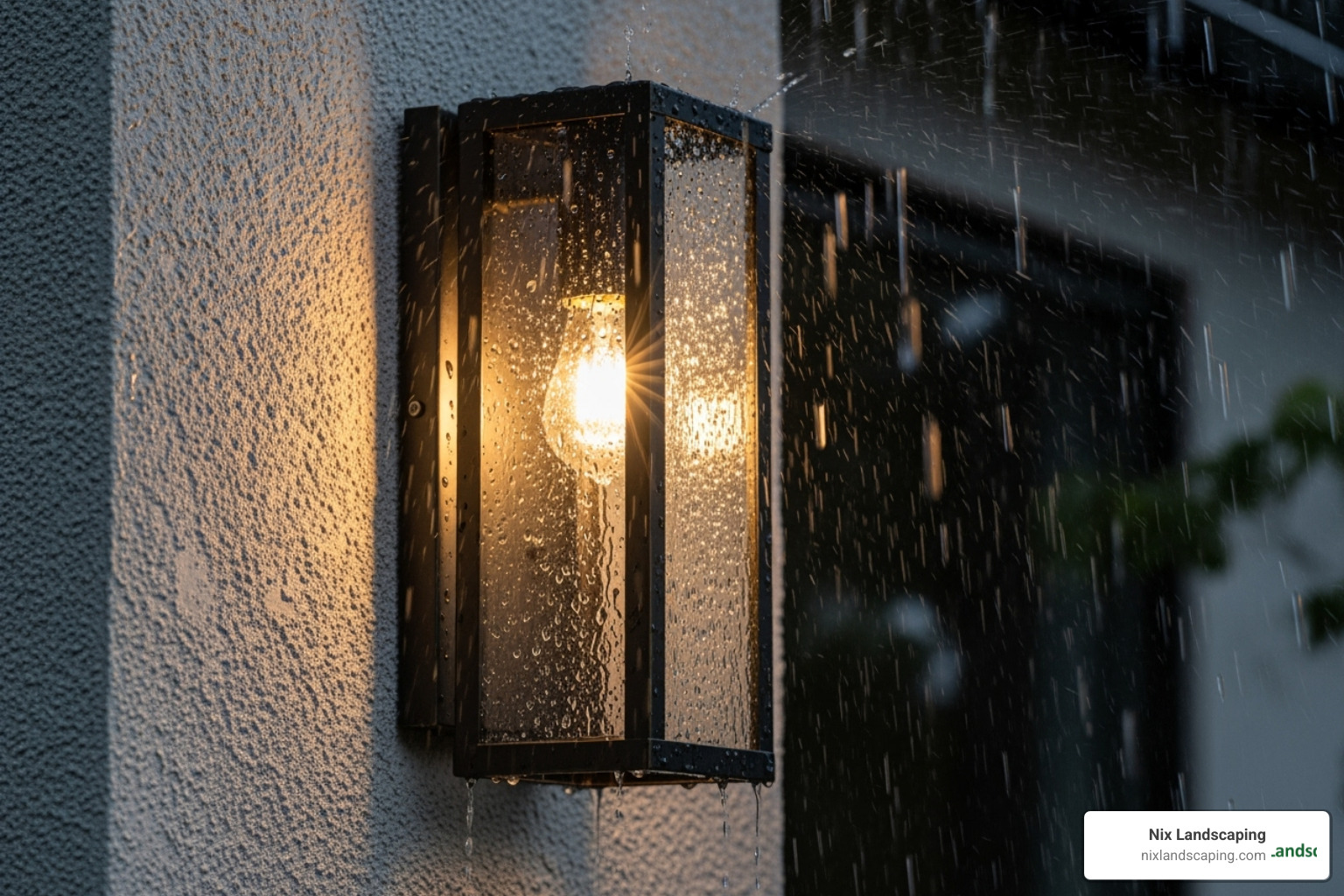
Pay attention to the fixture’s rating: Wet Rated lights can handle direct rain and sprinklers, while Damp Rated lights are for covered areas like porches. Choose rust-resistant materials like aluminum, stainless steel, or composites. For coastal areas, marine-grade products are designed to resist corrosive salt and humidity. Quality fixtures also feature sturdy construction and seamless edges to keep water out.
Smart Features for Convenience and Security
Modern exterior house lights offer smart features for convenience, security, and ambiance control.
- Dimmable lights allow you to adjust brightness for security or to create a cozy atmosphere.
- Motion sensors automatically turn on lights when movement is detected, deterring intruders and lighting your path.
- Dusk-to-dawn sensors (photocells) automatically turn lights on at night and off in the morning, ensuring consistent security and saving energy.
- Smart home integration lets you control lights from your phone, set schedules, and link them with other smart devices. Many fixtures also have built-in timers for programmed control.
Design and Installation: Bringing Your Vision to Light

Designing and installing your exterior house lights is where your vision comes to life, blending art and science to make your home look amazing after dark.
Key Principles of Landscape Lighting Design
A stunning outdoor lighting scheme requires thoughtful design. Key techniques include:
- Layering light: Use a mix of ambient (general), task (for specific activities), and accent (for drama) lighting to create depth and interest.
- Creating focal points: Use accent lights to showcase a beautiful tree, statue, or unique architectural feature.
- Wall washing: Casts a wide, even beam across a wall to highlight its texture and color with a soft glow.
- Grazing: Placing a light very close to a surface like brick or stone to create dramatic shadows and highlight texture.
- Silhouetting: Placing a light behind an object and aiming it at a backdrop to create a dramatic outline.
For more inspiration, explore our Creative Landscape Lighting Ideas.
Placement and Spacing Considerations for Exterior House Lights
Proper placement is crucial for both safety and aesthetics. For wall lights by a front door, a good rule is to mount them at eye level (around 66 inches high) or about 1/4 to 1/3 the height of the door. This helps avoid glare, which can also be minimized by using shielded fixtures. For pathway spacing, place lights so their illumination overlaps slightly, creating a continuous, inviting glow without dark spots. To highlight architectural details, experiment with angles. Uplighting from the base of columns can make your home look taller and more stately.
For professional help, our team at Nix Landscaping can assist with Garden Lighting Installation.
DIY vs. Professional Installation
While simple, low-voltage lights can be a DIY project, complex systems are best left to professionals. Working with electricity outdoors carries risks, and improper wiring can be a fire hazard. Professionals are versed in local building codes and regulations, like those here in Fishers, IN. Complex systems require special tools and expertise to ensure everything is installed correctly and safely.
A professional ensures your exterior house lights are beautifully integrated, with hidden wires and perfectly aimed fixtures for a polished look. Professional installation also guarantees long-term reliability, with secure, weatherproof connections built to last. This investment pays off in safety, efficiency, and stunning aesthetic appeal.
Frequently Asked Questions about Exterior Lighting
Here are answers to some of the most common questions we hear from homeowners about exterior house lights.
How do I choose the right size outdoor lights for my house?
Choosing the right size is about creating visual balance. For wall lights flanking a front door, a good rule of thumb is to pick a fixture that’s 1/4 to 1/3 the height of the door. For a single garage door, use the same rule. For a double garage, you might use two smaller fixtures or one larger one. The key is proportionality; a tiny light can look lost on a grand home, while a huge one can overwhelm a modest house. Consider taping cardboard cutouts to visualize the size before buying.
What is “Dark Sky Compliant” lighting?
Dark Sky Compliant lighting is designed to reduce light pollution. These fixtures direct all light downward, preventing it from spilling up into the atmosphere or sideways. They often use shields or full cut-off designs. This approach helps preserve the visibility of the night sky, reduces glare, and avoids disorienting nocturnal wildlife. Choosing these fixtures is a responsible choice for both your home and the environment.
How many lumens do I need for outdoor lighting?
Lumens measure brightness, and the amount you need for your exterior house lights depends on the light’s purpose. Too much light can create harsh glare, while too little won’t be effective. Here are some general guidelines:
- Path lights: 100-200 lumens for safe guidance.
- Step lights: 12-100 lumens to safely highlight each step.
- Flood lights: 700-1300 lumens for broad security or driveway lighting.
- Motion sensor lights: 300-700 lumens to startle intruders and illuminate activity.
- Accent lighting: 50-500+ lumens, depending on the size of the feature you’re highlighting (e.g., a small plant vs. a large tree).
Conclusion: Transform Your Home’s Exterior Tonight
Exterior house lights are a powerful investment that improves your home’s beauty, safety, and security. The right lighting makes your home stunning and more welcoming.
Bringing your home to light begins with understanding your options—from fixture types and styles to technical details like lumens and Kelvin. Modern technology like energy-efficient LEDs, weather-ready fixtures, and smart features like motion sensors offer incredible performance and convenience. These elements come together in a cohesive lighting plan that showcases your home’s unique charm.
While simple projects can be DIY, a comprehensive design with complex wiring benefits from a professional touch to ensure safety and compliance with local codes. At Nix Landscaping, we specialize in crafting custom lighting schemes for homeowners in Fishers, IN, and the surrounding area. We combine our landscape design experience with lighting expertise to create systems that are both stunning and functional.
Ready to see your home in a whole new light? We’re here to help you illuminate its full potential. Explore our outdoor lighting solutions and let’s get started.

