
The Great Debate: To Clean or Not to Clean Your Fall Garden
Fall cleanup in the garden has sparked one of the most passionate debates among gardeners today. The traditional approach calls for thorough autumn cleaning – raking every leaf, cutting back all perennials, and creating pristine beds for winter. But a growing movement argues for a “messier” approach that leaves seed heads standing, allows leaf litter to remain, and prioritizes wildlife habitat over perfect aesthetics.
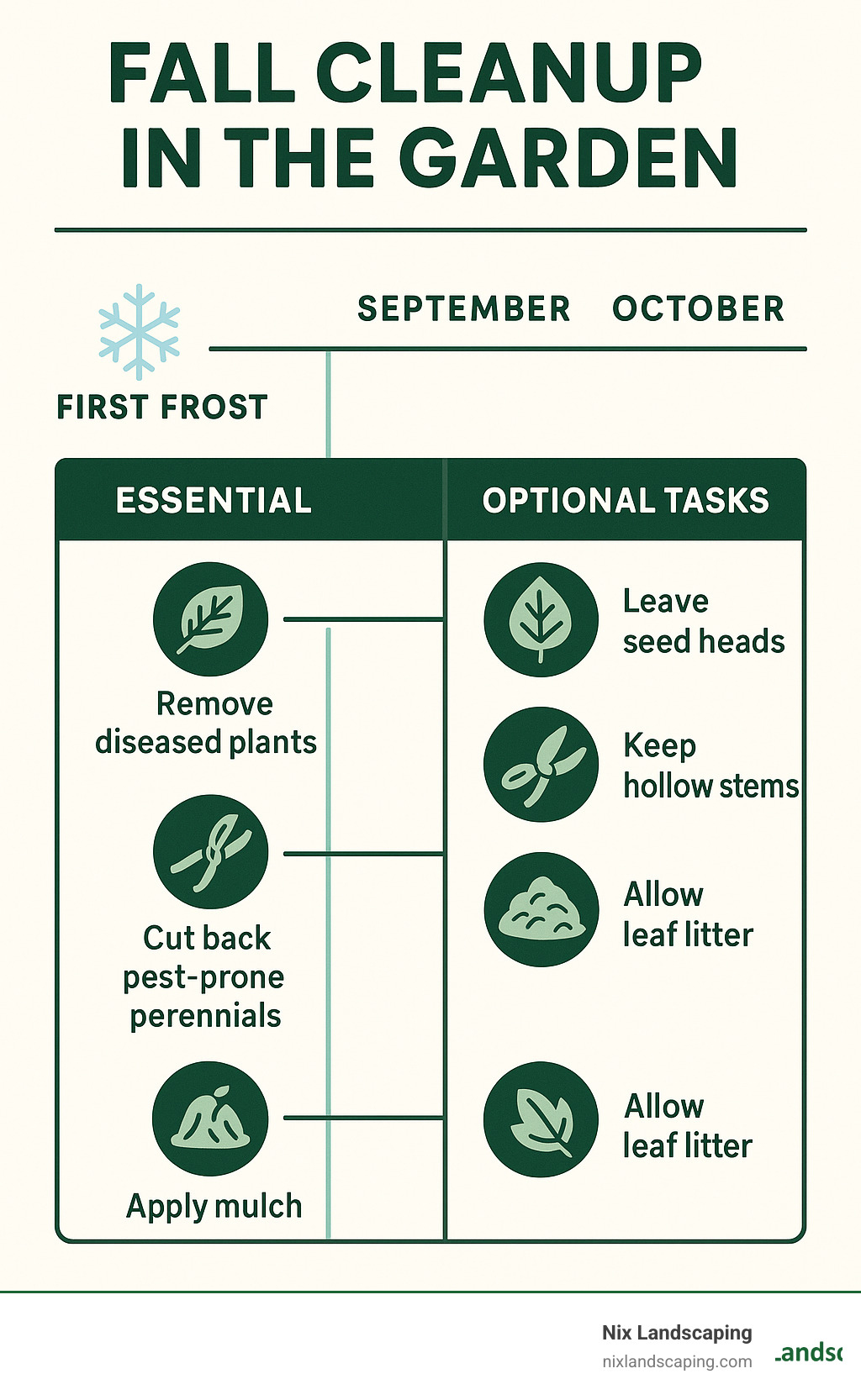
Essential Fall Garden Cleanup Tasks:
- Remove diseased plants and debris
- Cut back pest-prone perennials (iris, peony)
- Clean and store garden tools
- Drain hoses and irrigation systems
- Apply mulch after first hard frost
Optional Tasks (Wildlife-Friendly Approach):
- Leave seed heads for bird food
- Keep hollow stems for beneficial insects
- Allow leaf litter under shrubs
- Create brush piles for small mammals
This isn’t just about personal preference – it’s about balancing garden health, aesthetic appeal, and environmental stewardship. Some gardeners swear by the disease prevention and spring efficiency of thorough cleanup. Others champion the ecological benefits of leaving natural debris for overwintering pollinators and soil organisms.
I’m Kyle Nix, owner of Nix Landscaping in Fishers, Indiana, and I’ve helped hundreds of homeowners steer this fall cleanup in the garden decision over the years. Through practical experience with both approaches, I’ve learned that the best strategy often combines elements of both philosophies depending on your specific garden conditions and goals.
Explore more about fall cleanup in the garden:
Setting the Stage
The debate over fall cleanup in the garden reflects a broader shift in gardening philosophy. For decades, the “clean garden is a healthy garden” mentality dominated landscape maintenance, emphasizing removing all plant debris and creating picture-perfect winter landscapes.
However, growing awareness of declining pollinator populations has challenged these traditional practices. Ecologists now advocate for leaving natural debris that provides critical habitat for beneficial insects, food sources for birds, and soil protection through winter months.
This creates real challenges for homeowners. Do you prioritize the tidy appearance that neighbors expect? Or do you accept the “messy” approach that supports local ecosystems? The answer isn’t always clear-cut, and that’s what makes this debate so compelling.
Fall Cleanup in the Garden: Tidy vs Messy Philosophy
When it comes to fall cleanup in the garden, you’re choosing between two different philosophies about what makes a garden “good.” The tidy garden approach is about bringing order to autumn’s chaos – every perennial cut back to neat stubs, lawns free of leaves, and beds ready for a magazine photo shoot.
The messy garden philosophy accepts what nature intended. These gardens keep seed heads standing through winter, let fallen leaves settle naturally, and prioritize wildlife needs over neighbor expectations. It’s not about being lazy – it’s about recognizing that your garden is part of a bigger ecosystem.
Cultural pressure to maintain tidy gardens runs deep in American neighborhoods. We’ve been trained to see a “clean” yard as a sign of responsible homeownership, while anything too natural might earn disapproving glances.
Both approaches can create beautiful, healthy gardens. The key is understanding what ecological gardening really means and how traditional seed heads and wildlife shelter can coexist with your aesthetic goals.
Historical Roots of Garden Tidiness
The obsession with perfectly manicured landscapes traces back to Victorian lawns and the idea that conquering nature was the ultimate sign of civilization and success. Having a formal garden showed you had both money and time to maintain such perfection.
Suburban aesthetics took this concept further. After World War II, developers created neighborhoods where uniform, pristine yards became the standard. Maintaining a tidy landscape became about fitting in with your community and protecting property values.
Lawn culture became so embedded in American life that we stopped questioning whether it made sense. Marketing campaigns convinced homeowners that fallen leaves were enemies to be defeated, not natural materials that could benefit the soil.
Modern “Leave the Leaves” Movement
The “leave the leaves” movement gained momentum when researchers began documenting what happens to pollinators when we remove every trace of natural debris from our landscapes.
About 70% of native bee species nest in the ground, and many others depend on hollow plant stems to survive winter. When we cut everything down and rake everything up, we’re essentially evicting these beneficial insects from our gardens.
Leaf litter isn’t garden waste – it’s habitat for tiny creatures that keep our gardens healthy. Butterfly larvae, beneficial beetles, and countless other helpful insects depend on fallen leaves for shelter and food. One oak tree can support over 500 species of butterflies and moths, many needing that leaf litter to complete their life cycles.
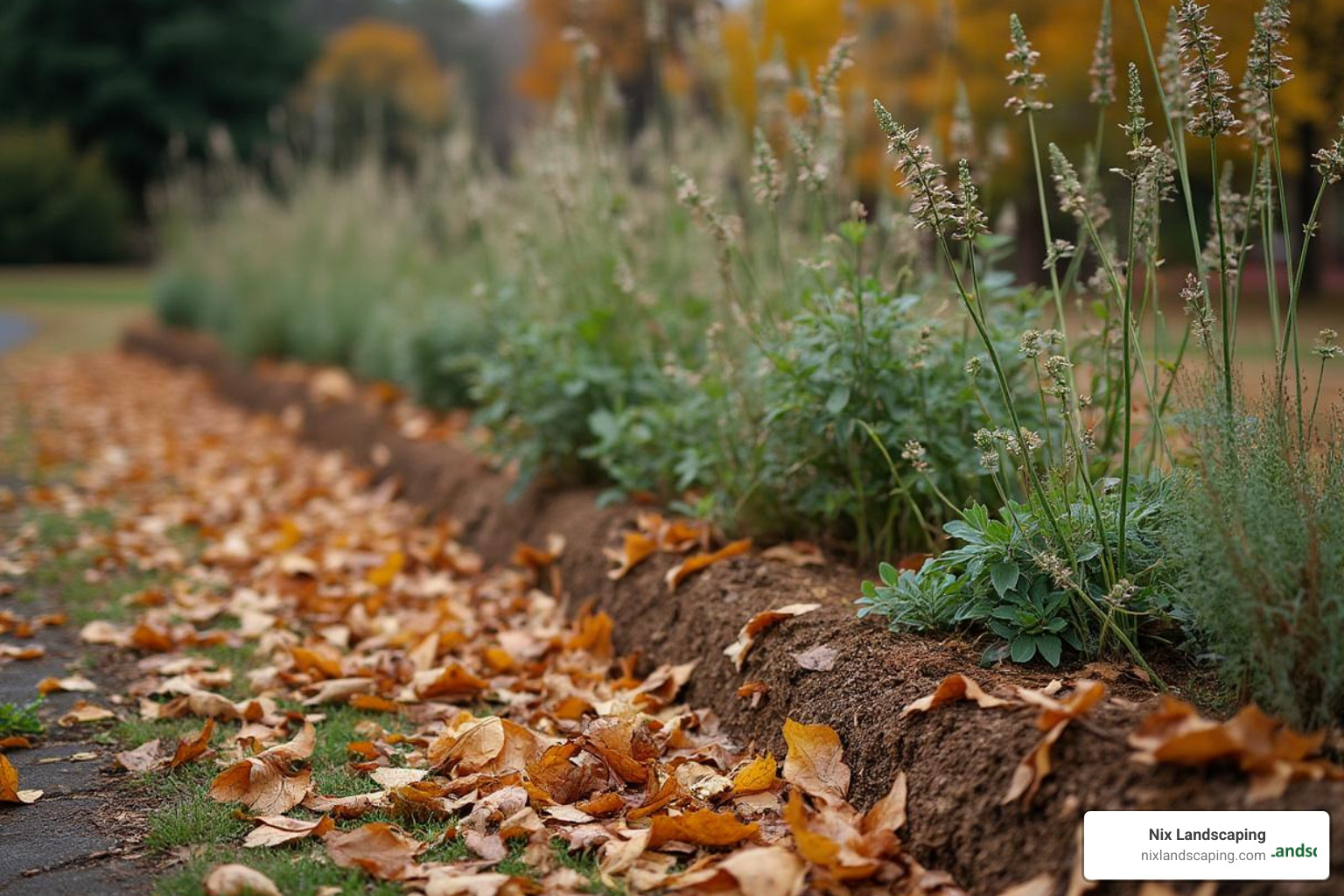
Extension services and master gardener programs have started embracing these wildlife-friendly practices. The shift from seeing fallen leaves as “mess” to recognizing them as “habitat” represents a fundamental change in how we think about our role as gardeners.
Smart fall cleanup in the garden can balance both approaches, giving you a landscape that looks intentional while still supporting the wildlife that makes your garden thrive.
Reasons to Tidy Up: Health, Aesthetics, Efficiency
Traditional fall cleanup in the garden practices exist for good reasons beyond just wanting things to look neat.
Disease prevention stands as the strongest argument for thorough autumn cleaning. If your garden battled fungal issues this year – black spot on roses, powdery mildew on zinnias, or late blight on tomatoes – those problems are waiting to return next season. Many disease pathogens overwinter in plant debris, ready to attack when conditions warm up.
Weed control offers another compelling reason to clean up thoroughly. Those innocent-looking seed heads are time bombs of future headaches. A single dandelion can scatter up to 15,000 seeds that stay viable for years. Chickweed and henbit will germinate this fall and get a head start on choking out your spring plantings.
The efficiency factor can’t be ignored. Spring arrives with its own urgent to-do list. Getting cleanup tasks done in fall means you can focus on the fun stuff when growing season returns.
| Cleanup Approach | Disease Risk | Weed Pressure | Spring Workload | Wildlife Benefit |
|---|---|---|---|---|
| Tidy Garden | Low | Low | Light | Minimal |
| Messy Garden | Higher | Higher | Heavy | High |
| Selective Cleanup | Moderate | Moderate | Moderate | Good |
Fall cleanup in the garden for plant health
Some plants practically beg for fall cleanup to stay healthy. Annual removal should be non-negotiable, especially for disease-prone crops. Those tomato plants that succumbed to blight need to go straight to the trash, not your compost pile. Same goes for squash vines with bacterial wilt and bean plants showing signs of rust.
Hot composting can kill pathogens if you maintain temperatures above 140°F consistently, but most backyard compost piles never get that hot. It’s safer to bag problematic plant material and send it out with municipal waste.
Certain perennials benefit from fall cutting. Peonies should be trimmed to 3-5 inches to prevent botrytis blight. Bearded iris foliage must come out to eliminate iris borer eggs. Lily stems and leaves should be cut back to prevent various fungal diseases.
Smart Gardening practices from extension services can reduce disease problems by up to 60% compared to leaving everything in place.
Compost quality improves when you properly balance materials. Shredded leaves mixed with grass clippings and kitchen scraps create the perfect carbon-to-nitrogen ratio for efficient decomposition.
Curb Appeal & HOA Compliance
Property values consistently benefit from well-maintained landscapes, with studies showing 10-15% increases in home values when yards look cared for year-round. Fall cleanup plays a big role in that overall impression.
Homeowner association rules might frustrate wildlife-minded gardeners, but they’re legal obligations. Many HOAs require leaf removal from lawns and restrict the height of ornamental grasses or perennials left standing through winter.
Neighborhood expectations create social pressure that affects community relationships and property values. The key is finding ways to balance ecological benefits with community standards – where selective cleanup strategies really shine.
Reasons to Go Messy: Wildlife, Soil, Sustainability
Choosing a “messier” approach for fall cleanup in the garden means giving nature breathing room. The benefits for wildlife and soil are real and backed by science. When you leave plant stems, seed heads, and leaf litter, you’re creating habitat for native bees, butterflies, beetles, and other helpful critters that need these spots to survive winter.
Research from the Xerces Society shows that about 30% of native bees nest in hollow plant stems. Other species need the pithy centers of elderberry and sumac stems left standing through winter. Cutting everything down can wipe out entire broods of beneficial insects that would otherwise emerge next spring.
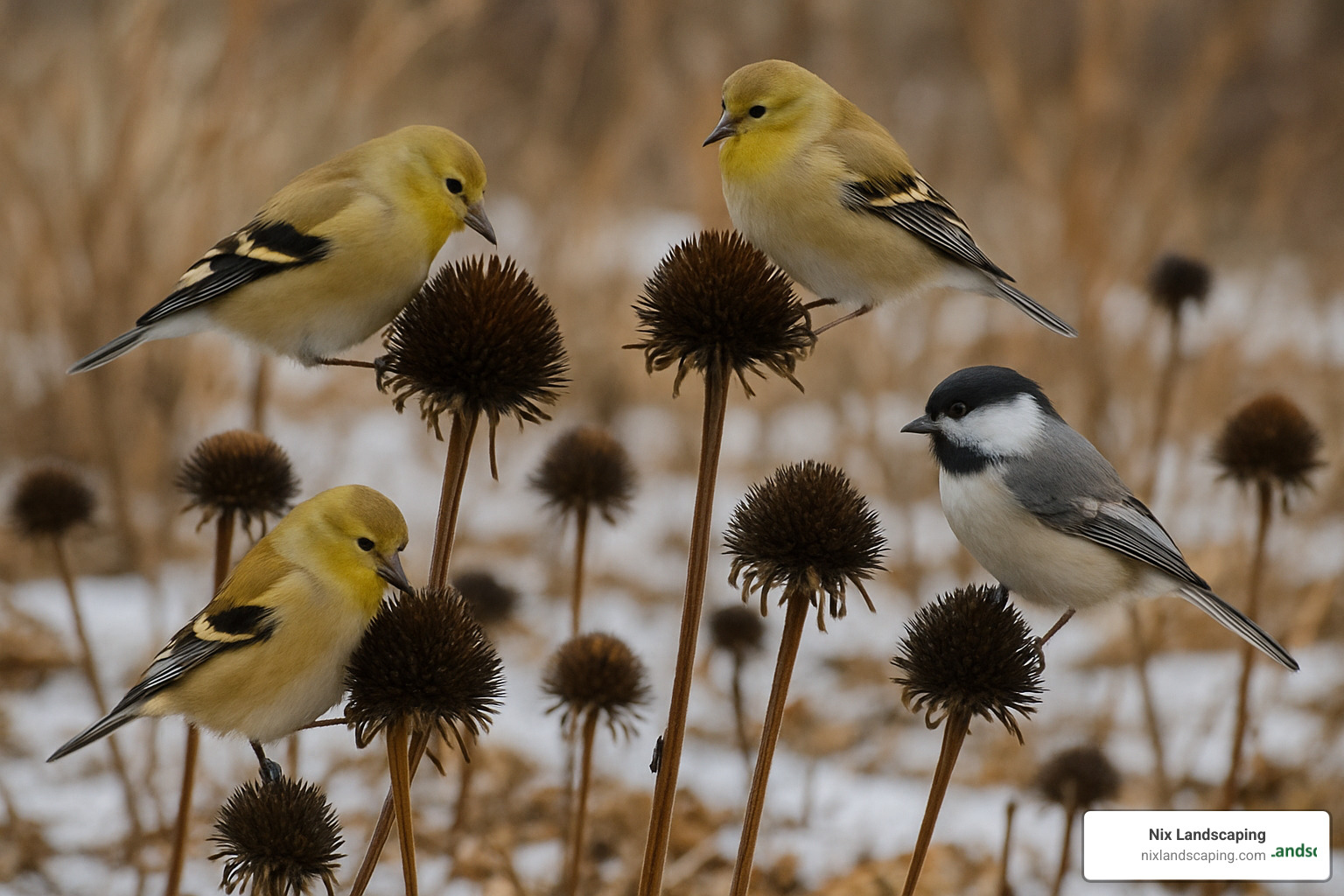
It’s not just insects that benefit. Seed heads from coneflowers and black-eyed Susans stock the pantry for goldfinches, chickadees, and nuthatches. A single coneflower can keep a flock happily snacking for days.
Fallen leaves aren’t “yard waste” – they’re a gift to your soil. This natural mulch protects the ground from temperature swings and, as it breaks down, feeds soil microbes that boost plant health. Leaf litter builds organic matter and helps retain moisture – a recipe for strong roots and lusher gardens come spring.
Fall cleanup in the garden that favors pollinators
If you want to support pollinators, your fall cleanup in the garden should be thoughtful, not just thorough. Many butterflies spend winter as chrysalises attached to stems or tucked under leaves. Clearing every corner can mean their numbers dwindle. Experts suggest keeping at least 20% of your yard “messy” – leaving a brush pile in the back, letting a border of perennials stand tall, or not raking under shrubs.
Native bees are especially sensitive to too much tidiness. Ground-nesting species need patches of undisturbed soil mixed with plant debris, while stem-nesters need those hollow stalks left until well after spring warms up.
Managing Risks While Staying “Messy”
Going “messy” with your fall cleanup in the garden doesn’t mean ignoring real-world problems. You still need to think about fire safety, keeping rodents in check, and making sure garden paths are safe all winter.
To lower fire risk, keep dry brush and tall grasses away from your house – local guidelines usually recommend a buffer zone of 30 to 100 feet. For rodents, keep a strip of clear ground right next to your home, while brush piles and leaf cover can be placed farther out. Always keep walkways clear for safe winter access.
“Messy” gardening is about balance. With planning, you can protect pollinators, nourish your soil, and enjoy winter wildlife – all while keeping your home and family safe. If you’d like help planning your own eco-friendly fall cleanup, the team at Nix Landscaping is always happy to help!
Essential Tasks, Timing & Tools
Regardless of your philosophical approach to fall cleanup in the garden, certain tasks are universally beneficial and should be completed before winter. These essential activities focus on plant health, equipment maintenance, and soil preparation.
Disease management tops the list of critical fall tasks. Any plants showing signs of bacterial or fungal infections should be removed and disposed of in municipal waste. This includes tomatoes with late blight, roses with black spot, and perennials with obvious pest damage.
Tool maintenance ensures equipment longevity and prevents disease transmission. Garden tools should be cleaned with a 10% bleach solution, sharpened, oiled, and stored in a dry location.
Irrigation system winterization prevents costly freeze damage. Hoses should be drained, coiled, and stored indoors, while automatic irrigation systems require professional blowout services in climates where temperatures drop below freezing.
For comprehensive guidance on these essential tasks, check out our Yard Cleaning Tips for detailed maintenance schedules and techniques.
What Must Go Before Snow Falls?
Certain garden materials pose health or safety risks if left through winter and must be removed regardless of your cleanup philosophy. Diseased plant material tops this list, as many pathogens survive freezing temperatures and can reinfect gardens in spring.
Invasive weeds should be removed before they set seed. Plants like thistle, bindweed, and garlic mustard can quickly overwhelm garden areas if allowed to complete their reproductive cycles.
Spent vegetable plants, particularly nightshade family plants (tomatoes, peppers, eggplants), should be removed after the first killing frost. These plants are susceptible to numerous diseases that can overwinter in plant debris.
Tender bulbs and tubers like dahlias, gladiolus, and cannas must be dug after foliage dies back but before hard freezes damage the storage organs.
For specific guidance on essential fall tasks, visit our Fall Garden Clean Up page for detailed checklists and timing recommendations.
What Can Stay Until Spring?
Many garden elements can safely remain through winter and actually provide benefits when left in place. Ornamental grasses add winter interest while providing seed for birds and nesting material for small mammals. Sturdy perennials like coneflowers, black-eyed Susans, and native asters offer similar benefits.
Brush piles created from pruned branches provide essential cover for ground-dwelling birds and beneficial insects. These structures should be located away from buildings but can occupy corners or edges of garden areas.
Leaf blankets under trees and shrubs mimic natural forest conditions while suppressing weeds and feeding soil organisms. Research shows that areas mulched with fallen leaves have 40% fewer weeds and significantly improved soil biology.
Standing stems of plants like bee balm and other native perennials provide overwintering sites for beneficial insects. These hollow stems house native bee larvae and beneficial beetle pupae that emerge in spring to provide natural pest control.
Timing & Zone Considerations
Fall cleanup in the garden timing varies significantly based on geographic location and local climate patterns. In Fishers, Indiana (USDA Zone 5b-6a), the first killing frost typically occurs in mid to late October, marking the beginning of the fall cleanup window.
Temperature thresholds guide cleanup decisions more accurately than calendar dates. Most annual plants succumb to temperatures below 32°F, while tender perennials may be damaged by temperatures in the upper 20s.
Soil temperature affects the timing of certain tasks like bulb planting and cover crop seeding. Spring-flowering bulbs should be planted when soil temperatures consistently stay below 60°F, typically 6-8 weeks before hard freezes are expected.
Compost & Waste Management Best Practices
Proper handling of garden debris determines whether fall cleanup in the garden contributes to soil health or creates problems. Hot composting requires maintaining temperatures above 140°F to kill pathogens and weed seeds, which demands careful attention to carbon-to-nitrogen ratios, moisture levels, and regular turning.
Cold composting offers a simpler alternative but takes longer and may not eliminate all pathogens. This method works well for healthy plant debris but isn’t suitable for diseased material or invasive weeds.
Shredding leaves and other organic matter accelerates decomposition and prevents matting. A mulching mower can effectively shred moderate amounts of leaves, while larger quantities may require a dedicated leaf shredder.
Moisture balance is critical for successful composting. Compost piles should feel like a wrung-out sponge – moist but not waterlogged.
For detailed composting guidance and other maintenance tips, explore our Garden Maintenance Tips resource.
Tool & Equipment Winterization
Proper tool maintenance extends equipment life and ensures reliable performance when spring gardening resumes. Garden tools should be thoroughly cleaned to remove soil and plant debris, which can harbor pathogens and accelerate corrosion.
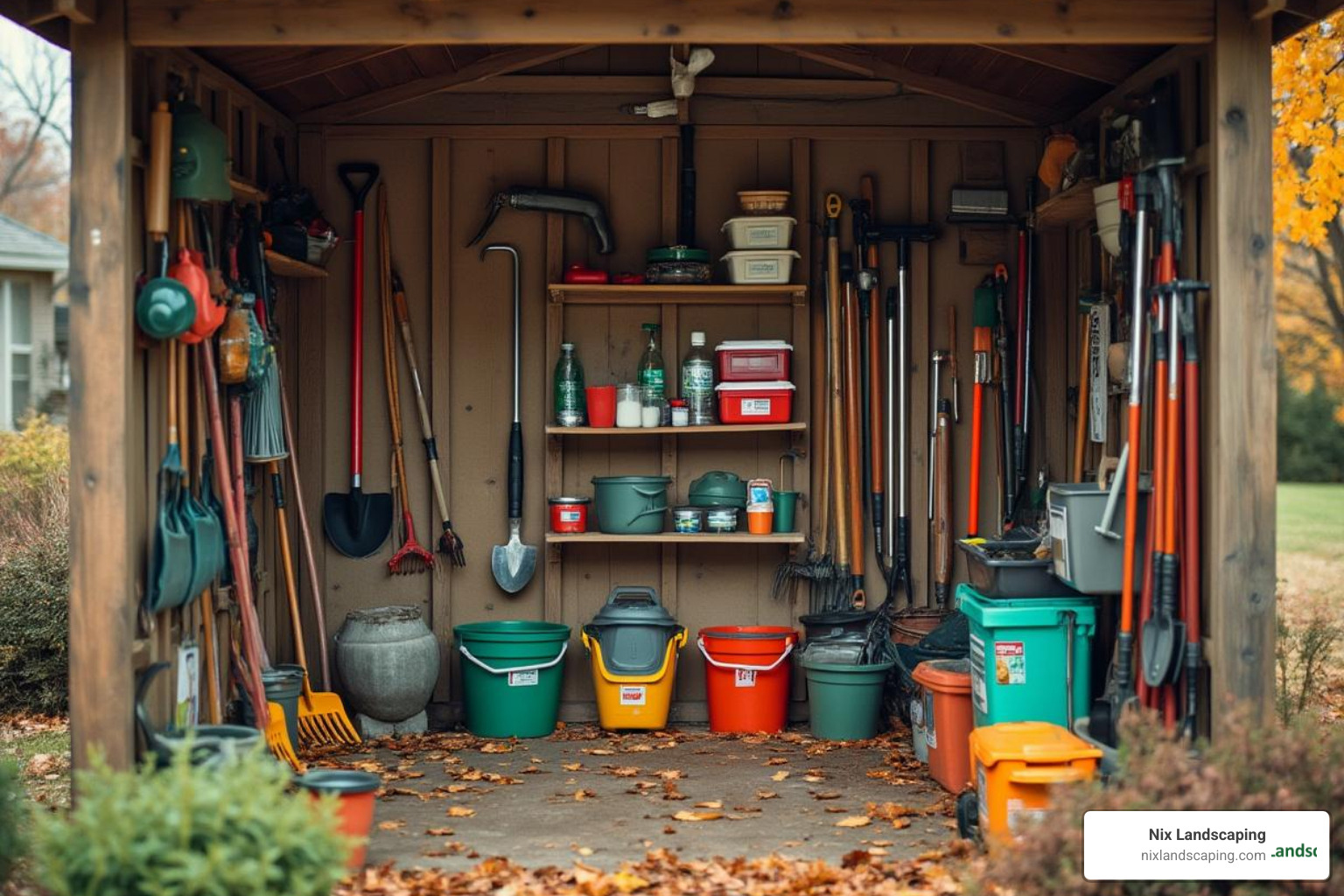
Cutting tools require special attention, as dull blades create ragged cuts that heal poorly and invite disease. Pruning shears, loppers, and hedge trimmers should be sharpened and oiled before storage.
Power equipment needs more extensive winterization. Gasoline should be stabilized or removed entirely to prevent fuel system problems. Oil changes, air filter cleaning, and spark plug inspection help ensure reliable spring startup.
Storage conditions significantly affect tool longevity. Tools should be stored in dry locations away from temperature extremes.
Conclusion, FAQs & Next Steps
The fall cleanup in the garden debate doesn’t have to be an either-or decision. After helping hundreds of Fishers homeowners steer this choice, I’ve learned that the most successful gardens often blend both approaches. You might maintain pristine beds near your front entrance while creating wildlife havens in your backyard corners.
The key is understanding that your garden’s needs change over time. A new garden might benefit from stricter cleanup to establish healthy plants, while a mature landscape can support more ecological approaches. Climate, soil conditions, and local wildlife populations all influence what works best for your specific situation.
Keep notes about what you try each fall. Did leaving those coneflower heads bring more goldfinches to your yard? Did cutting back the peonies prevent that recurring leaf spot problem? This simple record-keeping helps you refine your approach.
Fall soil testing gives you a huge advantage for next year. Soil pH adjustments and organic matter additions work slowly, so applying them now means your plants will benefit from day one of the growing season.
Don’t forget about spring bulbs – this is your last chance to plant them before the ground freezes. Whether you’re team tidy or team messy, everyone can agree that daffodils poking through the snow are pure magic.
At Nix Landscaping, we’ve seen both approaches create beautiful, healthy gardens. What matters most is choosing a strategy that fits your lifestyle and goals. We’re always happy to help you figure out what that looks like for your specific property.
Action Plan for Your Preferred Cleanup Style
Creating your personal fall cleanup in the garden plan starts with separating the must-dos from the nice-to-dos. Think of it like packing for a trip – some things are essential, others depend on your destination and style.
Your non-negotiable essentials should include removing any diseased plants, cleaning your tools, and winterizing your irrigation system before that first hard freeze hits. These tasks prevent bigger problems down the road.
Everything else becomes a choice based on your goals. Want to support wildlife? Leave those seed heads standing and create a brush pile in a corner. Prefer a tidy look? Cut back selectively but consider leaving some areas wilder. Need to keep the neighbors happy? Focus cleanup efforts on highly visible areas while letting back corners go natural.
Timing flexibility makes the whole process less stressful. You don’t have to do everything the weekend after the first frost. Spread tasks over several weeks, tackling urgent items first and saving optional work for when you have time and energy.
For detailed seasonal schedules that take the guesswork out of timing, check out our Seasonal Yard Cleanup guide.
Frequently Asked Questions about fall cleanup in the garden
The questions I hear most often about fall cleanup in the garden usually boil down to three main concerns: what’s actually necessary, how to help wildlife, and what to do with problem plants.
Is fall cleanup in the garden always necessary?
Fall cleanup in the garden isn’t a one-size-fits-all requirement. Your garden’s history tells you a lot about what you need to do. If you battled diseases or pests all season, thorough cleanup becomes much more important. A healthy garden with minimal problems can often get by with just the basics.
Location matters tremendously. Urban gardens often need more intensive management because problems can spread quickly in tight spaces. Rural properties typically have more flexibility to let nature take its course. Suburban gardens usually fall somewhere in between.
Your garden’s age and establishment also influence needs. Young gardens benefit from more careful management while they’re getting established. Mature, well-balanced gardens can handle more natural approaches.
How can fall cleanup in the garden support pollinators?
Supporting pollinators through fall cleanup in the garden means thinking like a bee instead of a human. Those “messy” hollow stems you might want to cut down? They’re apartment buildings for native bees who will emerge next spring to pollinate your vegetables and flowers.
Selective leaving works better than all-or-nothing approaches. Keep seed heads on plants like coneflowers and black-eyed Susans – they feed birds all winter while providing attachment points for butterfly cocoons. Leave ornamental grasses standing for the same reasons.
Create designated wild zones where you let nature handle the cleanup. Even a small corner of your yard can make a big difference for overwintering insects.
What should I do with diseased or pest-infested material?
Diseased or pest-infested plant material gets special treatment because composting it usually just saves problems for later. Bag it and send it out with your regular trash – this breaks the cycle that would otherwise continue next year.
Tool cleaning becomes critical when you’re dealing with diseased plants. A quick wipe with rubbing alcohol or bleach solution between cuts prevents spreading problems to healthy plants.
Burning is an option where local regulations allow it, and the high heat destroys pathogens effectively. Just check with your local fire department about restrictions and safety requirements.
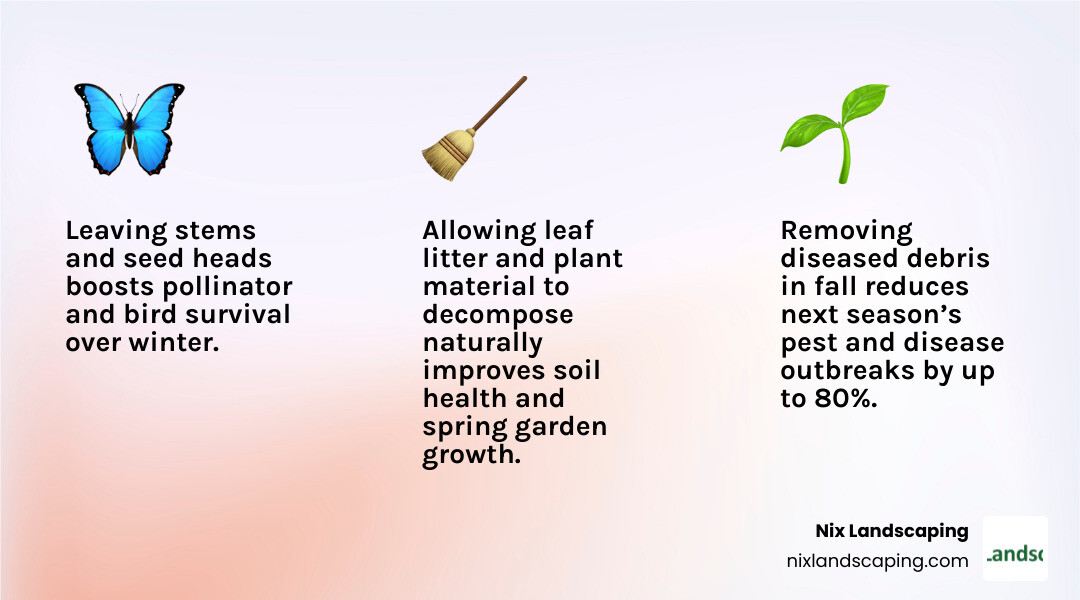
The beauty of fall cleanup in the garden is that there’s no single right answer. Your best approach depends on your specific situation, goals, and what makes you happy in your outdoor space. Whether you find satisfaction in a perfectly tidy garden or joy in watching birds feast on seed heads you left standing, the important thing is making informed choices.
As gardening wisdom evolves and we learn more about supporting local ecosystems, the strategies that work best will likely continue changing too. The key is staying flexible and adapting your approach based on what you observe in your own garden.
For personalized help developing the perfect fall cleanup in the garden strategy for your Fishers property, we’d love to chat. Our team understands both traditional and wildlife-friendly approaches, so we can help you find the sweet spot that works for your specific needs. More info about our services

