
Why Fall Garden Maintenance Sets the Stage for a Stunning Spring
Fall garden maintenance tips are essential for protecting your investment and ensuring your landscape bounces back beautifully next year. As temperatures drop and leaves begin to fall, your garden needs specific care to survive winter and thrive when spring arrives.
Essential Fall Garden Tasks:
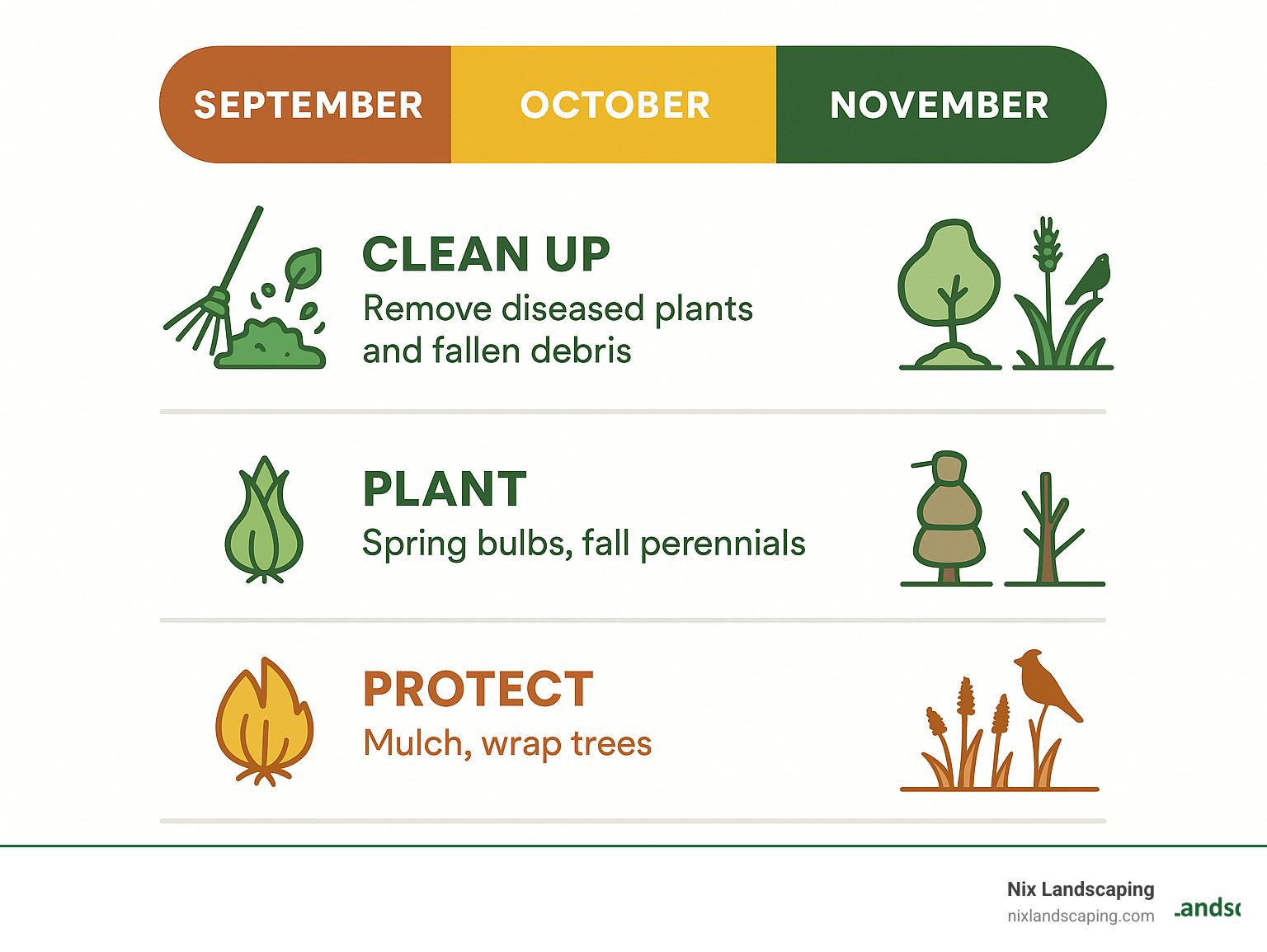
1. Clean up – Remove diseased plants and fallen debris
2. Protect – Mulch tender plants and wrap young trees
3. Plant – Set spring bulbs and fall perennials while soil is warm
4. Prepare – Amend soil, sow cover crops, and winterize equipment
5. Support wildlife – Leave some seed heads and create habitat areas
Fall isn’t just about cleanup – it’s your chance to get ahead of spring work while soil conditions are still ideal for planting. The warm fall soil helps new plants establish strong root systems before winter dormancy begins.
Many homeowners make the mistake of either doing too much cleanup (removing beneficial wildlife habitat) or too little (allowing diseases to overwinter). The key is finding the right balance between garden health and ecological support.
I’m Kyle Nix, owner of Nix Landscaping, and I’ve spent years helping Fishers homeowners master fall garden maintenance tips that save time and money while creating healthier landscapes.
Fall garden maintenance tips vocab explained:
– beginner gardening
– yard cleaning tips
– DIY garden projects
Essential Fall Garden Maintenance Tips Checklist
Getting your fall garden maintenance tips timing right makes all the difference between a successful winter and spring cleanup headaches. The secret is waiting for that first killing frost – it’s nature’s way of telling you when annual plants have finished their job for the year.
After that first hard freeze hits, you’ll want to tackle the must-do tasks that protect your investment. Removing diseased plant material tops the list because those fungal spores and pest eggs are just waiting to cause trouble next spring. Mulching tender perennials and wrapping young tree trunks prevents costly winter damage.
The nice-to-do tasks are your chance to get ahead of the spring rush. Planting spring bulbs while the soil is still workable means gorgeous blooms when you’re tired of winter. Adding compost to garden beds gives soil microorganisms all winter to work their magic.
Here’s where modern fall garden maintenance tips differ from old-school advice: we now know that leaving some things messy is actually better for your garden ecosystem. Standing perennial seed heads feed birds through winter, while ornamental grass plumes add beautiful structure to snow-covered landscapes.
| Clean Everything Approach | Wildlife-Friendly Approach |
|---|---|
| Cut all perennials to ground | Leave seed heads and grasses standing |
| Remove all fallen leaves | Keep 20% leaf coverage in beds |
| Clear every bit of debris | Maintain small brush piles for habitat |
| Focus on neat appearance | Balance tidiness with ecology |
The wildlife-friendly approach isn’t just about being nice to nature – it’s smart gardening. Those beneficial insects you’re sheltering will help control aphids, spider mites, and other pests next growing season.
Fall Garden Maintenance Tips for Vegetable & Annual Beds
Your vegetable garden deserves the most thorough fall attention because this is where disease problems love to hide out over winter. Once that first killing frost has done its work, it’s time to roll up your sleeves.
Start with the diseased stuff first – anything showing signs of blight, powdery mildew, or serious pest damage needs to go straight into the trash, not your compost pile. Most home compost systems don’t get hot enough to kill these troublemakers.
Jot down what grew where this year for crop rotation planning. Fall weeding is actually more important than spring weeding because many weeds are busy setting seed right now.
Once your beds are clean, spread 2-3 inches of compost or well-rotted manure over everything. Winter weather will work this organic matter into your soil, creating better growing conditions than any spring soil prep could achieve.
For detailed timing and techniques, this Fall Vegetable Garden Cleanup Checklist covers everything you might have questions about.
Fall Garden Maintenance Tips for Perennials
Perennial care is where the old “cut everything to the ground” advice has really changed. We’ve learned that being selective about what you cut back helps both your plants and the wildlife that depends on your garden.
Some perennials really do need cutting back for health reasons. Bee balm and garden phlox are notorious for developing powdery mildew, so cutting them back prevents that white fuzziness from returning next year. Bearded iris should be trimmed to 4-5 inches to prevent iris borers. Peonies get cut back to 2-3 inches to prevent botrytis blight.
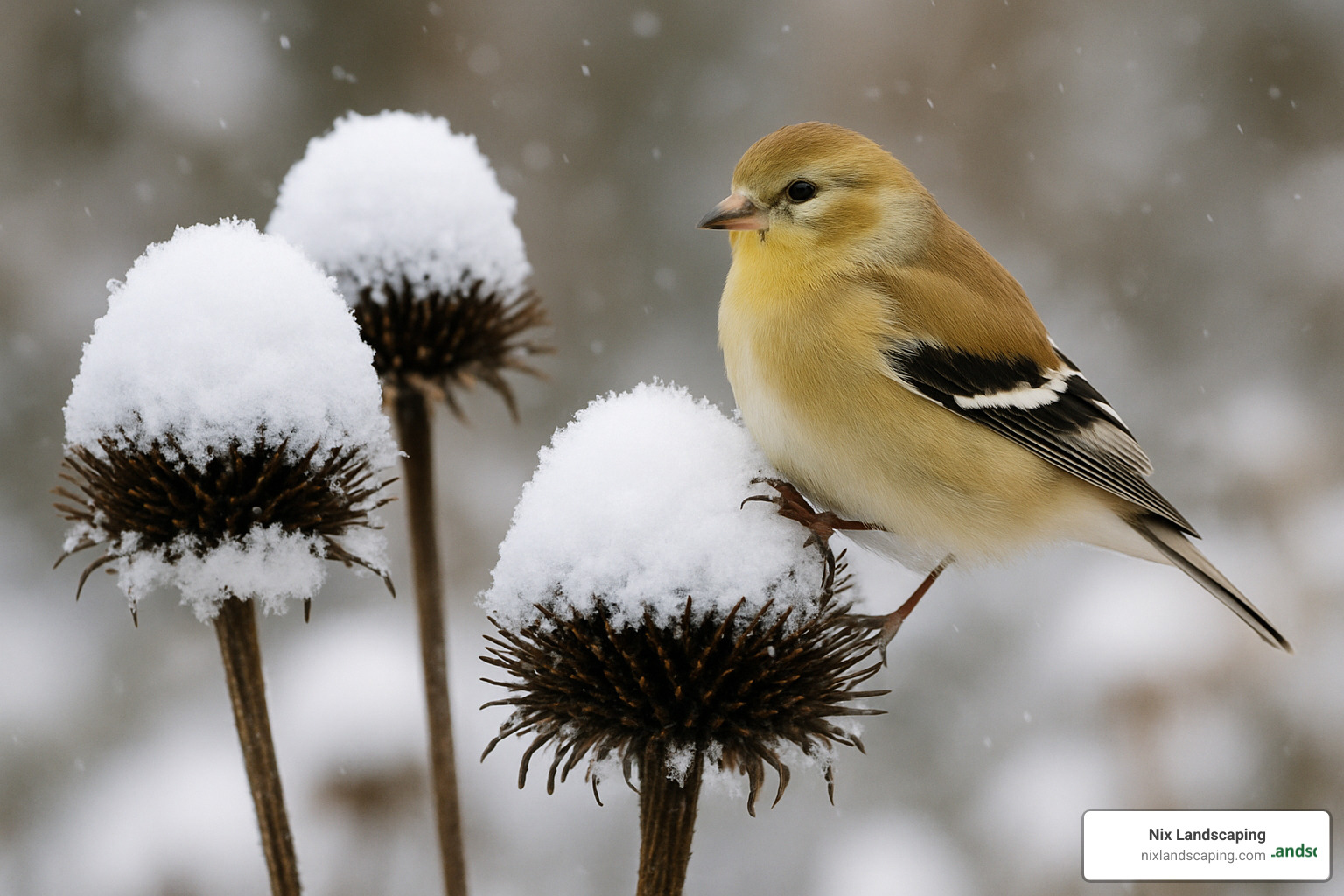
Leave your ornamental grasses standing through winter. Their plumes look gorgeous against snow and provide seeds for birds. Coneflowers and black-eyed Susans should stay put too because goldfinches absolutely love their seeds.
Winter mulching is crucial but timing matters. Wait until the ground starts to freeze, then apply 4-5 inches of mulch around perennial crowns. Keep the mulch a few inches away from the plant centers to prevent rot.
If you grow frost-tender bulbs like dahlias or gladiolus, dig them up after the foliage dies back. Clean off the soil, let them dry for a few days, then store them in paper bags with sawdust in a cool spot that stays between 35-50°F.
Prep and Plant for Spring Success
Fall planting often beats spring planting hands down. While spring gardeners are battling mud and unpredictable weather, smart fall planters are setting themselves up for effortless spring success.
The magic happens because fall soil stays warm even as air temperatures drop. This creates perfect conditions where plants focus their energy on growing strong roots instead of showy leaves.
Timing is everything though. You need to give new plants at least six weeks before hard frost hits to establish those crucial root systems. Here in central Indiana, that typically means getting your planting done by mid-October.
Plant Bulbs & Perennials Before Ground Freezes
Spring bulbs are like nature’s time capsules – they absolutely must be planted in fall to get the cold treatment they need for blooming. Tulips, daffodils, and crocuses won’t flower without experiencing winter’s chill.
Wait until soil temperatures consistently stay below 60°F before planting, which usually happens in late October through November.
Large bulbs like tulips and daffodils need to go 8 inches deep, while small bulbs like crocuses and grape hyacinths only need 4 inches. Space them 4-6 inches apart for natural-looking clusters.
Try the lasagna planting technique – layer different bulb types at various depths in the same planting area. Put large bulbs at the bottom (8 inches deep), medium bulbs in the middle (6 inches), and small bulbs near the surface (4 inches). This creates a succession of blooms from early spring through late spring.
For step-by-step instructions on this technique, check out this detailed guide on layering your flower bulbs.
Container-grown perennials can be planted right up until the ground freezes. They’re actually easier to establish in fall because you don’t have to worry about keeping them watered through hot summer weather.
October is also perfect for planting garlic in our Indiana climate. Plant individual cloves 4-6 inches apart and 3-4 inches deep in well-drained soil. Mulch heavily after planting.
Sow Cover Crops & Amend Soil
Cover crops are like giving your soil a cozy blanket and a nutritious meal all winter long. These living mulches protect bare soil from erosion while actually improving it for next year’s garden.
Most cover crops should be sown about a month before first frost. Winter rye is excellent for erosion control and adds organic matter when you turn it under in spring. Crimson clover fixes nitrogen from the air while attracting beneficial insects.
The beauty of cover crops is that they work while you’re not. They prevent soil erosion during winter storms, suppress weeds, and add organic matter when you turn them under in spring.
Fall is also prime time for soil testing because you have months to address any problems before spring planting. If your soil test shows low pH, add lime in fall rather than spring. Lime works slowly, so fall application gives it time to properly adjust your soil pH by planting time.
For more comprehensive guidance on keeping your garden healthy year-round, explore our detailed Garden Maintenance Tips resource.
Protect Plants, Soil, and Wildlife All Winter
Winter protection is like tucking your garden in for a long nap – you want everyone to wake up healthy and happy come spring. The secret isn’t wrapping everything in sight, but rather creating smart protection that keeps your plants cozy while giving beneficial wildlife a place to call home.
Manage Fallen Leaves Wisely
Those autumn leaves carpeting your yard aren’t just beautiful – they’re like nature’s multivitamin for your garden. The trick is using them wisely instead of sending them to the landfill.
Your lawn can actually handle some leaf coverage, but there’s a magic number to remember: the 20% rule. When leaves cover more than 20% of your grass surface, it’s time to take action. Less than that? Your mulch-mow approach works perfectly – just run your mower over the thin layer to chop leaves into small pieces that will decompose and feed your lawn naturally.
For heavier leaf coverage, rake them off the lawn but don’t bag them up. Shredded leaves make excellent mulch for your flower beds and around trees. They insulate plant roots, keep weeds at bay, and slowly break down to improve your soil structure. Apply 2-3 inches around plants, but keep the mulch a few inches away from tree trunks and plant crowns to prevent rot issues.
Pile whole leaves in a quiet corner of your yard to create leaf mold. This isn’t the scary kind of mold – it’s nature’s perfect soil conditioner that improves water retention and provides slow-release nutrients. Just pile them up and let time do the work.
If managing all those leaves feels overwhelming, our Seasonal Yard Cleanup service handles the heavy lifting while making sure your leaves get put to good use.
Shield Trees, Shrubs, and Tender Plants
Young trees and tender plants face a triple threat in winter: freezing temperatures, drying winds, and surprisingly, bright winter sun.
Tree trunk wrapping is essential for young trees under 4 inches in diameter. Winter sun can actually heat up dark bark during the day, then rapid cooling at night causes the bark to crack – a condition called sun scald. Simple tree wrap or burlap around the trunk prevents this damage.
Hardware cloth guards made from 1/4-inch mesh work perfectly around tree bases to prevent rabbit and mouse damage. Install them around tree bases and bury them 2-3 inches deep.
Deep watering before freeze-up might seem counterintuitive, but plants actually die from dehydration more often than cold damage. Give trees and shrubs a thorough soaking before the ground freezes solid.
For shrubs, burlap windbreaks work wonders around broadleaf evergreens like rhododendrons and boxwood. A simple burlap screen on the windward side makes all the difference.
Anti-desiccant sprays applied in late fall act like invisible raincoats for evergreen shrubs, reducing moisture loss through their needles or leaves. Apply these on a calm day when temperatures are above 40°F.
Empty those decorative ceramic pots before winter hits. Water expands when it freezes, and that beautiful glazed pot will crack faster than you can say “spring planting.”
Support Pollinators & Beneficial Insects
Hollow plant stems are like tiny apartments for native bees. They lay their eggs inside and the larvae develop over winter, emerging as adults in spring ready to pollinate your flowers. This is why leaving some perennial stems standing is so important for garden health.
Those coneflower and rudbeckia seed heads you might be tempted to cut down? They’re actually bird feeders in disguise. Goldfinches and other seed-eating birds depend on these natural food sources during winter months.
Small leaf piles tucked into garden corners provide shelter for overwintering butterflies and beneficial insects. You don’t need massive piles – even a modest collection of leaves in an out-of-the-way spot helps support your garden’s ecosystem.
The staggered cleanup approach works best for both garden health and wildlife support. Clean up about 70% of your garden debris in fall, leaving 30% for wildlife habitat.
Native plants deserve special consideration since they co-evolved with local wildlife. If you have native wildflowers, grasses, or shrubs, leave their seed heads and stems standing until early spring.
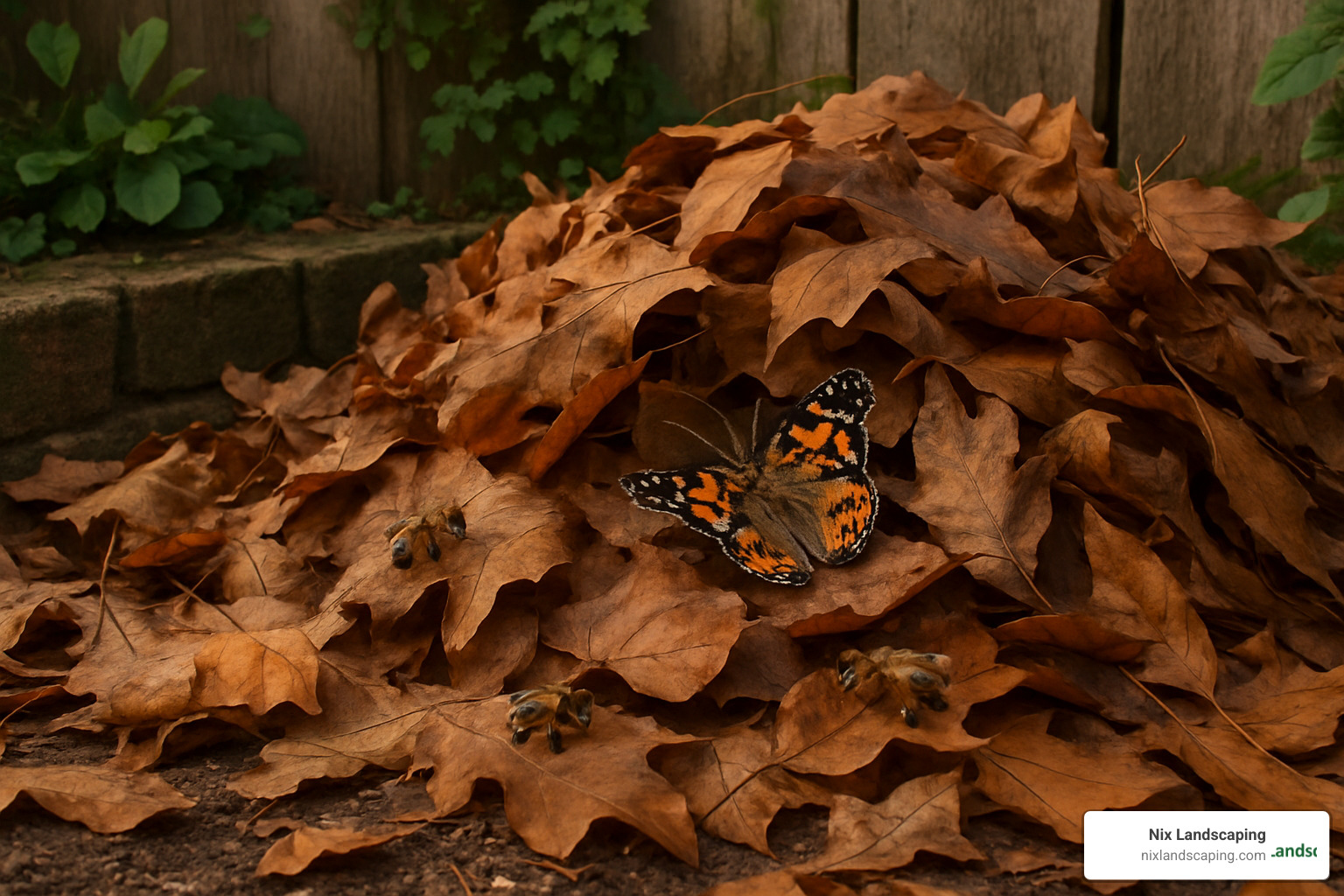
Research shows that gardens with diverse winter habitat support 5-10 times more beneficial insects than completely cleaned gardens. This translates to better natural pest control the following year – fewer aphids, fewer harmful caterpillars, and healthier plants overall.
Lawn, Tools & Hardscape Tune-Up
Your lawn has been working hard all summer, and now it’s time to give it the care it deserves. Fall lawn maintenance might seem counterintuitive, but this is actually the most important season for lawn care. Cool-season grasses are busy growing roots right now, storing energy for winter survival and early spring green-up.
Feed & Repair the Lawn
Think of fall fertilization as feeding your lawn a hearty meal before its long winter nap. Late-fall fertilization is more important than spring feeding because it supports root development rather than leaf growth.
Timing matters tremendously – apply your winter fertilizer in late October or early November, using about 1 pound of actual nitrogen per 1,000 square feet. Look for fertilizers labeled “winterizer” or “fall lawn food” for the right nutrient balance.
Raise your mower height for the final few cuts of the season. Taller grass (around 3-4 inches) develops deeper roots and survives winter stress better. The extra blade length also acts like a cozy blanket, insulating grass crowns during freeze-thaw cycles.
Fall is also perfect for broadleaf weed control. Dandelions, clover, and other weeds are actively growing as temperatures cool, making them more susceptible to herbicides. Apply weed control when temperatures are above 50°F and weeds are actively growing.
Core aeration works wonders if your lawn gets heavy foot traffic or feels spongy when you walk on it. Aerating in fall gives grass roots more room to grow and improves water penetration before winter.
For detailed fertilization schedules and rates, check out this comprehensive Lawn Fertilization guide that covers timing and application techniques.
Clean, Sharpen & Oil Garden Tools
Your garden tools have been your faithful companions all season, and they deserve some TLC before winter storage. Clean tools work better, last longer, and prevent disease spread between plants.
Start by removing all the debris – scrape off dried soil, plant sap, and stuck-on grass with a wire brush or putty knife.
Disinfecting comes next – spray tools with rubbing alcohol or a weak bleach solution (1 part bleach to 9 parts water). This step is especially important for pruning tools that might have contacted diseased plants.
Remove rust with steel wool or a wire brush, then sharpen cutting edges on pruners, hoes, and shovels. Sharp tools make garden work easier and create cleaner cuts that heal faster on plants.
Oil all moving parts – hinges, springs, and metal surfaces benefit from a thin coat of oil. This prevents rust and keeps tools operating smoothly. Don’t forget to oil wooden handles too.
Drain your hoses completely and store them in a garage or shed. Frozen water expands and can split hoses, creating expensive spring surprises.
Research shows that well-maintained tools last three to five times longer than neglected ones.
Our Yard Cleaning Tips resource covers tool maintenance and storage in detail.
Winterize Containers & Water Features
Container gardens and water features add beauty to your landscape, but they need special attention to survive our Indiana winters. Freezing water expands with tremendous force, and that expansion can crack pots, damage pumps, and burst pipes.
Empty ceramic and clay pots completely – even “frost-proof” containers can crack if water freezes inside them. Remove all soil and store pots in a frost-free location like your garage or basement.
Large containers with hardy plants can often stay outside with protection. Wrap them with bubble wrap, burlap, or even old blankets. Group containers together against a south-facing wall where they’ll get maximum winter sun and protection from harsh north winds.
Water feature winterization is critical – drain all pumps and filters when water temperatures drop below 45°F. Remove and store pumps indoors where they won’t freeze. Clean out fallen leaves and debris that can create water quality problems under ice.
Professional irrigation systems need to be blown out with compressed air by early November. This prevents water from freezing in underground pipes and causing expensive damage.
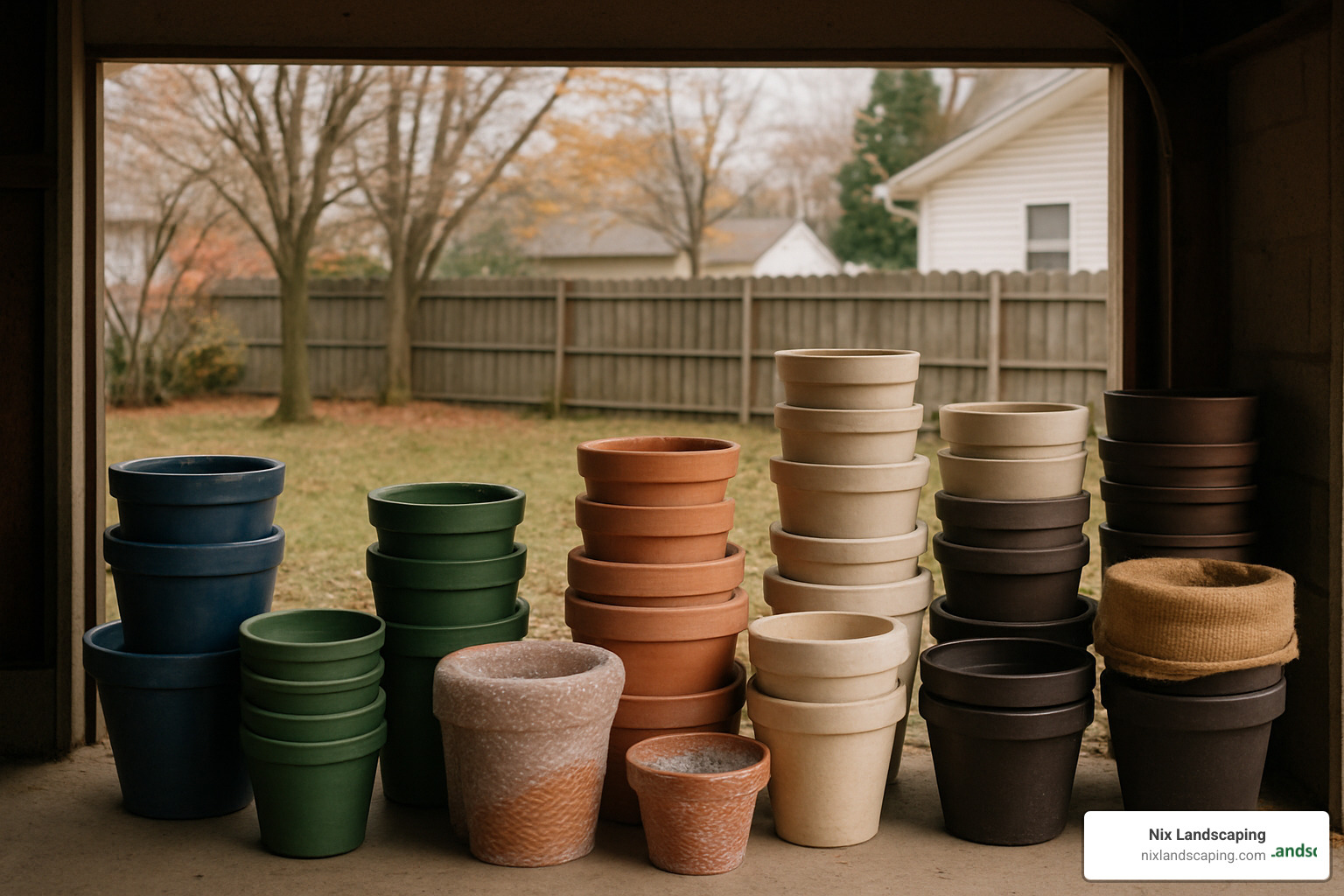
Clean containers before storage with soap and water, followed by a quick bleach rinse. This prevents pest and disease problems from carrying over to next year. Store containers in a dry, ventilated area to prevent mold and mildew.
Frequently Asked Questions about Fall Garden Maintenance Tips
Fall garden care often raises questions for homeowners who want to do the right thing for their plants and local wildlife. These are the most common concerns I hear from clients about fall garden maintenance tips, along with practical answers based on years of hands-on experience.
When should I cut back perennials in the fall?
The short answer is: it depends on what you’re growing and what you’re trying to accomplish. Timing is everything when it comes to perennial pruning, and the old “cut everything down” approach actually does more harm than good.
Disease-prone perennials like bee balm, garden phlox, and peonies should be cut back after several hard frosts. These plants are magnets for fungal diseases that can overwinter in dead foliage. Cut them down to 2-3 inches above ground level once they’re completely dormant.
Wildlife-friendly perennials tell a different story. Leave ornamental grasses, coneflowers, black-eyed Susans, and native plants standing through winter. Their seed heads feed birds during harsh months, and their hollow stems provide crucial shelter for beneficial insects.
Wait until you’ve had multiple hard frosts before making any cuts. This gives plants time to move nutrients from their leaves down to their roots for winter storage.
What plants or debris must be removed to prevent pests and diseases?
This is where being selective really pays off. Remove anything that looks sick or pest-damaged – no exceptions. Diseased plant material is like leaving a welcome mat out for next year’s problems.
Definitely remove all tomato and potato plants, which can harbor late blight that survives winter. Squash and cucumber vines often carry bacterial wilt and provide cozy winter homes for squash bugs. Any rose leaves showing black spot or powdery mildew need to go too.
Iris foliage gets special treatment – cut it back to 4-5 inches to prevent iris borers from overwintering in the leaf debris.
Clean up any fallen fruit immediately. Rotting apples, pears, or other fruit attract wasps and can harbor disease spores that affect next year’s crop. Don’t compost diseased material – most home compost piles don’t get hot enough to kill pathogens.
Here’s the good news: healthy plant debris is garden gold. Leaves without disease spots, spent flowers from healthy plants, and general garden trimmings can all be composted or used as mulch.
When and how do I bring houseplants and tender containers indoors?
Don’t wait for frost warnings – that’s usually too late. Bring tender plants indoors when nighttime temperatures consistently drop below 50°F. Most tropical plants start suffering damage around 45°F, even if they don’t show it immediately.
The transition process matters more than the timing. Plants that go from full outdoor sun to indoor conditions overnight often drop leaves or go into shock. Start by moving them to shadier outdoor spots for a week, then bring them inside.
Pest inspection is non-negotiable before bringing anything indoors. Check every leaf, stem, and the soil surface for aphids, spider mites, or other hitchhikers. I recommend quarantining plants in a separate room for 2-3 weeks to catch any problems before they spread to other houseplants.
Adjust your care routine once plants are inside. Indoor plants need less water because they’re growing more slowly and losing less moisture to wind and heat.
Tender bulbs like dahlias, gladiolus, and cannas get different treatment. Wait until frost kills their foliage, then dig them up. Clean off the soil, let them dry for several days in a warm, airy spot, then store them in paper bags with sawdust or peat moss. Keep them in a cool (35-50°F), dry place like an unheated basement.
Conclusion & Next Steps
Your garden is counting on you this fall, and honestly, that’s pretty exciting! When you follow these fall garden maintenance tips, you’re not just checking boxes on a to-do list – you’re setting up a whole chain of garden wins that’ll make next spring absolutely magical.
Think about it: every diseased plant you remove now means fewer problems to deal with later. Every bulb you plant becomes a cheerful spring surprise. Every beneficial insect you shelter through winter becomes your personal pest control team. It’s like making a bunch of small investments that pay big dividends when warm weather returns.
The payoff is real and measurable. You’ll spend less time fighting problems in spring because you prevented them in fall. Your plants will emerge stronger and healthier. Your soil will be richer from all that organic matter you added. And your local ecosystem will be buzzing (literally) with the beneficial creatures you helped survive winter.
Start with what matters most – removing diseased material and protecting your most valuable or vulnerable plants. Then work through the other tasks as time and energy allow. Your garden will respond beautifully to whatever care you can give it.
At Nix Landscaping, we’ve seen how proper fall care transforms landscapes throughout Fishers. Every year, we watch gardens that received thoughtful autumn attention burst into spectacular spring displays while their neglected neighbors struggle to catch up. The difference is remarkable, and it all starts with the work you do right now.
Whether you tackle everything yourself or need a hand with the bigger tasks, fall garden care is an investment in countless mornings of coffee-and-garden-gazing that await you next year. For comprehensive help with seasonal maintenance and landscape planning, check out our services. We’d love to help you create a landscape that thrives year after year while supporting the amazing wildlife that makes Indiana gardens so special.
Your future spring self is going to thank you for every bit of effort you put in this fall. Trust me on this one.

