
Why Proper Flower Garden Maintenance Tips Make All the Difference
Flower garden maintenance tips are essential for creating and keeping a beautiful, thriving garden that brings joy to your outdoor space. A well-maintained garden not only improves your home’s curb appeal but also provides a personal sanctuary for relaxation. Whether you’re a beginner or experienced gardener, understanding these core practices will help you achieve the vibrant, healthy flower displays you’ve always wanted.
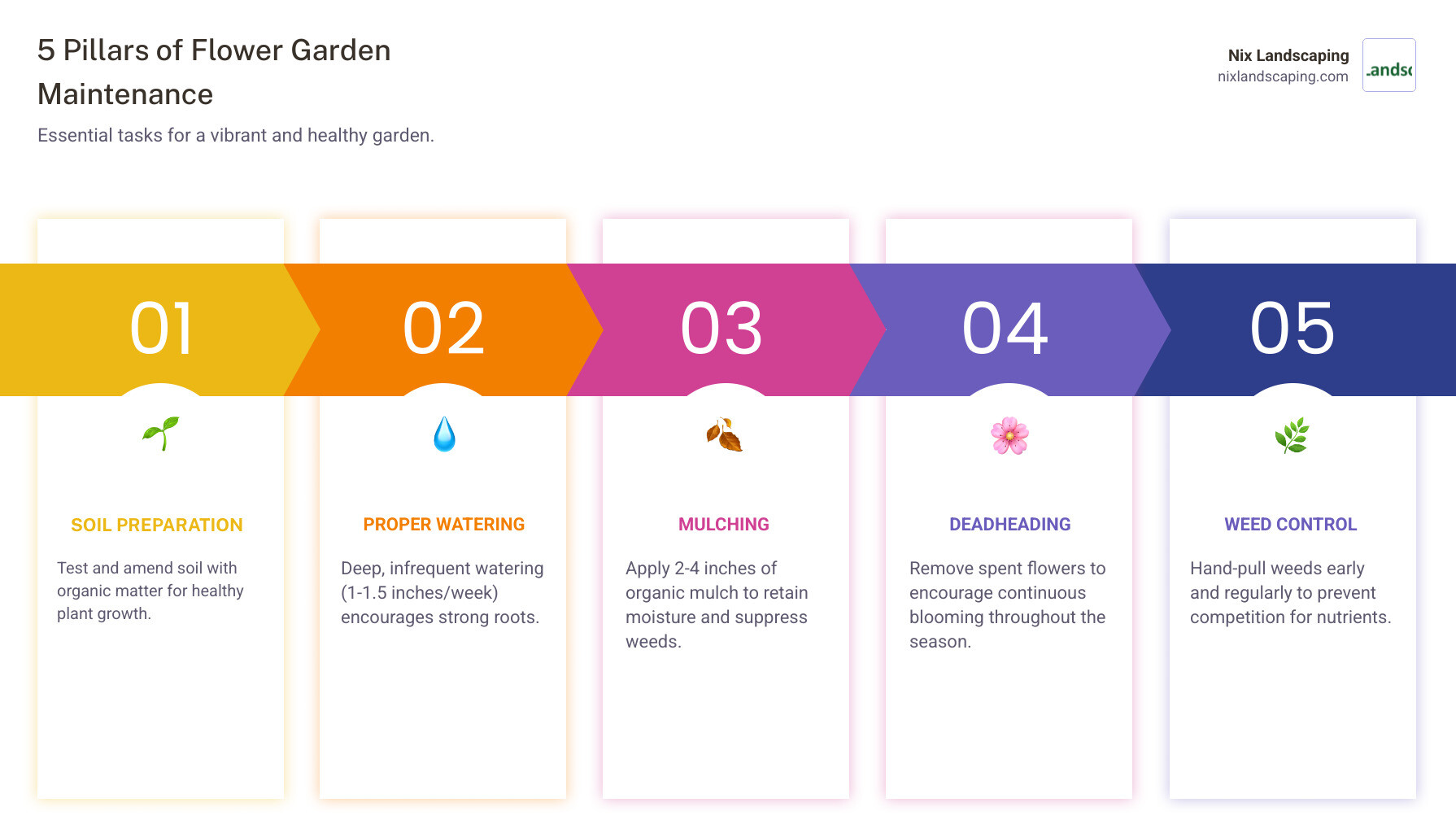
Essential Flower Garden Maintenance Tasks:
- Soil Preparation – Test and amend soil with organic matter for healthy plant growth
- Proper Watering – Deep, infrequent watering (1-1.5 inches per week) to encourage strong roots
- Mulching – Apply 2-4 inches of organic mulch to retain moisture and suppress weeds
- Deadheading – Remove spent flowers to encourage continuous blooming throughout the season
- Weed Control – Hand-pull weeds early and regularly to prevent competition for nutrients
- Fertilizing – Feed plants with slow-release fertilizer or compost, especially in poor soil
- Pest Management – Monitor for common issues like aphids and powdery mildew
As garden expert P. Allen Smith notes, “I find that the spring garden can put on a glorious show almost without my help… Then comes summer— a different gardening experience altogether.” This highlights why consistent maintenance becomes crucial as the growing season progresses.
The key to success is developing a regular routine that includes checking soil moisture, removing weeds before they spread, and deadheading spent blooms. Many gardeners find that spending just 15-20 minutes a few times per week keeps their gardens looking their best.
I’m Kyle Nix, owner of Nix Landscaping in Fishers, Indiana, and I’ve helped countless homeowners transform their outdoor spaces through proper garden care and maintenance. My years of hands-on experience with flower garden maintenance tips have taught me that consistent, simple practices create the most stunning and sustainable results.
Flower garden maintenance tips helpful reading:
The Foundation: Soil, Water, and Mulch
A flourishing flower bed always starts below ground. Healthy soil, sensible watering, and a protective layer of mulch form the trio that every other tip builds on. Nail these basics and the rest of your maintenance routine becomes easy (especially if you’re tackling DIY garden projects).
Preparing Your Soil for Success
Begin with a quick soil test to learn pH and nutrient levels—a service offered by most county extension offices or with a simple kit like the one in this BHG guide. Once you know what’s missing, remove debris, loosen the top 8-10 inches, and blend in 2-3 inches of compost or other organic matter. This improves drainage, feeds plants, and creates that crumbly texture roots love.
Mastering the Art of Watering
The golden rule is deep but infrequent watering—roughly 1–1.5 inches per week for established beds, including rainfall. New plantings may need a deep drink every other day until roots establish. Always water early in the morning at the soil line, not the leaves.
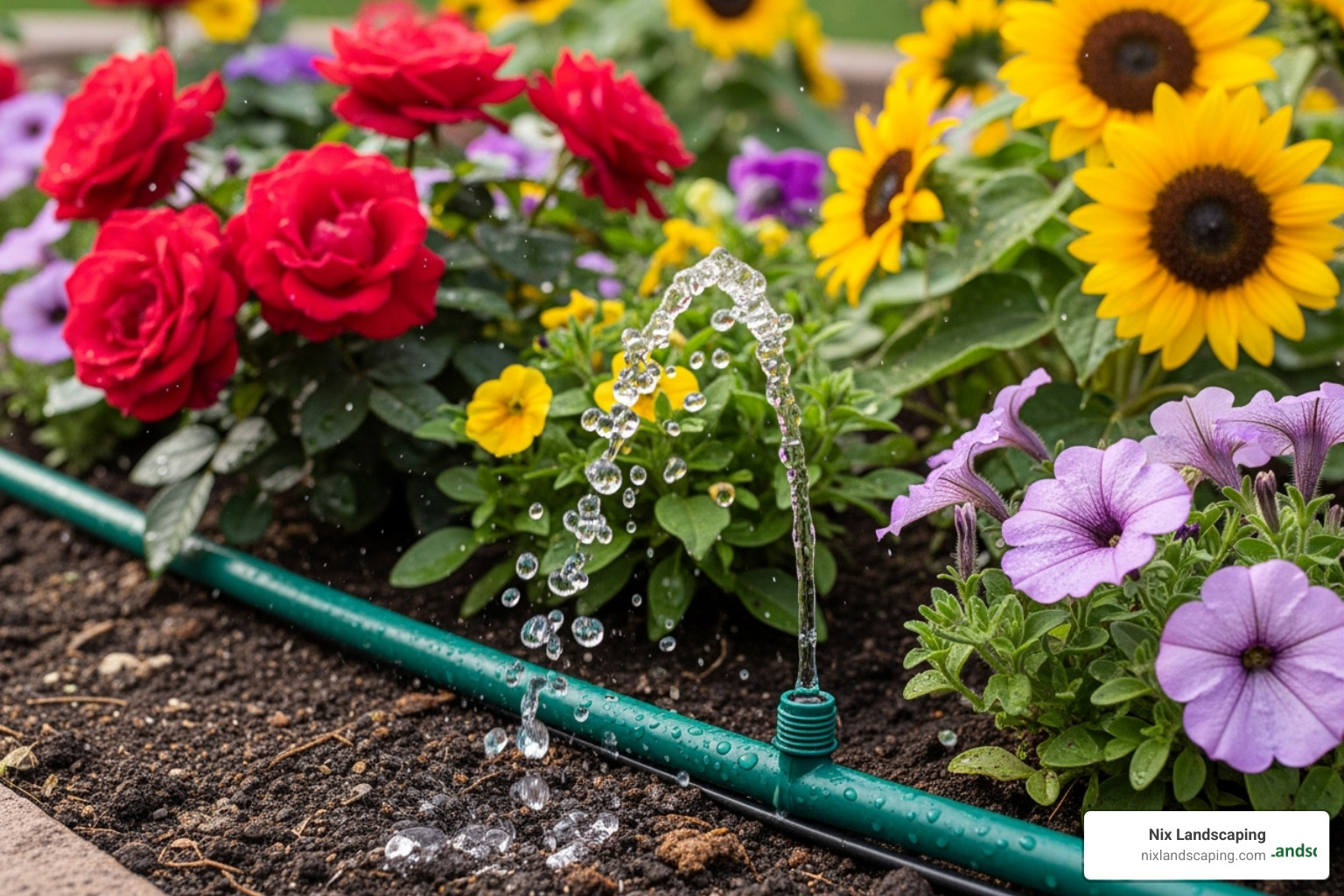
A quick finger test 2 inches down tells you when it’s time to water. Soaker hoses or drip irrigation deliver moisture right to the roots while saving water.
The Magic of Mulching
Finish with a 2–4 inch layer of organic mulch (shredded bark, leaves, or compost). Mulch locks in moisture, blocks weeds, buffers soil temperature, and slowly feeds the soil as it breaks down. Keep it a few inches away from plant crowns to avoid rot and skip synthetics—organic choices work harder for your garden.
Core Flower Garden Maintenance Tips for a Thriving Display
With the groundwork set, regular care keeps your beds picture-perfect. The following habits—weed control, feeding, and eco-friendly pest management—take only minutes a week but pay huge dividends. (Need broader advice? See our general garden maintenance tips.)
Effective Weed Control Strategies
Weeds rob your flowers of water and nutrients, so pull them while they’re small. A 5-minute walk-through every day or two is easier than marathon sessions later. Mulch smothers most seedlings; hand-pull the rest or spot-treat with a pre-emergent in large, non-edible beds. For serious overgrowth, work in sections and bag weeds immediately. Our seasonal yard cleanup service can shoulder the heavy lifting.
Fertilizing for Abundant Blooms
Perennials thrive when top-dressed with compost each spring; only fertilize if growth looks weak. Annuals and container plants bloom nonstop and appreciate a diluted liquid feed every 2–4 weeks or a slow-release granular product mixed into the soil. Yellowing leaves or sparse blooms signal it’s time for a boost.
Managing Pests and Diseases Naturally

Start with the least-toxic option. Blast aphids with water, invite ladybugs, deter slugs with crushed eggshells or copper, and use deer-resistant plants or motion sprinklers for browsing wildlife. Good spacing and morning watering help prevent fungal issues like powdery mildew; prune out diseased foliage promptly. Neem oil or insecticidal soap handles most outbreaks without harming pollinators.
Advanced Care: Pruning, Deadheading, and Dividing
Beyond day-to-day tasks, a little strategic grooming keeps plants vigorous and your garden looking professionally designed. For inspiration beyond flowers, explore our yard maintenance ideas.
The “Why” and “How” of Deadheading
Removing spent blossoms redirects energy into new buds, extending the show for favorites like roses, zinnias, and salvia.
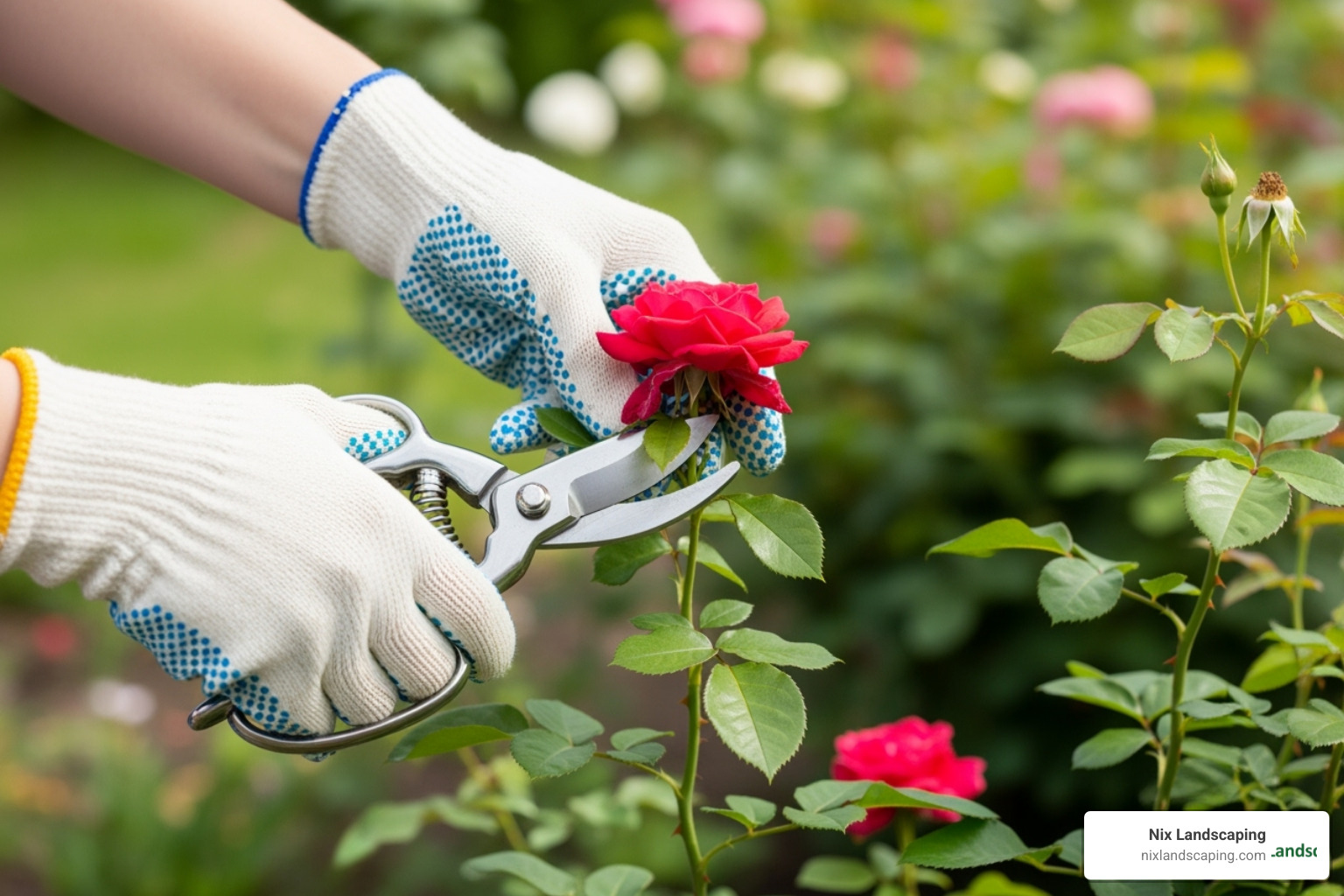
Pinch soft stems just above a leaf; use clean pruners for woody ones, cutting at a 45° angle above an outward-facing bud. Skip deadheading if you value decorative seed heads.
Pruning and Trimming for Health and Shape
Pruning removes dead or crossing branches, improves air flow, and keeps shrubs in bounds. Cut no more than 25% of a plant at once, and time major pruning to each species: spring-flowering shrubs after bloom, summer bloomers in late winter or early spring. Pinching back leggy annuals like zinnias encourages bushier growth.
Dividing Perennials to Refresh Your Garden
Every 3-5 years, many perennials (daylilies, hostas, coneflowers) benefit from division. Dig up the clump, slice it into healthy segments, and replant immediately. Divide spring bloomers in late summer/fall and summer/fall bloomers in early spring. It’s an easy way to invigorate crowded plants and get freebies for other beds—or friends. Our fall garden clean up guide walks you through the details.
Strategic Planning for Year-Round Beauty
Proactive choices make maintenance lighter and blooms longer-lasting.
Choosing the Right Plants for Your Garden
Match plants to your conditions—sun, soil, and USDA zone (Fishers sits in Zone 5b/6a). Fewer square pegs in round holes means fewer problems later. Want low-maintenance color? Try marigolds, daylilies, sunflowers, begonias, daffodils, or morning glories. Need extra guidance? The USDA Plant Hardiness Zone Map is your friend.
Essential Tools for Efficient Maintenance
A streamlined toolkit is all you need: sturdy gloves, hand trowel, pruning shears, watering can or hose with a soaker attachment, weeding tool, rake, wheelbarrow (or debris bag), and a kneeling pad. Quality tools save time and your back.
Seasonal Flower Garden Maintenance Tips
Spring: clean up winter debris, amend soil, divide crowded perennials, and plant after the last frost.
Summer: water deeply, deadhead regularly, and stay ahead of weeds and pests.
Fall: plant spring-blooming bulbs, remove spent annuals, top-dress beds with compost, and mulch for winter. More tips live in our fall garden maintenance guide.
Winter: protect tender plants with mulch or covers and tackle dormant pruning on deciduous trees and shrubs.
Frequently Asked Questions about Flower Garden Care
How often should I water my flower garden?
Aim for roughly 1 inch of water per week. Check soil 2 inches deep; if it’s dry, water deeply, preferably in the morning. New plantings need more frequent attention until roots establish.
What is the most important maintenance task for a flower garden?
Consistent watering and weeding form the backbone of every healthy bed. Get those right and most other issues shrink dramatically.
How do I keep my flowers blooming all season?
Regular deadheading keeps annuals and many perennials producing new buds. Combine that with adequate sun, balanced fertilizer, and a mix of plants with staggered bloom times for color from spring through fall.
Conclusion
Flower-garden success isn’t complicated: feed the soil, water wisely, mulch, weed, and give plants an occasional trim or division. A few focused minutes each week reward you with a vibrant, low-stress landscape that’s ready to impress.
Need a hand changing or maintaining your beds in Fishers, IN? The team at Nix Landscaping specializes in personalized design and care. Let’s make your garden dreams blossom.

