
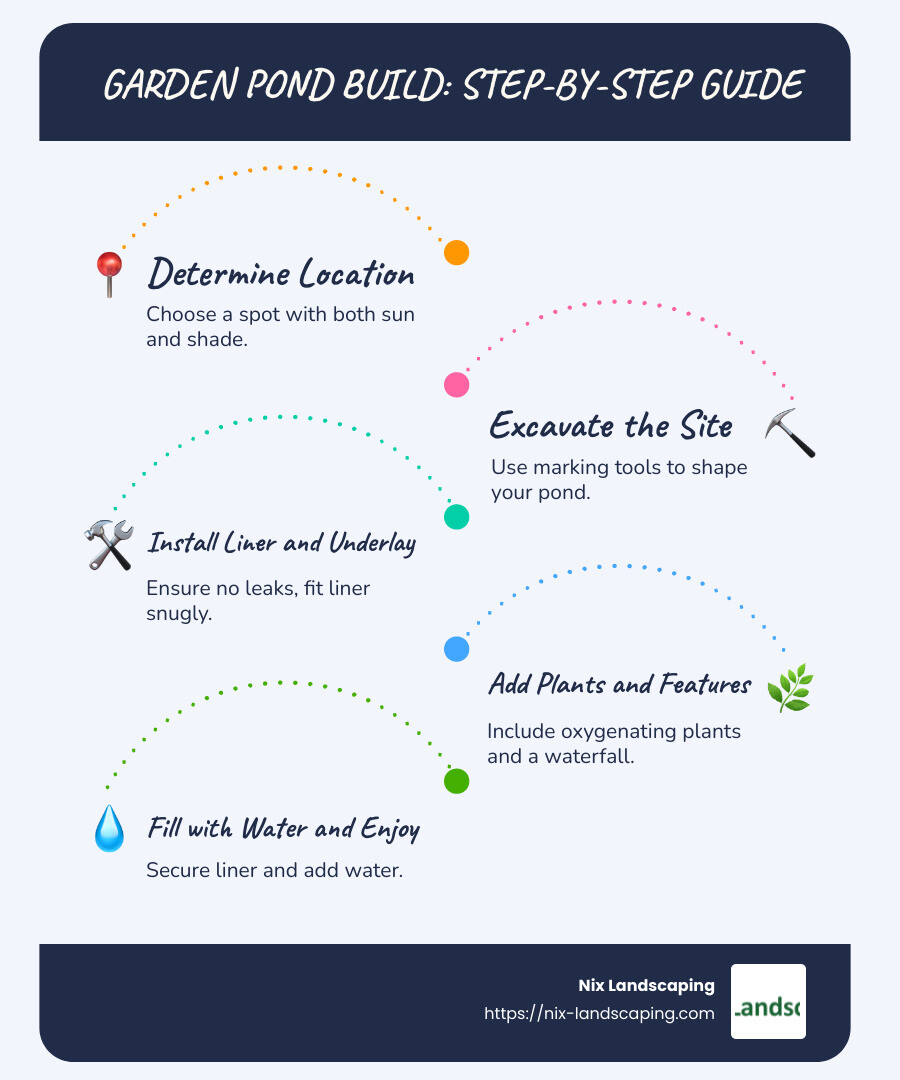
A garden pond build transforms any outdoor space into a haven of tranquility and beauty. Imagine spending warm afternoons near a sparkling pond while a gentle waterfall trickles beside you. For homeowners in Fishers, adding a pond can lift outdoor living areas from ordinary to extraordinary. Here’s a quick start guide for your garden pond build:
- Determine the Location and Size: Choose a place that gets both sun and shade.
- Excavate the Site: Use marking tools to shape your pond.
- Install the Liner and Underlay: Ensure no leaks and that the liner fits snugly.
- Add Plants and Water Features: Consider oxygenating plants and set up a waterfall or skimmer for that extra serenity.
As the owner of Nix Landscaping, I, Kyle Nix, bring years of expertise in crafting serene outdoor escapes through the art of garden pond build. Our mission is to create landscapes that blend functionality with aesthetic charm. This seamless transition compactly introduces you to the peaceful world of garden ponds, perfectly set for further exploration.
Planning Your Garden Pond Build
Location is Key
When planning your garden pond build, location is your first big decision. A spot that gets both sun and shade is ideal. Sunlight helps plants like water lilies thrive, while shade prevents water from overheating, which can harm fish and plants. Consider placing your pond in a visible area so you can enjoy it from your home or patio.
Shape and Design
Shape influences both the look and function of your pond. Common shapes like oval or kidney allow for better water circulation, reducing the risk of stagnant spots. This is especially important if you plan to have fish or other aquatic life. Curved shapes are not only aesthetically pleasing but also practical, guiding the water gently towards the skimmer or pump.
Permits and Regulations
Before you start digging, check if you need a permit. Regulations vary, but typically, ponds over a certain size or depth require approval. This is crucial to avoid any legal issues down the road. Local authorities in Fishers, IN, may have specific requirements, so it’s wise to consult them early in your planning process.
Depth Considerations
Deciding on the depth of your pond is another critical step. A depth of 2 to 3 feet is generally optimal for most aquatic plants and small fish. However, if you’re planning to keep larger fish like koi, a deeper pond is necessary to provide adequate space and protection from predators. Also, deeper ponds are less prone to temperature fluctuations, which can be vital for maintaining a healthy ecosystem.
By carefully planning the location, shape, permits, and depth, your garden pond build will not only improve your landscape but also create a thriving environment for plants and wildlife. With these elements in place, you’re ready to move on to gathering the necessary materials and tools for your project.
Essential Materials and Tools
Building a garden pond requires some key materials and tools to ensure your project is a success. Here’s a quick rundown of what you’ll need:
Pond Liner
The pond liner is the backbone of your pond. It holds the water and creates a barrier between the soil and the water. EPDM liners are highly recommended due to their durability and resistance to UV rays and chemicals like chlorine. They are thicker and more durable than PVC liners, which can save you from future headaches.
Fountain Pump
A fountain pump is essential for keeping the water circulating. This not only helps oxygenate the water for fish and plants but also prevents stagnation, which can lead to algae growth. Choose a pump that matches the size of your pond to ensure effective water movement.
Landscaping Rocks
Rocks play both a functional and aesthetic role in your garden pond build. Use them to anchor the pond liner and create natural-looking edges. Smaller, smoother rocks on the pond bottom make cleaning easier and improve the visual appeal. Remember to source rocks legally and ensure they’re safe for aquatic life.
Spirit Level
A spirit level ensures that your pond is even and properly aligned. This tool is crucial when you’re setting up the pond’s foundation and laying the liner. An uneven pond can lead to water overflow or uneven distribution, which can affect the pond’s ecosystem.
Shovel
You’ll need a sturdy shovel for digging out the pond’s shape. It’s also useful for creating terraces on the pond’s sides and bottom, which help prevent rocks from sliding and make your pond look more natural. A good shovel will make the excavation process much smoother.
Trowel
A trowel is perfect for the finer details, like smoothing out the pond’s edges and removing small rocks or roots that could damage the liner. It’s also handy for planting aquatic plants around the pond’s perimeter.
By gathering these essential materials and tools, you’re setting the stage for a successful garden pond build. Next, we’ll guide you through the step-by-step process of bringing your pond to life.
Step-by-Step Guide to Building a Garden Pond
Step 1: Mark and Dig
Start by deciding the exact location and shape of your pond. Use a garden hose to outline the pond’s perimeter. This flexible tool helps you visualize the shape and make adjustments easily. Once you’re satisfied, use marking paint to draw the final outline on the ground.
Now, it’s time for excavation. Dig carefully along the marked lines. Keep the sides straight and the bottom level. For a natural look, create some terraces or shelves for plants. Remove any rocks or roots that might puncture the liner.
Step 2: Install Liner and Underlay
Before laying the pond liner, spread a layer of sand or damp newspaper at the bottom of the pond. This protects the liner from sharp objects and provides a smooth surface. Carefully lay the liner over the sand, ensuring it fits snugly into the contours of the pond.
Make sure to leave some extra liner around the edges. This will help secure it later. Smooth out any pleats or wrinkles to prevent water from getting trapped.
Step 3: Add Water and Secure Liner
Begin filling the pond with water. As the water level rises, the liner will settle into place. While filling, use bricks or large stones along the edges to hold the liner down securely. This prevents the liner from shifting or blowing away.
Check the water level regularly to ensure it’s even. Adjust the liner and bricks as needed to maintain a smooth, level surface.
Step 4: Position Rocks and Plants
With the liner in place, it’s time to improve the pond’s appearance with boulders and gravel. Arrange these along the pond’s edges to hide the liner and create a natural look. Use larger boulders for dramatic effect and smaller gravel for filling gaps.
Consider adding bog plants like irises or water lilies. These plants thrive in wet conditions and add vibrant colors and textures to your pond.
Step 5: Install Water Features
To bring your pond to life, install a waterfall and a fountain pump. The waterfall not only adds a soothing sound but also helps with water circulation. Position it at one end of the pond for the best visual effect.
Place a skimmer at the opposite end to collect debris and keep the water clean. Connect the pump to the waterfall and skimmer to ensure efficient water flow.
With these steps complete, your garden pond is ready to become a tranquil oasis in your outdoor space. Next, we’ll explore how to maintain your pond for lasting beauty and health.
Maintenance Tips for Your Garden Pond
Building a garden pond is just the beginning. Keeping it beautiful and healthy requires some regular upkeep. Here’s how you can maintain your pond effortlessly.
Algae Control
Algae can quickly turn your pond from a clear oasis into a murky mess. The key to controlling algae is balance.
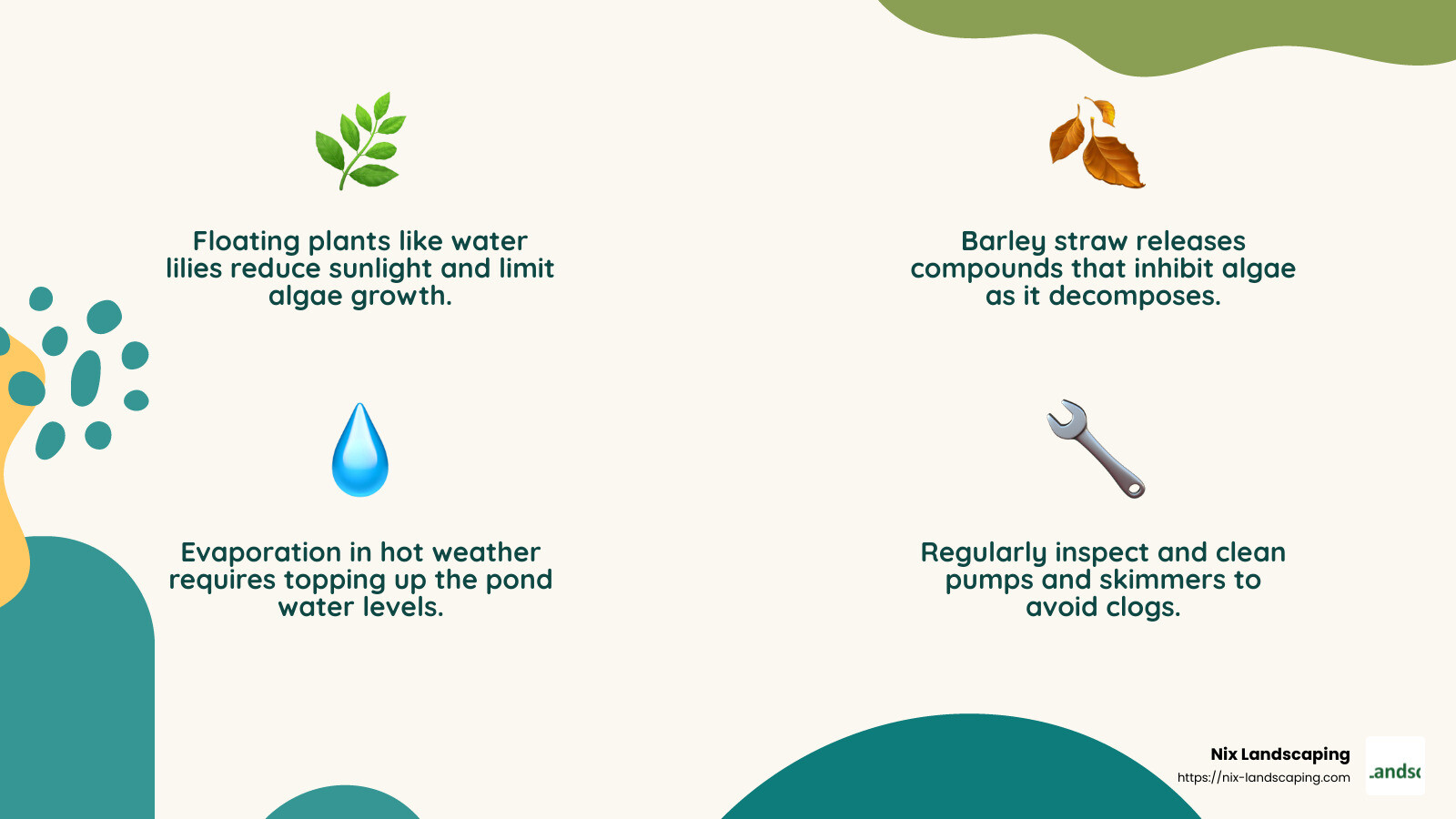
- Shade and Plants: Adding floating plants like water lilies can reduce sunlight penetration, limiting algae growth.
- Barley Straw: Some pond owners swear by barley straw. It releases natural compounds that help inhibit algae when it decomposes.
- Regular Skimming: Use a skimmer to remove debris and algae from the water’s surface. This prevents build-up and keeps the pond clean.
Regular Maintenance
Consistent care keeps your pond in top shape. Here are some simple tasks to include in your routine:
- Check Water Levels: Especially during hot weather, water can evaporate quickly. Keep the pond topped up to maintain the correct water level.
- Inspect Equipment: Ensure your pump and skimmer are functioning properly. Clean them regularly to avoid clogs.
- Trim Plants: Keep plants in check by trimming dead leaves and excess growth. This helps maintain a healthy ecosystem.
Water Treatment
Healthy water is crucial for a thriving pond. Here’s how to keep it in optimal condition:
- Beneficial Bacteria: Add beneficial bacteria to break down fish waste and organic matter. This keeps the water clear and reduces odors.
- Water Conditioners: Use water conditioners to neutralize harmful chemicals found in tap water, like chlorine, before adding it to your pond.
- Seasonal Treatment: Adjust your treatments based on the season. For example, in winter, reduce feeding and filtration to match the slower biological processes.
By following these simple tips, your garden pond will remain a stunning focal point in your yard. Up next, we’ll tackle common questions about building and maintaining your pond.
Frequently Asked Questions about Garden Pond Build
Building a garden pond can be an exciting project, but it often comes with questions. Here are some of the most common queries we hear from new pond builders.
How much does it cost to build a garden pond?
The cost of building a garden pond can vary widely based on size, materials, and additional features. On average, a basic pond construction might cost around $100 to $300 for a small pond, typically up to 10 square feet. This includes essentials like a pond liner, sand, and a pump, as highlighted in one user’s experience who spent approximately $100, primarily on these items. For larger or more elaborate ponds, costs can rise significantly, especially if you add features like waterfalls or advanced filtration systems.
How deep should a garden pond be?
Depth is crucial when planning your garden pond build. A typical garden pond should be at least 18 inches deep to accommodate a variety of plants and small fish. Some plants thrive in shallow water, around 6-12 inches, while others prefer deeper areas. If you plan to include fish like koi, which require more space, aim for a depth of at least 36 inches. This depth not only supports diverse aquatic life but also helps regulate water temperature and quality.
Do I need a permit to build a garden pond?
Permit requirements for building a garden pond vary by location. In many areas, small ponds under a certain size, often less than 100 square feet, do not require a permit. However, larger ponds or those with significant structural features might need approval from local authorities. It’s essential to check with your local government or municipality in Fishers, IN, to understand specific regulations and avoid any compliance issues.
These FAQs should help clarify some of the basic aspects of starting your garden pond project. As you plan and build, keep these considerations in mind to ensure a smooth process. Next, we’ll conclude with how Nix Landscaping can assist in creating your dream pond.
Conclusion
Building a garden pond can transform your outdoor space into a serene oasis. At Nix Landscaping, we specialize in turning your vision into reality with our personalized design approach and creative solutions. Whether you’re dreaming of a tranquil water feature or a vibrant habitat for local wildlife, our team in Fishers, IN, is here to help every step of the way.
Personalized Design: We believe every garden pond should be as unique as its owner. Our design process starts with understanding your specific needs and preferences. From the pond’s shape and size to the selection of plants and rocks, we tailor every aspect to fit your style and landscape.
Creative Solutions: Challenges are opportunities for creativity. Our team is skilled at finding innovative solutions to common pond-building problems, such as managing spillover or integrating water features. We use a mix of native plants and sustainable materials to ensure your pond not only looks beautiful but also supports local biodiversity.
By choosing Nix Landscaping, you’re not just building a pond—you’re creating an outdoor experience that improves your property’s value and your quality of life. Ready to dive into your garden pond project? Visit our services page to learn more about how we can assist you in bringing your pond dreams to life.

