
Understanding the True Investment in Your Home’s First Impression
When homeowners in Fishers, Indiana, consider enhancing their property’s curb appeal and functionality, one of the first questions that comes to mind is, “How much does a paver walkway cost?” It’s a crucial question, as this investment is about more than just creating a path from point A to point B. A well-designed paver walkway is the first handshake your home offers to visitors. It sets the tone, adds character, and can significantly increase your property’s value. The answer, however, isn’t a single number; it’s a range influenced by materials, design complexity, and labor.
Quick Cost Overview:
- National Average: $2,665
- Typical Range: $1,565 – $3,765
- Cost Per Square Foot: $9 – $20 installed (average $14.50)
- Material Costs: $8 – $50 per sq ft depending on paver type
- Labor Costs: $55 – $75 per hour for professional installation
These figures provide a general guideline, but the final price tag is a mix woven from three main threads: the materials you select, the size and intricacy of your walkway’s design, and the choice between a DIY project and professional installation. For instance, a straightforward 80-square-foot walkway using standard concrete pavers might land on the lower end of the spectrum, around $1,160. In contrast, a sprawling 280-square-foot path with neat curves, premium natural stone, and integrated lighting could easily exceed $4,000.
Beyond price, remember you’re investing in everyday experience and long-term durability. In central Indiana, winters bring freeze-thaw cycles and spring rains that challenge poorly built paths. A properly prepared base, thoughtful drainage, and quality edge restraint make the difference between a walkway that settles or heaves and one that stays beautiful for decades.
To help you sketch a realistic budget, here are a few common scenarios we see locally:
- Compact front entry (60–100 sq ft) with straight lines and standard concrete pavers: typically at or below the lower end of the range.
- Mid-size curved approach (120–180 sq ft) with a soldier-course border and a herringbone pattern in concrete or clay brick: commonly mid-range.
- Large garden path or wrap-around walk (200–300+ sq ft) with decorative borders, curve transitions, and upgraded stone: often in the upper range, especially if lighting and sealing are added.
Extras you might choose (and should plan for if desired):
- Decorative borders or inlays to highlight curves or entries
- Integrated low-voltage lighting for safety and ambiance
- Stabilization fabric and deeper base for soft soils
- Sealing to improve color and resist stains
- Steps or small landings where grades change
I’m Kyle Nix, owner of Nix Landscaping, and for years, I’ve helped families across Fishers, Carmel, and the greater Indianapolis area steer the question of how much a paver walkway costs. We don’t just lay stones; we build lasting impressions. Our hands-on experience with Indiana’s unique soil conditions, our access to quality local materials, and our understanding of regional pricing allow us to provide personalized consultations and create beautiful, durable walkways that perfectly align with your vision and budget.
What you can expect when you work with us:
- A site walk to evaluate soil conditions, drainage, utilities, and access
- A design that balances aesthetics, function, and budget
- A clear proposal outlining materials, base preparation, borders, and any add-ons
- Professional installation with proper compaction and slope for drainage
- Guidance on maintenance so your walkway looks great, season after season
With a thoughtful plan and the right partner, your new walkway becomes a smart, confidence-boosting upgrade—one you’ll appreciate every time you step outside.
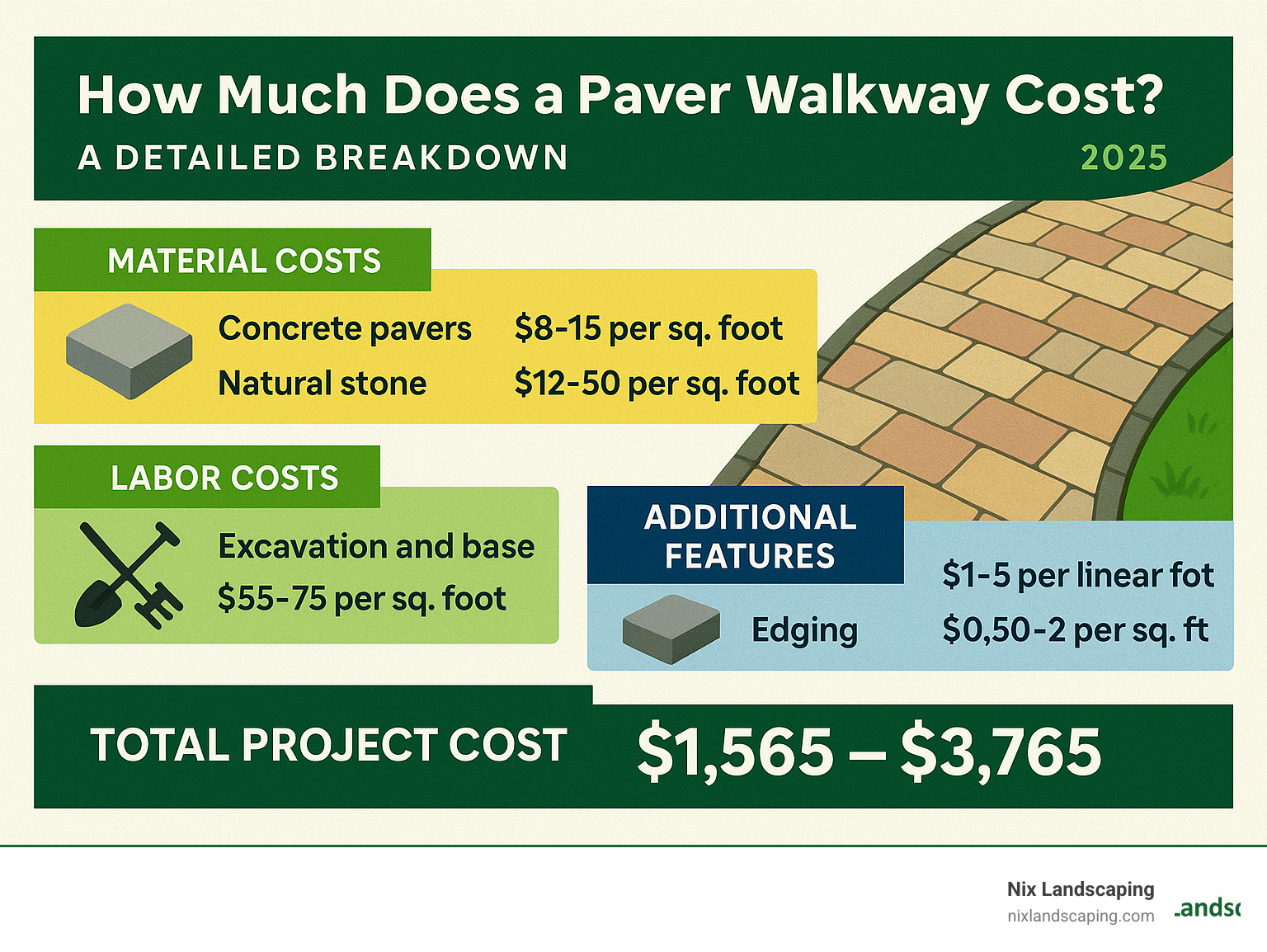
How Much Does a Paver Walkway Cost? A Detailed Breakdown
When we talk about the total cost of installing a paver walkway, we’re looking at a few key ingredients, much like baking a delicious cake (but with more dirt and less sugar). Understanding these components will empower you to make informed decisions and set a realistic budget for your project. This section will break down the core components of the total project cost, from the pavers themselves to the labor required for a professional installation.
Cost by Paver Material
The type of paver you choose is arguably the biggest determinant of your project’s material cost. Each material has its own unique charm, durability, and price point. We’ve worked with everything from the humble concrete paver to majestic natural stone, and we can tell you, they each have their place! Pavers alone can cost anywhere from $2 to $30 per square foot before installation.
Here’s a quick look at the most popular paver materials and their typical installed costs per square foot:
| Paver Type | Installed Cost Per Square Foot | Pros | Cons |
|---|---|---|---|
| Concrete Pavers | $8 – $15 | Highly durable, wide variety of colors and shapes, uniform size for easy installation, cost-effective. | Color can fade over time from UV exposure, can be susceptible to cracking in extreme freeze-thaw cycles if not installed properly. |
| Brick Pavers | $10 – $20 | Classic, timeless look, excellent color retention, strong and durable, made from natural clay. | Can be more brittle than concrete, limited color palette, can absorb moisture and promote moss growth if not sealed. |
| Natural Stone | $15 – $50+ | Best natural beauty, each stone is unique, extremely durable and long-lasting, high-end aesthetic. | Most expensive option, irregular shapes can make installation more complex and time-consuming, can be slippery when wet depending on the finish. |
Concrete Pavers: These are the workhorses of the paver world. Manufactured from cement and aggregate, they are incredibly versatile and can be molded into countless shapes, sizes, and colors. They can mimic the look of natural stone or classic brick at a fraction of the cost. Their uniformity makes for a relatively straightforward installation, which helps keep labor costs down. They are an excellent choice for homeowners seeking a durable, attractive, and budget-friendly option. Modern manufacturing techniques have significantly improved their resistance to color fading, with many manufacturers now offering warranties of 20 years or more on color retention. The variety available is truly impressive – from tumbled pavers that look weathered and aged to sleek, contemporary designs with sharp edges and smooth surfaces.
Clay Brick Pavers: For a timeless, traditional aesthetic, nothing beats classic brick. Made from fired clay, these pavers offer rich, earthy tones that don’t fade over time. They are incredibly strong and can last for generations. While the color palette is more limited than concrete, the classic red, brown, and tan hues complement many architectural styles, from historic homes to modern farmhouses. The manufacturing process, which involves firing clay at extremely high temperatures (often exceeding 2000°F), creates a dense, durable product that resists weathering exceptionally well. In fact, many historic brick walkways in cities across America have been in service for over a century. The natural clay composition also means these pavers are environmentally friendly and can be recycled at the end of their life cycle.
Natural Stone Pavers: If you’re looking for a premium, one-of-a-kind walkway, natural stone is the ultimate choice. Options like flagstone, slate, travertine, and granite offer unparalleled beauty and character. Each stone has unique veining, texture, and color variations, ensuring your walkway is truly unique. While it is the most expensive option, both in material and installation labor due to the irregular shapes, its longevity and stunning appearance make it a worthwhile investment for a high-end landscape. Flagstone, particularly popular in Indiana, comes in various colors including buff, gray, and rust tones that complement our regional architecture beautifully. Travertine, with its natural pitted surface, provides excellent traction even when wet, making it an ideal choice for pool areas or regions with frequent rainfall. Granite, though on the higher end of the price spectrum, offers best durability and can literally last centuries with minimal maintenance.
Labor and Installation Costs
Professional installation typically accounts for 40-60% of your total project cost, but this investment ensures your walkway is built to last. Labor costs in the Fishers area generally range from $55 to $75 per hour, with most walkway projects requiring a crew of 2-3 workers for 1-3 days depending on size and complexity.
The installation process involves several critical steps that require expertise and specialized equipment:
Excavation and Base Preparation: This foundational work is perhaps the most crucial aspect of the entire project. Professionals will excavate to a depth of 6-12 inches, depending on soil conditions and expected traffic. In Indiana’s clay-heavy soils, proper excavation depth is essential to prevent frost heaving. The excavated area must be wider than the finished walkway to accommodate edge restraints and proper drainage.
Base Material Installation: A properly compacted base layer of crushed stone (typically 4-6 inches) provides the foundation for your pavers. This isn’t just dumping gravel – it requires careful grading to ensure proper slope for drainage (typically 1-2% away from structures) and thorough compaction using a plate compactor. Each layer must be compacted in 2-inch lifts to achieve the required density.
Sand Bedding Layer: A 1-inch layer of bedding sand provides a smooth, level surface for the pavers. This sand must be screeded to exact specifications, creating a perfectly flat surface that ensures even paver placement and prevents future settling.
Paver Installation: While laying the pavers might seem straightforward, achieving tight joints, maintaining pattern integrity, and ensuring proper alignment requires skill and experience. Complex patterns like herringbone or circular designs demand even more precision and time.
Cutting and Fitting: Almost every walkway requires custom cuts around curves, edges, or obstacles. Professional installers use wet saws or specialized paver splitters to make precise cuts that maintain the walkway’s aesthetic appeal.
Joint Sand and Compaction: After pavers are laid, polymeric sand is swept into the joints and the entire surface is compacted. This locks the pavers in place and prevents weed growth and insect infiltration.
According to the Bureau of Labor Statistics, experienced paving and surfacing equipment operators in Indiana earn competitive wages that reflect their specialized skills and the physical demands of the work. This expertise translates directly into the quality and longevity of your finished walkway.
Site Preparation and Additional Fees
Beyond materials and basic labor, several additional costs can impact your final invoice. Understanding these helps prevent budget surprises:
Excavation and Disposal: Removing existing walkways, dealing with tree roots, or hauling away excess soil typically adds $500-$1,500 to your project. If your property has particularly rocky soil or requires extensive regrading, these costs can increase significantly.
Drainage Solutions: Proper drainage is critical in Indiana’s climate. Installing French drains, catch basins, or channel drains might add $300-$1,000 but prevents costly water damage to your home’s foundation and extends your walkway’s lifespan.
Edge Restraints: These essential components prevent paver migration and maintain your walkway’s shape. Options range from plastic edging ($1-$3 per linear foot) to aluminum ($5-$10 per linear foot) or natural stone borders ($10-$20 per linear foot).
Permits and Utilities: While simple walkways rarely require permits in Fishers, projects near property lines or involving significant grade changes might need approval. Always call 811 before digging to mark utility lines – hitting a gas line or fiber optic cable can result in thousands of dollars in damages and repairs.
Sealing: While optional, sealing your pavers ($0.50-$2 per square foot) improves color, prevents staining, and can extend the life of your walkway. In high-traffic areas or under trees where sap and leaves are concerns, sealing becomes particularly valuable.
Specialty Features: Steps typically add $300-$500 per step, while integrating features like built-in planters, seating walls, or water features can add thousands to your project but create a truly unique outdoor space.
For more inspiration on creating stunning outdoor spaces with professional installation, explore our Patios and Paving services. Our team brings decades of combined experience to every project, ensuring your investment delivers both immediate satisfaction and long-term value.

