
Why Landscape Lights Transform Your Property
Landscape lights are outdoor lighting fixtures designed to illuminate and improve your property’s exterior spaces, including pathways, gardens, architectural features, and hardscape elements. Here are the main types and benefits:
Popular Types of Landscape Lights:
- Path lights – Guide walkways and define garden borders
- Spotlights – Highlight trees, walls, and architectural features
- Hardscape lights – Integrate into retaining walls, steps, and patios
- Well lights – Create dramatic uplighting effects
- Flood lights – Provide broad area illumination for security
Key Benefits:
- Improved curb appeal and property value
- Improved safety on walkways and stairs
- Extended use of outdoor spaces after dark
- Increased home security through strategic illumination
Whether you’re looking to create stunning visual effects or simply make your property safer, the right lighting system can transform your outdoor space. Modern systems use energy-efficient LED technology and low-voltage power for easy installation and long-term savings.
As Kyle Nix, owner of Nix Landscaping in Fishers, Indiana, I’ve seen how professional landscape lights can turn ordinary yards into breathtaking evening retreats. The right fixtures don’t just illuminate—they create magic.

Simple landscape lights word guide:
Why Invest in Quality Landscape Lighting?
Landscape lights don’t just illuminate your property at dusk—they create an entirely new, magical version of it.
The increased curb appeal is immediate. Highlighting your home’s architectural details and garden features with warm light creates a welcoming scene. This visual improvement also contributes to a higher property value, an investment smart homeowners recognize.
Beyond aesthetics, safety is a primary benefit. Improved safety on paths and stairs means no more fumbling in the dark or worrying about guests. Well-placed lighting eliminates tricky shadows and uneven spots that can cause trips and falls.
Improved home security comes naturally with proper illumination. By eliminating dark corners and blind spots, you create a powerful deterrent that works around the clock without monthly fees.
Thoughtful lighting design also leads to extended use of outdoor spaces. Your patio, deck, and garden paths become perfect spots for evening conversations, nighttime strolls, or spontaneous dinner parties long after sunset. The goal is creating ambiance by layering different types of illumination to make your outdoor spaces feel warm and inviting.
While cost is a consideration, choosing cheaper alternatives often backfires. A surprising 78% of homeowners replace their landscape lighting within just two years due to burned-out bulbs, corroded fixtures, and systems that fail to last.
In contrast, quality landscape lights offer long-term value. Our clients typically save $1,200 over five years compared to those caught in the replacement cycle, thanks to reduced maintenance, lower energy bills from LED technology, and the peace of mind from a durable system.
For comprehensive solutions that stand the test of time, explore our Outdoor Lighting Solutions. When you invest in durability from the start, you’re choosing years of reliable performance over the headache of constant repairs.
At Nix Landscaping, we believe your lighting should be something you enjoy, not something you constantly worry about fixing.
A Guide to the Different Types of Landscape Lights

Designing with landscape lights is like painting with light. Each fixture type helps create layers of illumination that blend functionality with beauty. Understanding the different types is key to creating outdoor spaces that truly shine. By combining fixtures thoughtfully—using path lights for guidance, spotlights for drama, and step lights for safety—we achieve a perfect balance of aesthetics and practicality.
Path & Area Lights
Path lights illuminate walkways and define garden beds, ensuring everyone can steer your property safely after dark. They cast a gentle, downward glow that guides without overwhelming.
Bollard lights are taller, more robust fixtures perfect for defining larger areas like driveways or expansive walkways, making them ideal for commercial properties or homes with longer approaches.
Garden lights are smaller fixtures that nestle among flowers and shrubs, providing soft, ambient illumination that makes your garden beds glow.
Proper spacing is crucial for these lights. We carefully calculate the right distance to ensure smooth, consistent illumination that feels natural and inviting.
For more details on how we integrate these lighting solutions into your green spaces, check out our Garden Lighting Installation services.
Spotlights & Floodlights
Spotlights are the artists of the lighting world, using narrow beam angles to create stunning focal points. We use them for uplighting trees, casting soft light on the canopy to create intricate shadow patterns. They also excel at highlighting architectural features, such as stonework or garden sculptures. A key technique is wall washing, where we position lights to create smooth, even illumination across vertical surfaces.
Floodlights, with their wider beam angles, are perfect for illuminating larger areas and enhancing security. We strategically place them to eliminate dark corners while creating dramatic effects that make your property feel both safe and stunning. The security benefits are significant, as well-placed floodlights make your home less appealing to intruders.
Find more creative applications on our Creative Landscape Lighting Ideas page.
Hardscape & Step Lights
Hardscape lights are designed for seamless integration into retaining walls, stone features, and patios. They are barely noticeable during the day but provide subtle illumination at night that defines your built features.
Step lights are essential for safety, integrated directly into stairs to ensure no one stumbles in the dark. They provide just enough light to see each step without creating harsh glare.
Deck lights, installed along railings or edges, transform your outdoor entertaining space into an evening paradise, keeping it functional and inviting long after sunset.
These fixtures improve safety while adding an neat touch. This integrated lighting approach makes your lighting system feel like a natural part of your landscape design.
For more inspiration on enhancing your outdoor entertaining spaces, visit our Patio Lighting Ideas page.
Specialty Fixtures
Well lights sit flush with the ground, making them invisible during the day. At night, they provide powerful uplighting that can dramatically transform trees, columns, or architectural details.
In-ground lights offer similar effects with different beam spreads for specific applications, creating “wow” moments that make visitors take notice.
Underwater pond lights are built to be completely submerged, illuminating fish, aquatic plants, and the movement of water. They require high IP ratings for water protection, but the results are magical.
Fountain lighting highlights water sprays, creating dynamic, captivating displays. These specialty landscape lights allow for unique focal points that reflect your personal style.
For even more innovative approaches, explore our Outdoor LED Strip Lighting Ideas.
Powering Your System: Key Choices for Outdoor Lighting
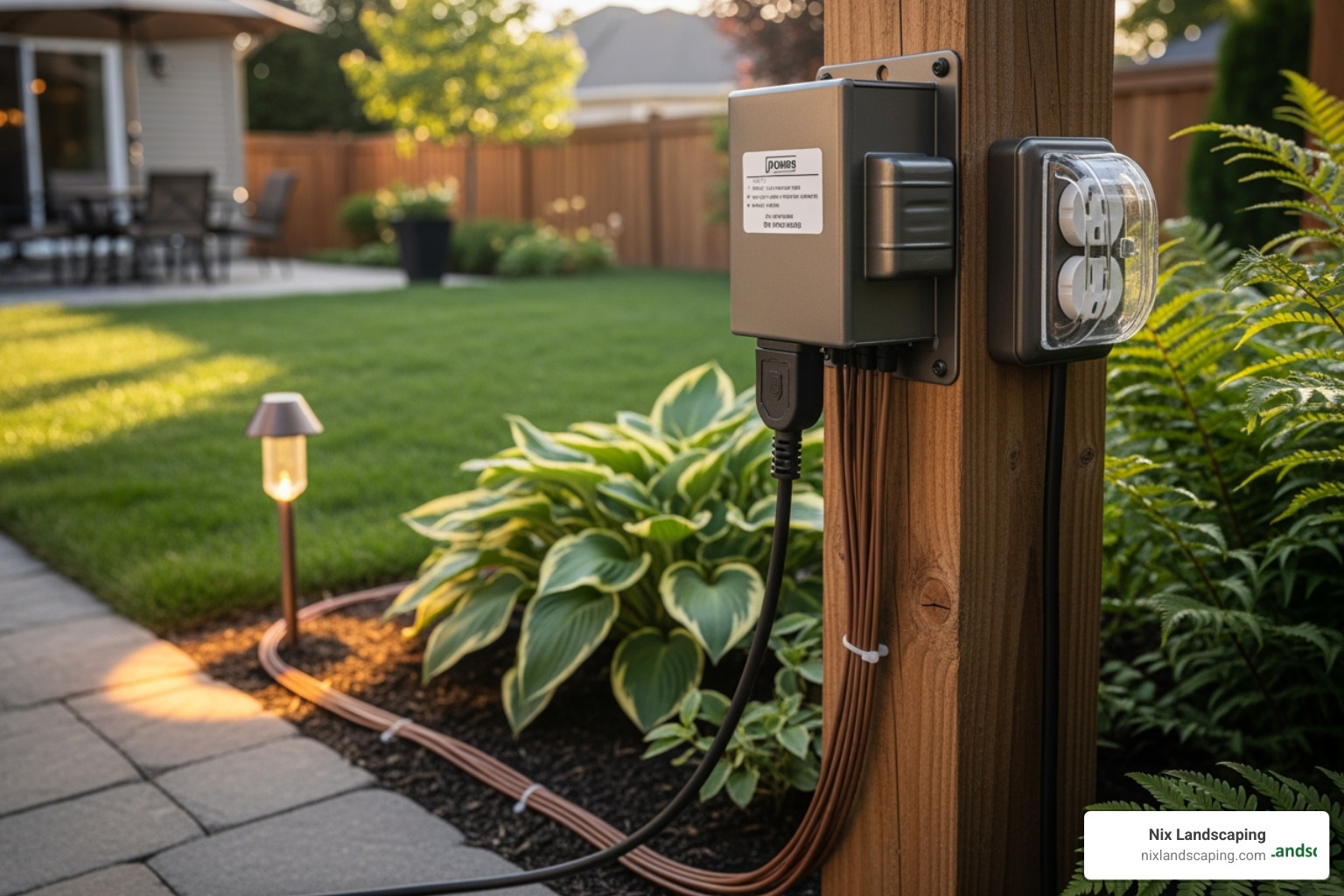
When planning your landscape lights, choosing a power source is a critical decision that affects installation, performance, and maintenance. The two main options are low-voltage and solar-powered systems, each with distinct advantages for different needs and budgets. Understanding both will help you make the best choice for your property.
Low-Voltage (12V) Systems
Low-voltage systems are the gold standard in professional landscape lighting. These systems use a transformer to convert your home’s standard 120-volt electricity to a much safer 12 volts. This component connects to buried cables that power your lights.
Safety is a top benefit; at 12 volts, there’s virtually no risk of serious shock. The installation is also more straightforward since the wiring doesn’t require deep burial or conduit.
Energy efficiency is another major advantage, especially with LED technology. These systems use minimal electricity while delivering consistent, reliable illumination. As the professional standard, low-voltage systems provide the consistent brightness and durability that make your investment worthwhile. The components are built to withstand Indiana’s changing weather conditions.
For those interested in the technical details, you can find general information on landscape lighting systems that covers the engineering behind these reliable systems.
Solar-Powered Systems
Solar-powered landscape lights appeal to homeowners who want to use free energy from the sun. Their primary advantage is being DIY-friendly with no wiring required—just stake them in the ground. This offers tremendous placement flexibility, allowing you to light areas far from an electrical source.
Solar lights are also eco-friendly, converting sunlight into illumination without increasing your electric bill. However, they come with trade-offs. Performance depends on battery life and daily sunlight. After several overcast days or during winter, you may notice dimmer light or shorter run times. This variable brightness can be a drawback if you need consistent illumination for safety or aesthetics.
While solar lights work well for accent lighting, most homeowners find that low-voltage systems provide the reliability needed for comprehensive landscape illumination. If you’re considering solar for specific commercial applications, our Commercial Solar Bollard Lights page offers insights into when solar makes the most sense.
Choosing between these power sources comes down to your priorities: consistent performance versus installation simplicity.
Key Features to Look For in Modern Fixtures
Choosing the right landscape lights involves more than aesthetics; it’s about finding fixtures with the reliability, efficiency, and features for long-term satisfaction. The right features can mean the difference between lights that delight you for decades and ones that disappoint within months.
Material, Durability, and Weather Resistance
The material of your landscape lights determines their longevity against weather. Brass is the gold standard for its toughness and the beautiful patina it develops with age. While it costs more upfront, a quality brass fixture can last 20-30 years, making it a wise long-term investment.
Aluminum offers a great middle ground, providing excellent durability at a more accessible price when properly powder-coated. Composite materials (high-density plastics) are a budget-friendly option that won’t rust but may fade or become brittle over time.
Beyond material, look for fixtures that are rust-proof and have appropriate weather ratings. Wet-rated fixtures handle direct rain and sprinklers, while damp-rated fixtures are for covered areas. For underwater use, like in ponds, look for an IP68 rating, which signifies complete protection against dust and water immersion.
LED Technology: The Bright and Efficient Standard for landscape lights
LED technology has become the clear choice for modern landscape lights. The energy savings are compelling, as LEDs use up to 85% less electricity than incandescent bulbs. Their long lifespan of 25,000 to 50,000 hours means fewer bulb replacements. LEDs also produce very low heat, making them safer around plants and people.
Color temperature, measured in Kelvin (K), determines the light’s feel. Warm white (2700K-3000K) creates a cozy, golden glow perfect for entertaining areas. Neutral white (3500K-4500K) is great for general lighting, while cool white (5000K-6500K) offers a modern, security-focused look.
The Color Rendering Index (CRI) is also important. A CRI above 80 ensures that your garden’s colors look rich and natural at night.
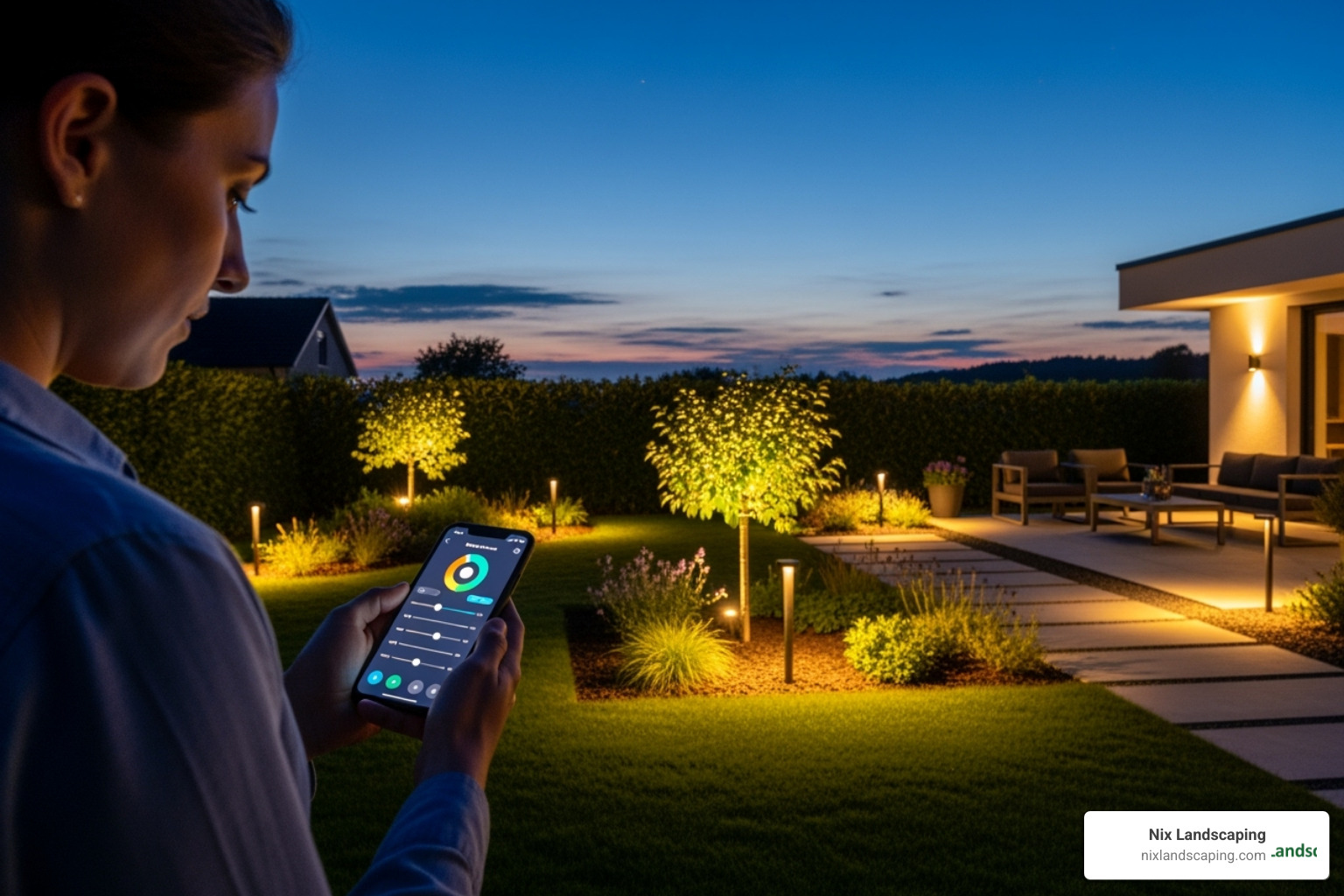
Smart Controls and Automation for your landscape lights
Smart technology makes landscape lights more useful and efficient. These features turn a simple switch into a sophisticated system adapted to your lifestyle.
- App control lets you adjust your lighting from anywhere with your phone.
- Timers automatically turn lights on and off on a schedule, improving security and saving energy.
- Dimmers allow you to create the perfect mood for any occasion, from bright for parties to soft for quiet evenings.
- Color-changing (RGBW) capabilities offer endless customization for holidays or special events.
- Dusk-to-dawn sensors use photocells for effortless automation, turning lights on at sunset and off at sunrise.
- Voice assistant integration with Alexa or Google Home adds hands-free convenience.
These smart features transform your lighting into an integrated system that improves daily life while providing peace of mind.
Frequently Asked Questions about Landscape Lighting
Here are answers to common questions homeowners in Fishers, IN, ask about landscape lights, helping you make confident decisions for your property.
How many lumens do I need for landscape lighting?
Lumens measure light output, and the right amount depends on the application. It’s about layering different light levels to create a beautiful, functional space.
- Path lighting typically requires 100-200 lumens per fixture to create a gentle, welcoming glow that ensures safe passage.
- Step lighting needs less, usually 50-150 lumens, to illuminate treads clearly without creating harsh glare.
- Spotlighting varies greatly. Highlighting small shrubs might take 120-200 lumens, while uplighting a large tree or washing a wall with light could require 800 lumens or more.
The magic is in layering these different light levels to create a cohesive and visually appealing scene.
Can I install low-voltage landscape lighting myself?
While DIY installation of 12-volt landscape lights is safer than line-voltage work and requires only basic tools, there are key challenges to consider. The technical installation is often the easy part; the real difficulty lies in professional-level design.
Design expertise is what separates an average result from a stunning one. Knowing where to place fixtures, how to angle beams to avoid glare, and how to create layered effects takes experience. Another technical hurdle is voltage drop calculation. Without proper planning, fixtures at the end of a wire run can appear noticeably dimmer than those closer to the transformer.
The benefits of professional installation include creative design solutions, long-term reliability, and expert handling of all complexities. If you’re considering professional help in the Fishers area, we can bring your vision to life.
Learn more about our local services at Garden Lighting Installation Near Me.
How do I prevent my landscape lights from creating light pollution?
Responsible lighting design can be both beautiful and eco-friendly. By following Dark Sky principles, we keep light focused on your property and out of the night sky, which benefits wildlife and neighbors.
- Aiming lights downward is the most effective step. Path and step lights are naturally aimed down, while spotlights should be aimed precisely at the feature being illuminated.
- Using shields and cowls on fixtures acts like a visor, directing the beam and preventing sideways glare.
- Choosing appropriate brightness is key. Using only the lumens needed for a specific task reduces excess light and creates a more sophisticated look.
- Using timers to turn off late-night lights makes a huge impact. Smart controls can dim or turn off decorative lights after midnight while keeping essential safety lighting active.
By following these principles, we create outdoor spaces that are both breathtaking and respectful of the environment.
Conclusion
Your outdoor space doesn’t have to disappear at sunset. As this guide has shown, landscape lights are a smart investment that transforms your property by improving its beauty, safety, and value. From path lights and spotlights to integrated hardscape fixtures, each element helps create your perfect evening landscape.
Choosing the right system—like reliable low-voltage power, durable materials, and efficient smart LED technology—ensures your lights will serve you well for decades. At Nix Landscaping, we’ve seen how the right lighting can completely change a property. Our personalized design and maintenance approach helps homeowners in Fishers, IN, create solutions that fit their unique lifestyle.
Quality design and professional-grade fixtures make all the difference. Your landscape has beauty worth showing off—let’s make sure it shines.
Ready to see your property in a whole new light? Start designing your outdoor living space today and find how landscape lights can make your evenings extraordinary.

