
Why Outdoor Lights Transform Your Home
Outdoor lights are one of the most impactful ways to improve your property’s beauty, safety, and value. Whether you’re looking to create stunning curb appeal, secure your pathways, or extend your outdoor living hours, the right lighting can completely transform your space.
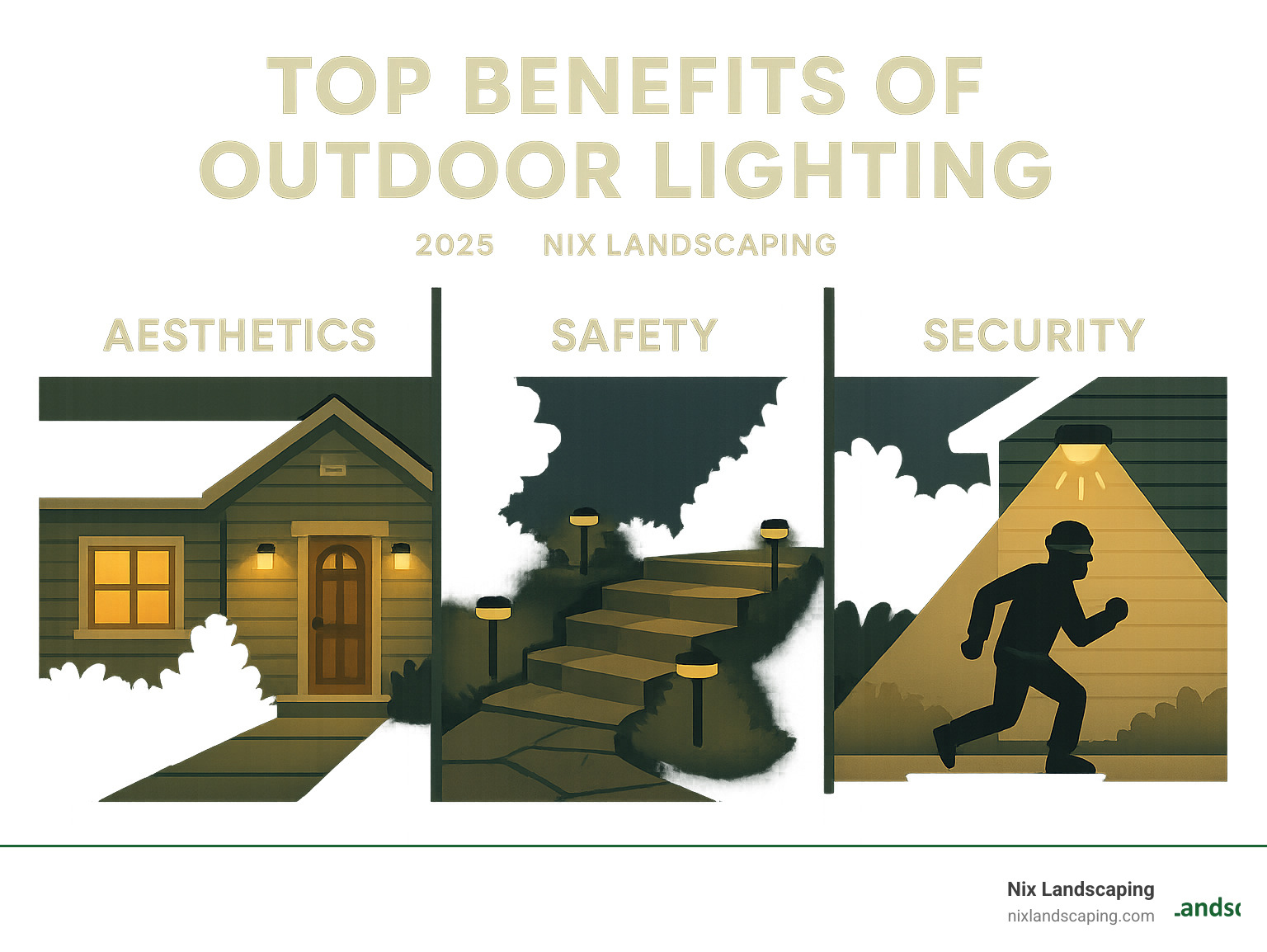
Top Benefits of Outdoor Lighting:
- Aesthetics – Highlight architectural features and landscaping
- Safety – Illuminate pathways, stairs, and potential hazards
- Security – Deter intruders and eliminate dark hiding spots
- Property Value – Increase home value and curb appeal
- Extended Use – Enjoy outdoor spaces well into the evening
The magic happens when you understand that outdoor lighting isn’t just about brightness – it’s about creating the right ambiance for your specific needs. From the warm 2700K glow that makes your front entrance welcoming to strategic placement that showcases your beautiful landscaping, every choice matters.
Key Technical Considerations:
- Residential landscape lighting typically ranges from 50-700 lumens
- Most outdoor lights use 2700K color temperature for warm, inviting light
- LED options can last up to 50,000 hours
- Average installation costs range from $2,000-$4,000
As Kyle Nix, owner of Nix Landscaping in Fishers, Indiana, I’ve helped countless homeowners find how the right outdoor lights can completely change their property’s nighttime appeal and functionality. My years of experience in landscape design have shown me that well-planned lighting is often the final touch that brings an entire outdoor space together.
Essential outdoor lights terms:
Why Illuminate Your Outdoors? The Triple Benefits of Lighting
Imagine your home not just as it appears by day, but as a welcoming guide shining brightly after sunset. That’s the real magic of well-designed outdoor lights! Here at Nix Landscaping, we’ve seen how these systems do so much more than just brighten a space. They offer a powerful triple threat of benefits: making your home look amazing, keeping everyone safe, and adding an extra layer of security.
Enhancing Aesthetics and Ambiance
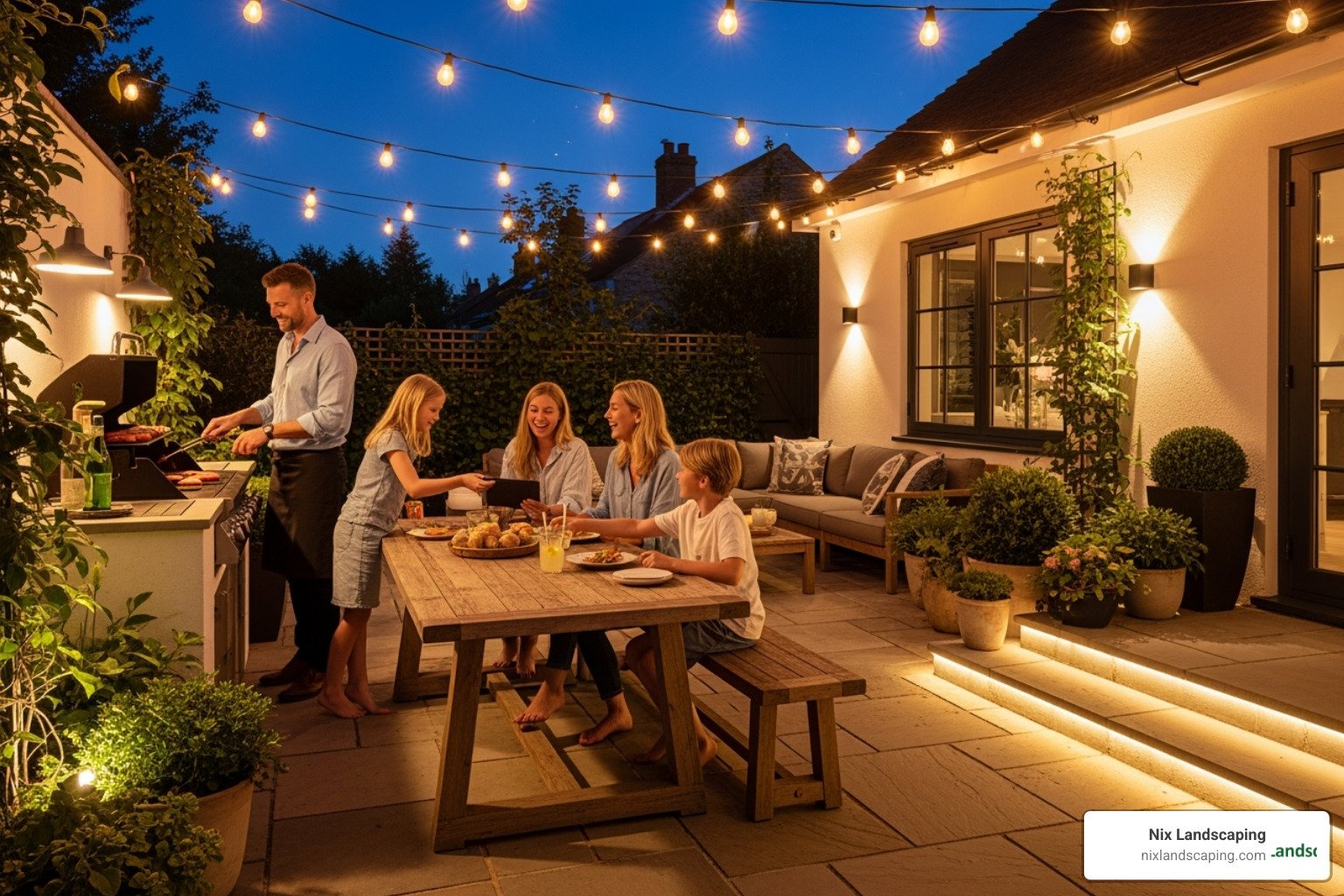
Let’s talk about beauty first. Outdoor lights are like the ultimate secret weapon for your home’s curb appeal after dark. They let us extend your property’s charm long past sunset, turning heads and making guests feel instantly welcome. We use light to artfully highlight your home’s unique architectural details and bring your beautiful Landscaping to life when the sun goes down.
Think of it this way: lighting is like painting with light! We can create stunning focal points, drawing your eye to that majestic oak tree, a bubbling fountain, or a favorite garden sculpture. By layering different types and intensities of light, we add depth and dimension to your yard. This prevents it from looking flat and creates cool visual effects, from dramatic shadows to soft, inviting glows. It truly changes the entire vibe of your Patios and outdoor areas.
Our goal is always to set the perfect mood. Warm, inviting light can transform your backyard into a cozy escape, perfect for evening chats or just unwinding. It truly extends the usability of your Outdoor Living Space Design, letting you enjoy your deck, patio, or garden well into the night. It’s all about crafting an alluring atmosphere that makes your home feel even more welcoming and your outdoor spaces more functional and beautiful than ever. Want to dive deeper into design ideas? Check out A guide to outdoor lighting design.
Boosting Safety and Security
Beyond just looking good, outdoor lights are absolute champions when it comes to keeping your home and family safe. Trying to steer your property in the dark can be tricky, right? But with smart lighting, we can eliminate those pesky trip hazards and make sure you can see everything clearly.
Think about walking to your front door at night, or taking out the trash. Well-placed path lights make sure your walkways are bright and safe, preventing slips and falls. And for steps, especially around multi-level Decks or garden paths, step lights are a must. They clearly define each step, so no more missteps! We also make sure to light up those dark corners and shadowy spots around your home. Why? Because those are exactly where unwanted visitors might try to hide.
For an extra layer of peace of mind, we often suggest motion-sensor lights. These clever lights pop on automatically when they sense movement, which is a great way to startle potential intruders and let you know if something’s happening. Dusk-to-dawn features are super convenient too – they ensure your property is lit up as soon as it gets dark and turn off automatically at sunrise. This constant, visible light acts as a strong deterrent, making your home a much less appealing target. By giving you clear visibility, outdoor lights not only scare off bad guys but also help you see exactly what’s going on, giving you that great feeling of security.
A Guide to Choosing the Right Outdoor Lights
Walking into a lighting showroom can feel overwhelming – rows upon rows of beautiful fixtures, each promising to transform your space. But choosing the perfect outdoor lights doesn’t have to be complicated. It’s really about understanding what each type does best, getting familiar with a few key technical terms, and finding fixtures that make your home look its absolute best.
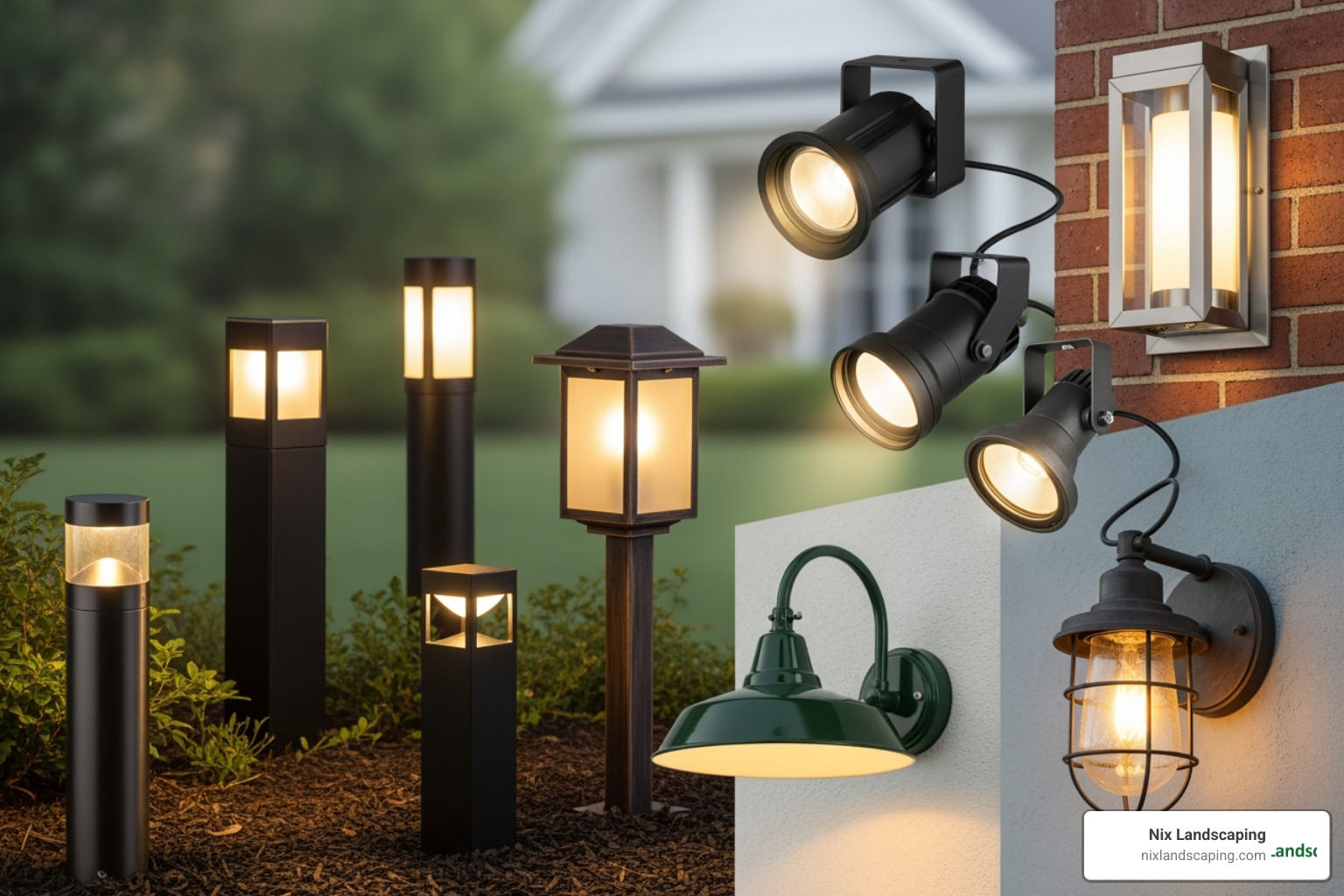
Think of it like choosing the right tool for each job. You wouldn’t use a hammer to turn a screw, and you wouldn’t use a floodlight where a subtle path light would work better. Each fixture type has its sweet spot, and understanding these differences will help you create a lighting design that’s both beautiful and functional.
Types of Outdoor Light Fixtures
Every outdoor lights project starts with understanding your options. Over the years at Nix Landscaping, I’ve learned that the right fixture in the right spot makes all the difference.
Path lights are the workhorses of landscape lighting. These low-level fixtures guide you safely along walkways and driveways while adding a welcoming glow to your garden beds. They’re like friendly guides that say “this way home” after a long day.
When you want to show off something special – maybe that gorgeous oak tree or your home’s beautiful stonework – spotlights are your best friend. These focused beams create drama and highlight features that deserve attention. Residential landscape spotlights typically range from 50 to 700 lumens, giving you plenty of flexibility to create just the right effect.
For security and broad area coverage, floodlights flood large spaces with bright, wide beams. Many come with motion sensors, making them perfect for deterring unwanted visitors while keeping your family safe.
Wall lights mount directly to your home’s exterior, providing ambient lighting for porches, patios, and entryways. They’re like jewelry for your house – functional but also a key part of your home’s style.
Safety meets sophistication with step and deck lights. These small fixtures illuminate stairs and Decks, preventing accidents while adding a subtle, neat glow. Post lights work like miniature street lamps, perfect for lighting driveways or garden entrances with classic charm.
For a more integrated look, hardscape lights tuck directly into retaining walls, benches, or outdoor kitchens. String lights bring festive warmth to Pergolas and dining areas – think cozy restaurant patio vibes. And well lights hide flush with the ground, providing discreet uplighting that seems to make trees and columns glow from within.
Understanding the Technicals: Lumens, Color, and Style
Here’s where many people get confused, but it’s actually pretty straightforward once you know what to look for. The old way of thinking about bulb brightness was watts, but that really measures energy use, not light output. What you actually care about is lumens – that’s your brightness measurement.
For most residential outdoor lights, you’ll want somewhere between 50 and 700 lumens. A gentle path light might use 50-100 lumens, while a security spotlight could go up to 700. To put this in perspective, that old 100-watt bulb in your house produces about 1,600 lumens – way more than you need for subtle outdoor accent lighting.
Color temperature is measured in Kelvin, and it’s simpler than it sounds. Lower numbers mean warmer, more yellow light. Higher numbers mean cooler, more blue-white light. Most outdoor lights use 2700K because it creates that warm, inviting glow that makes homes feel welcoming. But you’ve got options ranging from 2200K (very warm, like candlelight) up to 4000K (cool and crisp, like moonlight).
| Kelvin (K) | Associated Mood | Best Use Case |
|---|---|---|
| 2200K | Very warm, intimate | Creating a cozy, candlelight-like ambiance |
| 2700K | Warm, inviting white | Most common for residential landscape lighting, general ambiance, accentuating features |
| 3000K | Soft white, neutral | Good for paths, general illumination, slightly brighter feel |
| 4000K | Cool white, bluish | Security lighting, modern aesthetics, task lighting where clarity is key |
The style of your fixtures should feel like a natural extension of your home’s personality. Traditional homes look great with classic lantern styles, while modern houses shine with clean, geometric designs. We always consider finishes like black, bronze, or brass to make sure everything works together beautifully.
Powering Your Lights: Energy-Efficient and Smart Options
The power source you choose can make or break your lighting project. LED technology has completely changed the game for outdoor lights. These bulbs can last up to 50,000 hours – that’s potentially decades without changing a bulb! Plus, they use a fraction of the energy that old incandescent bulbs consumed.
For comprehensive lighting systems, low-voltage systems are usually the way to go. They run on 12 volts instead of your home’s standard 120 volts, using a transformer to step down the power. This makes them safer to install and operate, while providing consistent, reliable illumination that won’t dim or flicker.
Solar-powered lights are fantastic for DIY projects and spots where running electrical wires would be tricky. They charge during the day and light up at night, with zero electricity costs. Just remember that their performance depends on how much sun they get, so they work best in areas with good daytime exposure.
The latest smart technology options are pretty amazing. You can set timers to turn lights on and off automatically, use motion sensors for security, and even control everything from your phone with app control. Dusk-to-dawn features use light sensors to automatically turn on when darkness falls and off at sunrise – convenient and energy-efficient.
For more detailed information about optimizing outdoor area lighting for energy efficiency, check out this helpful resource: More on outdoor area lighting.
Installation, Maintenance, and Cost Considerations
Bringing your outdoor lighting vision to life involves careful planning for installation, understanding ongoing maintenance, and budgeting effectively. At Nix Landscaping, we focus on ensuring your outdoor lights are not only beautiful but also durable and cost-effective in the long run.

Best Placement and Installation Practices for outdoor lights
The magic of outdoor lights happens when they’re placed with purpose. We don’t just scatter fixtures around your yard and hope for the best – every light has a job to do.
Strategic pathway lighting creates safe passage while guiding guests naturally toward your front door. We illuminate walkways and driveways with carefully spaced fixtures that prevent dark spots where someone might stumble. Your entryway becomes a guide of welcome when properly lit, setting the tone for your entire property.
Uplighting transforms ordinary features into nighttime showstoppers. When we shine light upward onto your favorite oak tree or that beautiful stone column, we create drama and depth that simply doesn’t exist during the day. It’s like having a personal spotlight operator who never takes a break.
Wall washing and grazing techniques sound fancy, but they’re really about making your home’s textures shine. Wall washing gives you smooth, even light across larger surfaces, while grazing places fixtures close to textured walls to emphasize every brick, stone, or architectural detail. Both techniques add sophistication to your outdoor space.
Professional installation becomes especially valuable here in Fishers, where our Indiana weather can be tough on outdoor electrical systems. We understand the difference between damp-rated fixtures (perfect for covered porches) and wet-rated fixtures (essential for areas exposed to rain and snow). Proper transformer placement and adherence to electrical codes aren’t just good ideas – they’re essential for safety and longevity.
DIY installation works well for simple solar fixtures or small additions to existing systems. Just remember that safety comes first, especially with electrical components. Make sure everything you use is rated for outdoor conditions and properly sealed against moisture.
Maintenance and Longevity of your outdoor lights
Your outdoor lights are built to last, but a little care goes a long way toward keeping them performing at their best. Think of maintenance as protecting your investment rather than a chore.
Regular cleaning makes a bigger difference than you might expect. Dirt and debris can cut your light output significantly, so a simple wipe-down with a damp cloth every few months keeps your fixtures shining bright. Don’t forget those internal reflectors and lenses – they’re doing the heavy lifting when it comes to directing light where you want it.
Wire inspection might not be exciting, but it’s crucial for safety. Take a walk around your property periodically and look for any signs of wear, damage, or exposed wiring. Secure connections prevent problems before they start, and catching issues early saves money down the road.
Bulb replacement is becoming less common thanks to LED technology lasting up to 50,000 hours, but other bulb types will eventually need attention. Replace any burned-out bulbs promptly – your lighting design works best when all fixtures are functioning properly.
Foliage management keeps your lights from playing hide-and-seek with your landscaping. Plants grow, and what started as perfect placement can become obscured over time. Regular trimming ensures your light beams hit their intended targets and prevents unwanted shadows.
Fixture security matters more than you might think. Weather, settling, and the occasional bump can loosen fixtures over time. A quick check to ensure everything is properly positioned and securely fastened prevents bigger problems later.
Seasonal adjustments let you adapt your lighting as your needs change throughout the year. You might want to adjust angles for winter safety or add temporary fixtures for holiday entertaining.
Budgeting for Your Project
Understanding the investment in outdoor lights helps you plan effectively and make choices that deliver the best value for your specific needs.
Most residential lighting projects fall between $2,000 and $4,000 for professional installation. This range reflects the variety of options available and the different factors that influence final costs. It’s not just about buying fixtures – you’re investing in a complete lighting system designed specifically for your property.
A typical example might include installing eight LED step lights around your deck plus twelve hardscape lights around your pool area. With professional wiring and installation, this type of project typically runs around $3,000. It’s a good benchmark for understanding what a moderate residential project involves.
Several factors influence your final investment. The number of fixtures obviously affects cost – more lights mean higher material and labor expenses. The type of lights you choose makes a difference too. High-quality, specialized fixtures like marine-grade or smart-enabled lights cost more upfront than basic path lights, but they often provide better long-term value.
Installation complexity varies significantly between projects. Simple installations in easily accessible areas cost less than projects requiring extensive trenching, complex wiring runs, or integration with existing smart home systems. Our Indiana clay soil can sometimes add challenges, but our experience in Fishers helps us work efficiently even in difficult conditions.
Long-term energy savings make LED outdoor lights particularly attractive. While the initial investment might seem significant, the combination of extremely long bulb life and low energy consumption means your system pays for itself over time. When you consider that quality LED fixtures can run for decades with minimal maintenance, the value proposition becomes even stronger.
Frequently Asked Questions about Outdoor Lighting
Over my years helping homeowners in Fishers transform their properties, I’ve noticed the same questions come up again and again about outdoor lights. Let me share the answers that have helped countless families make the right choices for their homes.
What is the best color temperature for outdoor lighting?
Here’s the thing about color temperature – there’s no single “perfect” answer, but there’s definitely a sweet spot for most homes. The magic number we recommend is 2700K, which gives you that warm, welcoming glow that makes your home feel like, well, home.
Think of it this way: when you picture a cozy evening on your patio or a welcoming front entrance, you’re probably imagining that soft, golden light that feels natural and inviting. That’s exactly what 2700K delivers. It mimics the warmth of traditional incandescent bulbs and brings out the rich colors in your landscaping without feeling harsh or clinical.
But sometimes, you might want something a little different. If you’re going for a more modern look or need clearer visibility for security purposes, cooler temperatures between 3000K and 4000K can work beautifully. These create a crisper, more moonlight-like effect that can make your home feel sleek and contemporary.
My advice? Start with 2700K for most of your outdoor lights, then consider adding a few cooler options for specific areas where you want that modern edge or extra security lighting.
How can I reduce light pollution from my outdoor lights?
Being a good neighbor while still enjoying beautiful outdoor lights is easier than you might think. The key is being thoughtful about where your light goes – and more importantly, where it doesn’t go.
The biggest game-changer is choosing shielded fixtures that direct light downward instead of letting it scatter everywhere. Think of it like putting a lampshade on your outdoor lights – the light goes where you want it, not up into the sky or into your neighbor’s bedroom window.
Smart timing makes a huge difference too. Motion sensors and timers mean your lights are only on when you actually need them. Why light up your garden all night when no one’s out there to enjoy it? Dusk-to-dawn features give you the perfect balance of convenience and consideration.
Here’s something interesting: those warm 2700K lights I mentioned earlier? They’re not just prettier – they’re also better for the environment. Warmer color temperatures have less impact on wildlife and create less of that unwanted glow that washes out the stars.
The goal is simple: light what you want to see, when you want to see it, without bothering anyone else. It’s really that straightforward.
Should I choose solar or low-voltage lighting?
This is probably the question I get asked most, and my answer always starts with: “What are you trying to achieve?”
Solar lights are fantastic for certain situations. If you want to add some quick accent lighting to a garden path, highlight a few plants, or create ambiance for a weekend gathering, solar can be perfect. They’re incredibly easy to install – literally just stake them in the ground – and your electric bill won’t budge. For DIY enthusiasts or anyone wanting to test out lighting ideas before committing to a permanent system, solar is a great starting point.
But here’s where low-voltage lighting really shines: consistency and control. When you want your outdoor lights to look the same every single night, regardless of whether it was cloudy that day, low-voltage is your answer. The light output is reliable, the brightness is exactly what you choose, and you can create those layered, professional lighting effects that truly transform a property.
At Nix Landscaping, we typically recommend low-voltage systems for comprehensive lighting designs. Yes, there’s more upfront investment and installation complexity, but the results speak for themselves. You get the power to create exactly the ambiance you want, exactly when you want it.
Think of it this way: solar is great for adding touches of light, while low-voltage is perfect for creating a complete lighting experience that becomes part of your home’s character.
Illuminate Your World with Expert Design
There’s something magical about stepping outside on a warm evening and seeing your home bathed in the perfect glow of well-designed outdoor lights. It’s that moment when you realize your property has been completely transformed – not just lit up, but truly illuminated with purpose and beauty.
Outdoor lights are far more than simple fixtures; they’re powerful tools that can change your property’s beauty, safety, and usability after dark. When you choose the right fixtures and understand key technical aspects like lumens and color temperature, you create an environment that’s both stunning and secure. The difference between randomly placed lights and a thoughtfully designed system is like the difference between scribbling and creating art.
In my years working with homeowners throughout Fishers, IN, I’ve witnessed countless changes. A simple ranch home becomes a welcoming guide. A beautiful backyard extends its usefulness well into the night. Children can play safely on the deck after dinner, and adults can enjoy evening conversations without squinting in the dark or fumbling with flashlights.
The key is understanding that great outdoor lighting isn’t about flooding your yard with brightness. It’s about creating layers of light that work together harmoniously. Proper installation makes all the difference – from strategic placement that highlights your home’s best features to technical considerations like weather ratings and electrical safety.
But here’s the thing: while the technical knowledge is important, the real magic happens when you combine that expertise with creative vision. That’s where the difference between a DIY project and professional design becomes clear. We don’t just install lights; we craft experiences that make your home feel more welcoming, your family safer, and your evenings more enjoyable.
For a truly seamless and creative lighting solution custom to your home, consider consulting with the experts at Nix Landscaping. We specialize in personalized design and maintenance, ensuring your project runs smoothly with a focus on your needs and creative solutions. Ready to bring your outdoor space to life and experience the magic of professional outdoor lights? Explore Our Services to get started.

