
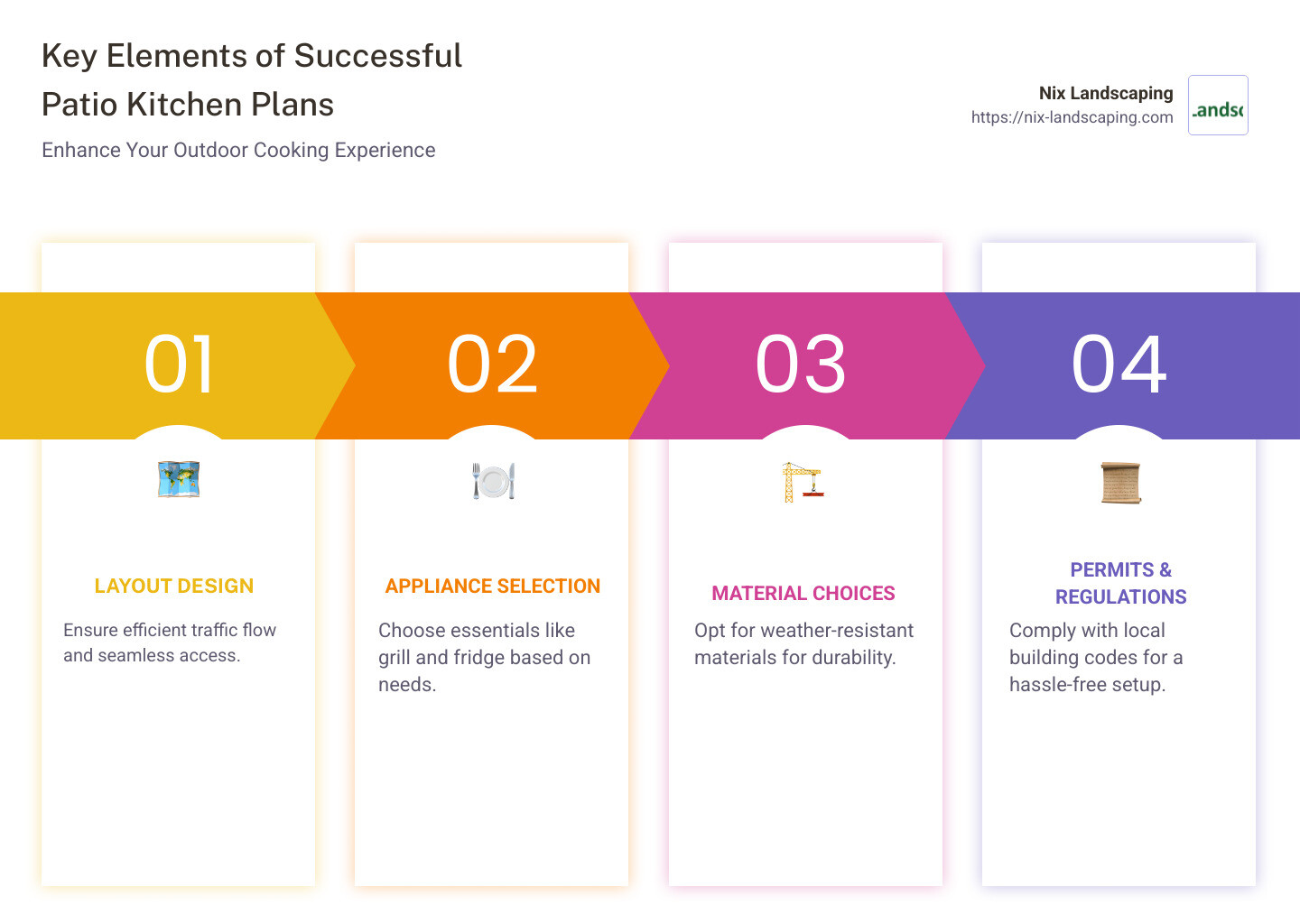
Patio kitchen plans offer a perfect opportunity to revolutionize your backyard into a vibrant space for cooking and entertaining. Whether you’re looking to craft a custom DIY setup or prefer the convenience of a prebuilt modular kitchen, a patio kitchen can lift your outdoor experiences. Here’s a quick glimpse into the essential elements of a successful patio kitchen plan:
- Layout Design: Prioritize functional traffic flow and easy access between cooking and leisure zones.
- Appliance Selection: Install essentials like a grill, refrigerator, and prep space custom to your culinary needs.
- Material Choices: Opt for weather-resistant materials for long-lasting durability.
- Permits and Regulations: Ensure compliance with local building codes for a hassle-free setup.
Creating the right outdoor kitchen can transform your backyard from an ordinary space into the social hub of your home.
I’m Kyle Nix, owner of Nix Landscaping. With years of experience specializing in patio kitchen plans, I’ve honed the ability to blend functionality with aesthetic appeal in every outdoor project. Now, let’s dig deeper into planning the perfect patio kitchen for your home.
Planning Your Patio Kitchen
Designing your patio kitchen plans is an exciting journey that begins with thoughtful planning. Here’s a breakdown of the key aspects to consider:
Space and Layout
Traffic Flow and Accessibility
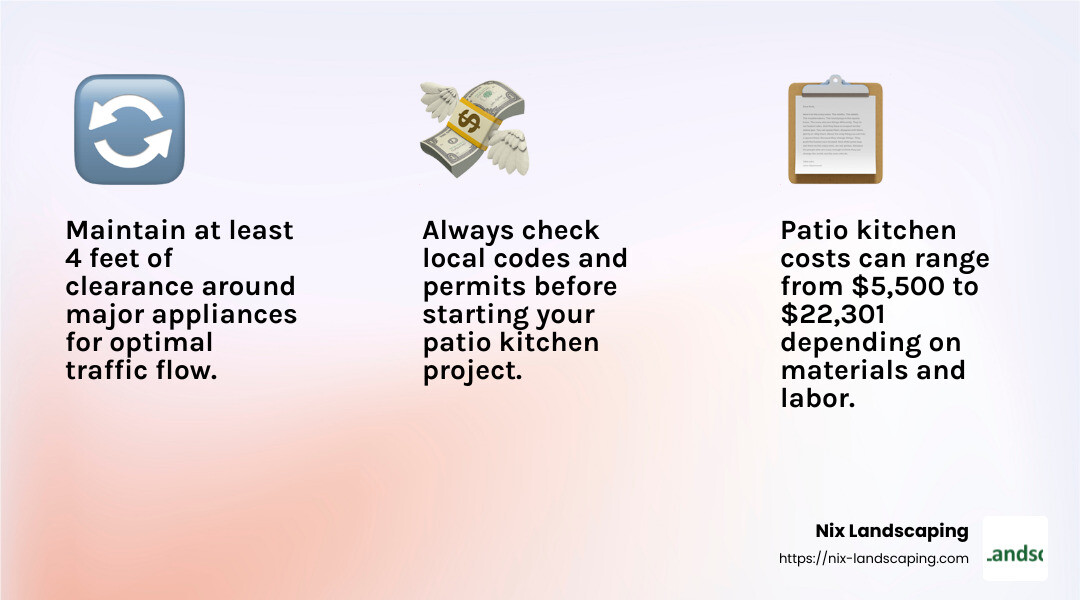
Imagine your patio kitchen as a well-orchestrated dance. You want smooth movements between the grill, prep area, and seating. Ensure there’s enough space for people to move around without bumping into each other. A good rule of thumb is to keep at least 4 feet of clearance around major appliances and work areas.
Consider placing the kitchen closer to your home if you want easy access to indoor amenities. But, if you prefer a more secluded vibe, a standalone setup might be ideal. Just remember, distance can affect utility connections.
Budgeting for Your Project
Cost Variations and DIY Savings
Budgeting is crucial. The cost of a patio kitchen can vary widely. A basic setup might start at around $5,500, while a more deluxe version could reach $22,301. A significant part of this cost comes from labor, which can range from $3,000 to $12,000. Opting for a DIY approach can save you a lot of money, especially if you have the skills and time to tackle the project yourself.
When budgeting, include costs for appliances, materials, and any necessary utility connections. Don’t forget to set aside a buffer for unexpected expenses.
Permits and Regulations
Permit Costs and Local Codes
Before you start building, check with local authorities about required permits. These can include permits for electrical work, plumbing, and structural changes. Permit costs can vary, so it’s wise to factor this into your budget early on.
Compliance with local building codes is non-negotiable. These codes ensure your patio kitchen is safe and up to standard. Failing to adhere to them can result in fines or having to redo parts of your project. Always consult with a professional if you’re unsure about the regulations in your area.
In summary, careful planning of your patio kitchen’s space, budget, and permits will set the foundation for a successful project. With these elements in place, you’re ready to move on to selecting the essential components of your patio kitchen.
Essential Components of a Patio Kitchen
Designing your patio kitchen involves several key components that will define its functionality and style. Let’s explore the grill, countertops, storage solutions, and sink installation to ensure you create the perfect outdoor cooking space.
Grill Selection
The grill is the heart of any patio kitchen. When choosing a grill, consider the fuel type:
- Gas Grills: Quick to heat up and easy to control, gas grills are popular for their convenience. They require a connection to a natural gas line or a propane tank.
- Charcoal Grills: Known for imparting a smoky flavor, charcoal grills offer a traditional grilling experience. However, they require more time to heat up and cool down.
- Electric Grills: Best for areas with strict regulations on open flames, electric grills are easy to use but may lack the flavor depth of gas or charcoal options.
Look for additional features like side burners, rotisserie attachments, and smoker boxes to expand your cooking options.
Countertop Materials
Your countertop choice affects both the look and functionality of your patio kitchen. Here are three popular options:
- Granite: Durable and stylish, granite countertops can withstand high temperatures and resist scratches. They require sealing to prevent staining.
- Concrete: Known for its versatility, concrete can be customized with different colors and textures. It’s durable but needs sealing to protect against stains and weathering.
- Stainless Steel: Offers a sleek, modern look and is highly durable. Stainless steel is easy to clean and resists rust and corrosion, making it ideal for outdoor use.
Storage Solutions
Weather-resistant storage is essential for keeping your kitchen organized and functional. Consider the following:
- Weather-Resistant Cabinets: Choose materials like stainless steel or sealed wood to withstand the elements. Cabinets should have a good seal to keep out moisture and pests.
- Pantry Options: Built-in pantries can store non-perishable items and cooking tools. Look for options with adjustable shelving for flexibility.
Sink Installation
A sink adds convenience to your patio kitchen, allowing for easy cleanup and food prep. Here are some plumbing considerations:
- Utility Connections: Ensure you have access to water lines and a proper drainage system. Depending on your setup, you might need a pump for drainage if your patio is far from the main drain line.
- Professional Consultation: Consulting with a plumbing professional ensures your sink is installed correctly and meets local codes. They can also advise on the best placement for efficiency.
By carefully selecting each component, you can create a patio kitchen that is both beautiful and functional. Next, we’ll dig into the various material options available for your patio kitchen to improve its durability and aesthetic appeal.
Material Options for Patio Kitchens
Choosing the right materials for your patio kitchen is crucial for both durability and aesthetics. Let’s explore the options for stone, wood, and metal to find what suits your needs best.
Stone Choices
Stone is a timeless choice for outdoor kitchens, offering both beauty and resilience. Here are some popular options:
Granite: Known for its robustness, granite can handle high temperatures and resist scratches. It’s a fantastic choice for countertops and can endure harsh weather with minimal maintenance. Just remember to seal it to prevent stains.
Marble: While stunning, marble is more porous than granite. It requires regular sealing to protect against stains and etching. Its neat appearance makes it a favorite for those who prioritize aesthetics.
Quartzite: This natural stone is as durable as granite but offers a unique look with its swirling patterns. Quartzite is highly resistant to heat and scratches, making it a practical choice for countertops.
Wood Varieties
Wood adds warmth and a rustic feel to your patio kitchen. When selecting wood, consider options that resist rot and insects:
Cedar: Naturally resistant to moisture and insects, cedar is an excellent choice for outdoor cabinets and pergolas. Its rich color and pleasant aroma are added bonuses.
Teak: Known for its durability, teak can withstand the elements without warping or cracking. It requires occasional sealing to maintain its golden hue, but its natural oils provide excellent protection against decay.
Metal Uses
Metal, particularly stainless steel, is a popular choice in patio kitchens for its sleek look and resilience:
- Stainless Steel: This metal is highly durable, rust-resistant, and easy to clean. It’s perfect for appliances, cabinetry, and countertops. Stainless steel provides a modern aesthetic and can withstand the elements with ease.
By understanding these material options, you can create a patio kitchen that not only looks great but also stands the test of time. Next, we’ll discuss the pros and cons of DIY vs. Professional Installation to help you decide the best approach for your project.
DIY vs. Professional Installation
Building a patio kitchen is an exciting project. But first, you need to decide if you’ll do it yourself or hire professionals. Both options have their own benefits and challenges.
DIY Installation
Customization and Cost Savings
Doing it yourself can save you a lot of money. You won’t have to pay for labor, which can be a big part of the total cost. Plus, you get to make all the decisions. You can choose every detail, from the layout to the materials. This makes your patio kitchen truly unique and custom to your needs.
Sense of Accomplishment
There’s something special about building something with your own hands. Completing a DIY project gives you a sense of pride and accomplishment.
Skill and Time Investment
However, a DIY project requires a good amount of skill and time. You need to be comfortable with tools and have some experience in construction. If you’re not careful, mistakes can be costly and time-consuming to fix.
Professional Installation
Workmanship Quality and Safety
Hiring professionals ensures high-quality workmanship. They have the expertise to build a patio kitchen that looks great and is safe to use. Professionals know the local codes and regulations, so your kitchen will be up to standard.
Efficiency and Peace of Mind
With professionals, the project can be completed faster. They have the tools and skills to work efficiently. This saves you time and stress. You won’t have to worry about making mistakes or missing important details.
Higher Upfront Cost
The downside is the cost. Professional installation is more expensive upfront. But for many, the peace of mind and quality of work are worth the investment.
When deciding between DIY and professional installation, consider your budget, skills, and how much time you can commit. Each option has its pros and cons, so choose what suits your needs best.
Next, we’ll walk you through a Step-by-Step Guide to Building Your Patio Kitchen, covering everything from frame construction to applying the finishing touches.
Step-by-Step Guide to Building Your Patio Kitchen
Building your own patio kitchen can be a rewarding experience. Let’s break it down into simple steps to make the process easier and more manageable.
Building the Frame
Corner Posts and Stretchers
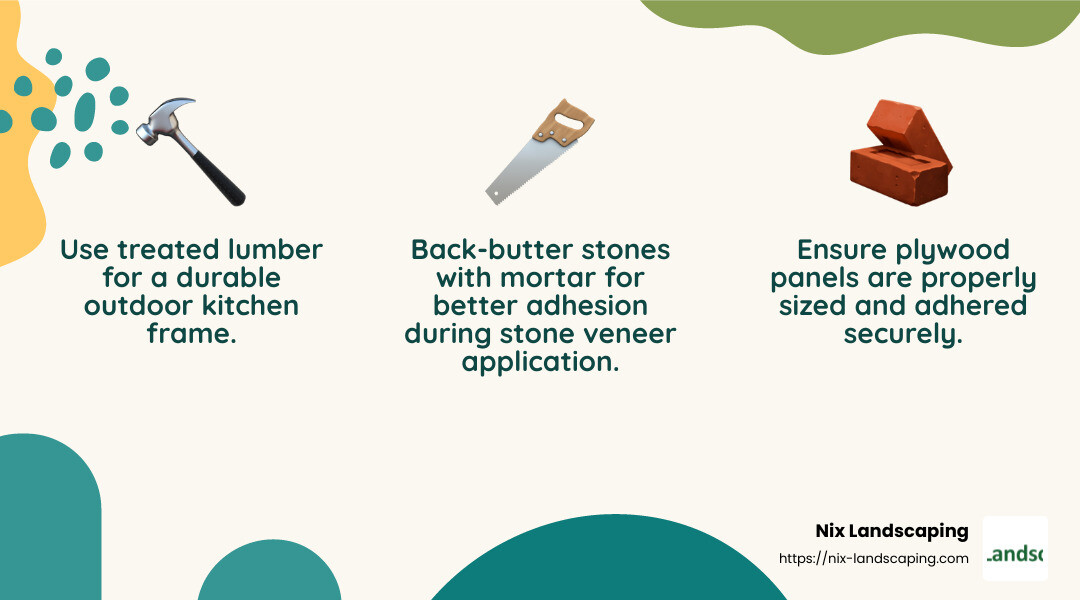
Start by setting up the foundation of your patio kitchen with sturdy corner posts. These posts will provide the support needed for the entire structure. Use treated lumber to ensure durability against outdoor elements.
Next, connect the corner posts with stretchers. These horizontal pieces of wood will tie the frame together. Make sure everything is level and square to maintain a solid base for your kitchen. Use 2-inch deck screws to secure the frame tightly.
Sheathing the Frame
Plywood Panels and Adhesive Application
Once your frame is ready, it’s time to add the sheathing. Cut plywood panels to the correct size and attach them to the frame. This will create a smooth surface for the next steps.
Apply a strong adhesive to the plywood panels before attaching them. This helps ensure a secure bond and adds stability to the structure. Work carefully to avoid gaps and ensure a seamless finish.
Applying Stone Veneer
Mortar Application and Stone Setting
Now, let’s move on to the exciting part—applying the stone veneer. Begin by back-buttering the stones with a 1-inch layer of mortar. This technique helps the stones adhere better to the surface.
Press each stone firmly onto the grooved scratch coat, starting with corner pieces. Use a pointing trowel to scrape off any excess mortar that oozes out. This ensures a tight seal and neat appearance.
Continue laying stones, shaping and trimming them as needed. Use a grinder with a diamond blade for precision cuts. Dry-fit stones before mortaring to achieve a natural look.
Tip: Clamp smaller stones to the frame before cutting to keep your hands safe from the blade.
By following these steps, you can create a beautiful and functional patio kitchen. Whether you’re a seasoned DIY enthusiast or a beginner, taking it step by step will make the process enjoyable and rewarding. Next, we’ll address some common questions about patio kitchen plans to help you further in your journey.
Frequently Asked Questions about Patio Kitchen Plans
What is the average cost to build an outdoor kitchen?
Building an outdoor kitchen can be a worthwhile investment, but it’s important to know what to expect cost-wise. On average, constructing an outdoor kitchen costs around $16,004, but it can range from $6,085 to $25,999 depending on various factors. These include the size of the kitchen, the materials used, and whether you choose to DIY or hire professionals. By planning carefully, you can align your project with your budget.
How to build an outdoor kitchen on a budget?
Creating a patio kitchen doesn’t have to break the bank. Here are a few tips to keep costs down:
DIY Labor: Consider doing some or all of the work yourself. This can significantly reduce labor costs.
Use Upcycled Materials: Incorporate recycled wood, stone, or tile to add character and save money.
Simple Foundation: Use poured concrete for the foundation. It’s cost-effective and durable.
Modular Components: Opt for semicustomizable modular units. They allow flexibility and can be more budget-friendly than custom builds.
By following these strategies, you can enjoy a beautiful outdoor kitchen without overspending.
What materials are best for outdoor kitchens?
Selecting the right materials is key to building a durable and attractive outdoor kitchen. Here are some top choices:
Stone: Options like granite, marble, and quartzite are popular for countertops. They are durable and withstand weather well.
Wood: If you prefer a natural look, consider cedar or teak. These woods are resistant to rot and insects, making them ideal for outdoor use.
Metal: Stainless steel is a great choice for appliances and fixtures. It’s rust-resistant and easy to clean.
Each material has its advantages, so choose based on your design preferences and local climate considerations.
By understanding these aspects of patio kitchen plans, you can make informed decisions that suit your needs and budget. Now, let’s dive into the next section to explore the essential components of a patio kitchen.
Conclusion
At Nix Landscaping, we understand that crafting the perfect patio kitchen is more than just a project—it’s about creating a personalized outdoor oasis that fits your lifestyle. Our expertise in personalized design ensures that every detail is custom to your specific needs and preferences.
Whether you’re dreaming of a rustic outdoor kitchen with wood-fired ovens or a sleek, modern space with stainless steel accents, our team is ready to bring your vision to life. We focus on client-focused solutions, working closely with you every step of the way to ensure your outdoor kitchen not only meets but exceeds your expectations.
Our commitment to quality means using only the best materials, ensuring your patio kitchen is durable and beautiful. From the early planning stages to the final installation, we prioritize your satisfaction, offering creative solutions and expert guidance.
Ready to transform your backyard into a stunning outdoor retreat? Contact us at Nix Landscaping for a free consultation and let us help you design the patio kitchen of your dreams. With our personalized approach, your backyard will become the perfect place for cooking, entertaining, and creating lasting memories.

