
Illuminate Your Outdoor Oasis
Looking for patio lighting ideas to transform your backyard? Here are the top options:
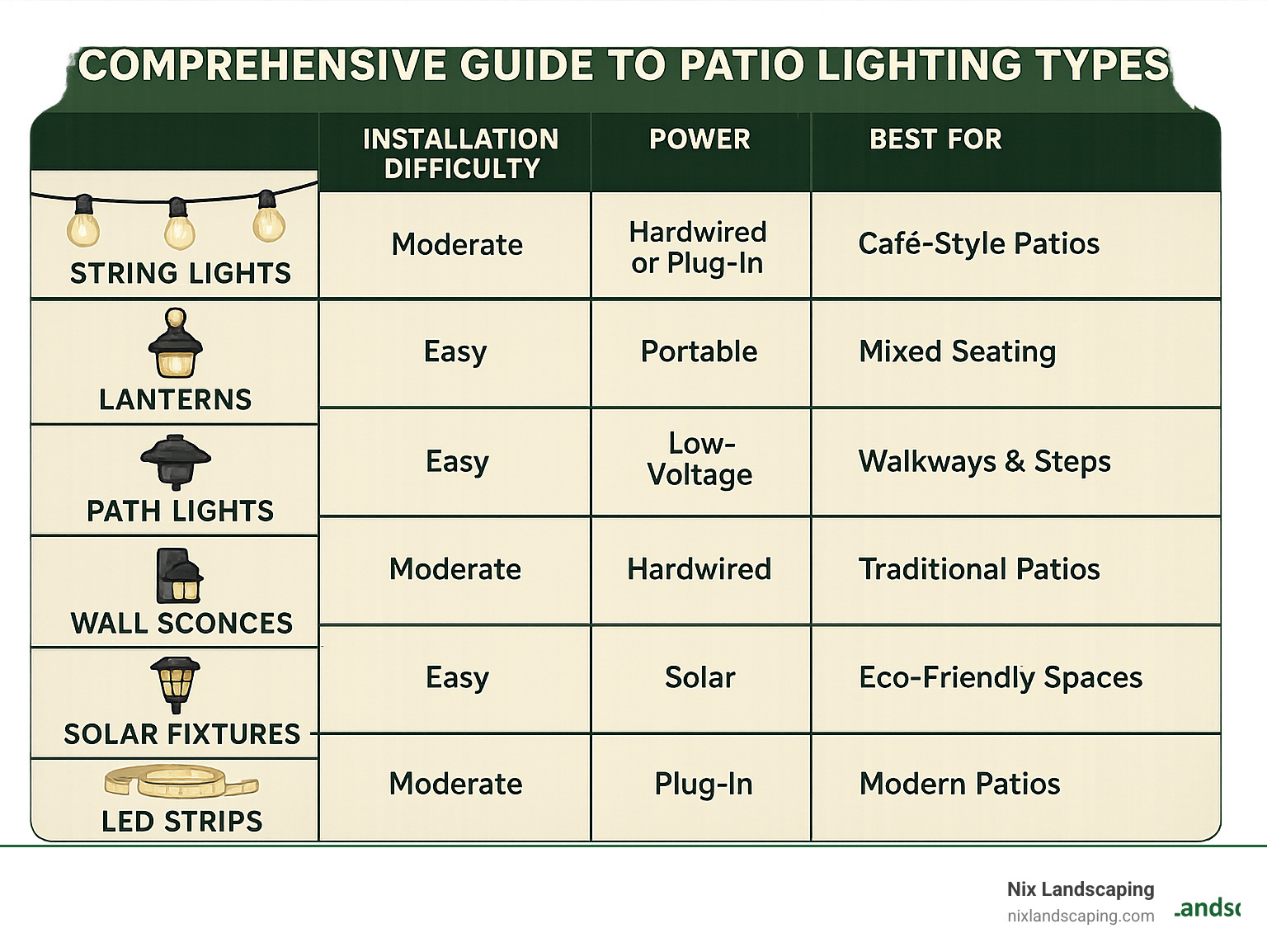
- String Lights: Create a magical canopy effect with café-style bulbs
- Lanterns & Pendants: Add portable, stylish lighting clusters
- Path & Step Lights: Improve safety while highlighting walkways
- Wall Sconces: Provide ambient light and accent architectural features
- Solar Fixtures: Harness sunlight for eco-friendly illumination
- LED Strip Lights: Highlight edges and create subtle glow
Patio lighting ideas can instantly transform an ordinary outdoor space into a magical retreat. The right lighting doesn’t just help you see after dark—it creates ambiance, improves safety, and extends the usable hours of your outdoor living area. Whether you’re hosting summer gatherings or enjoying quiet evenings alone, thoughtful lighting makes all the difference between a forgettable space and one that feels like a natural extension of your home.
As one homeowner put it: “It is amazing to see how your outdoor space gets transformed with the addition of string lights. It immediately turns into a magical space!”
The beauty of patio lighting lies in its versatility. From simple solar stake lights that require zero wiring to elaborate string light canopies that create the feel of an outdoor ceiling, options exist for every style preference and technical skill level.
I’m Kyle Nix, owner of Nix Landscaping, and I’ve helped countless homeowners in Fishers transform their outdoor spaces with creative patio lighting ideas that balance both beauty and functionality, turning underused patios into captivating evening retreats that families enjoy year-round.
Patio lighting ideas word roundup:
– Backyard patio ideas
– Patio landscape design
– Patio installation services
Patio Lighting Ideas 101: Layer Your Light Like a Pro
Ever walked into a beautifully lit restaurant and wondered why it feels so magical? The secret isn’t just good fixtures—it’s layering. When planning your patio lighting ideas, think beyond a single bright light and instead create depth with multiple sources.
Layering isn’t complicated, but it makes all the difference. Just like inside your home, outdoor spaces benefit from three key lighting types:
Ambient lighting serves as your base layer, providing overall illumination that lets you steer the space. Think string lights overhead or wall sconces that cast a gentle glow across the patio.
Task lighting focuses on specific activities—bright enough to read a book, slice vegetables at the outdoor kitchen, or see cards during game night.
Accent lighting adds the magic by highlighting special features like a water fountain, beautiful tree, or architectural detail on your home.
“I thought one bright light would be enough for our patio,” shares Melissa, one of our Fishers clients. “But after layering different fixtures, it feels like we added an entire new room to our home. The space feels bigger and so much more inviting!”
Understanding light output is crucial for effective layering. Here’s a simple guide to help you choose the right brightness:
| Purpose | Recommended Lumens | Best For |
|---|---|---|
| Ambient/Decorative | 50-200 | General atmosphere |
| Path Lighting | 100-200 | Safe navigation |
| Entry Points | 300-500 | Security and welcome |
| Cooking/Dining | 400-700 | Functional tasks |
| Security Flood | 700-1,300 | Safety and deterrence |
The color of your light matters just as much as brightness. Think of color temperature as the “mood setter” for your outdoor space:
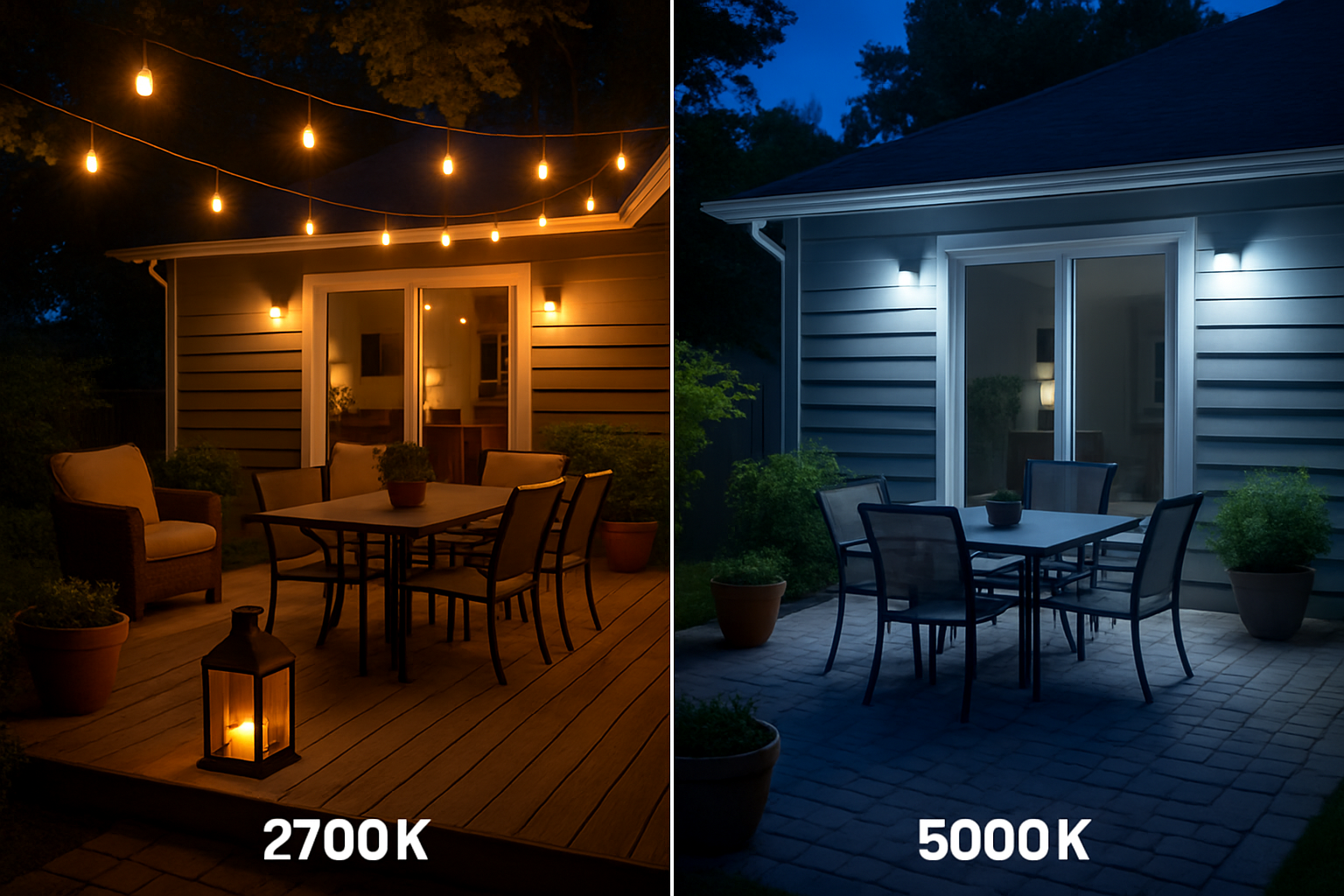
Warm white (2700K-3000K) creates that cozy, golden glow perfect for relaxing evenings and dinner parties. Most patio lighting ideas benefit from this inviting temperature.
Neutral white (3000K-4000K) provides clearer visibility without feeling harsh—ideal for cooking areas or reading nooks.
Cool white (4000K-5000K) offers the sharpest visibility, making it best for security purposes, though it can feel a bit clinical for social spaces.
Don’t forget to consider beam spread—the width of light your fixture casts. Narrow beams spotlight specific features, while wide beams wash areas with general light. Mixing beam widths adds another dimension to your layering strategy.
When choosing fixtures, you’ll need to decide on a power source:
Hardwired systems offer reliability and clean aesthetics with no visible cords, but typically require an electrician.
Low-voltage options run on just 12 volts, making them safer for DIY installation and around water features.
Solar fixtures need no wiring at all—perfect for areas far from power sources, though they depend on good sun exposure.
Battery-operated lights offer complete flexibility and are ideal for renters or temporary setups.
At Nix Landscaping, we’ve found that the most inviting patios typically combine at least two power sources—perhaps hardwired sconces for permanent structure, with solar path lights for flexibility. This approach creates a resilient system that won’t leave you completely in the dark during power outages.
Good lighting isn’t about brightness everywhere—it’s about creating the right brightness in the right places. By layering your light sources, you’ll transform your patio from a flat, one-dimensional space into a dynamic outdoor room that draws everyone outside long after the sun goes down.
Twinkle Power: String & Rope Light Setups
There’s something almost magical about the way string lights transform an outdoor space. These twinkling patio lighting ideas have captured the hearts of homeowners everywhere—and for good reason. They’re affordable, create instant ambiance, and can turn even the most basic patio into something that feels special and inviting.
One Fishers homeowner we worked with put it perfectly: “There’s nothing better than sitting around a fire pit with friends and family under the warm glow of string lights. It honestly feels like we’re on vacation in our own backyard.”
String lights come in several delightful varieties, each creating a slightly different mood. Globe bulbs offer a modern, clean aesthetic that works in nearly any setting. Edison-style bulbs with their visible filaments bring a warm, nostalgic glow that pairs beautifully with rustic outdoor furniture. Mini lights provide a more subtle twinkle similar to holiday lights but designed for year-round enjoyment, while rope lights—those flexible tubes filled with tiny LEDs—can outline structures and create defined borders around your space.
The secret to successful string light installation isn’t just about picking pretty bulbs—it’s proper planning and support. As one client learned the hard way: “What was I thinking by waiting until the day before to build them? Ugh…” A little preparation prevents both disappointment and safety hazards.
For string lights that look great and last for seasons to come, remember these essentials: maintain a minimum height of 8 feet for comfortable clearance, choose commercial-grade weatherproof lights rated for permanent outdoor use, select a sturdy 14-gauge cord for longer strands to ensure consistent power delivery, and always keep spare bulbs on hand for quick replacements.

Patio lighting ideas: Creative hanging patterns
The way you arrange your string lights dramatically influences the feel of your space. Through our work with clients across Fishers, we’ve found several patterns that consistently create beautiful results.
The zig-zag pattern creates a dynamic overhead canopy by criss-crossing strings across your patio. This works wonderfully for larger rectangular spaces and provides even light distribution that eliminates dark spots. For patios without surrounding structures, a V-shape arrangement can be perfect—strings radiate from a central point (typically your house wall) outward to multiple anchor points, creating a tent-like effect that draws the eye upward.
When you want a more uniform, ceiling-like effect, the curtain canopy approach is ideal. Here, strings hang parallel to each other, creating the most even light distribution—perfect for dining areas where consistent lighting matters. For simplicity with impact, the perimeter outline approach simply follows the shape of your patio for a defined border of light that frames your outdoor living space.
Many patios lack convenient attachment points for string lights, which is why we often create custom pole supports for our clients. Our planter pole system has become particularly popular—decorative planters filled with concrete anchor wooden or metal poles that support your string lights. This approach combines functionality with beauty, as the planters can be filled with seasonal flowers or ornamental grasses for added color and texture.
“We love these outdoor string lights…they last forever,” shared one client who’s enjoyed their installation for over three years without needing replacement bulbs.
For patios with pergolas, try draping lights in a gentle wave pattern across the top or wrapping them around the posts for a cozy glow. The possibilities are endless, and the right lighting pattern can completely transform how your space feels after dark.
Looking for more creative ways to light up your outdoor space? Check out our Pretty and Practical Backyard Lighting Ideas or browse our gallery of Outdoor Lighting Ideas for inspiration that might be perfect for your own outdoor retreat.
Glow Up: Lanterns, Pendants & Wall Fixtures
While string lights create that magical canopy overhead, lanterns, pendants, and wall fixtures add character to specific areas of your patio, bringing warmth and definition to your outdoor living space.
Lanterns might be my favorite patio lighting ideas because they’re so incredibly versatile. You can place them on tables, hang them from hooks, or cluster them on the ground to create intimate lighting zones that naturally draw people together.
“I tell my clients to think of lanterns as portable ambiance,” says Kyle Nix. “Group them in clusters of different heights for maximum visual impact—it creates a focal point that feels both designed and inviting.”
We’ve seen stunning results with simple lantern arrangements that homeowners can easily recreate:
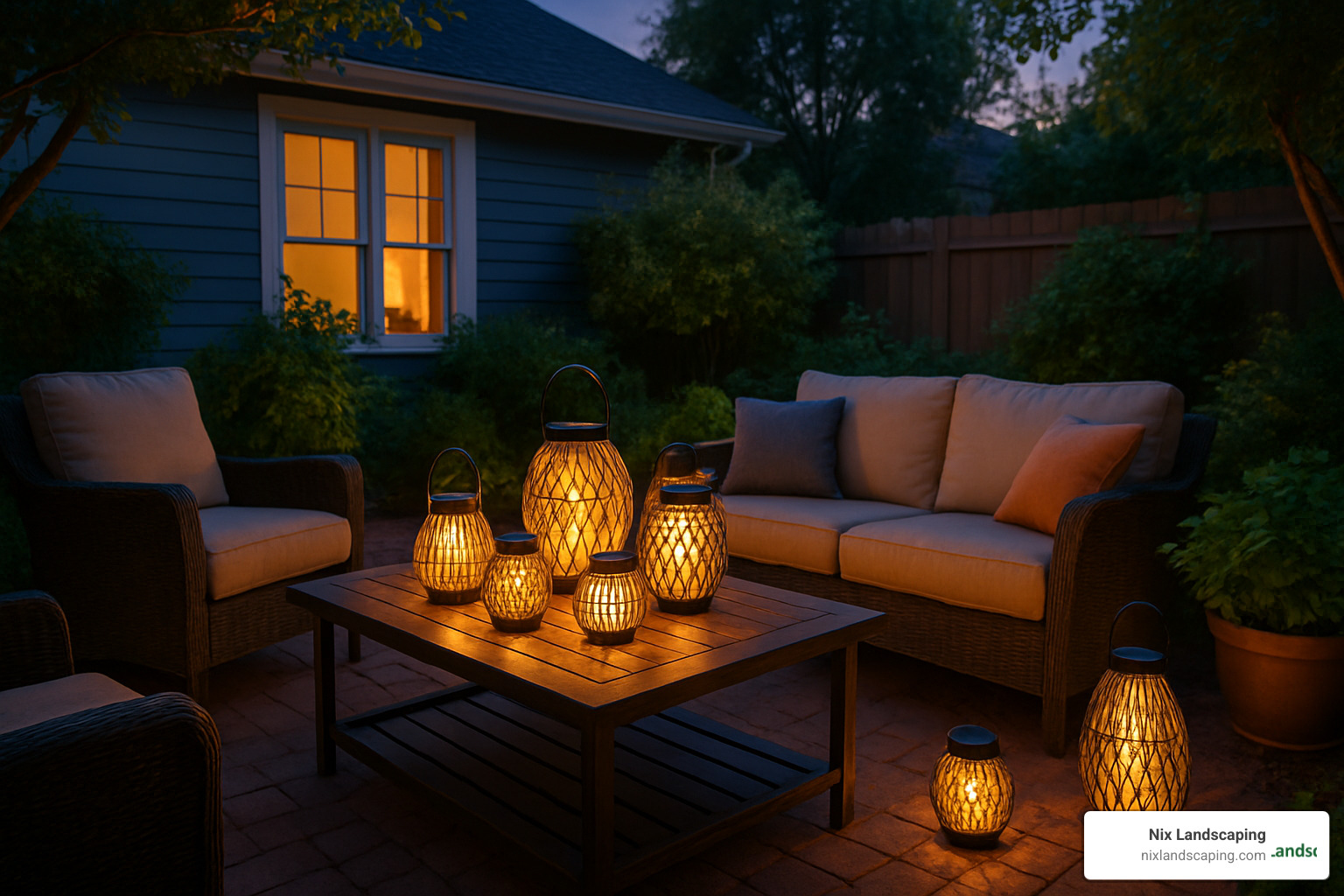
A Fishers homeowner recently shared, “The clustered lanterns around our fire pit create such an intimate setting. It’s become everyone’s favorite spot to gather—even our teenagers want to hang out there!”
When selecting lanterns, material choice dramatically affects both style and longevity:
Rattan and wicker create that casual, tropical vibe we all love, but they don’t always stand up to Indiana’s changing weather. If that’s your preferred look, consider resin-wound alternatives that capture the aesthetic with better durability.
Metal lanterns offer a more contemporary or industrial feel. Warm brass has been trending strongly among our clients lately, bringing a golden glow that feels both modern and timeless.
Glass lanterns not only protect your light source but also create beautiful light patterns on surrounding surfaces—almost like having built-in art after dark.
Pendant lights essentially bring your indoor style outdoors, and they work beautifully over dining areas or conversation sets. For the most flattering effect, center hanging lights over seating areas and maintain at least 7 feet of clearance underneath so tall friends don’t bump their heads!
One client laughed about learning this the hard way: “We hung our pendants too low at first—my brother-in-law kept forgetting they were there. After the third head bump, we adjusted!”
Wall-mounted fixtures like sconces provide wonderful ambient lighting while highlighting your home’s architectural features. The trend we’re seeing most often leans toward clean, understated designs in materials like copper, stainless steel, and brushed aluminum that complement most architectural styles.
“When we installed warm brass porch lights flanking our French doors, it completely transformed the entry to our patio,” noted a homeowner in Fishers. “They cast the most beautiful warm glow that makes the space feel so inviting—like it’s giving guests a hug before they even sit down.”
For more inspiration on decorative lighting options, check out Light It Up With Lanterns.
Highlight architecture & plants
Strategic lighting transforms ordinary landscape elements into nighttime showstoppers. This is where accent lighting really shines (pun intended!), using techniques that create dramatic effects:
Uplighting places fixtures at ground level pointing upward, creating dramatic shadows that emphasize vertical elements like trees, architectural columns, or textured walls. The effect is subtle but powerful—suddenly that ornamental maple becomes a living sculpture after dark.
Downlighting mounts fixtures above features to cast light downward, mimicking natural moonlight. This technique works beautifully when placed high in tree canopies to illuminate seating areas below with a soft, dappled effect that feels magical rather than manufactured.
Cross-lighting uses multiple light sources from different angles to eliminate harsh shadows and create dimension. This technique is particularly effective for highlighting statement plants or water features.
“Using stake lights to create a halo effect around potted plants completely transformed our spa area,” shared a client whose patio we recently renovated. “The plants become these gorgeous silhouettes at night—it’s like having an art gallery that changes with the seasons.”
The right lighting doesn’t just illuminate your space—it tells a story about what matters in your landscape. Whether it’s highlighting the texture of a stone wall or creating a soft glow around your favorite Japanese maple, thoughtful accent lighting extends your enjoyment of these features long after sunset.
For more sophisticated architectural lighting solutions, visit our Outdoor Lighting Solutions page.
Eco & Tech Savvy: Solar, LED & Smart Solutions
The world of outdoor lighting has evolved dramatically in recent years, with patio lighting ideas now embracing technology that’s as smart as it is beautiful. Today’s options prioritize not just aesthetics, but also sustainability, convenience, and integration with your digital life.
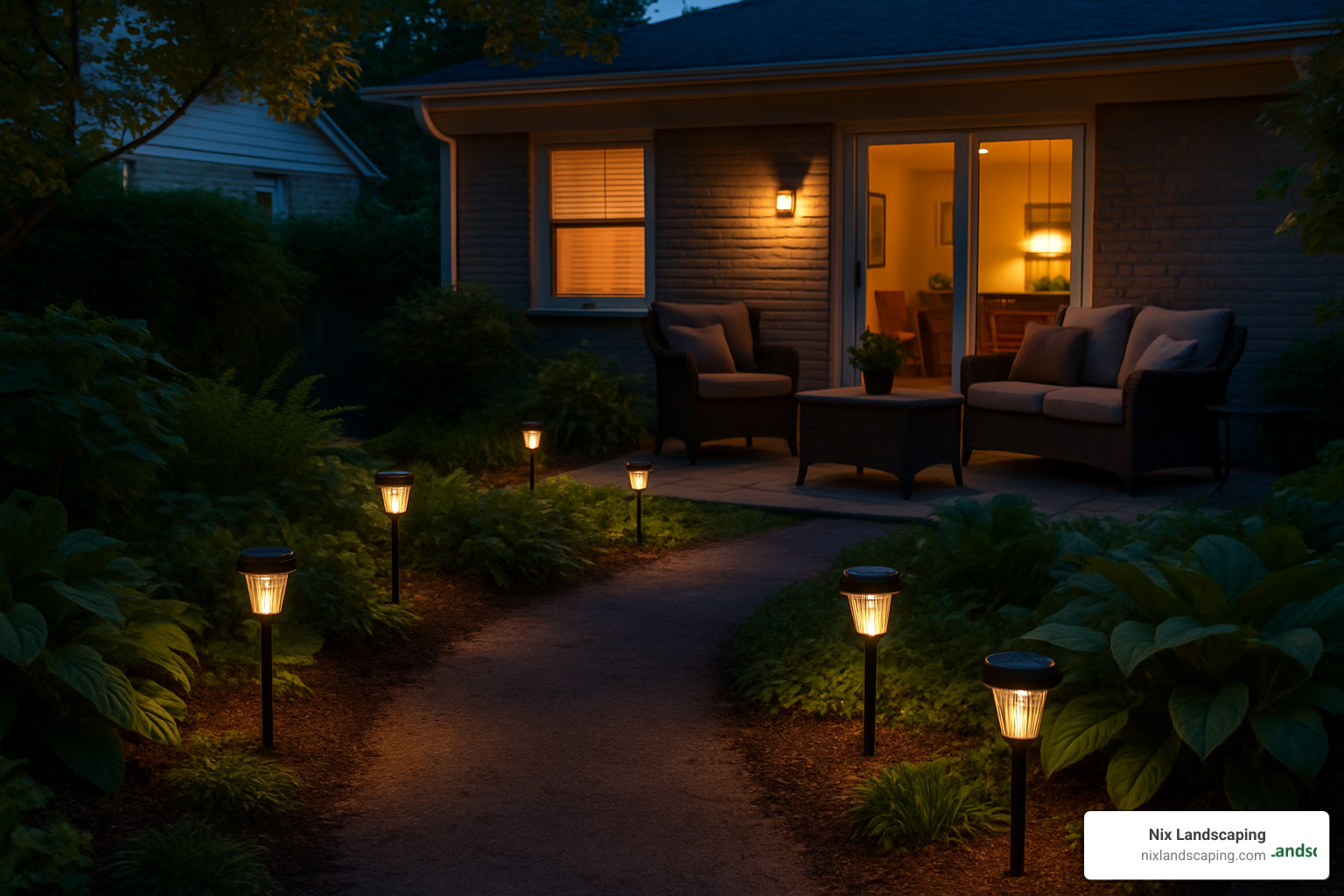
Solar lighting has made impressive strides lately. Gone are the dim, unreliable solar lights of yesteryear. Modern versions feature high-efficiency monocrystalline panels paired with robust batteries (look for at least 800 mAh) that can keep your lights glowing even through several cloudy days.
“Solar lights recharge within 9–12 hours on sunny days and turn on automatically at dusk,” explains Kyle Nix. “This makes them essentially a ‘set it and forget it’ solution for busy homeowners who still want a beautifully lit outdoor space.”
For those considering solar options, placement makes all the difference. Position panels where they’ll receive maximum sunlight (south-facing spots work best), keep them clean from debris, and remember that solar path lights generally need closer spacing than their wired counterparts—about 6-8 feet apart rather than 10-15 feet. While perfect for accent lighting, it’s still wise to rely on wired options for critical security areas.
LED technology has been nothing short of for outdoor spaces. These energy-efficient marvels consume up to 75% less electricity than traditional incandescent bulbs while lasting up to 40,000 hours (compared to a mere 2,000 for old-school options). They also run cooler, reducing fire risk—a crucial consideration for any outdoor installation. Perhaps best of all, LEDs now come in various color temperatures, allowing you to create precisely the mood you’re after.
One of our Fishers clients recently told us, “Switching our patio to all LED lighting cut our outdoor electricity use so much that we noticed the difference in our monthly bill right away. Plus, I love not having to replace bulbs every season!”
Smart technology has added yet another dimension to outdoor lighting possibilities. Imagine lights that know when to turn on, adjust their brightness based on the time of day, and can be controlled with a simple voice command. This isn’t futuristic fantasy—it’s available right now:
Motion sensors activate lights only when needed, improving security while conserving energy. Programmable timers adjust automatically to seasonal sunset times, ensuring your lights are always on when you need them. Smartphone controls let you adjust brightness and color from anywhere, while voice-activated systems integrate seamlessly with home assistants like Alexa or Google Home.
“After installing a smart lighting system on our patio, we never have to worry about forgetting to turn off the lights,” one Fishers homeowner shared with us. “They come on automatically at sunset and dim to 30% at midnight, then shut off at sunrise. It’s both convenient and energy-efficient.”
For those who rent or prefer flexibility, battery-operated table lamps offer cordless illumination that can move wherever you need it. These portable fixtures provide the look of traditional lamps without installation hassles, allowing for easy rearrangement and storage during severe weather.
Patio lighting ideas: Choosing color temperature
The color temperature you select dramatically influences how your outdoor space feels. This choice goes beyond mere aesthetics—it affects mood, functionality, and even how people interact in the space.
Warm white (2700K-3000K) creates that magical, inviting glow that makes people want to linger. This temperature range mimics the golden light of sunset, creating a relaxed, intimate atmosphere perfect for entertaining. When we install warm lighting in dining areas and conversation nooks, clients often tell us their guests stay longer and conversations flow more easily.
Cool white (4000K-5000K), by contrast, improves visibility and clarity. This temperature range approaches natural daylight, making it ideal for task-oriented areas like outdoor kitchens, pathways, and entry points. Cool white light helps with accurate color perception—important when you’re grilling steaks or navigating steps after dark.
Many of our most successful installations use what we call “zone mixing”—incorporating warmer lights in relaxation and dining areas while using cooler temperatures for pathways and work surfaces. This thoughtful approach optimizes both mood and functionality, creating a space that’s as practical as it is beautiful.
For the latest research on energy savings and lighting technology, visit Latest research on energy savings, which offers regularly updated information on maximizing efficiency in outdoor spaces.
Safe Steps: Path, Stair & Security Lighting
Let’s face it – while twinkling lights create magic, proper lighting can also prevent twisted ankles! Safety and style should go hand-in-hand when planning your patio lighting ideas. The right illumination around steps, paths, and entries not only prevents mishaps but also makes your outdoor space more inviting and usable.
Path lighting is where function meets beauty. I’ve found that the most successful path lighting strikes a perfect balance – bright enough for safety but subtle enough to improve your landscape. For that perfect balance:
Space traditional path lights about 10-15 feet apart along walkways (though you’ll want solar fixtures a bit closer together, around 6-8 feet, since they typically produce less light). Rather than placing lights directly on the path’s edge, set them back slightly to illuminate the way without creating obstacles. Look for fixtures that cast light downward to prevent that uncomfortable glare in your guests’ eyes. And for brightness, aim for that sweet spot of 100-200 lumens per fixture – enough to see clearly without feeling like you’re walking through a football stadium.
Stair lighting deserves special attention because, as one homeowner told me after installing recessed step lights, “It’s amazing how something so simple completely transformed how we use our patio after dark. We used to avoid the steps entirely!”
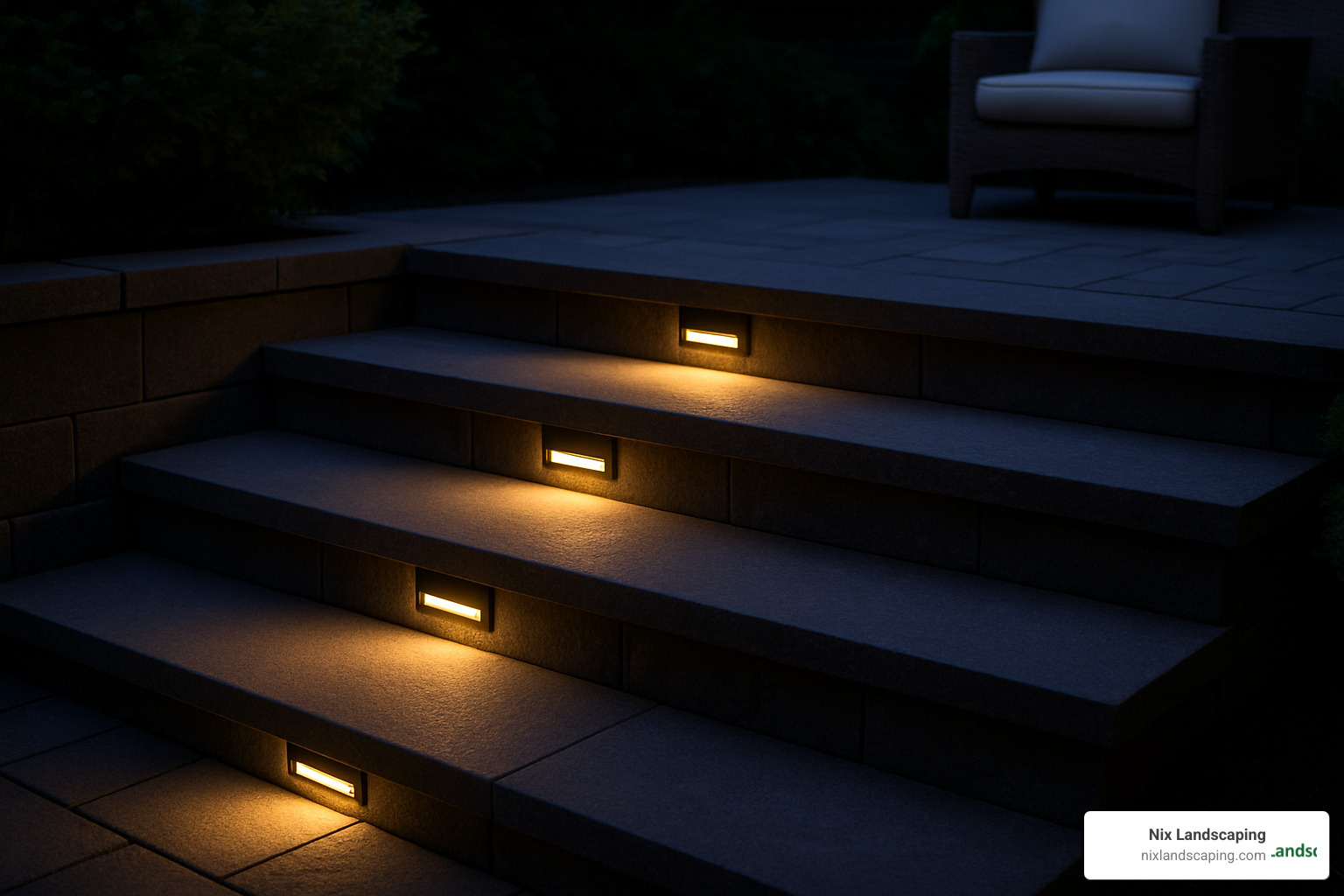
Recessed step lights create a sophisticated look while clearly marking level changes. As lighting specialists often note, “Recessed walkway lights are most popular for wooden and stone pathways due to ease of integration.” These fixtures can be installed directly into stair risers, creating a subtle glow that highlights each step without overwhelming brightness.
Another trend we’re seeing more often is rail lighting with LED strips. These flexible strips mount discreetly under handrails or along step edges, providing gentle guidance lighting that looks modern and sleek. They’re particularly effective for defining the boundaries of liftd patios or decks.
When it comes to security, think strategic rather than blinding. Consider these thoughtful approaches:
Motion-activated flood lights (700-1,300 lumens) work wonderfully at entry points and vulnerable areas. They conserve energy while alerting you to movement. Dusk-to-dawn fixtures automatically adjust to seasonal light changes, ensuring your space is never left in the dark. And well-placed downlights from trees or eaves can eliminate shadowy corners without creating harsh lighting that detracts from your carefully created ambiance.
One Fishers client shared, “After installing step lights and motion sensors near our patio doors, we feel so much more secure using the space at night. Plus, the lighting is subtle enough that it doesn’t detract from the ambiance we’ve created with our decorative fixtures.”
Remember to check local regulations before installation. Many communities have ordinances regarding light pollution, brightness levels, and fixture placement. At Nix Landscaping, we stay current with local codes to ensure all installations are not only beautiful but also compliant.
For more inspiration on balancing safety with style, check out our Outdoor LED Strip Lighting Ideas. With the right approach, your safety lighting can become one of your favorite design elements!
DIY & Renter-Friendly Patio Lighting Ideas
Not every patio lighting idea requires calling in the pros or making permanent changes to your space. If you’re renting, watching your budget, or simply enjoy rolling up your sleeves for a weekend project, plenty of temporary and wallet-friendly options can transform your outdoor area after dark.
Planter pole lights have become the darling of the DIY lighting world, especially for patios without convenient attachment points nearby. The beauty of this solution lies in its clever simplicity: decorative planters filled with concrete anchor wooden or metal poles that support string lights above your space.
“Installing these outdoor string lights was on my list for years after we moved into our house! The problem was, we had a new backyard with no mature trees to attach the lights to,” one homeowner shared with us. Their creative solution turned a challenge into a design feature—using substantial planters that serve double-duty as both light pole bases and decorative elements filled with seasonal blooms.
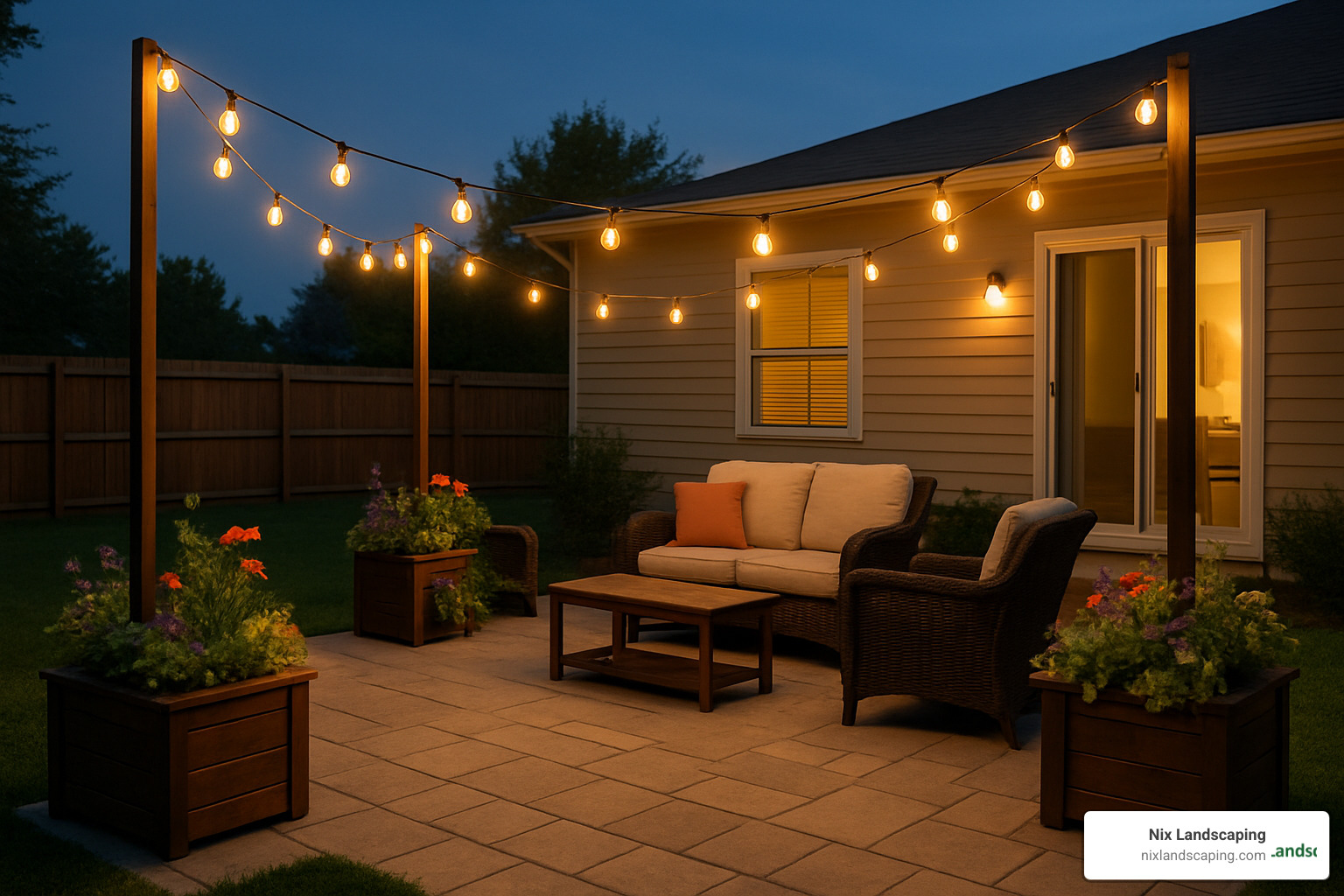
Creating your own planter pole lights is surprisingly straightforward. Start with wide-based planters (at least 18-20 inches in diameter provides good stability), then fill them about three-quarters full with quick-set concrete. Insert 8-10 foot poles—either 2×2 wood posts or EMT electrical conduit work beautifully—and use a level with temporary bracing to ensure they set straight. Once the concrete has cured (typically about 12 hours), drill drainage holes just above the concrete line, add soil, and plant around the pole base. Finally, install hooks or eye screws at the top of each pole for hanging your lights.
For renters dealing with strict lease agreements, adhesive hooks and clips offer damage-free solutions for hanging lights. “No-hole needed vinyl siding clips and hooks can hang solar-powered lights on exterior surfaces with no nails, no drilling, and easy removal,” as one product manufacturer puts it. These temporary fixtures work wonders on balconies and rental patios where permanent changes aren’t an option.
The budget-conscious have plenty of creative options as well. Repurposed mason jars with battery-powered LED string lights create a magical firefly effect when clustered together. Clamp-on work lights with decorative bulbs offer adjustable task lighting that can move where needed. Battery-operated LED puck lights placed inside painted buckets create dramatic uplighting for plants or architectural features. Solar lanterns clustered on shepherd’s hooks form movable light sculptures that change with your mood.
One client recently told me, “We created the most beautiful evening atmosphere for our daughter’s graduation party using battery-operated fairy lights in glass cloches as centerpieces. The whole setup cost less than $50 and made such an impact. Everyone asked who our decorator was!” Sometimes the most memorable lighting comes from imagination rather than a big budget.
The beauty of these non-permanent solutions is their flexibility—you can reconfigure them as your needs change or when you move to a new home. Many of our Fishers clients start with these DIY options before eventually investing in more permanent installations as they settle into their homes and outdoor living habits.
For step-by-step instructions on creating sturdy planter pole lights, check out How to Make Sturdy DIY Patio Light Planters.
Planning & Maintenance Checklist
Creating beautiful patio lighting ideas is exciting, but thoughtful planning and regular maintenance are what keep your outdoor illumination safe and stunning for years to come.
Before you start buying fixtures, grab a piece of paper and sketch a simple zone map of your patio. Mark your dining area, lounging spots, cooking station, and entry points. Note where your existing power sources are located (this will save you headaches later!), and identify any architectural features worth highlighting with accent lighting. Don’t forget to circle those safety-critical areas like steps, level changes, and dark corners that need reliable illumination.
“When we first planned our patio lighting, we completely overlooked how the lights would look from inside our house,” shares a Fishers homeowner. “Now we position our accent lights so we can enjoy the view from our kitchen window too.”
This planning stage isn’t just about aesthetics—it helps determine the right fixtures, power sources, and installation methods for each area of your outdoor space.
When calculating your electrical needs, add up the wattage of all your planned fixtures, then multiply by 1.25 to allow room for future additions (because, let’s face it, outdoor lighting can get addictive!). Make sure your outdoor circuits can handle the load, and consider wiring separate circuits for different lighting zones so you can control areas independently.
Weather exposure is another critical consideration. All outdoor fixtures should carry the proper rating:
– Wet-rated: For fixtures directly exposed to rain, snow, and moisture
– Damp-rated: For covered areas protected from direct water but subject to humidity
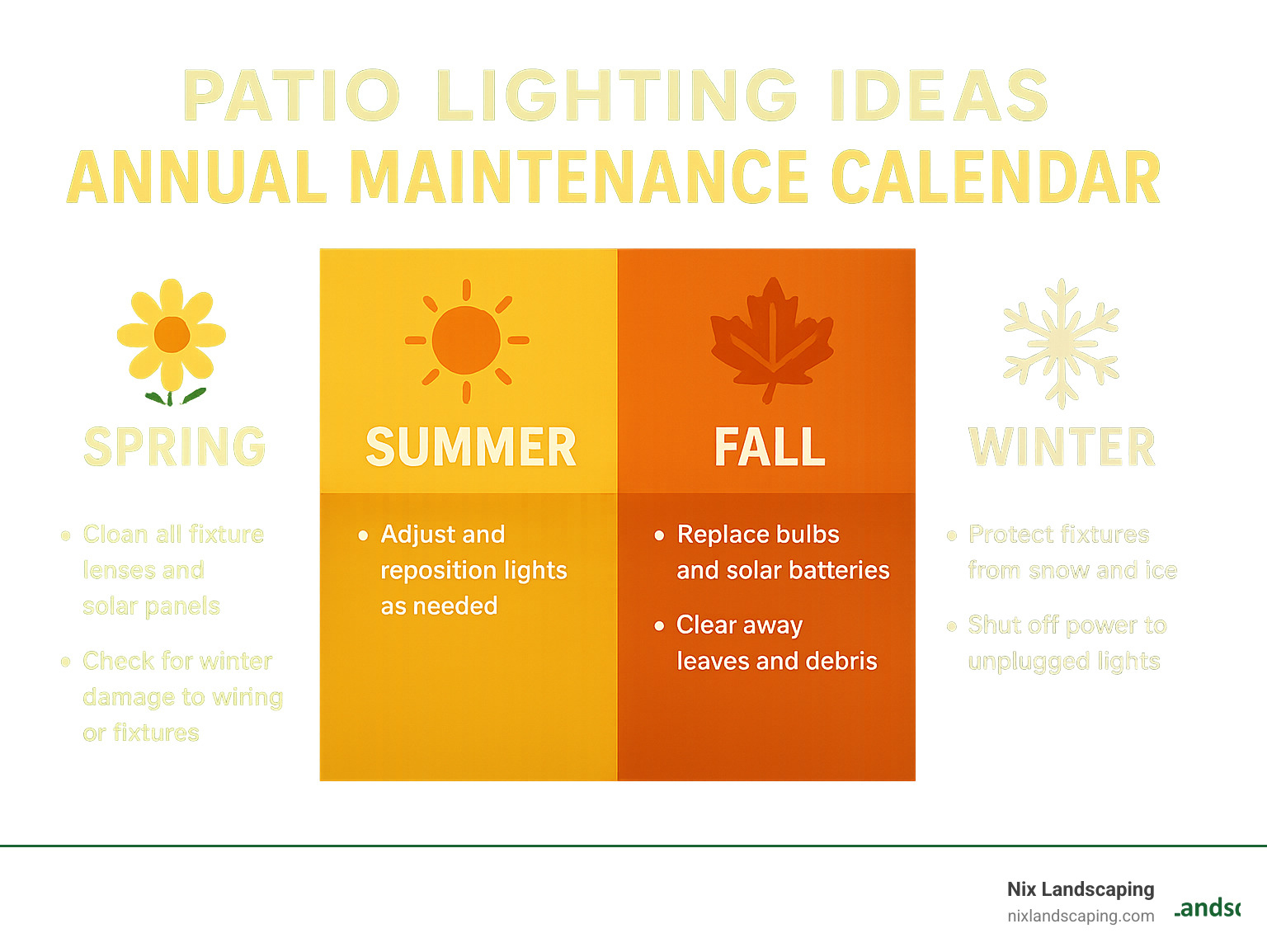
Seasonal maintenance isn’t complicated, but it makes all the difference in how your lighting performs. Think of it as quarterly check-ups for your outdoor ambiance:
When spring arrives, take time to clean all fixture lenses and solar panels—you’d be amazed how much dust and pollen can accumulate over winter. Check for any damage to wiring or fixtures from winter storms, replace burned-out bulbs, and adjust your timers for those lovely longer daylight hours.
During summer, keep an eye on plant growth that might block solar panels or fixtures. “My solar path lights stopped working last July,” one client told us, “until I realized my hostas had completely covered the solar panels!” This is also prime time for insects to build nests in or around fixtures, so a quick check can prevent problems. Make sure all connections remain tight and weatherproof, especially after summer thunderstorms.
As fall approaches, clear leaves and debris from ground fixtures—they’re not only unsightly but can become fire hazards around warm lights. Adjust timers for earlier sunset times, and consider adding additional lighting for those darker winter evenings ahead. It’s also a good time to test that your GFCI outlets are functioning properly before winter moisture sets in.
In winter, inspect for snow or ice damage after storms. Consider removing or covering particularly delicate fixtures during severe weather. Check that transformers and timers are protected from moisture, as winter freeze-thaw cycles can be particularly hard on outdoor electronics.
“Regular seasonal checks have kept our outdoor lighting looking great for years,” notes a long-term client. “We spend about 15 minutes each season doing a quick inspection and cleaning, and it makes all the difference in both appearance and longevity.”
For professional assistance with planning or maintaining your patio lighting system, or if you’d like help creating a custom lighting plan custom to your specific outdoor space, explore our Patio Installation Services. Our team at Nix Landscaping can help you create a lighting plan that balances beauty, functionality, and long-term performance.
Frequently Asked Questions about Outdoor & Patio Lighting
What color temperature is best for entertaining vs. security?
Choosing the right color temperature can make or break your outdoor lighting experience. For those magical evenings with friends around the patio table, warm white lighting (2700K-3000K) creates that perfect inviting glow. This golden hue mimics candlelight and sunset, naturally encouraging everyone to relax and linger a little longer over dessert and conversation.
“We switched our dining area lights from cool white to warm white, and suddenly everyone wanted to stay outside until midnight,” one Fishers homeowner told me with a laugh. “It completely changed how the space felt.”
When it comes to security lighting, however, you’ll want to shift to cooler white lighting (4000K-5000K). This brighter, clearer light improves visibility and helps you accurately identify colors and objects—exactly what you need near entry points, along pathways, or around property boundaries.
Many of our Nix Landscaping clients have found the sweet spot with a mixed approach—warm lights for social zones and cooler lights for functional areas. This balanced strategy gives you the best of both worlds without compromising on either ambiance or safety.
How do I hang lights without hard-wiring?
Not everyone can (or wants to) tackle electrical work for their patio lighting ideas. Thankfully, there are plenty of no-electrician-needed options that still create beautiful results:
Solar-powered fixtures have come a long way in recent years. Today’s models capture enough energy to illuminate your space for 8-10 hours when fully charged. Just be sure to position them where they’ll receive maximum sunlight during the day.
Battery-operated LED lights offer amazing flexibility for renters or temporary setups. Modern LEDs are so efficient that many fixtures can run for weeks before needing new batteries. One creative client placed battery-operated string lights inside vintage lanterns for a portable, romantic glow that could move wherever the evening took them.
Plug-in options with cord covers work wonderfully if you have at least one outdoor outlet. The key is disguising those cords—decorative cord covers that match your decking, cord-concealing plants, or even painting cords to match surfaces can help them disappear from view.
Temporary mounting solutions like removable command hooks, tension wires between posts, or free-standing planter poles can support string lights without leaving a single hole in your home’s exterior.
“We were so worried about lighting our rental patio without making any permanent changes,” shared a young couple in Fishers. “But with some solar stake lights and battery-operated table lamps, we created a space our friends constantly compliment—and we’ll take it all with us when we move!”
How many lumens do I need for a 200-sq-ft patio?
Figuring out your lumen needs for a 200-square-foot patio isn’t about finding one magic number—it’s about creating the right atmosphere for how you’ll use the space. Think of lumens as your “brightness budget” that you’ll distribute throughout your patio:
For ambient lighting that sets the overall mood, consider:
– 2,000-3,000 total lumens for an intimate, cozy atmosphere (perfect for romantic evenings)
– 4,000-6,000 total lumens for moderate brightness (ideal for family gatherings)
– 6,000-10,000 total lumens for a well-lit entertaining space (great for larger parties)
The secret isn’t packing in one or two blindingly bright lights—it’s distributing multiple lower-lumen sources throughout your space. This creates depth, eliminates harsh shadows, and makes the space feel more natural.
“When clients ask for ‘bright’ lighting, what they really want is good visibility without the harsh feeling of floodlights,” explains our design team. “We’ve learned that five 200-lumen fixtures distributed strategically create a much more pleasant experience than one 1,000-lumen spotlight.”
Different activities within your patio need different lighting levels too. For your dining table, aim for 300-500 lumens centered above to ensure everyone can see their food (and each other). Your grill or outdoor kitchen deserves 400-700 lumens directed right at those work surfaces, while steps and paths need 100-200 lumens per fixture to prevent trips and falls. For highlighting special features like a water feature or favorite plant, 50-200 lumens creates just enough accent lighting without overwhelming the scene.
By thoughtfully combining these targeted lighting zones with your ambient illumination, you’ll create a 200-square-foot patio that feels welcoming, functional, and perfectly lit for every occasion.
Conclusion
There’s something magical about stepping out onto your patio as the sun sets and watching your carefully planned lighting come to life. From the enchanting glow of string lights creating a starry canopy overhead to the dramatic beam of an uplight showcasing a beautiful maple tree, patio lighting ideas truly transform ordinary outdoor spaces into extraordinary retreats.
The right lighting isn’t just about being able to see after dark—it’s about creating a mood, improving safety, and making your outdoor living area usable long after sunset. As many of our clients tell us, their patios have become their favorite “room” in the house once proper lighting extended their usable hours.
Throughout this guide, we’ve seen how successful patio lighting combines layers—ambient illumination for overall visibility, task lighting for cooking and reading, and accent lighting to highlight special features. This layered approach creates the depth and dimension that distinguishes a professionally designed space from a basic setup.
Remember these essential takeaways as you plan your own patio lighting:
Layer different lighting types to create a rich, multi-dimensional effect that mimics what professional designers achieve. Your space should have varying levels of brightness that guide the eye and create visual interest.
Select appropriate color temperatures for each area—warmer lights (2700K-3000K) create inviting conversation spaces while cooler lights (4000K-5000K) work better for task and security areas. Many of our clients are surprised by how dramatically this simple choice affects the feel of their space.
Consider which power source makes the most sense for your situation and skills. Hardwired options offer permanence, low-voltage systems balance safety with effectiveness, while solar and battery options provide flexibility for renters and DIY enthusiasts.
Never overlook safety lighting for transitions like steps, paths, and entries. As one client shared, “The step lights were an afterthought in our design, but they’ve prevented countless accidents and actually became one of our favorite features.”
Maintain your lighting seasonally—clean fixtures, check connections, and adjust timers as daylight hours change. This simple routine dramatically extends the life and performance of your investment.
Whether you’re a weekend warrior ready to hang string lights from DIY planter poles or a homeowner envisioning a comprehensive lighting design, the ideas we’ve shared provide a starting point for creating your perfect outdoor atmosphere.
Here at Nix Landscaping, we understand that every patio has unique characteristics and challenges. Our team specializes in creating custom lighting solutions that improve the natural beauty of your outdoor space while addressing practical concerns like safety and energy efficiency. We work closely with our Fishers clients from initial concept to final installation, ensuring their patios shine in the best possible light.
Ready to illuminate your outdoor oasis? We’d love to help bring your patio lighting ideas to life. Explore our More info about our services page to find how we can transform your evenings outdoors.

