
Residential and commercial hardscaping services can transform any outdoor space into a stunning visual and functional masterpiece. These services involve the artful integration of non-living elements like patios, pathways, and retaining walls into your landscape, offering aesthetic appeal and improved usability. For those seeking immediate insights:
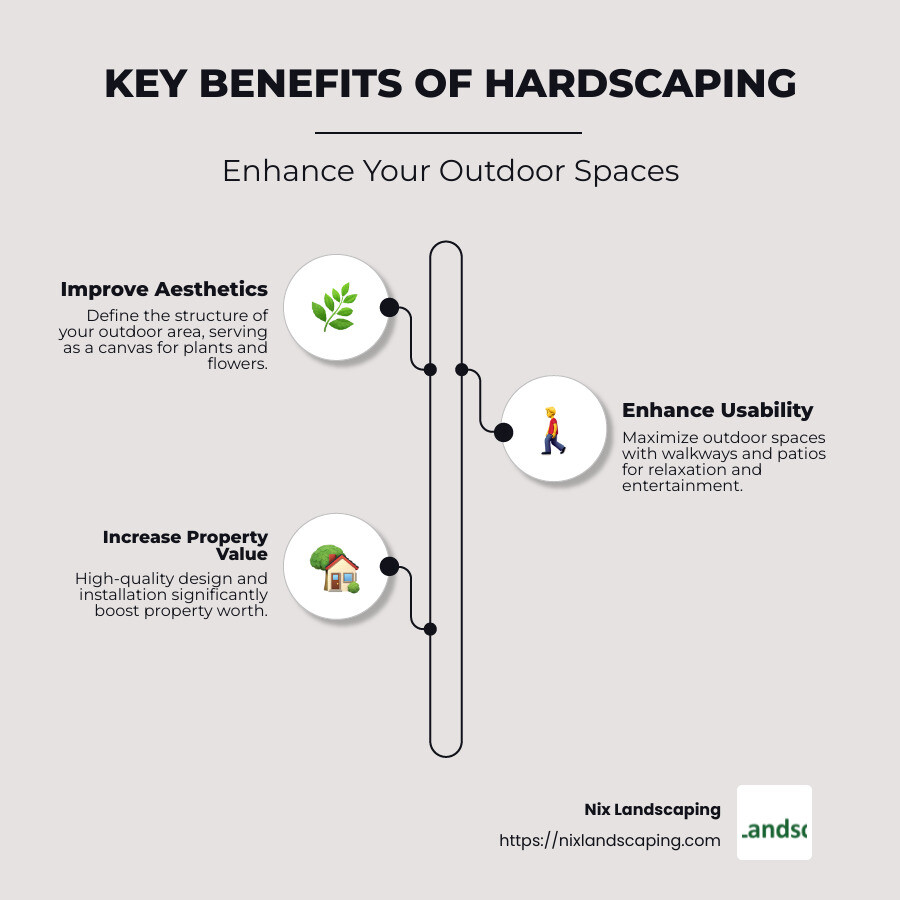
- Improve Aesthetics: Hardscaping defines the structure of your outdoor area, serving as the canvas for plants and flowers.
- Improve Usability: Beautifully placed walkways and patios maximize outdoor spaces for relaxation and entertainment.
- Increase Property Value: Thoughtful design and high-quality installation add significant worth to your property.
As someone deeply passionate about enhancing outdoor living, I’m Kyle Nix, owner of Nix Landscaping in Fishers, Indiana. With experience in residential and commercial hardscaping services, I specialize in changing outdoor spaces into beautiful, functional landscapes custom to each client’s unique needs. Let’s explore how personalized service can seamlessly blend hardscaping into your property improvement journey.
Basic residential and commercial hardscaping services vocab:
– commercial hardscaping service
– commercial landscape maintenance services commercial hardscaping
Understanding Hardscaping Services
Hardscaping is all about creating beautiful, functional outdoor spaces using non-living materials. It’s like giving your yard a solid structure with elements that last. Here’s a breakdown of some key materials and features used in residential and commercial hardscaping services:
Pavers
Pavers are versatile and come in various shapes, colors, and materials like concrete, brick, and stone. They’re perfect for creating paths, patios, and driveways. Their modular nature makes them easy to replace if damaged. Plus, they add a neat, organized look to any space.
Rocks
Rocks are more than just decorative. They can be used for creating borders, lining pathways, or even as part of a water feature. Natural stones like granite or river rocks add a rustic charm to any landscape. They’re durable and require minimal maintenance.
Wood
Wood brings warmth and a natural feel to outdoor spaces. It’s commonly used for decks, pergolas, and patio covers. While wood can be beautiful, it’s important to choose treated or naturally resistant types like cedar or redwood to withstand the elements.
Stone
Stone is a timeless material that adds elegance and durability. It’s ideal for retaining walls, walkways, and patios. Each type of stone, from limestone to slate, offers a unique texture and color, allowing for creative design solutions.
Bricks
Bricks are classic and durable, often used for pathways and patios. They provide a traditional look and can be arranged in various patterns, like herringbone or basket weave, to add visual interest. Bricks are also known for their strength and longevity.
Concrete
Concrete is a go-to material for many hardscaping projects due to its versatility and cost-effectiveness. It can be poured into any shape and finished in numerous ways, from smooth surfaces to stamped patterns that mimic stone or wood.
Patio Covers and Pergolas
These structures provide shade and define outdoor living spaces. Patio covers shield from the elements, extending the usability of patios. Pergolas, with their open lattice design, offer a stylish touch and can support climbing plants for added greenery.
Decks
Decks are liftd platforms made from wood or composite materials. They expand living spaces and are perfect for entertaining or relaxing. A well-designed deck can seamlessly connect indoor and outdoor areas, enhancing the flow of a home.

Incorporating these elements into your outdoor space not only boosts its aesthetic appeal but also its functionality. The right combination of materials and features can transform any ordinary yard into a personal oasis or a professional outdoor setting.
Residential and Commercial Hardscaping Services
Hardscaping services play a vital role in changing outdoor spaces into functional and beautiful areas. Whether it’s a cozy backyard or a busy commercial plaza, the process involves design, installation, and maintenance to ensure lasting results.
Design
Designing a hardscape is like setting the stage for your outdoor space. It involves selecting the right materials and layout to match your style and needs. For residential projects, the focus might be on creating a relaxing retreat with patios and pergolas. In commercial settings, the design often emphasizes usability and flow, ensuring spaces are accessible and inviting for everyone.
Installation
Once the design is in place, the next step is installation. This process requires precision and skill to bring the blueprint to life. At Nix Landscaping, we ensure that every element, from pavers to decks, is installed correctly to withstand the test of time. Our team uses the best practices to ensure a seamless and efficient installation process.
Maintenance
After installation, maintenance is key to preserving the beauty and functionality of your hardscape. Regular upkeep, like cleaning and sealing surfaces, can prevent wear and tear. For commercial properties, maintenance also includes ensuring pathways and outdoor areas remain safe and accessible for all visitors.
Outdoor Spaces
Hardscaping transforms outdoor spaces into multi-functional areas. Patios become outdoor dining rooms, while walkways guide visitors through gardens or courtyards. These spaces are not just for aesthetics; they provide practical benefits like increased property value and improved usability.
Accessibility
Accessibility is a crucial aspect of both residential and commercial hardscaping. Designing with accessibility in mind means creating spaces that everyone can enjoy. This includes smooth pathways for wheelchairs, ramps, and strategically placed seating areas.
Incorporating these elements into your outdoor space ensures a harmonious blend of beauty and function. Whether you’re looking to improve a home or a business, residential and commercial hardscaping services offer the expertise needed to create stunning and accessible environments.
Benefits of Hardscaping
Hardscaping is more than just adding stones and structures to your yard. It’s about creating spaces that are beautiful, functional, and valuable. Let’s explore the key benefits of residential and commercial hardscaping services:
Aesthetic Appeal
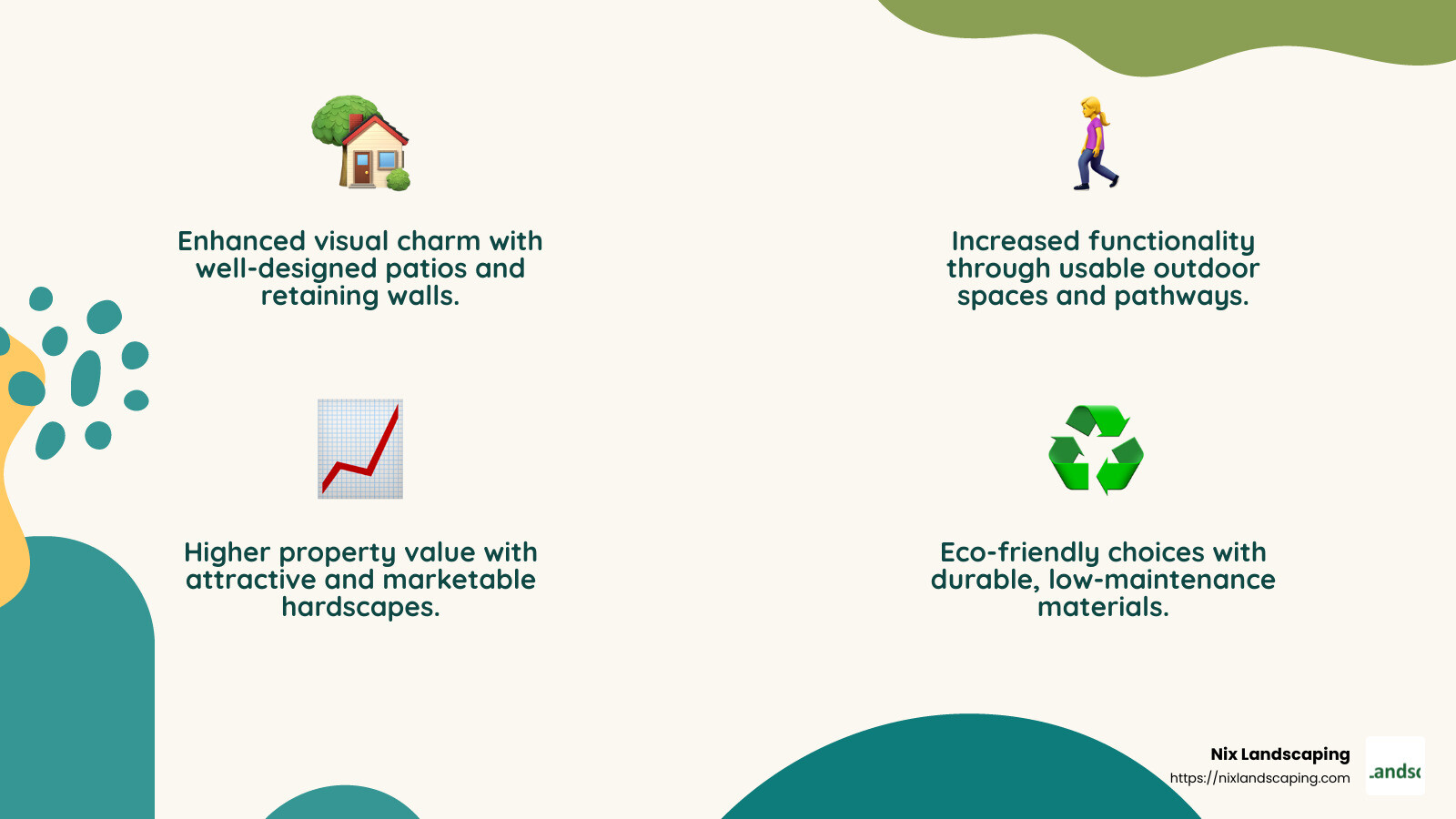
Hardscaping improves the visual charm of any property. Imagine a beautifully designed patio or a well-placed retaining wall. These features not only serve practical purposes but also become focal points that captivate visitors. A thoughtfully designed hardscape can transform a plain area into a stunning environment.
- Visual Harmony: Combining hardscape with softscape (plants and greenery) creates a balanced look.
- Customization: Use materials like flagstone, concrete, or tile to match your style.
Functionality
Hardscaping makes outdoor spaces more usable and enjoyable. By incorporating elements like patios and walkways, you maximize the utility of your yard.
- Usable Space: Create outdoor dining areas, pathways, or seating zones.
- Accessibility: Design spaces with everyone in mind, including ramps and smooth pathways.
Property Value
Investing in hardscaping increases your property’s market worth. Buyers are often willing to pay more for homes with well-maintained and beautifully designed outdoor spaces.
- Curb Appeal: A well-executed hardscape improves first impressions.
- Marketability: Properties with attractive outdoor areas are more appealing to potential buyers.
Sustainability
Hardscaping can also be eco-friendly. By using durable materials, you reduce maintenance and environmental impact over time.
- Durable Materials: Opt for long-lasting options like stone or concrete for less frequent replacements.
- Water Efficiency: Incorporate permeable surfaces to manage rainwater effectively.
In summary, hardscaping is a smart investment for both residential and commercial properties. It improves aesthetic appeal, functionality, property value, and sustainability, making it a versatile solution for any outdoor space.
Key Considerations for Hardscaping Projects
When planning a hardscaping project, several factors come into play. Here are some key considerations to ensure your project is successful and meets your needs.
Budget
Start by setting a clear budget. Hardscaping costs can vary widely based on the materials and complexity of the design. Remember to account for both labor costs and project scope. Keep a buffer for unexpected expenses, as issues can arise during construction.
- Labor Costs: Skilled labor is essential for quality installation.
- Project Scope: Larger or more complex projects will naturally cost more.
Scope of Work
Define the scope of your project early on. Decide what elements you want to include, such as patios, walkways, or retaining walls. Having a clear plan helps in managing expectations and ensuring the project stays on track.
- Detailed Planning: Outline all desired features and their locations.
- Phased Approach: Consider breaking the project into phases if budget or time is limited.
Materials
Choose materials that suit your style and climate. Options like stone, brick, and concrete each offer different aesthetics and durability levels. Consider maintenance needs and how materials will weather over time.
- Climate Suitability: Select materials that can withstand local weather conditions.
- Style and Durability: Balance aesthetic preferences with long-lasting options.
Climate Adaptation
Adapt your design to the local climate. In regions with heavy rainfall, incorporate features that manage water efficiently, like permeable pavers or drainage systems. In hotter climates, prioritize materials that stay cool underfoot.
- Water Management: Use permeable surfaces to reduce runoff.
- Heat Resistance: Opt for materials that remain cool in direct sunlight.
Water Efficiency
Water efficiency is crucial in sustainable hardscaping. Design your project to minimize water use and maximize natural drainage. Incorporate features like rain gardens or xeriscaping to reduce water consumption.
- Permeable Surfaces: Allow water to seep through and replenish groundwater.
- Native Plants: Use drought-resistant plants to complement hardscapes.
By considering these factors, you can create a hardscape that is not only beautiful but also functional and sustainable. Each decision, from budget to materials, plays a vital role in the success of your project.
Frequently Asked Questions about Hardscaping
What is the cost of hardscaping services?
Hardscaping services can vary greatly in cost. The price depends on several factors like labor, materials, and the project’s scope.
Labor Costs: Skilled labor is crucial for a quality finish. Expect to pay more for experienced professionals who ensure your project is completed correctly and on time.
Project Scope: The size and complexity of your project impact the cost. Simple patios may be less expensive than intricate designs with multiple elements like walkways, retaining walls, or water features.
It’s wise to have a detailed plan and a clear budget. Remember to include a buffer for unexpected expenses, as surprises can pop up during construction.
How do I choose the right materials for my hardscape?
Choosing the right materials involves considering your local climate, personal style, and maintenance preferences.
Climate Suitability: Materials should withstand local weather conditions. For instance, in areas with freezing temperatures, choose materials that won’t crack or shift, like certain types of stone or concrete.
Style and Aesthetics: Your hardscape should reflect your personal taste and complement your home and garden. Options range from rustic flagstone to sleek concrete.
Durability: Consider how long the materials will last. Some, like brick, offer classic looks and longevity, while others might require more frequent replacement or maintenance.
What are the maintenance requirements for hardscapes?
Hardscapes generally require less upkeep than traditional landscaping, but they still need care to stay in top shape.
Durability and Seasonal Care: Materials like stone or concrete are durable but may need seasonal maintenance, such as sealing to protect against weather damage.
Regular Cleaning: Keep surfaces clean to prevent stains and maintain their appearance. Power washing can be effective for removing dirt and grime.
Repairs and Adjustments: Over time, you might need to fix cracks or adjust settling pavers. Regular inspections can help catch these issues early.
By understanding these aspects, you can make informed decisions about your hardscaping project, ensuring it suits your needs and remains beautiful and functional for years to come.
Conclusion
At Nix Landscaping, we believe in crafting outdoor spaces that truly reflect our clients’ visions. Based in Fishers, IN, our team specializes in both residential and commercial hardscaping services. Our approach is centered around personalized design and client-focused solutions, ensuring every project runs smoothly from start to finish.
Why Choose Nix Landscaping?
Personalized Design: We take the time to understand your unique needs and preferences. Whether it’s a cozy backyard patio or a grand commercial entrance, our designs are custom to match your style and functional requirements.
Client-Focused Solutions: Your satisfaction is our top priority. We work closely with you throughout the process, ensuring that the final result not only meets but exceeds your expectations. Our commitment to clear communication ensures that there are no surprises along the way.
Local Expertise: Our knowledge of the Fishers, IN climate and soil conditions allows us to select the best materials and designs for your space. This local expertise ensures that your hardscape is not only beautiful but also durable and sustainable.
By choosing Nix Landscaping, you’re investing in a partner dedicated to bringing your outdoor dreams to life. Whether you’re looking to improve your home or business, our team is ready to help you create a stunning and functional outdoor environment.
Ready to transform your space? Explore our services and see how we can bring your vision to life.

