
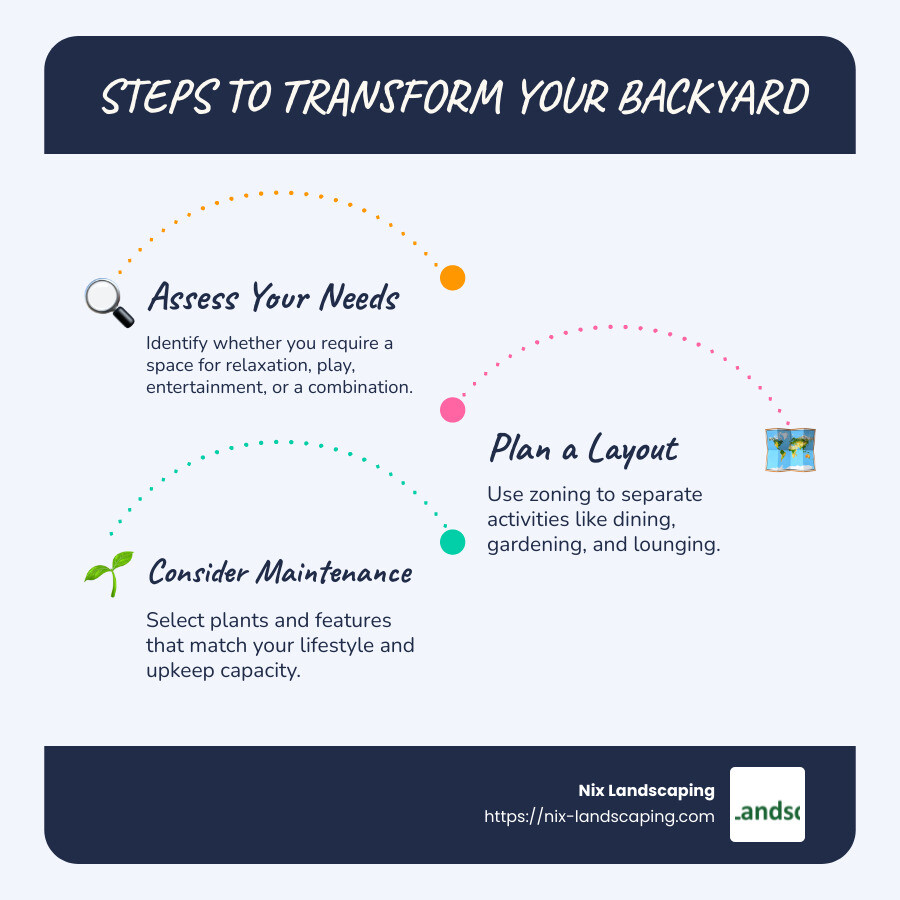
Residential backyard design is all about changing your outdoor space into a place you love. Whether you’re looking for a tranquil retreat or a lively spot for entertaining, the secret lies in creating a personalized design that meets your specific needs. Here’s a quick guide to get you started:
- Assess Your Needs: Determine whether you want a space for relaxation, play, entertainment, or all of the above.
- Plan a Layout: Use zoning to separate different activities, like dining, gardening, and lounging areas.
- Consider Maintenance: Choose plants and features that fit your lifestyle and the time you have for upkeep.
As someone deeply passionate about enhancing outdoor living, I’m Kyle Nix, owner of Nix Landscaping in Fishers, Indiana. With a commitment to excellence, I specialize in crafting residential backyard design solutions custom to each client’s vision and lifestyle.
Understanding Your Space
Starting on a residential backyard design journey starts with understanding your space. This means considering the climate, choosing the right plants, and assessing the unique features of your yard.
Know Your Climate
Before you start digging and planting, it’s crucial to understand your local climate. The climate will dictate which plants will thrive and which ones might struggle. For instance, if you live in a dry area, opting for drought-tolerant plants like succulents and native grasses can save water and reduce maintenance.
Choose the Right Plants
Selecting the right plants is about more than just aesthetics. It’s about ensuring they fit the climate and the specific conditions of your backyard. Expert tip: Choose plants that not only look good but also serve a purpose, such as providing shade, attracting pollinators, or adding fragrance.
Here’s a quick checklist for choosing plants:
- Climate Compatibility: Ensure the plants can handle your local weather patterns.
- Purpose: Decide if you want plants for shade, beauty, or functionality.
- Maintenance: Choose plants that fit your willingness to care for them.
Assess Your Space
Every backyard is unique, and understanding its features can help you make the most of it. Look at the size, shape, and existing structures. Consider sun exposure and wind patterns as they can affect plant growth and comfort levels in your outdoor spaces.
- Sun and Shade: Identify which parts of your yard get the most sun and which are shaded. This will help in deciding where to plant sun-loving plants and where to place seating areas.
- Topography: If your yard has slopes or uneven areas, consider how these can be used creatively, perhaps with terracing or retaining walls.
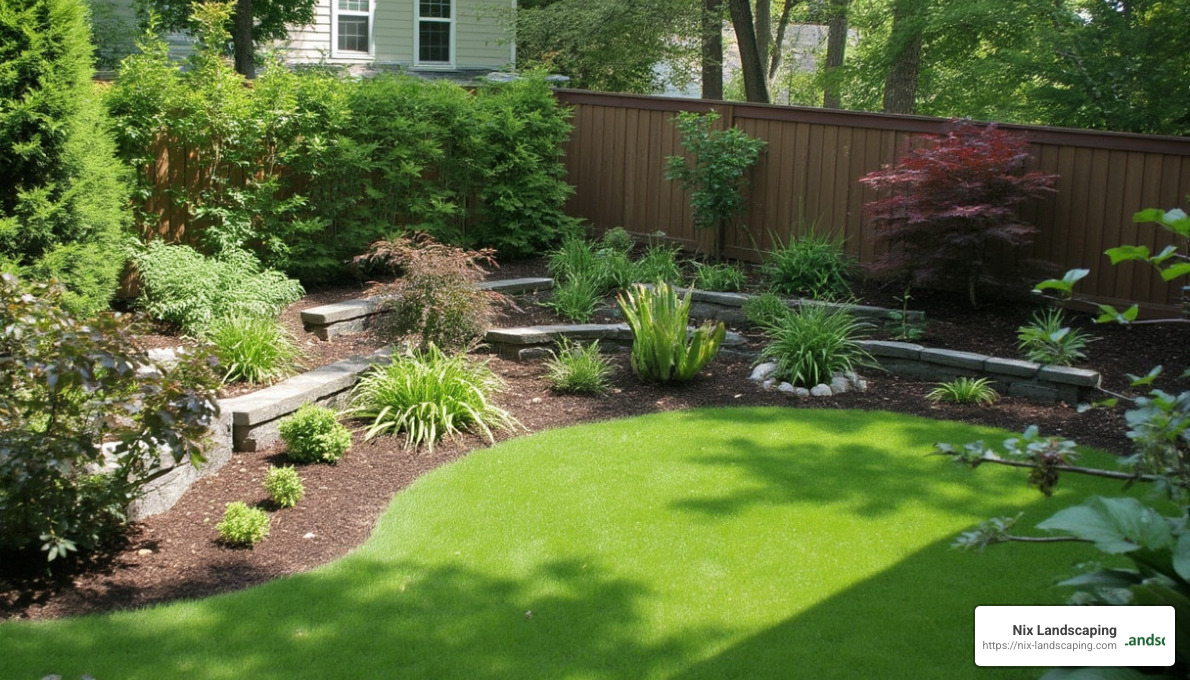
By taking the time to understand your space, you’ll lay the groundwork for a backyard that not only looks great but also functions well for your lifestyle.
Next, we’ll dig into planning your residential backyard design, ensuring your outdoor space is both beautiful and functional.
Planning Your Residential Backyard Design
Once you’ve grasped the essentials of your space, it’s time to plan your residential backyard design. This phase is all about setting priorities, creating a functional layout, and blending indoor and outdoor living.
Set Your Priorities
When space is limited, prioritize what matters most to you and your family. Do you dream of an outdoor kitchen, or is a quiet reading nook more your style? List your must-haves and nice-to-haves. Rank them to focus on what truly improves your lifestyle.
Pro Tip: Keep family activities in mind. If you love hosting barbecues, prioritize a grilling area. If relaxation is key, think about a cozy seating area.
Create a Functional Layout
A well-planned layout can transform even the smallest yard. Think about how you move through the space. Paths should guide you smoothly from one area to the next. Avoid clutter and obstacles that disrupt flow.
Here’s a simple approach to layout planning:
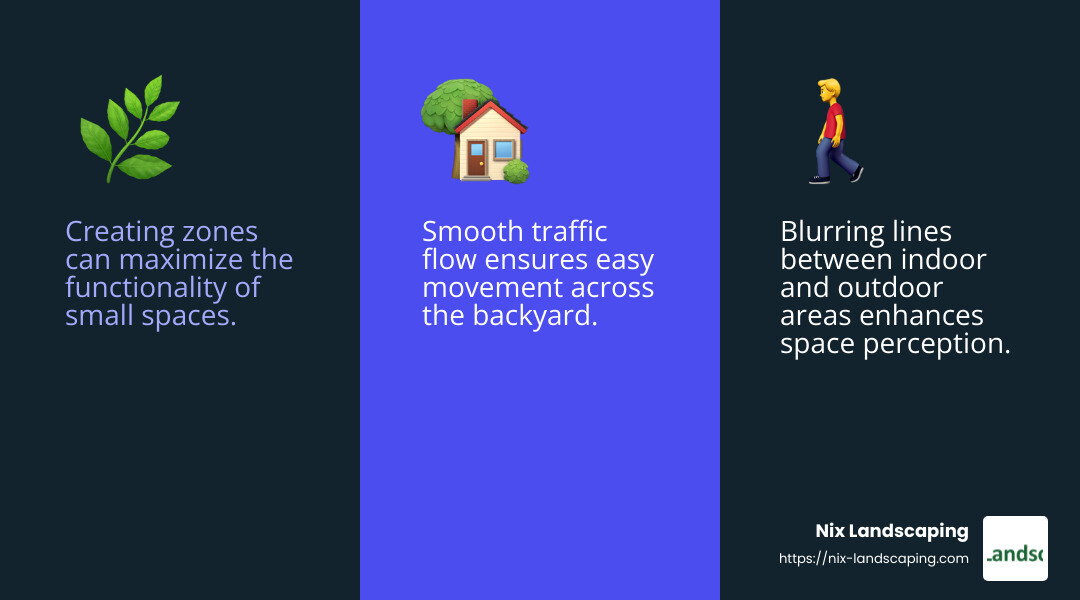
- Zones: Divide your yard into zones for different activities, like dining, playing, or gardening.
- Traffic Flow: Ensure there’s a clear path from your house to each zone.
- Accessibility: Make sure all family members can enjoy the space easily.
Blend Indoor and Outdoor Living
Blur the lines between your home and garden to make both feel larger. This can be as simple as adding French doors or as intricate as extending your interior flooring to the patio.
Ideas for seamless indoor-outdoor flow:
- Large Windows: Install big windows to invite natural light and views into your home.
- Consistent Flooring: Use similar materials indoors and outdoors for a unified look.
- Container Plants: Place potted plants near your doorways to create a natural transition.
By focusing on these elements, your backyard can become a true extension of your home, offering both beauty and functionality. Next, we’ll explore design ideas specifically for small backyards, ensuring you make the most of every inch.
Design Ideas for Small Backyards
Designing a small backyard can be a fun challenge. With the right strategies, you can maximize space and create a cozy outdoor retreat.
Maximize Space
Every inch counts in a small backyard. Begin by analyzing how you currently use the space and how you’d like to use it. Prioritize essential features and consider multi-functional elements.
- Multi-purpose Furniture: Choose furniture that serves more than one purpose. For example, a bench with storage or a foldable table.
- Built-in Seating: Incorporate seating into your landscaping to save space and add charm.
- Reflective Surfaces: Use mirrors or reflective materials to give the illusion of a larger area.
Vertical Gardens
When floor space is limited, think upwards! Vertical gardens are a fantastic way to add greenery without taking up ground space. They also add texture and interest to your backyard.
- Wall Planters: Use wall-mounted planters for herbs or flowers. These can be both decorative and functional.
- Trellises: Install trellises for climbing plants like ivy or tomatoes. They create a lush, green wall and can even provide some privacy.
- Hanging Pots: Suspend pots from your pergola or balcony to add greenery at different heights.
Outdoor Rooms
Creating distinct “rooms” in your backyard can make it feel larger and more functional. Define areas for different activities like dining, relaxing, or gardening.
- Outdoor Rugs: Use rugs to visually separate spaces. This can help define a dining area or lounge space.
- Canopies or Pergolas: Add a canopy or pergola to provide shade and a sense of enclosure.
- Lighting: Use string lights or lanterns to create ambiance and further delineate spaces.
By implementing these ideas, you can transform your small backyard into a versatile and inviting space. Next, we’ll look at how to improve your backyard with hardscaping elements like pergolas, retaining walls, and walkways.
Enhancing Your Backyard with Hardscaping
Hardscaping can transform your backyard into a functional and beautiful outdoor space. Let’s explore how elements like pergolas, retaining walls, and walkways can improve your residential backyard design.
Pergolas
A pergola is more than just a structure; it’s a statement piece. These neat features can provide shade, define spaces, and add vertical interest to your backyard. Nix Landscaping offers custom pergola designs that fit seamlessly into any landscape.
- Aesthetic Appeal: Pergolas add charm and elegance. Choose from materials like wood, vinyl, or aluminum to match your home’s style.
- Versatility: Use a pergola to create a cozy outdoor dining area or a shaded lounge. You can even hang lights or plants for added flair.
- Increased Value: A well-designed pergola can boost your property’s value, making it an attractive feature for potential buyers.
Retaining Walls
Retaining walls are essential for managing slopes and adding dimension to your yard. They not only serve a functional purpose but also improve the visual appeal of your landscape.
- Functionality: Retaining walls help prevent soil erosion and create flat, usable spaces on sloped terrain.
- Design Options: They can be built from various materials like stone, brick, or concrete, allowing for customization to suit your design aesthetic.
- Visual Impact: Use retaining walls to create terraced gardens or incorporate seating areas, making your yard more inviting and organized.
Walkways
Walkways guide visitors through your garden, leading them to different areas of your backyard. They can also serve as a focal point and add structure to your landscape design.
- Material Choices: Choose from materials like natural stone, brick, or concrete pavers to complement your landscape.
- Pathway Design: Curved paths can create a sense of mystery and exploration, while straight paths offer a formal look.
- Safety and Usability: Properly lit walkways ensure safe passage at night and extend the usability of your outdoor space.
By incorporating these hardscaping elements, you can lift your backyard’s functionality and aesthetic appeal. In the next section, we’ll explore sustainable and creative design practices to make your backyard both eco-friendly and visually stunning.
Sustainable and Creative Design Practices
Creating a beautiful backyard doesn’t have to come at the expense of the environment. By using sustainable design practices, you can make your residential backyard design both eco-friendly and visually stunning.
Sustainable Design
Sustainability in landscaping means working with nature, not against it. This can be achieved by using native plants, which require less water and maintenance. Native plants are adapted to the local climate and soil conditions, making them an ideal choice for a sustainable garden.
- Water-Wise Planting: Choose drought-resistant plants to reduce water usage. This not only conserves water but also lowers your water bill.
- Composting: Use kitchen scraps and yard waste to create nutrient-rich compost. This reduces the need for chemical fertilizers.
- Rain Gardens: These are designed to capture and filter rainwater. They help prevent runoff and provide a habitat for local wildlife.
Multi-Use Spaces
Make the most of your backyard by designing spaces that serve multiple functions. This approach maximizes the use of limited space and can cater to different activities.
- Outdoor Living Rooms: Combine seating, dining, and cooking areas to create a versatile outdoor living space. Use furniture that can be easily rearranged to adapt to different needs.
- Flexible Play Areas: Design play zones that can be transformed as your family’s needs change. A sandbox today can become a garden bed tomorrow.
- Edible Gardens: Incorporate fruit trees and vegetable beds into your design. They provide fresh produce and double as decorative elements.
Visual Tricks
Use visual tricks to improve the perception of space and create a captivating backyard.
- Vertical Gardens: These are perfect for small spaces and add greenery without taking up ground space. Vertical gardens can also act as privacy screens.
- Mirrors: Strategically placed mirrors can make a small yard appear larger by reflecting light and greenery.
- Color and Texture: Use a mix of textures and colors to create depth and interest. Group plants with different leaf shapes and colors for a dynamic look.
By incorporating sustainable practices, multi-use spaces, and visual tricks, you can create a backyard that is both beautiful and environmentally friendly. Next, we’ll dig into frequently asked questions about residential backyard design to address common concerns and provide practical solutions.
Frequently Asked Questions about Residential Backyard Design
Is there a free app to design my backyard?
Yes, there is! iScapes is a popular free app that allows you to visualize your backyard design on your phone or tablet. It’s perfect for DIY enthusiasts who want to experiment with different layouts and features without any cost. This app lets you add plants, structures, and other elements to see how they fit into your space.
How do I design my yard layout?
Designing your yard layout can be a rewarding DIY project, but it can also be complex. Start by sketching a simple plan of your yard, noting existing features like trees and pathways. Think about how you want to use the space—do you need a play area, a dining spot, or a garden?
For those who prefer professional help, hiring a landscape designer can be a great investment. The cost varies depending on the complexity of the project and your location. A designer can bring expertise and creativity, ensuring a cohesive and functional design.
What are some simple backyard landscaping ideas?
Changing your backyard doesn’t have to be complicated. Here are some easy ideas to get started:
Mulch: Adding mulch around plants can help retain moisture and reduce weeds. It’s an affordable way to give your garden a neat appearance.
Plant a Tree: Trees provide shade, beauty, and can even increase property value. Choose a species that suits your climate and space.
Start a Garden: Whether it’s a vegetable patch or a flower bed, gardening can be a fulfilling activity. Raised beds or container gardens are great for beginners and can fit into any size yard.
These simple steps can improve your backyard’s appearance and functionality with minimal effort and cost. Next, we’ll explore how Nix Landscaping can help you bring your backyard vision to life with personalized solutions and creative design.
Conclusion
At Nix Landscaping, we believe that every backyard should be a reflection of its owner’s personality and lifestyle. Our approach to residential backyard design focuses on creating personalized solutions that cater to your unique needs and preferences. Whether you’re looking for a serene retreat or a vibrant space for entertaining, we are here to make your vision a reality.
Our team in Fishers, IN, specializes in blending creativity with functionality. We take pride in crafting outdoor spaces that not only look stunning but also serve a practical purpose. From the initial consultation to the final touches, we work closely with you to ensure that every detail aligns with your expectations.
Creative design is at the heart of what we do. We use a mix of traditional and modern elements to improve the beauty of your outdoor space, while also incorporating sustainable practices to ensure minimal environmental impact. By choosing materials that are eco-friendly and locally sourced, we help you create a backyard that is both beautiful and sustainable.
Ready to transform your outdoor space? Let us help you bring your backyard dreams to life. Explore our landscaping services today and find how we can create a personalized outdoor experience for you.

