
Why Your Front Yard Design Matters More Than You Think
Residential front yard landscape design is the art of creating an inviting, functional outdoor space that serves as your home’s first impression. Here’s what makes an effective front yard design:
Key Elements of Successful Front Yard Design:
- Foundation plantings – Shrubs and perennials that frame your home
- Walkways and hardscaping – Safe, attractive paths to your entrance
- Focal points – Eye-catching features like specimen trees or water features
- Layered plantings – Mix of heights, textures, and seasonal interest
- Proper lighting – Safety and nighttime curb appeal
As one landscape designer noted, “You never get a second chance to make a first impression.” Your front yard creates that crucial first moment. A thoughtfully designed landscape can boost your property value while creating a welcoming entrance that reflects your personal style.
The change doesn’t have to break the bank either. Research shows it’s possible to achieve instant curb appeal for less than $100 with strategic improvements like fresh mulch, container gardens, and updated house numbers.
The key is understanding your space before you start. Every successful design begins with analyzing your site, setting realistic goals, and creating a plan that balances beauty with your lifestyle.
I’m Kyle Nix, owner of Nix Landscaping in Fishers, Indiana. I specialize in helping homeowners transform their outdoor spaces into beautiful, functional landscapes through expert residential front yard landscape design. My approach combines innovative vision with practical solutions to create stunning curb appeal.
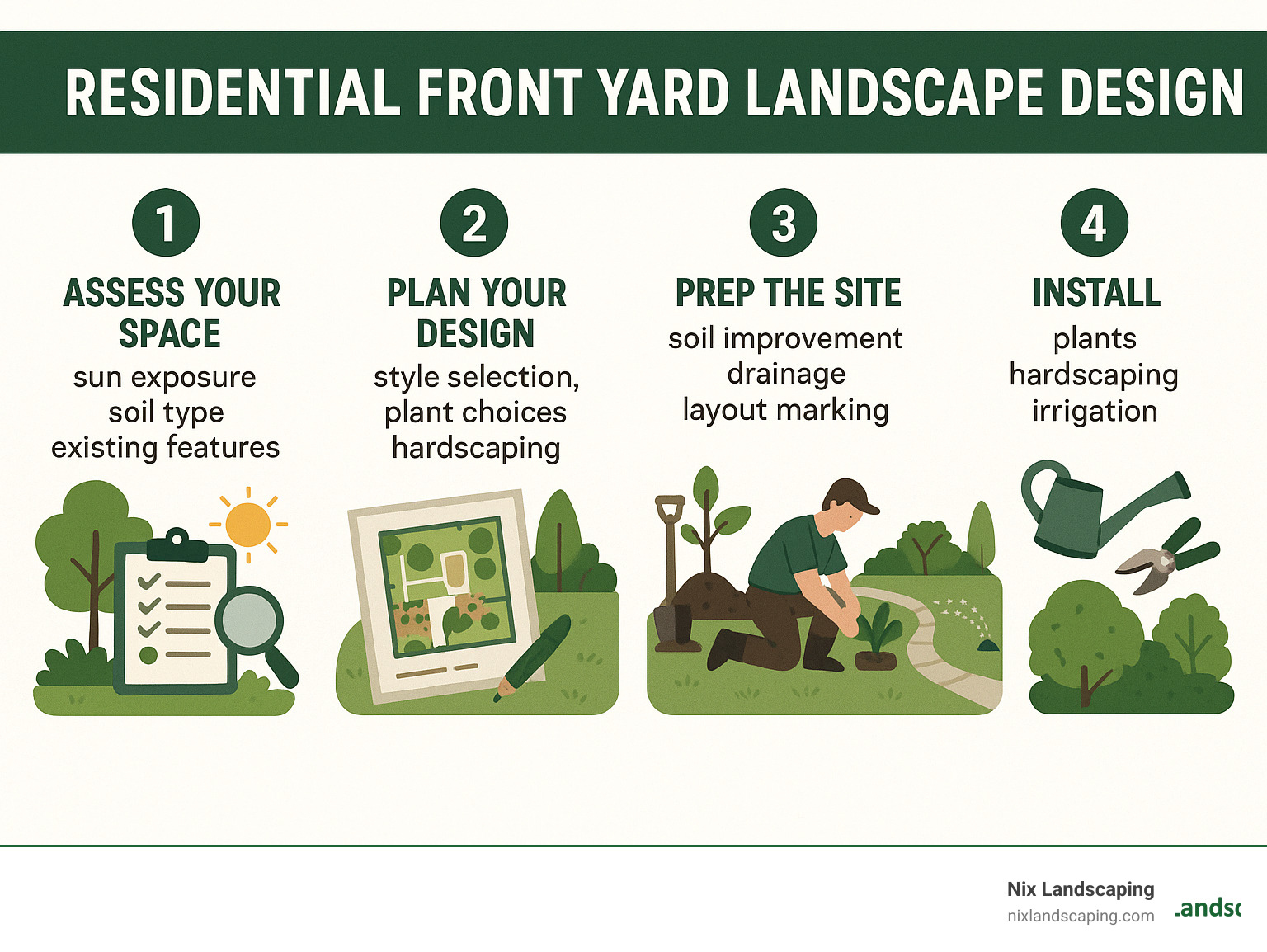
Explore more about residential front yard landscape design:
Step 1: Key Considerations Before You Begin
Planning your residential front yard landscape design saves time, money, and frustration. Rushing to the garden center without a plan often leads to buying plants that don’t fit your space or budget. Let’s do some smart groundwork first.
Understanding Your Space and Goals
Every yard is unique. What works for your neighbor might not work for you, which is why we always start with a thorough site analysis.
- Sun exposure is the most important factor. Does your yard get full sun, or is it mostly shade? A sun-loving plant will struggle in deep shade.
- Soil type comes next. Clay soil holds water but can become rock-hard, while sandy soil drains fast but doesn’t hold nutrients. Most plants prefer loamy soil.
- Your climate zone matters. In Fishers, Indiana, we have hot summers and cold winters. Choosing plants that can handle our weather is crucial for success.
- Don’t forget existing features. An electrical box can be screened with shrubs, and mature trees add instant character.
- Measuring your yard is essential. Sketch your space on graph paper, noting the house, windows, and any features you want to keep or remove. This becomes your roadmap.
- Consider the views from inside your house. What do you want to see from your kitchen window? A flowering tree or just more lawn?
- Think about your long-term family needs. A narrow walkway might need to be wider to handle strollers or car seats.
For a deeper dive into our planning process, check out our landscape design services.
Setting a Realistic Budget
Landscaping is an investment, but it doesn’t have to drain your savings. The key is being smart about where you spend.
- DIY versus professional installation is a major budget decision. You might save money on simple excavation, but complex projects like drainage or retaining walls are best left to pros. Fixing DIY mistakes often costs more than doing it right the first time.
- Material costs vary. Paver walkways in Fishers typically run $13 to $18 per square foot. Concrete pavers offer great durability and design options without breaking the bank. Always budget an extra 10-15% for surprises.
- Phasing your project is a smart strategy. We can create a master plan and tackle it in stages, spreading the cost over time.
- Instant curb appeal for less than $100 is possible. Fresh mulch, a few colorful containers, updated house numbers, or a fresh coat of paint on your front door can make a dramatic difference.
For more information about walkway costs, visit our walkway pavers installation page. For inspiration, these 10 ideas for the front of your house can spark creativity.
Step 2: Key Principles of Residential Front Yard Landscape Design
Think of your residential front yard landscape design like composing a song. Just as music needs rhythm and harmony, your landscape needs certain design principles to look its best.
- Unity and harmony ensure every element feels like it belongs and complements your home’s architecture.
- Balance keeps the view comfortable. This can be symmetrical (matching shrubs flanking a door) or asymmetrical (a large tree balanced by a group of smaller plants).
- Proportion and scale ensure everything feels “just right.” A tiny planting bed in front of a grand home looks lost, while massive plantings can overwhelm a smaller house.
- Focal points give your eye somewhere interesting to land, like a specimen tree, a water feature, or a beautifully planted container.
- Variety and texture add interest. Mixing plants with different leaf shapes, colors, and textures creates a dynamic look that changes with the seasons.
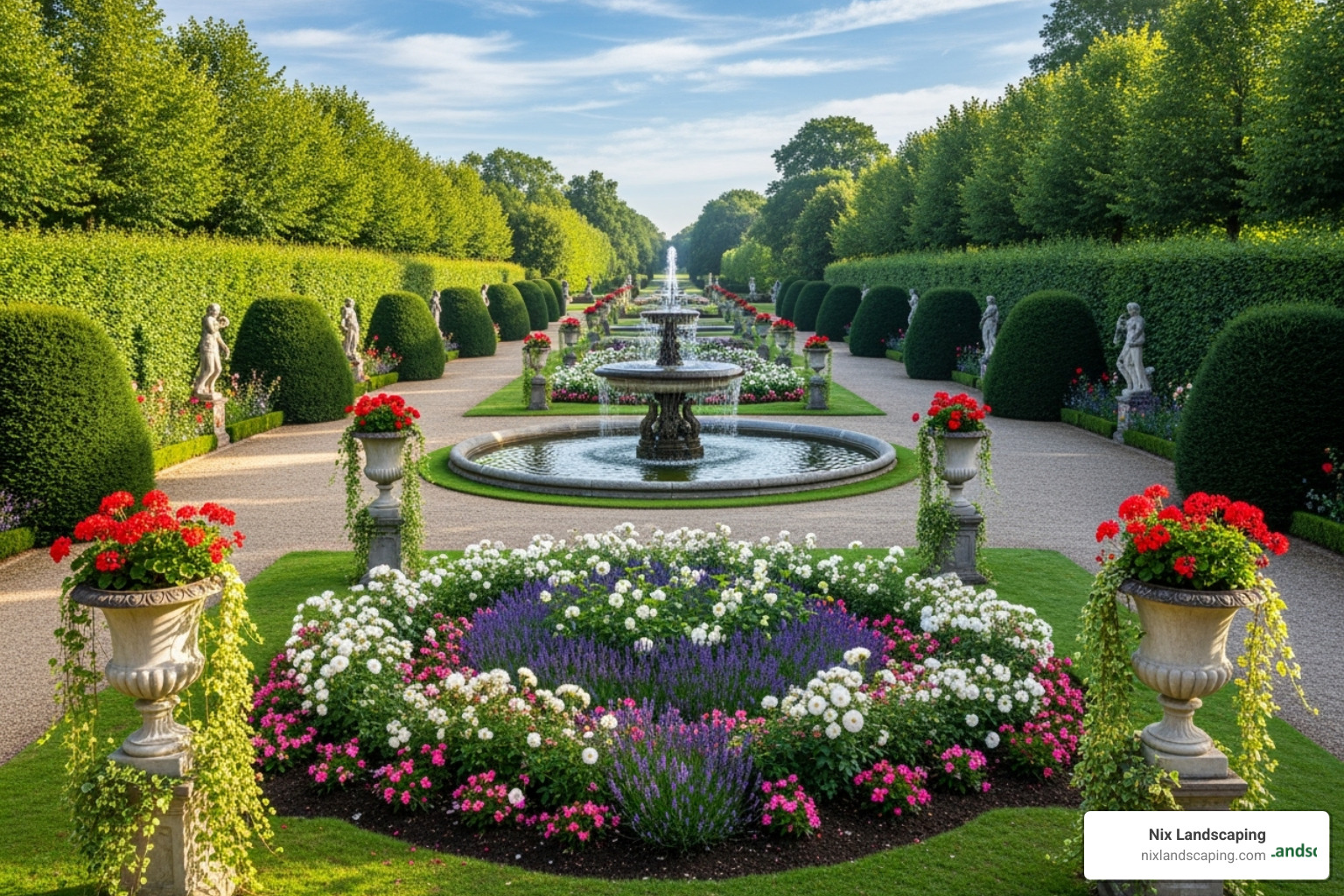
Popular Styles for Your Residential Front Yard Landscape Design
Your front yard is a style statement. Here are some popular approaches we use for homeowners in Fishers:
- Modern design: Clean, geometric layouts with minimal plant varieties and materials like decorative gravel. It’s sophisticated and low-fuss.
- Cottage garden style: Celebrates abundance and charm with a mix of seasonal flowers like hydrangeas and coneflowers, with curving gravel or stepping stone paths.
- Formal style: Manicured hedges, precisely placed shrubs, and symmetrical layouts, often using brick or square pavers to reinforce the classic appeal.
- Xeriscaping: Features drought-tolerant plants like succulents and ornamental grasses. It’s a stunning, low-maintenance style that’s kind to your water bill.
- Natural or woodland style: Uses native plants, irregular pathways, and layered trees and shrubs to mimic a peaceful forest clearing.
For more inspiration, explore our More residential landscaping ideas.
Choosing the Right Plants for Your Style and Climate
Selecting plants is where the fun begins. Each plant has a role to play in your landscape’s story.
- Layering creates depth. Place taller plants in the back of beds, transitioning to shorter plants in front to create visual interest.
- Evergreen plants are the backbone of great design, providing structure and beauty year-round.
- Ground covers fill bare spots and soften hard edges. Plants like ‘Pink Jewel’ Sedum spurium spread to create living carpets with minimal care.
- Native plants are your best friends. They are adapted to our Fishers climate, requiring less water, fertilizer, and fuss. They also support local wildlife.
- Pollinator-friendly flowers bring your garden to life with visiting butterflies, bees, and hummingbirds.
Be aware of potential plant challenges. Boxwoods are popular but can struggle with issues like Volutella Blight. We recommend resilient varieties like Green Velvet, Green Gem, and Green Mountain Boxwoods. If you’d like to Learn about common plant diseases, being informed helps you make better choices.
Here’s how different plant types can work in your landscape:
| Plant Type | Characteristics | Maintenance | Lifespan | Uses |
|---|---|---|---|---|
| Perennials | Return year after year; varied bloom times, textures, and colors. | Moderate | Multiple years | Flower beds, borders, ground cover, continuous color |
| Annuals | Complete life cycle in one growing season; intense, continuous color. | High (replanting) | One season | Seasonal color, container gardens, quick impact |
| Shrubs | Woody plants, provide structure and form; can be evergreen or deciduous. | Low to Moderate | Many years | Foundation plantings, hedges, focal points, screening, structure |
| Grasses | Ornamental grasses add texture and movement; turfgrass for lawns. | Low (ornamental) | Many years (ornamental); ongoing (lawn) | Ground cover, borders, naturalistic planting, lawn areas |
The secret is matching the right plant to the right spot while considering your style and maintenance preferences. When this combination is right, your landscape looks beautiful year after year.
Step 3: Incorporating Hardscaping for Function and Beauty
Hardscaping is the backbone of your residential front yard landscape design. While plants provide color and softness, hardscaping like walkways and walls creates the structure that holds everything together.
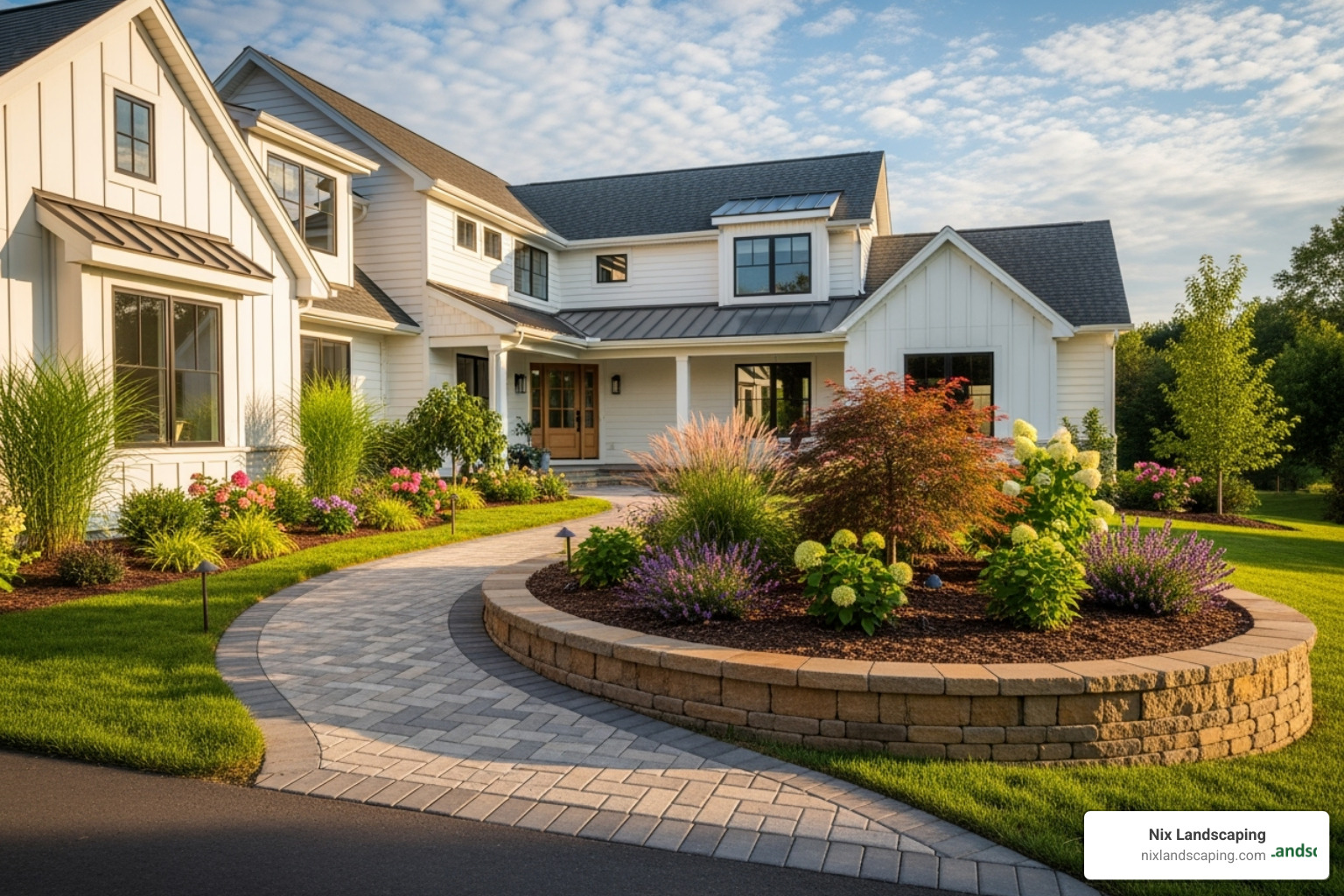
The magic happens when hardscaping and plants work together. A well-designed paver walkway creates a journey through your landscape. Retaining walls don’t just hold back soil—they create opportunities for layered plantings and add architectural interest. Hardscaping provides the “bones” that make your landscape feel intentional and polished.
Creating a Welcoming Entrance with Walkways
Your front walkway is the red carpet for your home. It sets the tone and should feel like an invitation.
- Paver walkways are my top recommendation. They offer incredible versatility with colors, shapes, and patterns like herringbone or basketweave. Concrete pavers balance cost, durability, and design, lasting 25-50 years with proper care.
- Stepping stones create a more relaxed, informal feel for cottage-style or natural landscapes, especially when set into gravel or groundcover.
- Flagstone paths offer rustic, organic beauty. Natural stone can last 100+ years when properly installed, becoming an heirloom feature.
While pavers might cost more upfront than a concrete slab, they often win in the long run. A single damaged paver can be replaced, whereas a crack in concrete often requires replacing the entire slab.
For detailed information, check out our Walkway Pavers Installation services.
Adding Dimension with Walls and Edging
Slopes and elevation changes are opportunities to create something special with retaining walls and raised beds.
- Retaining walls manage erosion, create level planting areas, and add dynamic vertical interest. We build them from natural stone, brick, or concrete blocks.
- Raised beds can pull double duty as both planting areas and casual seating, which is perfect for smaller front yards.
- Edging is the detail that separates amateur landscaping from professional results. Crisp, clean lines between your lawn, garden beds, and walkways make everything look intentional and prevent mulch from spilling or grass from creeping.
A pro tip: we excavate about three inches of soil when installing mulch or rock beds to keep them level with the surrounding grade, avoiding the unprofessional look of mounded beds.
For solutions to manage terrain and define your garden spaces, explore our Retaining Walls services.
Step 4: Smart Strategies for a Low-Maintenance and Budget-Friendly Yard
You want a gorgeous front yard, but not one that requires every weekend to maintain. A stunning residential front yard landscape design doesn’t have to own your schedule or wallet.
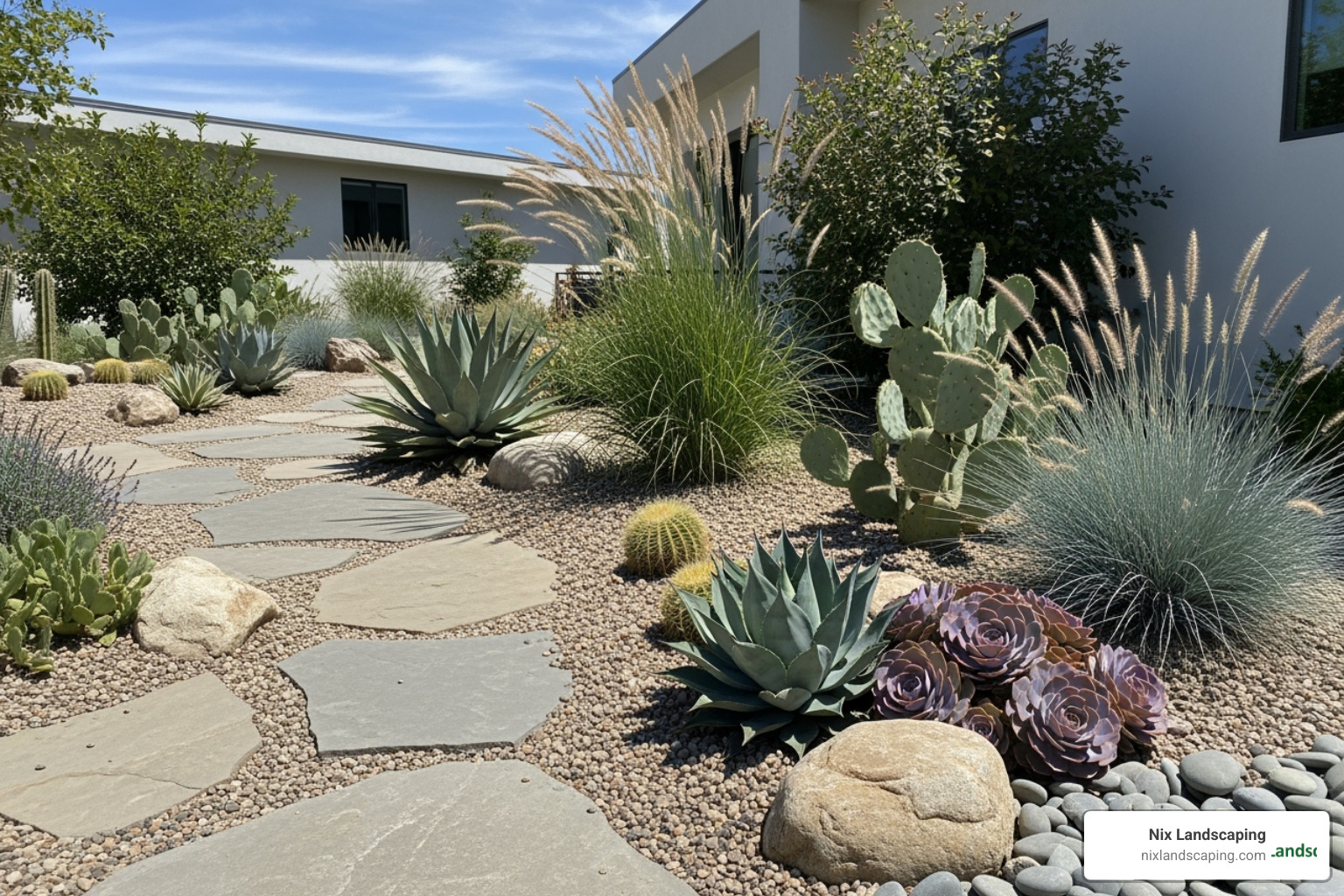
The secret is working with nature. Mulching is your first line of defense; a three-inch layer suppresses weeds and retains moisture. For a money-saving tip, ask local arborists for free wood chips.
Drought-tolerant plants are game-changers. Succulents, ornamental grasses, and native Indiana plants thrive in dry spells. We group plants with similar water needs (hydrozoning) for efficient watering.
Traditional lawns are high-maintenance. Consider lawn alternatives like decorative gravel, groundcovers, or expanded planting beds to save time on mowing and watering.
Drip irrigation pays for itself by delivering water directly to plant roots, reducing waste. Automated timers ensure perfect hydration whether you’re home or away.
Budget-Friendly Residential Front Yard Landscape Design Tips
Smart shopping and timing can stretch your budget. Starting with seeds or small seedlings costs a fraction of mature plants, and perennials provide years of beauty for a one-time purchase.
Fast-growing ground covers like creeping phlox fill bare spots quickly, reducing the need for mulch. The key is to start small and expand over time. Create one knockout area first, then add sections as your budget allows.
Phasing your project lets you spread costs while building toward a master plan. Tackle the entrance this spring, then add side plantings next fall.
Safety, Accessibility, and Finishing Touches
A beautiful yard should be safe for everyone. Wide, non-slip pathways are crucial, especially during Indiana winters. We design walkways for comfortable passage with good year-round traction.
Proper lighting transforms your landscape after dark while improving safety. Pathway lights guide visitors, while accent lighting showcases key features. See our Exterior House Lights for ideas.
Don’t overlook simple, high-impact touches. Clear house numbers help guests and emergency services find you. Water features add a peaceful, magical element and serve as a stunning focal point. Explore our Water Features Installation services to see how water can improve your design.
A successful residential front yard landscape design balances your dreams with your lifestyle, bringing you joy for years to come.
Frequently Asked Questions about Front Yard Design
After years of helping homeowners in Fishers, IN, I’ve noticed the same questions come up. Here are some quick insights for your residential front yard landscape design journey.
How do I landscape my front yard on a budget?
Focus on high-impact, low-cost changes. Fresh mulch, a newly painted front door, and colorful potted plants by your entrance can achieve instant curb appeal for less than $100. For long-term value, choose perennials over annuals, which return every year. You can also phase your project, tackling one area at a time to spread out costs. DIY tasks like digging for a new walkway can also save significantly on labor.
What is the easiest front yard to maintain?
The secret to a low-maintenance yard is working with nature. The easiest yards use native, drought-tolerant plants and minimize or replace traditional lawn areas with alternatives like decorative rock or groundcovers. Lawns are demanding, requiring regular watering, mowing, and fertilizing. Native plants, on the other hand, are adapted to our Indiana climate and require less care once established. Finally, a three-inch layer of mulch is crucial for suppressing weeds and retaining moisture, dramatically cutting down on maintenance time.
How can I add curb appeal to my front yard quickly?
For fast results, several simple changes make a dramatic difference. Colorful container gardens by your front door offer instant life and can be changed seasonally. Fresh mulch instantly tidies up garden beds, making everything look more intentional. Creating clean, crisp edges between your lawn and garden beds gives your yard a manicured, professional look. At night, landscape lighting can transform your home; even a few solar path lights make a big impact. For permanent solutions, see our Exterior House Lights services. Lastly, never underestimate the power of a clean space—power wash walkways and clear away any clutter.
Transform Your Vision into Reality
Your front yard is more than just space; it’s your daily welcome home and your first impression to the world. It should make you smile every time you pull into the driveway.
Planning is the most critical step in a successful residential front yard landscape design. We’ve covered understanding your space, choosing the right plants, and incorporating hardscaping. But knowing what to do and making it happen are two different challenges.
A well-designed yard boosts curb appeal, increases property value, and improves your daily enjoyment of your home. The change doesn’t have to happen overnight. Whether you’re starting with instant curb appeal tips for less than $100 or planning a complete redesign, every step forward is progress.
At Nix Landscaping, we specialize in personalized design and maintenance. We don’t just install your landscape; we ensure it thrives for years to come. We focus on your unique needs and creative solutions, whether you need a design that fits a busy family schedule or one that requires minimal maintenance.
Your front yard should reflect who you are while working with your home’s architecture and our Fishers, IN climate. Creating a welcoming entrance that you’ll love for years to come is our passion.
Ready to take the first step? Explore our landscaping services to get started.

