
Understanding Retaining Wall Drainage: The Foundation of Wall Stability
Retaining wall drainage solutions? are essential systems that prevent water buildup behind walls, ensuring their long-term stability and performance. Here’s a quick answer to your search:
| Top Retaining Wall Drainage Solutions | Best For |
|---|---|
| 1. French drains (perforated pipe + gravel) | All wall types, especially walls over 4 ft |
| 2. Drainage aggregate (12+ inches of clean gravel) | Universal application behind any wall |
| 3. Weep holes (spaced 3-7 ft apart) | Concrete or masonry walls |
| 4. Geocomposite drainage panels | Limited space applications |
| 5. Drainage cells (like EXPOL QuickDrain) | Faster installation, eco-friendly option |
Water is the number one enemy of retaining walls. Without proper drainage, hydrostatic pressure builds up behind the wall, dramatically increasing the lateral load and potentially causing the wall to lean, crack, or completely fail.
The problem is simple: water gets trapped behind your wall, either from rainfall, groundwater, or surface runoff. The solution requires careful planning and implementation of effective drainage systems.
Why standard backfill isn’t enough:
– Water accumulates faster than soil can absorb it
– Saturated soil creates massive pressure against the wall
– Freeze-thaw cycles in wet soil can cause additional movement
– Poor drainage leads to erosion of supporting soil
I’m Kyle Nix, owner of Nix Landscaping in Fishers, Indiana, and I’ve implemented countless retaining wall drainage solutions? over my years of changing outdoor spaces, saving homeowners from costly wall failures and repairs through proper drainage design and installation.
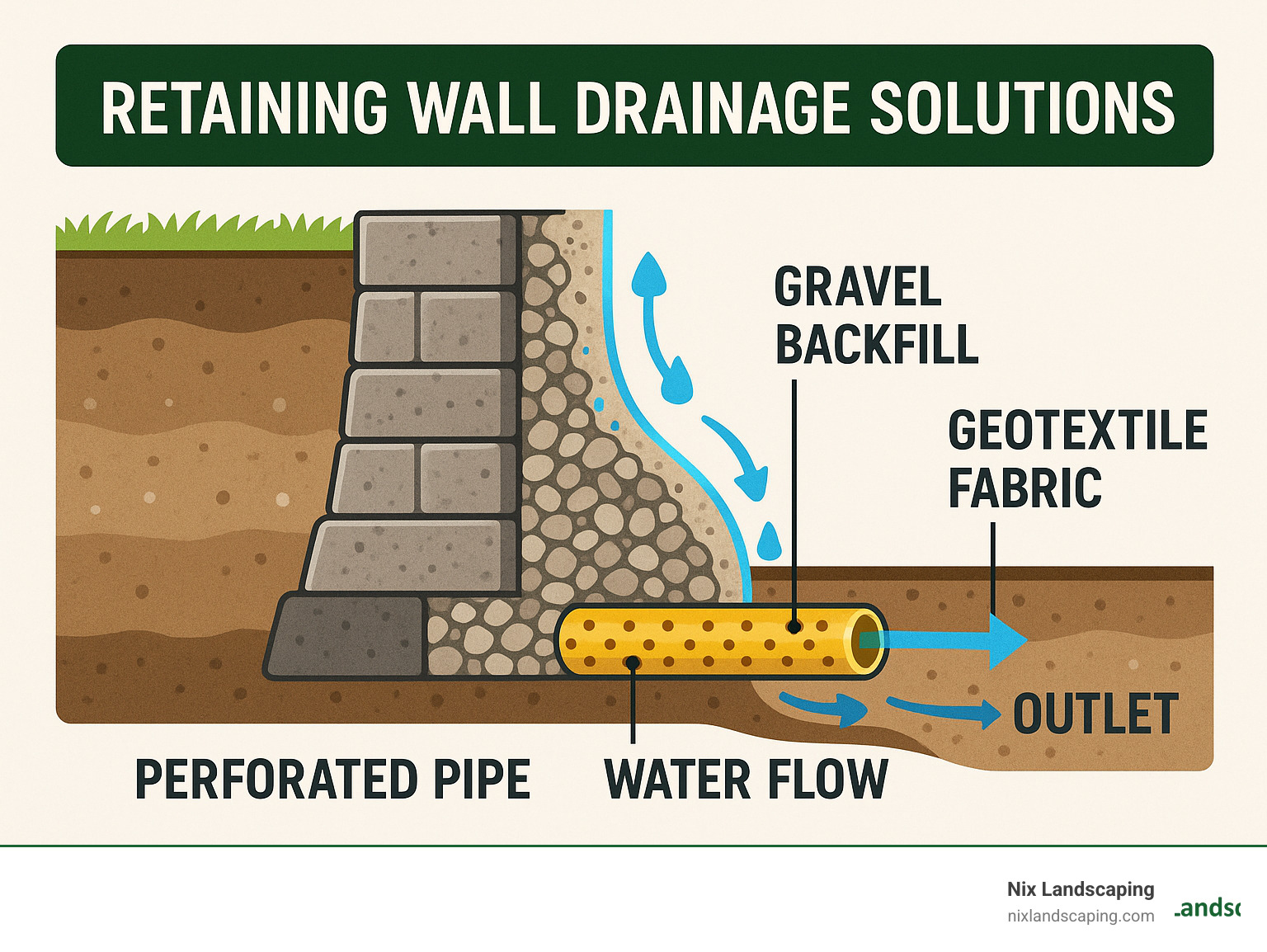
Retaining wall drainage solutions? basics:
– How to build retaining walls?
– Cost of retaining wall installation?
– Affordable retaining wall options?
Why Drainage Is Non-Negotiable
At Nix Landscaping, we consider drainage as essential as the wall itself. This isn’t an optional upgrade—it’s the backbone of your wall’s performance and longevity.
Hydrostatic pressure from water buildup can more than double the force pushing against your wall compared to dry conditions. This is a real, physical force that will inevitably damage your wall if not addressed properly.
A properly drained retaining wall typically lasts 2-3 times longer than one without good drainage. That’s the difference between replacing your wall in 10 years versus enjoying it for 30 years or more. The math isn’t complicated—invest in proper retaining wall drainage solutions? now, or pay significantly more for repairs later.
Beyond just saving money, there are several crucial reasons why drainage should never be an afterthought:
- Structural integrity: When soil becomes saturated with water, it gets heavier and pushes against your wall with surprising force
- Safety concerns: Walls that fail can collapse suddenly, creating real dangers for your family, visitors, and property
- Code compliance: Most local building codes actually require drainage systems for walls over 4 feet tall
- Landscape protection: Poor drainage leads to erosion that can damage your entire yard, not just the wall
- Insurance implications: If your wall fails and you didn’t install proper drainage, your insurance might not cover the damage
Scientific research on retaining-wall failures consistently identifies inadequate drainage as the number one reason walls fail before their time.
The Hidden Forces You Must Beat
Soil saturation transforms relatively stable soil into something more like a heavy, fluid mass pushing against your wall. Water fills the tiny spaces between soil particles, adding weight and reducing the natural friction that normally helps soil stay in place.
Active earth pressure is the sideways force that soil exerts against a wall. This pressure skyrockets when soil gets waterlogged. A wall that handles dry soil conditions just fine might suddenly face forces two or three times greater when that same soil becomes saturated.
Frost heave is especially problematic in our Indiana climate. When water-soaked soil freezes, it expands by about 9%. This expansion creates enormous pressure against your wall, potentially causing cracks or forward movement.
How Retaining Wall Drainage Solutions? Cut Repair Bills in Half
Lifecycle extension is the most obvious benefit. Good drainage typically extends a wall’s lifespan by 2-3 times compared to walls without proper drainage.
Maintenance savings add up year after year. Walls with good drainage need fewer repairs, less repointing, and rarely require structural reinforcement.
Property value matters too. A properly functioning retaining wall improves your property’s usability and curb appeal, while a failing wall can decrease your home’s value.
Retaining Wall Drainage Solutions—Traditional & Modern Options
When it comes to keeping water away from your retaining wall, you have several proven options. At Nix Landscaping, we assess your property’s unique needs and recommend a customized approach for maximum effectiveness.
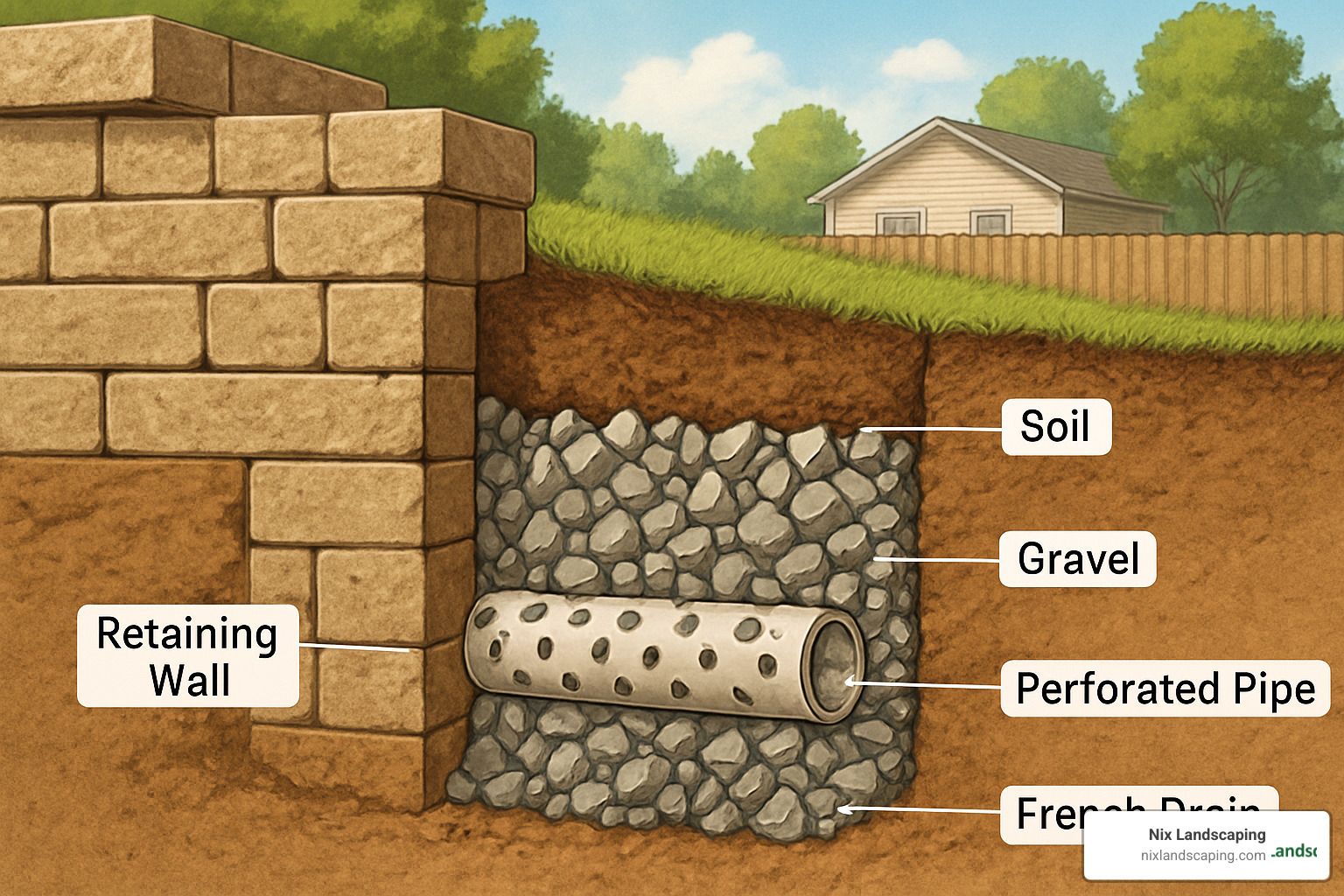
Classic Gravel-and-Pipe System
The French drain remains the gold standard of retaining wall drainage solutions? for good reason—it’s incredibly effective when installed correctly.
Angular aggregate (crushed stone sized between 1/2 and 3/4 inch) creates a stable but porous foundation. We recommend at least 12 inches of this material behind your wall for proper drainage capacity.
At the heart of this system is a perforated PVC pipe, typically 4 inches (100 mm) in diameter, installed with a 2% fall (about 1/4 inch drop per foot of length). We always add sock filters or wrap the pipe in geotextile fabric to prevent clogging.
When installing these systems, we place the pipe at the lowest point, surround it with gravel, extend the gravel backfill at least a foot behind the wall, and carefully compact everything in 6-inch layers. A geotextile barrier between the gravel and native soil prevents mixing while letting water pass through.
Weep Holes vs. Retaining Wall Drainage Solutions? Head-to-Head
Weep holes are small openings (usually 2-4 inches across) placed along the base of concrete or masonry walls, typically spaced every 3-7 feet horizontally.
Weep holes are less expensive upfront and easier to add to existing walls, but they’re visible on your wall face and can create unattractive water stains. They also have limited capacity and can become clogged over time.
A French drain system stays completely hidden from view, handles much more water, and resists clogging when properly installed, though it costs more initially and is more invasive to retrofit.
In Fishers, where we get heavy rains, we often recommend using both systems together for concrete retaining walls—better safe than sorry when protecting your investment!
Next-Gen Panels & Cells
Drainage cell panels are lightweight panels (about an inch thick) that create a continuous void space behind the wall where water can flow freely. Products like EXPOL QuickDrain use recycled materials, making them environmentally responsible.
These modern systems cut installation time dramatically—sometimes by half compared to traditional methods. They’re lightweight, easy to handle, often use recycled materials, and are engineered for consistency and longevity.
Geocomposite drainage panels combine a drainage core with attached filter fabric, creating an all-in-one solution that works beautifully in tight spaces.
Scientific research on modular drains confirms these newer solutions perform excellently while offering significant installation advantages.
Whether you choose traditional methods, modern innovations, or a combination approach, the important thing is making drainage a priority. Want to know more about what factors influence the cost of your retaining wall project? Check out our guide on the cost of retaining wall installation.
Sizing, Placement & Installation Best Practices
Getting the sizing and placement right can make or break your drainage system. At Nix Landscaping, we’ve refined our approach to ensure your retaining wall drainage solutions? perform flawlessly for decades.
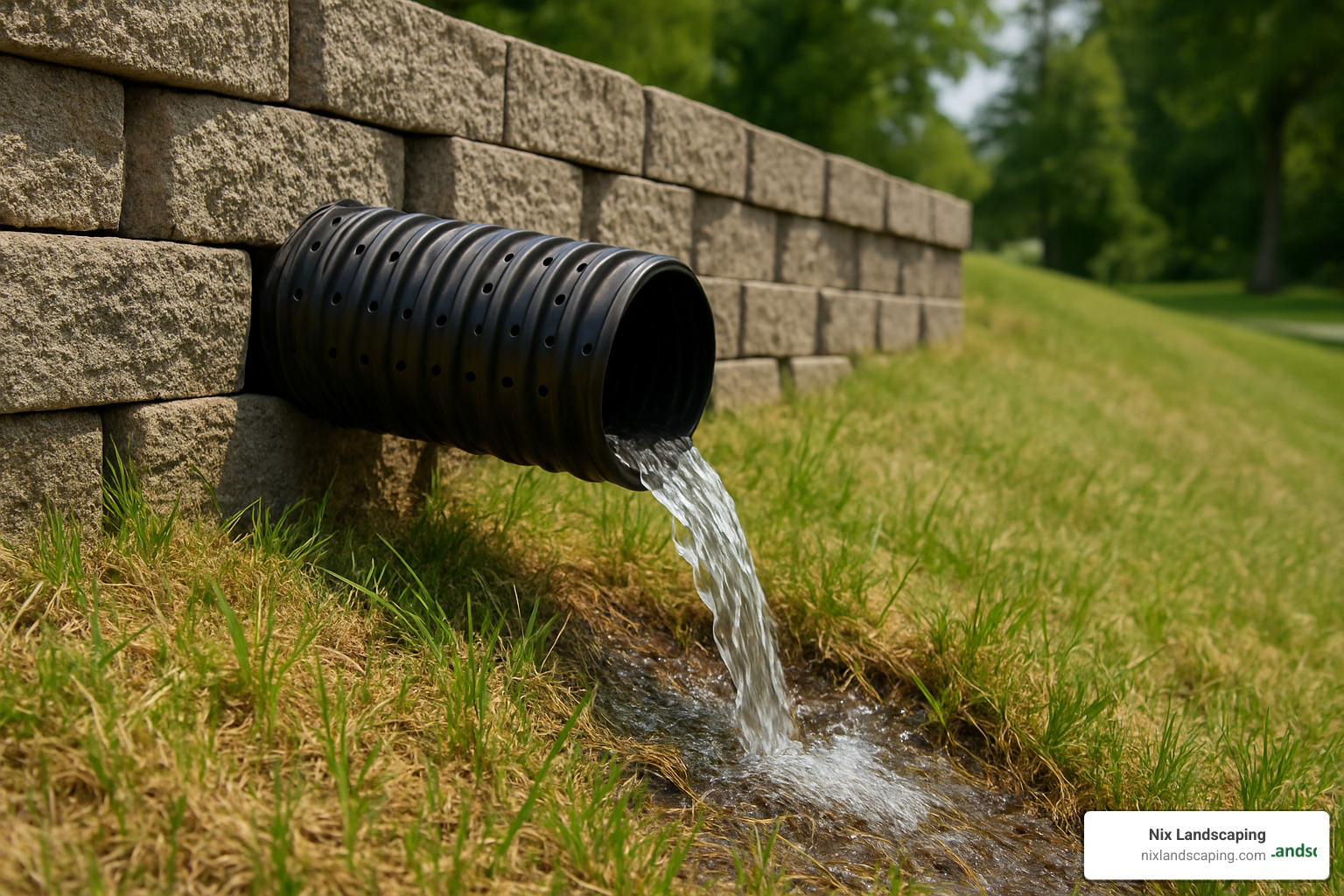
We always include a gravel zone of at least 12 inches behind the wall, using clean and angular gravel rather than smooth pea gravel that shifts over time.
The toe drain elevation needs to sit at the lowest point of your excavation, typically right at the front edge of the wall footing, to capture all water that trickles down through the drainage layer.
Every system needs proper daylight outlets where water can exit the system. We typically place outlets every 25-50 feet and protect them with rodent guards.
The non-woven geotextile fabric prevents soil particles from migrating into your drainage material while allowing water to pass through.
When backfilling with drainage gravel, we use compaction lifts, adding and compacting 6-inch layers at a time to prevent future settling while maintaining void spaces for water flow.
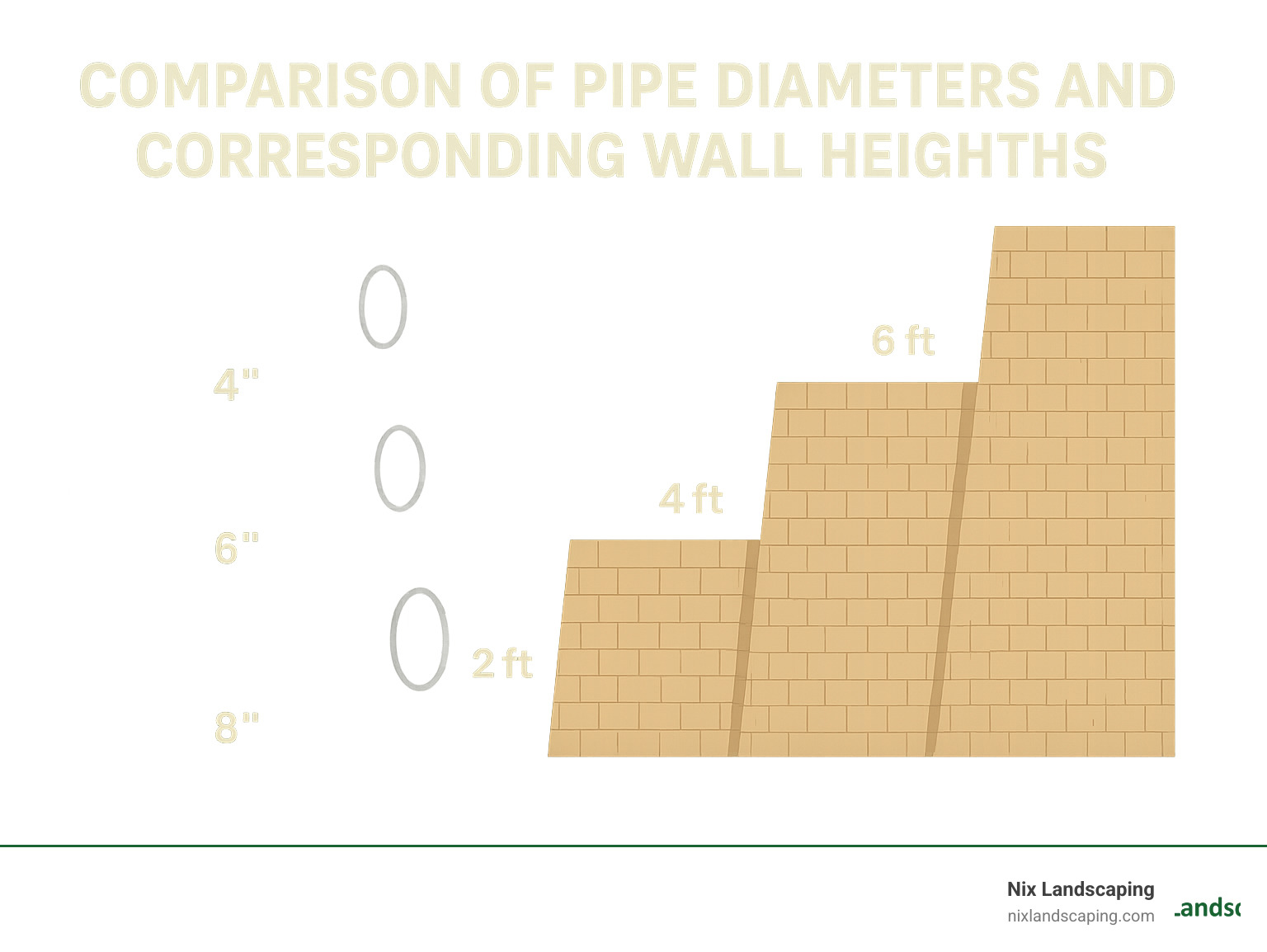
Guidelines for Concrete, Timber & Block Walls
For reinforced concrete walls, we typically double up on protection with both weep holes and toe drains, often adding a waterproof membrane on the soil side as extra insurance.
Segmental block walls allow some water to seep through the joints between blocks, but this natural drainage is not enough on its own. We fill the block cores with drainage aggregate and extend it at least 12 inches behind the wall, with a toe drain for any wall taller than 4 feet.
Treated timber walls require a gentler approach. We use a combination of drainage aggregate and geotextile to keep water moving away from the timber, sometimes using pea gravel because the smaller, rounded particles won’t scrape against the wood as much.
Site-Specific Checks: Soil Type, Rainfall, Groundwater
Every property in Central Indiana has unique characteristics that affect drainage needs:
Soil type dramatically affects drainage requirements. Clay soils hold water and can expand when wet, requiring more robust drainage solutions. Sandy soils drain more readily but might migrate into your drainage layer, requiring additional filter fabric.
Rainfall patterns in Fishers influence system capacity design. We plan not just for average rainfall but for occasional summer downpours, ensuring your system can handle peak loads.
Groundwater conditions are especially important for walls that extend below grade. High water tables might require improved drainage capacity or additional waterproofing measures.
Maintenance & Troubleshooting
Even the best retaining wall drainage solutions? need maintenance to keep performing year after year. At Nix Landscaping, we ensure our clients understand how to care for their investment.
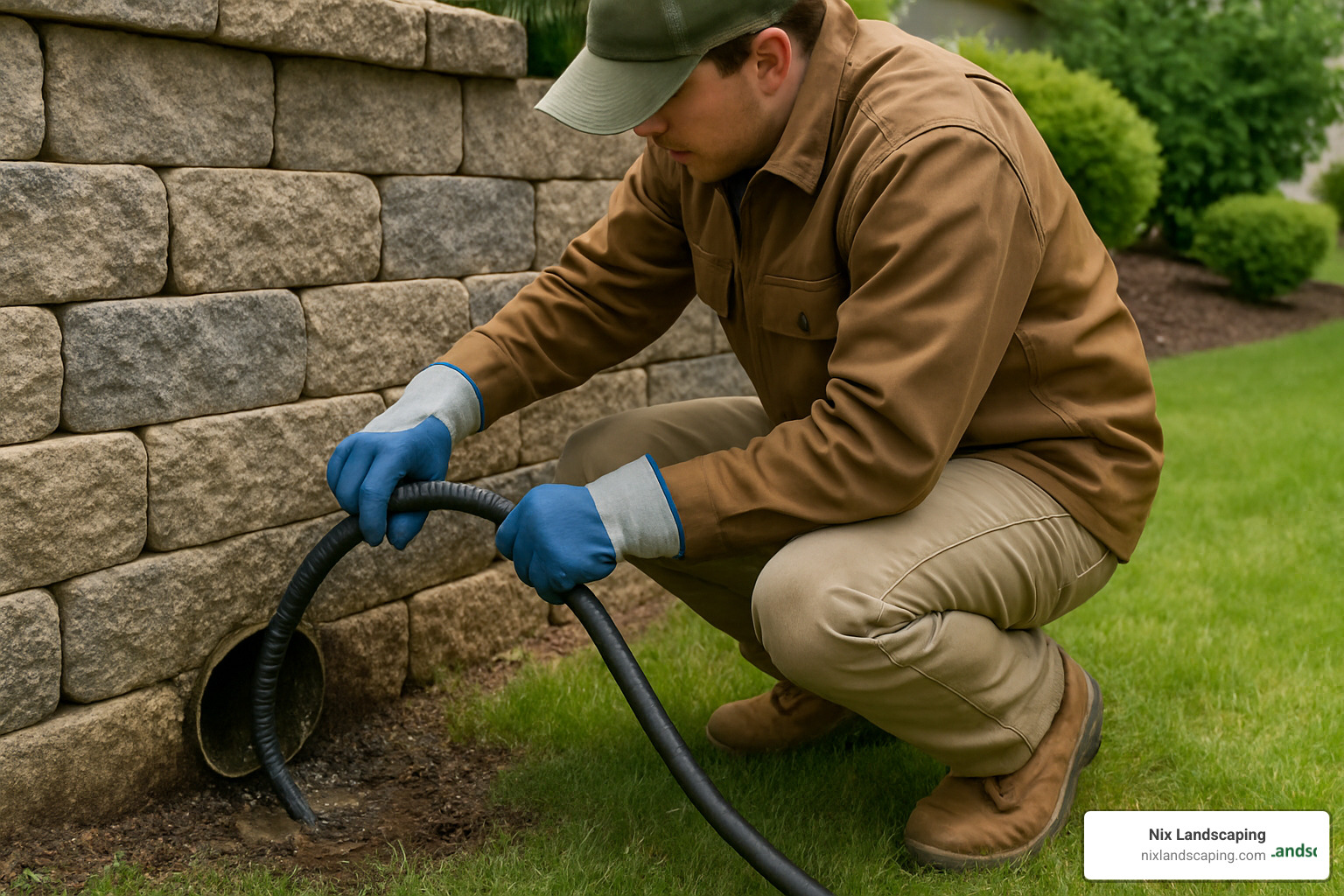
We recommend annual inspections twice a year – once in early spring after winter’s freeze-thaw cycles, and again in fall before winter sets in. Look for signs that water might be hanging around where it shouldn’t be, any wall movement, or blockages in drainage paths.
Regular outlet flushing with your garden hose keeps everything flowing freely. Think of it like dental floss for your drainage system – a little prevention saves a lot of trouble later.
Keeping the area around your wall free of debris is important. Fallen leaves might seem harmless, but they can clog your drainage system during heavy rain.
Watch out for root intrusion from nearby plants. Trees and shrubs are constantly searching for water, and your drainage pipes look like an all-you-can-drink buffet to them. Keep deep-rooted plants at least 3-4 feet away from your retaining wall.
Notice white, chalky stains on your wall? That’s efflorescence – mineral deposits left behind when water evaporates. A little is normal, especially on newer walls, but increasing white stains might indicate water is finding its way through your wall instead of through your drainage system.
For more detailed guidance, our retaining wall upkeep guide has everything you need to know.
Early Warning Signs Your Retaining Wall Drainage Solutions? Are Failing
Catching drainage problems early can save you thousands in repair costs:
Pools of water gathering at the base of your wall after rain are clear indicators of drainage problems.
If sections of your wall are bulging or leaning – even just a quarter-inch – take it seriously. This usually means water pressure is building up behind the wall.
Increasing white salt deposits suggest water is flowing through the wall itself rather than your drainage system.
Watch for erosion channels forming near the base of your wall. These rivulets mean water is creating its own escape route rather than following your designed drainage path.
Cracks in the wall, especially horizontal ones, often indicate pressure building up behind the wall and could signal impending structural failure.
If you spot any of these warning signs, don’t wait. At Nix Landscaping, we offer diagnostic services to identify drainage issues before they lead to costly failures.
Cost, Sustainability & DIY vs. Pro Decisions
Understanding what you’ll spend on retaining wall drainage solutions? helps you make smart choices that balance your budget with performance and environmental impact.
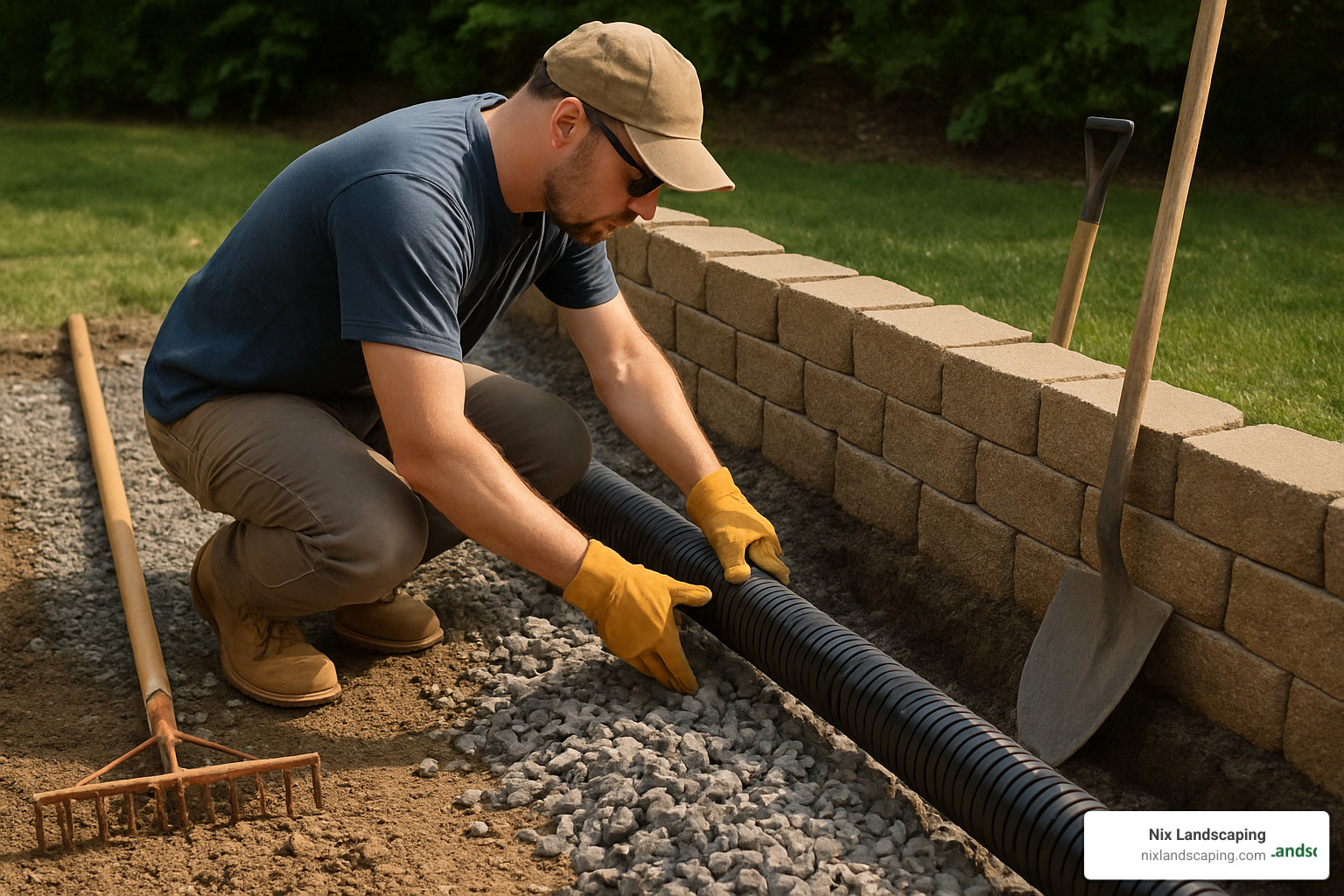
Traditional French drains typically run about $5-15 per linear foot for materials. Modern drainage cells might cost $8-20 per square foot, while geocomposite panels are more budget-friendly at $2-5 per square foot. Simple weep holes cost roughly $2-5 per hole, and geotextile fabric runs around $0.50-1.50 per square foot.
Labor often represents the bigger investment. For a typical 30-foot wall, installing a traditional French drain might take 8-12 hours, while modern drainage cells cut that time to just 4-6 hours, potentially offsetting their higher material costs.
Walls over 4 feet tall generally require permits in Fishers and nearby areas, costing between $50-200 depending on size and location.
Budgeting Tips & Green Choices
Consider these eco-friendly and budget-conscious options:
Recycled aggregates can reduce both costs and environmental footprint while still meeting drainage specifications.
Low-VOC fabrics and environmentally certified geotextiles might cost more upfront but are gentler on our Indiana ecosystem.
Creating a rain garden discharge area turns your drainage water into a resource for a beautiful garden feature rather than just directing it away.
If budget is tight, consider phased implementation – install critical base drainage during wall construction, then add surface water management features later.
When to Call a Professional (and Why)
While DIY videos make drainage installation look simple, consider professional help for:
Engineering stamps – Walls over 4 feet tall typically need qualified engineering to meet local codes.
Complex grading requires both experience and specialized equipment. Even minor slope errors can render an entire system ineffective.
Warranty protection comes with professional installation, providing peace of mind for larger walls where failure could be costly or dangerous.
Equipment access that most homeowners don’t have is often necessary for proper compaction of drainage materials.
Technical knowledge about soil mechanics, hydrology, and construction techniques, plus understanding of Central Indiana’s unique soil conditions and weather patterns, comes from working on hundreds of local projects.
If you’re still considering DIY, we recommend scheduling a consultation. For a reasonable fee, we can guide your project and identify potential issues before they become problems.
Frequently Asked Questions about Retaining Wall Drainage
Do walls under 4 ft still need drainage?
Absolutely yes. While building codes might only require engineered drainage for taller structures, even small walls face the same enemy: water.
For walls under 4 feet, you can simplify somewhat. A good layer of drainage aggregate (at least 12 inches thick) behind the wall and a basic toe drain will often suffice. But skipping drainage altogether is a mistake many homeowners regret when their “small” wall fails prematurely.
At Nix Landscaping, we install appropriate retaining wall drainage solutions? for every wall we build, regardless of size. The modest additional investment pays enormous dividends in wall longevity and performance.
How deep and wide should the gravel backfill be?
The standard minimum is 12 inches (300 mm) of clean, angular gravel extending behind the entire height of the wall. For optimal performance, especially in Indiana’s freeze-thaw climate, we recommend:
- 12-18 inches of drainage gravel for walls under 4 feet
- 18-24 inches for walls 4-6 feet tall
- 24+ inches for walls over 6 feet (usually with additional engineered reinforcement)
The gravel should run from the base all the way up, stopping just a few inches shy of the top. We usually cap those top few inches with less permeable soil that can support greenery while still allowing water to filter down into your drainage layer.
Can I retrofit drainage into an existing wall?
Yes, though retrofitting is more challenging than installing drainage during initial construction. If your wall shows signs of water problems, here are common approaches:
Toe drain installation involves excavating along the front base of the wall to install a perforated pipe. This provides significant relief, though it doesn’t address water trapped higher in the backfill.
Weep hole drilling works well for solid concrete or masonry walls. We carefully drill holes through the wall at regular intervals near the base, fill them with drainage gravel, and cover with geotextile to prevent soil migration.
Surface water management becomes even more important in retrofit situations. A well-placed French drain along the top of the wall can intercept surface water before it reaches the backfill.
The best approach depends on your specific wall type, current condition, and site access. Even walls that have stood for years without drainage can benefit from these retrofitting techniques.
Conclusion
Proper retaining wall drainage solutions? aren’t just technical checkboxes—they’re investments in your property’s future. Water will always find its way behind your wall, and your approach to managing that water determines whether you’ll enjoy decades of worry-free performance or face premature failure and costly repairs.
The most important takeaways:
- Drainage isn’t optional—even for smaller walls, it’s essential for long-term stability
- Multiple drainage components working together provide the best protection
- Your specific site conditions should guide your drainage decisions
- Regular maintenance extends your drainage system’s life significantly
- Professional installation ensures your system functions properly and complies with local codes
At Nix Landscaping, we’ve built our reputation in Fishers and throughout Central Indiana on creating retaining walls that stand the test of time. Our comprehensive approach to drainage is a key reason why our clients enjoy decades of trouble-free performance from their walls.
Whether you’re planning a new retaining wall or addressing drainage issues with an existing structure, we’re here to help with the technical knowledge, local experience, and craftsmanship needed to ensure your wall performs beautifully for years to come.
For more information about our professional retaining wall services, visit our retaining wall services page or reach out for a consultation. We’d be proud to be your partner for drainage done right—because at Nix Landscaping, we don’t just build walls; we build solutions that last.