
Transform Your Slope into a Stunning Feature
Retaining wall ideas for backyard? Here’s a quick answer to inspire you:
- Tiered Stone Terraces – Create multi-level planting beds with natural stone
- Curved Concrete Block Walls – Add visual interest with flowing lines
- Timber Retaining Walls – Budget-friendly option with rustic appeal
- Gabion Basket Seating – Wire cages filled with stone that double as benches
- Living Walls – Incorporate planters and climbing vegetation
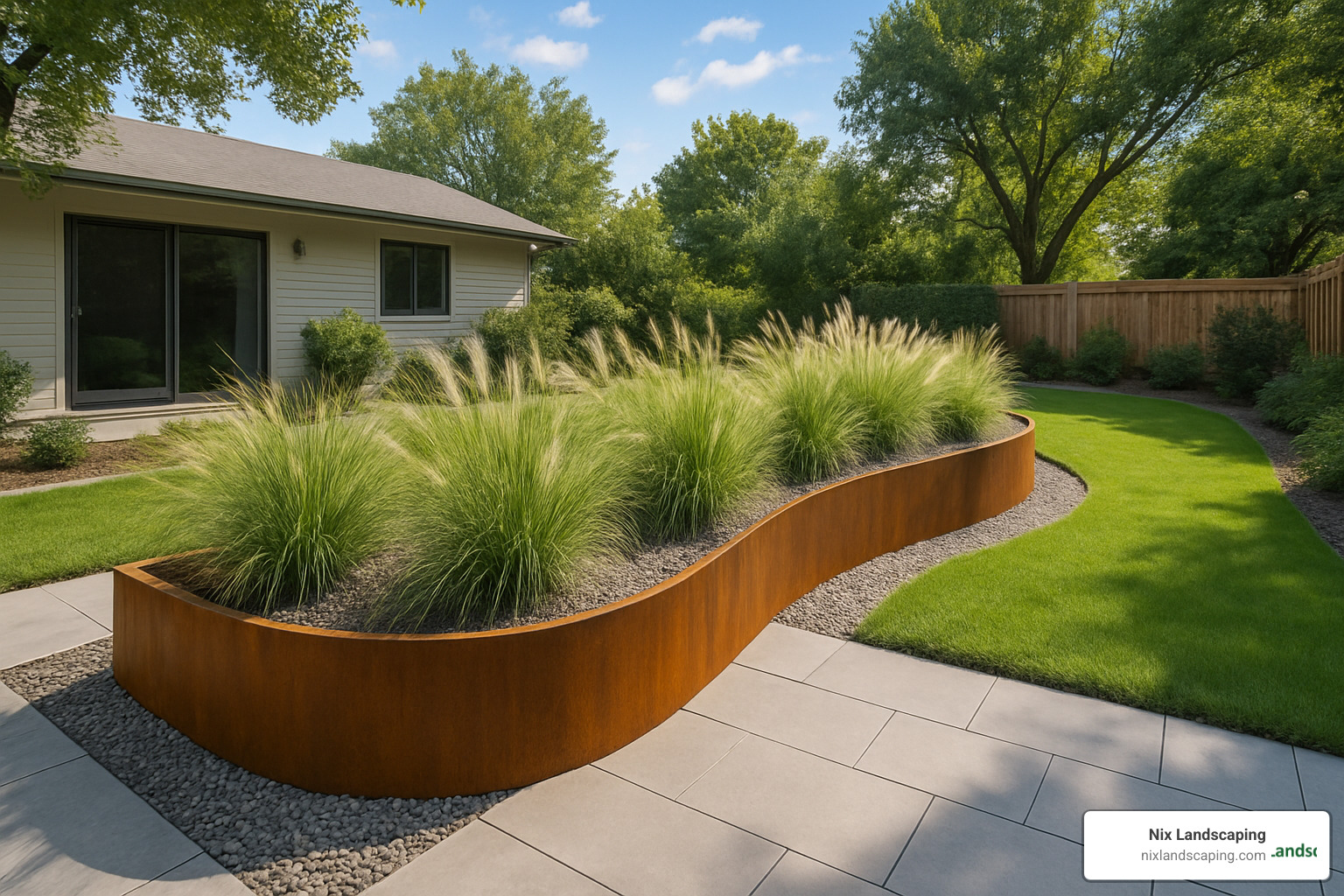
- Corten Steel Edges – Modern, rust-patina walls for contemporary yards
- Boulder Retaining Walls – Natural-looking solution for gentle slopes
Changing a sloped backyard from a maintenance headache into a functional, beautiful space is possible with the right retaining wall. Beyond simply holding back soil, today’s retaining walls serve as focal points, create usable flat areas, provide built-in seating, and dramatically improve your outdoor living space.
The national average cost for a 60-foot retaining wall ranges from $6,826 to $10,353, but simpler DIY options can be built for much less. Whether you’re dealing with a steep hillside or just want to add dimension to a flat yard, retaining walls offer practical solutions with serious style potential.
Why consider a retaining wall? They prevent soil erosion, create flat usable spaces, improve drainage, reduce yard maintenance, and can increase your property value. With options ranging from natural stone and concrete blocks to timber, gabion baskets, and even corten steel, there’s a retaining wall solution for every style and budget.
I’m Kyle Nix, owner of Nix Landscaping in Fishers, Indiana, with years of experience designing and installing stunning retaining wall ideas for backyard changes that combine beauty with functionality. My team specializes in creating custom hardscape solutions that turn challenging slopes into your property’s most striking feature.
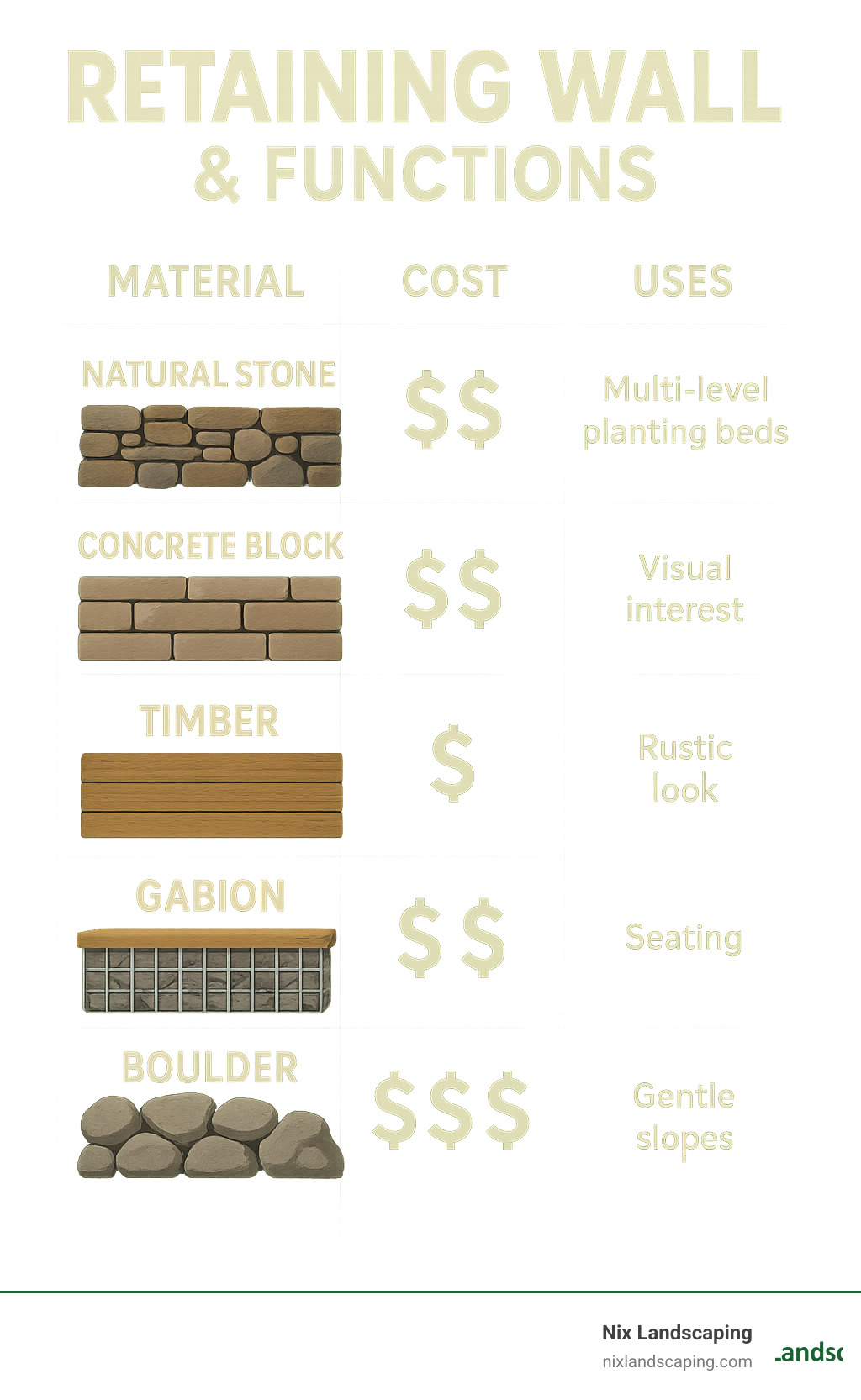
Related content about Retaining wall ideas for backyard?:
– Affordable retaining wall options?
– Best plants for retaining walls?
– Retaining wall with water feature?
What Is a Retaining Wall & Why Your Backyard Needs One
Ever looked at your sloping backyard and wished you could tame that hillside? That’s exactly what retaining walls do – they’re the unsung heroes of landscape design that hold back earth and create level changes in your outdoor space. Think of them as your yard’s way of defying gravity!
At their core, retaining walls are sturdy structures that resist the natural tendency of soil to move downhill. When it rains, that movement becomes even more pronounced as soil gets heavier and more unstable. A properly built wall stands firm against these forces, creating stability where nature intended chaos.
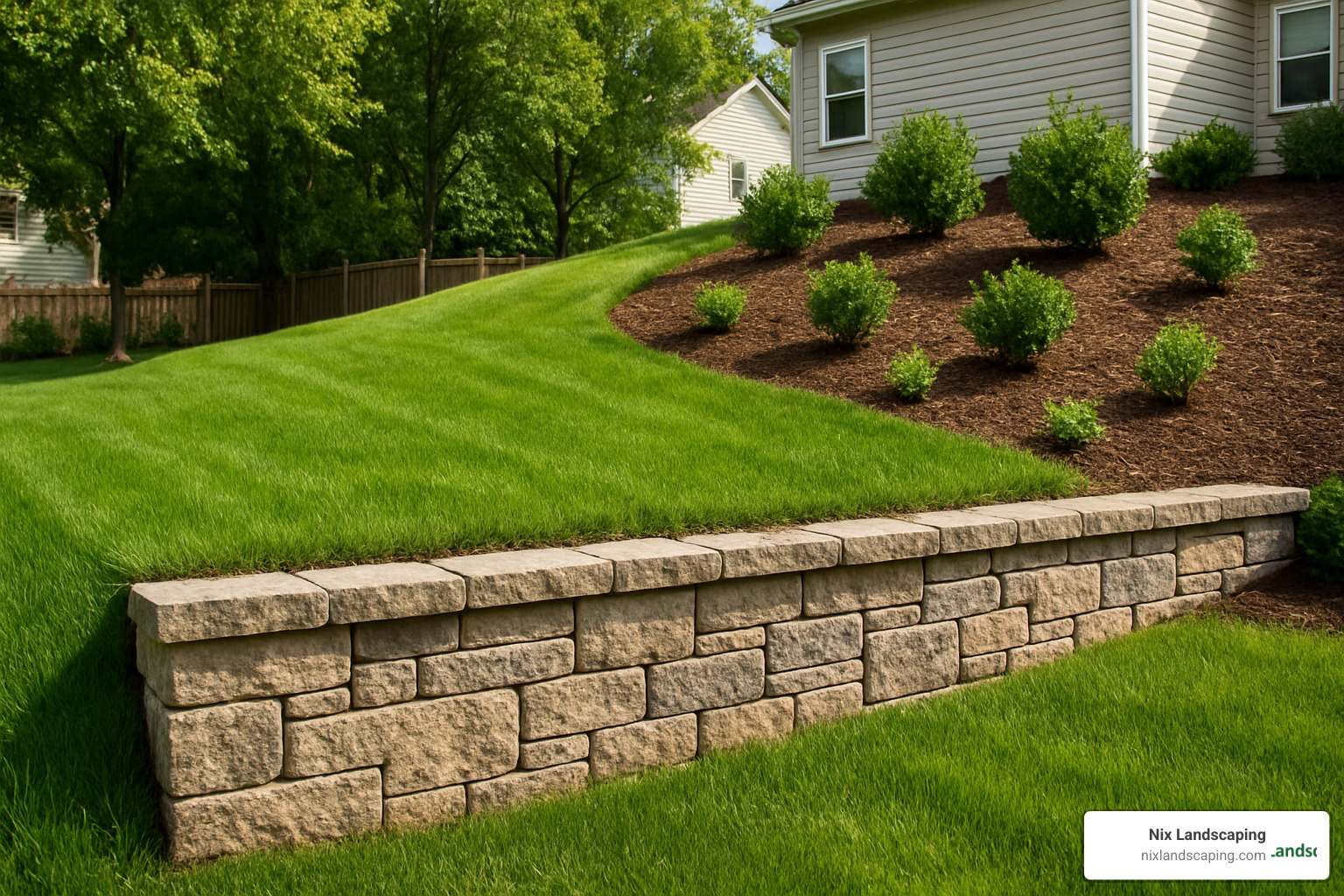
Without these hardworking structures, sloped yards face a host of problems that go beyond just looking messy. Soil washes away during storms, creating bare patches and depositing mud where you don’t want it. Your planting areas become unstable, making it tough to grow anything substantial. Water pools in low spots instead of draining properly. And perhaps most frustrating – you lose valuable outdoor living space to unusable slopes.
What many homeowners don’t realize is that these issues can eventually threaten your home’s foundation if left unchecked. Water and soil movement near your house isn’t just a landscape problem – it’s a potential structural one.
Purposes & Benefits Snapshot
Retaining wall ideas for backyard? They’re not just about holding back dirt! These versatile structures offer benefits that transform problematic slopes into your property’s best feature:
Create flat, usable terraces where your family can actually enjoy the outdoors. That steep hill can become a series of level garden beds, patios, or play areas with the right wall design.
Say goodbye to soil erosion and flooding problems. A well-designed wall system manages water flow intelligently, directing it away from your home and preventing your topsoil from washing away during heavy downpours.
Define your outdoor living spaces with walls that naturally create “rooms” in your landscape. That subtle stone wall might separate your grilling area from your garden or create a cozy conversation nook.
Cut down on maintenance headaches by eliminating awkward slopes that are impossible to mow safely. Well-planned retaining walls can actually reduce your yard work while improving your property’s appearance.
Boost your home’s value with thoughtful hardscaping. Potential buyers see well-constructed retaining walls as both beautiful and functional investments that they won’t have to make themselves.
Manage hydrostatic pressure – the technical term for water buildup behind walls – with proper drainage systems that prevent future damage and ensure your wall’s longevity.
Create a safer outdoor environment by eliminating dangerous slopes, especially important if you have young children, elderly family members, or just don’t want to risk taking a tumble while gardening.
The science behind effective retaining walls involves understanding your soil’s “angle of repose” – essentially how steep a pile of your particular soil type can be before it starts sliding. Different soils behave differently, which is why cookie-cutter solutions often fail. For those interested in the technical aspects, the scientific research on angle of repose provides fascinating insights.
Here at Nix Landscaping, we take the time to evaluate your property’s unique characteristics – soil composition, drainage patterns, and slope conditions – before suggesting the perfect retaining wall solution. We know that what works for clay soil won’t necessarily work for sandy soil, and that Indiana’s freeze-thaw cycles require special considerations for wall construction.
Retaining Wall Materials 101: Stone, Concrete, Timber & Beyond
Choosing the right material for your retaining wall isn’t just about looks—it’s the foundation of your project’s success. I’ve helped hundreds of homeowners transform their sloped yards, and the material choice always makes a huge difference in both function and feel.
Natural Stone
There’s something timeless about natural stone walls. Whether it’s the cool gray of limestone, the speckled surface of granite, or the warm tones of sandstone, these walls simply radiate character.
Natural stone offers best durability—many stone walls last for generations—but that permanence comes with a price tag. The installation requires skilled hands (and strong backs!), making it more of an investment. But when you’re sipping morning coffee beside a beautiful stone wall that perfectly complements your landscape, that investment feels pretty smart.
Segmental Concrete Blocks
If you’ve driven through any neighborhood in Fishers, you’ve seen these versatile blocks. They come in dozens of styles—from rough-faced to smooth, in earthy tones that blend with most landscapes.
What makes these blocks so popular? They’re engineered with interlocking features that make construction more straightforward (great news for DIY enthusiasts). While they don’t have the one-of-a-kind character of natural stone, their consistent appearance creates a clean, polished look. The colors might fade slightly over time, but modern manufacturing has improved their longevity considerably.
Poured Concrete
For sleek, contemporary designs, poured concrete delivers best versatility. We can form it into virtually any shape—curves, angles, even built-in seating.
The strength of poured concrete makes it ideal for taller retaining walls, but here in Indiana, we need to plan carefully for our freeze-thaw cycles. Proper reinforcement and drainage are non-negotiable to prevent cracking. This is definitely a job for professionals, but the results can be spectacular—especially when we add decorative finishes or integrated lighting.
Timber Sleepers
There’s something wonderfully approachable about wooden retaining walls. Pressure-treated pine or hardwood sleepers create a warm, natural feel that works beautifully in woodland settings or casual gardens.
Wood offers the friendliest price point and workability of all materials—perfect if you’re handy with tools. The trade-off? Even with pressure treatment, timber walls typically last 15-20 years before needing replacement. Here in our humid Indiana summers, we recommend additional waterproofing steps to maximize their lifespan.
Corten Steel
For the design-forward homeowner, corten steel delivers serious wow-factor. These steel panels develop a gorgeous rust-colored patina over time while remaining structurally sound.
The thin profile means you sacrifice minimal yard space, and the clean lines create striking contrast against greenery. While installation requires welding skills and proper anchoring, the end result is a conversation-starting feature that ages beautifully. It’s particularly stunning when paired with architectural grasses or minimalist plantings.
Gabion Baskets
These wire cages filled with stone create a fascinating textural element while offering exceptional drainage. What I love about gabions is their versatility—you can fill them with local stone, recycled concrete, or even glass for unique effects.
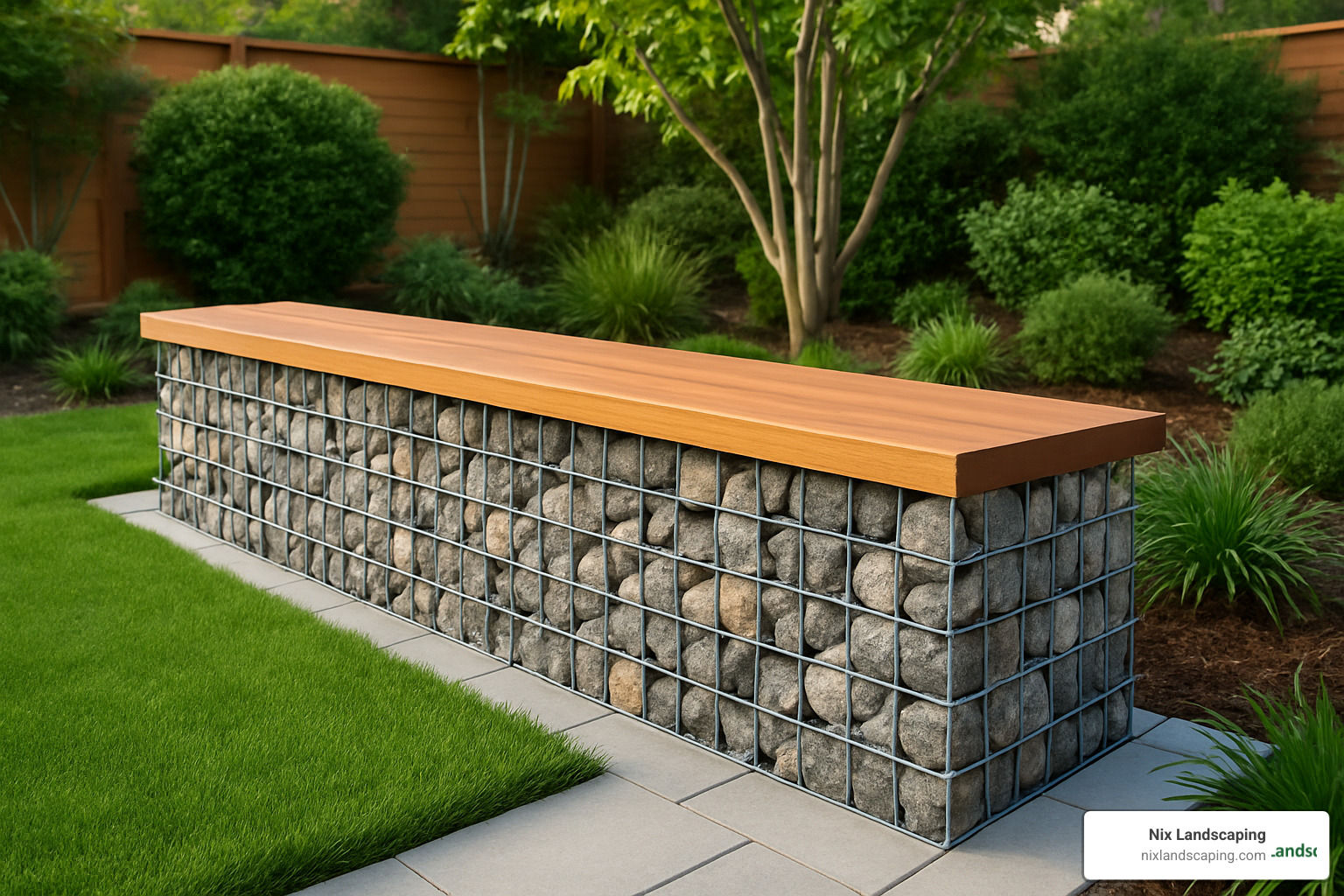
While their industrial look isn’t for everyone, they’ve become increasingly popular for contemporary landscapes. They’re relatively easy to assemble (though filling them properly takes some technique), and they make excellent seat walls when topped with wood. The open structure makes them perfect for areas with water management challenges.
Eco-Options
For environmentally conscious homeowners, consider reclaimed materials like salvaged brick, concrete pieces, or composite products made from recycled materials. These options reduce landfill waste while often creating one-of-a-kind designs with character and history.
Availability varies, so planning ahead is essential, but the unique appearance and sustainability story make it worth the effort. I’ve helped clients create stunning walls using brick from demolished historic buildings in Indianapolis—a beautiful way to preserve a piece of local history.
Pros & Cons at a Glance
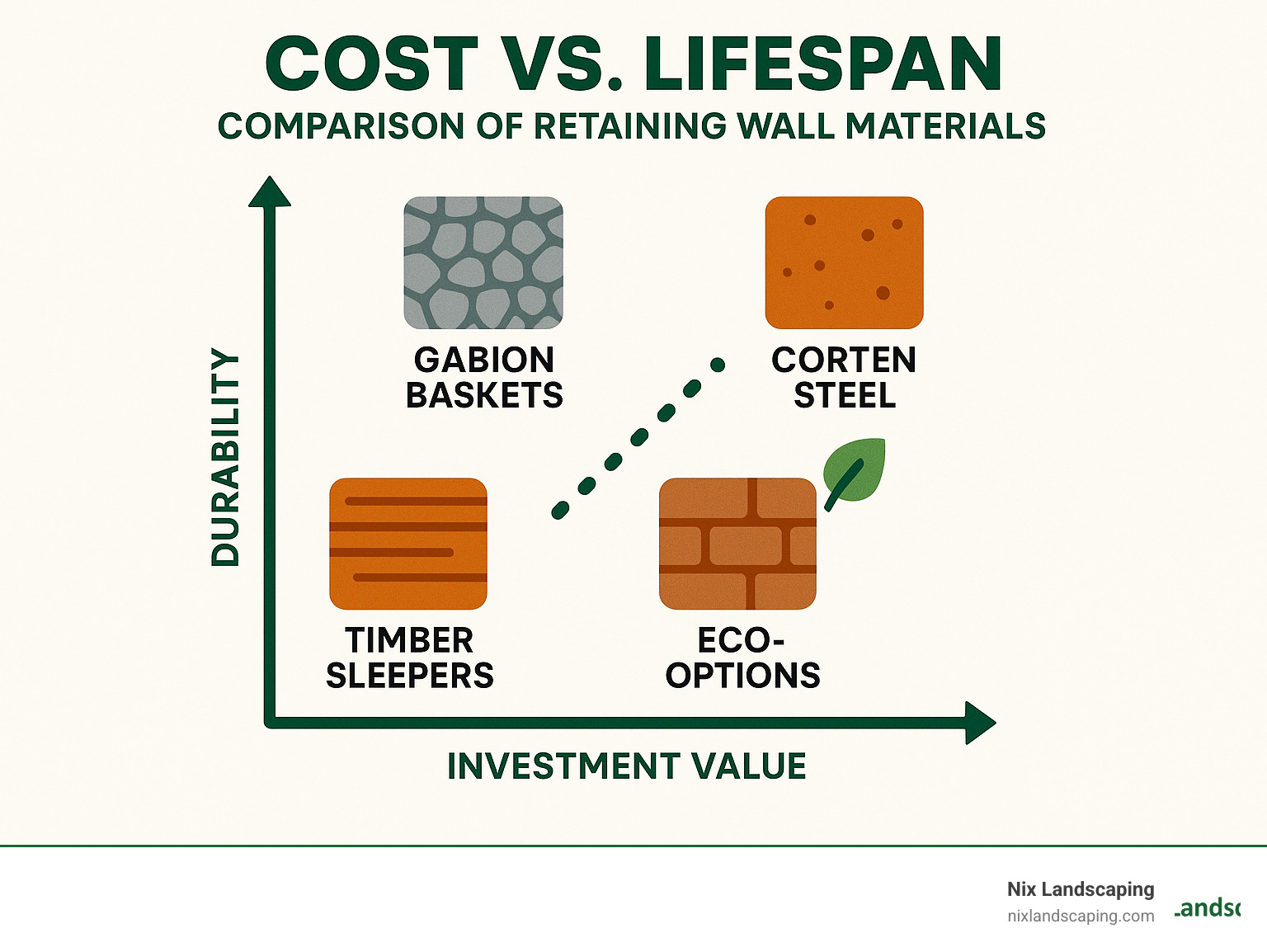
When helping clients choose materials, I always consider these key factors:
Durability matters tremendously in our Indiana climate. Stone and concrete structures often last 50+ years with proper installation, while timber needs replacement after about two decades. Those seasonal temperature swings we experience in Fishers can be tough on materials!
Aesthetics should complement your home’s character. I’ve found that modern homes pair beautifully with clean concrete lines or corten steel, while traditional homes often look best with natural stone or textured blocks. Your wall should feel like it belongs in your landscape.
Installation difficulty varies widely—segmental blocks and timber are more DIY-friendly (perfect for weekend warriors), while natural stone masonry requires specialized skills. Be realistic about your comfort level with tools and heavy materials.
Climate resistance is non-negotiable in our area. Proper drainage becomes even more critical with our freeze-thaw cycles, as water expansion can damage even the sturdiest walls. Some concrete products may be more prone to cracking without proper installation.
Pest resistance might not be your first concern, but timber walls can attract insects unless properly treated. Stone and concrete are naturally pest-proof, giving you one less thing to worry about.
Sustainability considerations include transportation distance (local stone reduces carbon footprint) and material lifecycle. Reclaimed materials offer environmental benefits while often reducing costs.
For more budget-friendly options that still look fantastic, check out our guide to affordable retaining wall options.
Drainage & Footing Essentials
I can’t stress this enough: proper drainage makes or breaks a retaining wall. In fact, water pressure is the number one cause of wall failures I’ve seen in my years of landscaping in Indiana.
Essential Drainage Components:
Behind every successful wall is a good drainage system. This typically includes a perforated pipe at the base to collect water, surrounded by clean crushed stone (we typically use 3/4″ gravel) that creates channels for water movement. A layer of geotextile fabric prevents soil from clogging these channels while allowing water through. Finally, weep holes or drainage outlets give that water a path to escape, preventing pressure buildup behind the wall.
Foundation Fundamentals:
A solid foundation prevents settling and failure. Most retaining wall ideas for backyard projects require a slight backward lean (what we call “batter”)—typically 1″ back for every 12″ of height—to counteract soil pressure.
Here in Fishers, we dig footings below the frost line (usually 30-36″ deep) to prevent frost heave during winter. A properly compacted gravel base creates a stable foundation that also allows for drainage. For walls on slopes, we step the foundation to maintain proper depth throughout.
Code Considerations:
Before getting too excited about your wall project, check local regulations. In Fishers and most nearby communities, walls over 4 feet typically require a building permit and engineered plans. Even for smaller DIY projects, understanding local requirements saves headaches later.
For specific installation guidelines when using engineered systems, you can refer to resources like Keystone block guidelines, though we’re always happy to provide detailed specifications for any material you choose.
Retaining wall ideas for backyard? — 15 Design Concepts That Wow
Now for the fun part! Let’s explore 15 innovative retaining wall ideas for backyard changes that blend practical function with eye-catching design.
Stone gardens with gentle curves add a flowing, natural element to your landscape that straight walls simply can’t match. The organic lines soften your outdoor space and create visual interest that draws the eye through your garden. Natural stone in various sizes brings timeless appeal that only gets better as your plantings mature around it.
Instead of building one imposing wall, consider creating multi-tier terraces with shorter walls and planting areas between them. Not only does this approach distribute soil pressure more effectively (making your walls last longer), but it also creates distinct garden “rooms” that add dimension and character to your property.
Built-in seat walls serve double-duty in your landscape. By designing retaining walls at seating height (typically 18-24″) with a comfortable flat cap, you’ll add casual seating throughout your yard without the need for additional furniture. This multi-functional approach maximizes your investment and creates natural gathering spaces.
Nothing creates a more inviting outdoor space than a fire pit surrounded by a semi-circular retaining wall. The wall not only provides built-in seating but also acts as a wind barrier, making your fire pit usable even on breezy Indiana evenings. It’s the perfect setup for s’mores with the kids or wine with friends under the stars.
Water and stone belong together, and integrating a waterfall or fountain into your retaining wall creates a sensory experience in your backyard. The sound of flowing water adds a peaceful dimension while masking unwanted neighborhood noise. Our clients often tell us this feature becomes their favorite aspect of their outdoor space.
For a clean, contemporary look, consider an infinity-edge lawn where a perfectly flat grass area meets a crisp retaining wall edge. This modern approach creates an architectural statement that works beautifully with updated home styles while still providing all the practical benefits of erosion control.
Even homes with minimal slopes can benefit from low retaining walls as driveway borders or garden bed definitions. These mini-walls (12-18″ high) prevent mulch and gravel from spilling onto walkways while adding architectural interest that flat garden beds simply can’t provide.
Sloped yards that seem impossible for pool installation become perfect pool sites with the right retaining walls. The walls create a level area for your pool while providing privacy and wind protection—changing your challenging slope into your property’s most valuable feature.
For the artistically inclined, a concrete retaining wall becomes a canvas for outdoor art. Whether you incorporate mosaic tiles, attach metal art pieces, or commission a painted mural, your functional wall transforms into a personal expression that makes your landscape uniquely yours.
Vertical planter integration softens the hardscape elements of your wall by incorporating built-in planting pockets or attached hanging planters. This living wall effect creates a beautiful transition between hardscape and landscape while maximizing your planting space.
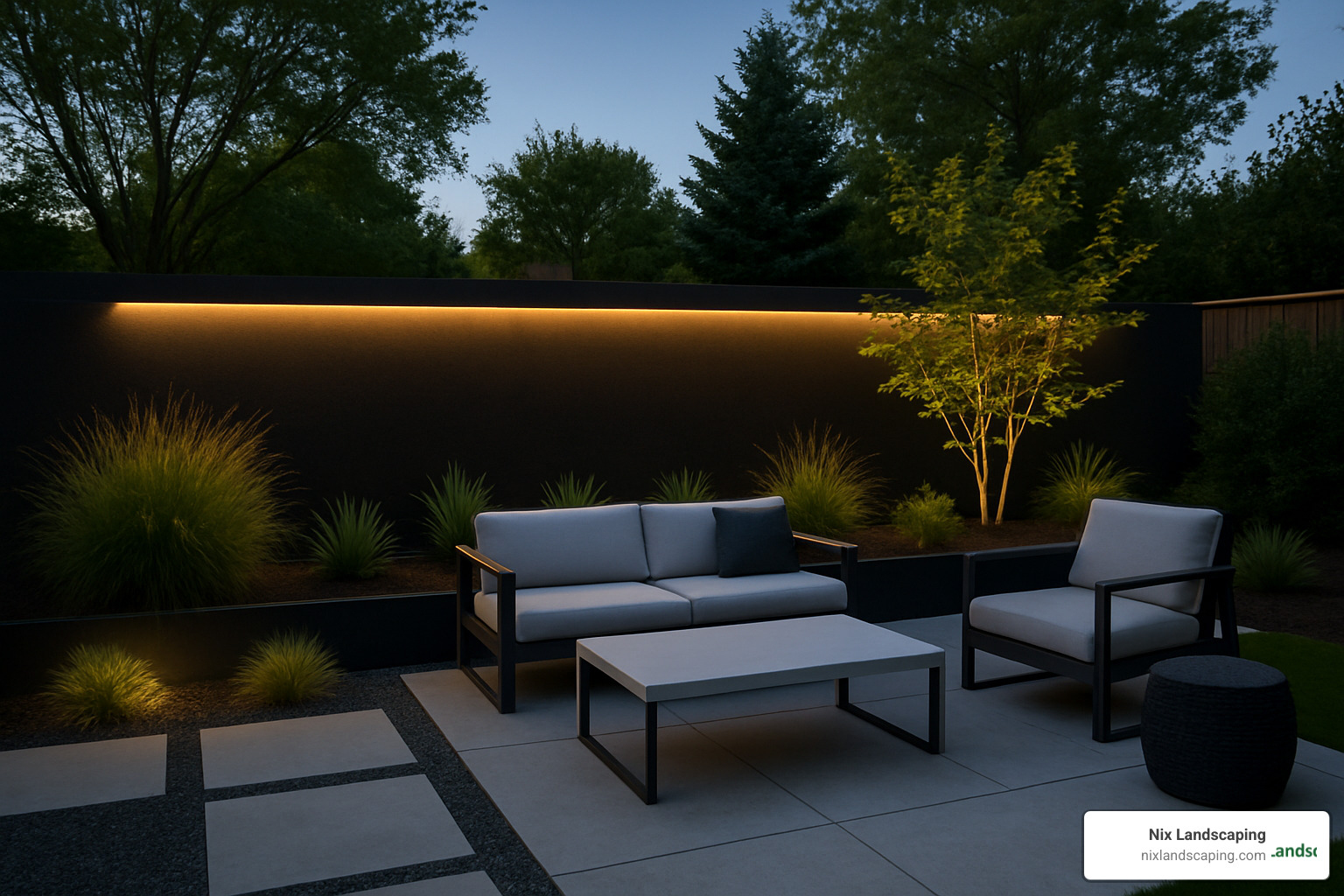
Don’t forget about nighttime appeal! Incorporating recessed lighting, cap lights, or uplighting dramatically transforms your wall after dark. This extends the usability of your outdoor space and creates beautiful evening ambiance visible from inside your home as well.
For contemporary homes, sleek poured concrete walls with black or dark gray pigment make a bold architectural statement. This modern approach pairs beautifully with minimal plantings and creates a sophisticated backdrop for outdoor living spaces.
Those seeking a more rustic feel might prefer horizontally stacked timber walls that terrace a steep slope into usable garden spaces. This cabin-in-the-woods aesthetic works particularly well for wooded lots or natural garden styles.
For an industrial-modern look that’s gaining popularity in the Fishers area, consider gabion bench walls—wire baskets filled with stone and topped with wood planks. These unique seating walls offer excellent drainage and create a distinctive design statement in your landscape.
Spotlight: Multi-Level Magic
Multi-level retaining walls are one of our specialties at Nix Landscaping, and they offer numerous benefits beyond their visual appeal.
By creating terraced planting beds at different heights, you establish distinct zones for various types of vegetation. This design approach allows for creative plant combinations while making maintenance more manageable—you can easily access each level without awkward reaching or balancing on slopes.
Integrating stone, timber, or concrete steps between wall sections creates beautiful, functional access to all levels of your yard. These pathways transform once-unusable slopes into inviting journeys through your landscape, encouraging exploration and enjoyment of previously neglected areas.
Planter pockets designed within your wall system create perfect spots for featured plants or small ornamental trees. These focal points draw the eye and create visual rhythm as you move through your landscape. They’re also practical for plants that need excellent drainage, like many perennials and herbs.
Multiple shorter walls distribute soil pressure more effectively than a single tall wall, significantly reducing the risk of failure. This improved engineering approach provides better long-term erosion control while creating more planting opportunities throughout your slope.
Families with children particularly appreciate how terraced areas naturally create play zones at different levels. Lower walls serve as impromptu balance beams or informal seating for kids, turning your landscape into an trip playground that encourages outdoor time.
For inspiration on combining retaining walls with water features in a multi-level design, visit our guide to retaining walls & water features.
Spotlight: Living Walls & Greenery
The right plant selections transform a simple retaining wall into a living work of art that changes with the seasons. Here are some of our favorite planting strategies:
Cascading ivy and vines like Boston ivy or Virginia creeper soften the top edge of a wall as they spill over and eventually create a living curtain on the wall face. These plants require minimal maintenance while providing maximum visual impact as they mature.
Draping perennials such as creeping phlox, sedum, or aubrieta create colorful cascades of flowers that soften hard edges and add seasonal interest. The contrast between solid stone or concrete and delicate blooms creates a beautiful juxtaposition in your landscape.
For walls near outdoor kitchens, consider creating planting pockets for herbs. The height makes harvesting easy (no bending!), and many herbs thrive in the well-drained conditions a wall provides. Imagine snipping fresh basil or thyme just steps from your grill.
Here in the Midwest, native prairie plants planted along the top of a wall create a beautiful transition between hardscape and landscape. These indigenous species support local pollinators while requiring less water and maintenance than exotic alternatives—a win-win for your landscape and the environment.
For sunny, dry locations, drought-tolerant succulents require minimal care while adding interesting textures and forms to your wall design. Their architectural shapes provide year-round interest, even during Indiana winters.
For a comprehensive guide to selecting the perfect plants for your retaining wall, visit our resource on best plants for retaining walls.
Spotlight: Budget & DIY Winners
Not every retaining wall ideas for backyard project requires a significant investment. Here are some budget-friendly and DIY-appropriate options that still deliver impressive results:
While not as long-lasting as some materials, pressure-treated railroad ties offer an affordable, rustic option that’s relatively easy to install. A 30′ × 4′ wall typically costs between $1,706 and $2,651—significantly less than stone alternatives while still providing years of service.
The innovative concrete bag technique involves stacking bags of dry concrete mix, wetting them in place, and allowing them to harden. Once cured, the bags can be stuccoed or faced with stone for a more finished look. This method reduces the need for extensive formwork while creating a solid structure.
Budget-friendly landscape blocks are available for just over $1 each at many home improvement stores. These interlocking units are designed specifically for DIY installation and don’t require mortar, making them perfect for weekend warriors with limited masonry experience.
Pre-made wire gabion baskets can be filled with local stone, recycled concrete, or even decorative glass for an eco-friendly wall that provides excellent drainage. These kits are delivered ready to assemble, making them accessible to DIYers with basic skills.
Salvaged bricks from demolition projects can be repurposed into beautiful, character-rich walls at a fraction of the cost of new materials. The patina of aged brick brings instant character to your landscape while keeping these materials out of landfills.
With basic carpentry skills, you can build a timber retaining wall over a weekend. One of our clients reported spending just $1,300 on materials compared to a $3,500 contractor quote—putting that savings toward beautiful plantings instead.
For detailed instructions on building your own wooden retaining wall, you might find this Outdoor Wooden Retaining Wall guide helpful, though we’re always available to provide guidance specific to your project and our local soil conditions here in Fishers.
Design & Planting Hacks: Turn Walls into Living Art
The most impressive retaining walls go beyond basic functionality to become artistic elements in your landscape. I’ve seen countless homeowners transform ordinary walls into stunning focal points with just a few creative touches. Let’s explore some design hacks that will lift your wall from merely functional to absolutely breathtaking.
Color Contrast Strategies
Nature’s palette offers endless possibilities for making your wall pop. Consider how silver-leaved plants like artemisia create dramatic contrast against dark stone, almost glowing in the evening light. Purple-leaved plants become visual anchors against light-colored concrete, drawing the eye and creating depth. At Nix Landscaping, we often pair golden grasses with bluestone for a stunning complementary effect that changes with the seasons.
Integrated LED Lighting
There’s something magical about a well-lit landscape after dark. Recessed lights tucked into the wall face, subtle strip lighting under caps, or strategic uplighting can completely transform your wall’s appearance when the sun goes down. Many of our clients in Fishers are now choosing color-changing LED options that allow them to customize their outdoor ambiance for holidays or special gatherings – imagine a subtle red and green glow for December festivities!
Built-in Bench Nooks
Why not make your wall work harder for you? By designing recessed seating areas within longer walls, you’ll create natural conversation spots that invite people to pause and connect. These intimate spaces often become favorite gathering spots, especially when positioned to capture sunset views or morning light.
Artistic Niches
Small recessed areas designed into your wall create perfect display spaces for outdoor sculpture, pottery, or seasonal decorations. These focal points draw the eye and add personality to your hardscape. One of our Fishers clients rotates handmade pottery pieces in their wall niches to reflect the changing seasons – a simple touch that makes their landscape feel curated and thoughtful.
Custom Murals and Artwork
Concrete walls provide an excellent canvas for creative expression. Weather-resistant mosaics, tile work, or painted murals can reflect your personal style and create a truly one-of-a-kind feature in your landscape. Even simple geometric patterns can transform a plain wall into something remarkable.
Smart Irrigation Integration
Beauty shouldn’t require endless maintenance. By incorporating drip irrigation lines during construction, we ensure wall plantings thrive with minimal attention. These hidden systems deliver water precisely where it’s needed, reducing waste while keeping your living wall lush and vibrant through Indiana’s hot summers.
Vertical Garden Frames
Custom metal frames attached to your wall can support climbing plants or hanging container gardens, creating a lush, green mix that changes through the seasons. These living installations soften hard edges while adding texture, movement, and habitat for beneficial insects.
Integrate With Other Backyard Features
The most successful landscape designs use retaining walls to connect and improve other outdoor elements, creating a cohesive overall experience:
Patio Edge Definition
A low retaining wall creates a clean, architectural edge for a patio while providing casual overflow seating for those summer gatherings when extra chairs are never enough. These transitions between hardscape and landscape become natural gathering spots.
Fire Pit Surround
There’s something primal about gathering around fire. A semi-circular retaining wall around a fire pit not only creates a windbreak but forms a natural seating area that encourages intimate conversations long into the evening. Several of our Fishers clients have told us these simple spaces have become their families’ favorite spots for making memories.
Outdoor Kitchen Backdrop
A taller retaining wall can serve as a functional backdrop for an outdoor kitchen, providing both structure and protection from the elements. The vertical surface also offers opportunities for mounting lights, hooks for utensils, or even a small herb garden within arm’s reach of your cooking area.
Water Feature Integration
The sound of water brings any outdoor space to life. Design a wall with a built-in water sheeting feature for a dramatic focal point that masks neighborhood noise while creating a peaceful atmosphere. The contrast of flowing water against solid stone creates a sensory experience that static landscapes simply can’t match.
Stepped Pathway Transitions
Retaining wall ideas for backyard? often include using walls to create neat transitions between different levels of your landscape. Incorporating steps and landings ensures safe navigation while creating moments of findy as visitors move through your yard.
Deck-to-Grade Transitions
Those awkward spaces where liftd decks meet the ground can become design opportunities. Retaining walls neatly resolve these transitions, creating planting pockets in what might otherwise be unused spaces. The result is a more finished look that blends built elements with the natural landscape.
For more inspiration on combining retaining walls with other landscape features, check out our guide to simple backyard landscaping ideas.
Retaining wall ideas for backyard? — Climate-Smart Planting
Living in central Indiana means working with some specific climate challenges. When selecting plants for your retaining wall, these strategies will help ensure success:
Hardiness Zone Awareness
Fishers sits in USDA Zone 6a, experiencing winter lows between -10°F and -5°F. I always remind my clients to choose plants rated for this zone or colder to ensure winter survival. Plants like coral bells, creeping phlox, and certain sedums thrive in our climate while adding color and texture to wall plantings.
Drought Tolerance Considerations
Wall plantings, especially at the top, often experience drier conditions than the rest of your landscape due to increased drainage and exposure. Select plants that can handle occasional dry spells once established. Native options like prairie dropseed grass and butterfly weed not only survive these conditions but contribute to local ecology.
Freeze-Thaw Cycle Survivors
Our Midwest climate subjects plants to repeated freezing and thawing throughout winter—a stress test that many plants fail. Choose species with flexible stems and strong root systems that can withstand these fluctuations. Russian sage, coneflowers, and ornamental grasses have proven themselves resilient performers in our retaining wall projects.
Root Barrier Protection
Some plants get a little too enthusiastic about spreading. For walls near valuable plantings or structures, consider installing root barriers to prevent aggressive roots from compromising the wall’s integrity. This simple preventive measure can add years to your wall’s lifespan.
Mulch Strategies
A 2-3″ layer of mulch helps retain moisture and moderate soil temperature in wall plantings, but keep it pulled back slightly from the wall itself to prevent moisture retention against the structure. We typically recommend hardwood mulch for its natural appearance and slow decomposition rate in our Indiana climate.
DIY vs. Pro: Budgets, Permits & Longevity
Let’s talk dollars and sense when it comes to your retaining wall project. Whether you’re leaning toward a weekend DIY trip or thinking about calling in the pros (that’s us!), understanding the costs, requirements, and long-term considerations will help you make the best choice for your backyard change.
The national average cost for retaining walls runs about $114-$173 per linear foot, but that’s just the starting point. Your actual investment will vary widely based on your material choices:
Budget-friendly options like timber and basic concrete blocks typically cost $15-40 per square face foot. These materials won’t break the bank and can still create beautiful results.
Mid-range choices such as decorative blocks and trendy gabion baskets fall in the $20-75 per square face foot range. These offer a nice balance of aesthetics and affordability.
Premium materials like natural stone and custom concrete work start around $40 and can exceed $150 per square face foot. Yes, they’re an investment, but they also create jaw-dropping results that last for decades.
When you hire professionals like our team at Nix Landscaping, about half to 60% of your project cost goes toward labor. That includes everything from initial excavation and proper base preparation to installing drainage systems (absolutely critical!), constructing the wall, backfilling correctly, and leaving your yard looking pristine when we’re done.
When to DIY, When to Hire
I’ve seen many successful DIY walls over the years, but I’ve also helped fix quite a few that didn’t quite work out. Here’s my honest take on when to tackle it yourself:
DIY might be right for you when your wall will stay under 3 feet tall, you’re working with stable soil, and you’re comfortable using materials like interlocking blocks or timber. Having access to proper equipment (don’t forget that plate compactor!) and enough time to research proper techniques are also must-haves for DIY success.
Professional installation makes sense when your wall exceeds 3 feet, you’re dealing with challenging soil or drainage issues, or you want to use materials that require specialized skills like natural stone. If your wall will support structures or heavy loads, you’ll definitely want professional expertise.
Here’s a quick soil test that might help you decide: Dig a small hole where your wall will go and observe how the soil behaves. If you’re seeing a lot of clay or poor drainage, that’s a red flag that you’ll need more complex drainage solutions – something best handled by professionals.
In Fishers, walls under 3 feet typically don’t require permits, but taller walls almost always do. Walls over 4 feet will need engineered plans in most cases. Our team can handle all the permit paperwork and engineering requirements, saving you significant headaches.
Also worth considering: You may be liable for any damage caused by a failing wall, including impacts to neighboring properties. This risk increases with wall height and proximity to other structures.
Extend Your Wall’s Life
A well-built retaining wall can last for decades with proper care. Here’s how to protect your investment:
Make annual inspections part of your spring routine. Look for any bulges, leaning sections, cracked materials, or drainage issues. Check that water is flowing properly through drainage outlets after heavy rains.
Address small problems before they grow. For concrete or block walls, use appropriate masonry repair products to fix minor cracks. With timber walls, replace damaged sections promptly before rot can spread.
Keep an eye on your capstones – these protective top pieces often shift first. Re-level and secure them with proper adhesive as needed to prevent water from getting inside your wall structure.
Manage your plantings thoughtfully. While plants can beautifully improve your wall, overgrown roots can cause damage. Trim aggressive plants regularly and remove any volunteer trees that sprout near the base of your wall.
Consider protective treatments appropriate for your wall type. Concrete and masonry walls benefit from water-repellent sealers every 3-5 years, while timber walls need preservative treatments to prevent rot and insect damage.
For detailed information about typical costs for different wall types and sizes, you might find this resource on how much does a wall cost? helpful. Of course, we’re always happy to provide a free, personalized quote for your specific retaining wall ideas for backyard change.
At Nix Landscaping, we offer maintenance plans to help keep your wall looking beautiful and functioning properly year after year. We’ve found that a little preventative care goes a long way toward maximizing the lifespan of your hardscape investment.
Frequently Asked Questions about Backyard Retaining Walls
What height requires a permit?
Here in Fishers, Indiana, you’ll typically need a building permit for retaining walls over 3 feet tall. But don’t just take that as gospel! The exact requirements can shift depending on several factors:
Your wall’s location relative to property lines makes a big difference – walls near boundaries often face stricter scrutiny. If your wall will support a structure or driveway, that changes things too. Walls that might affect how water flows through your neighborhood get extra attention, and local zoning rules occasionally change.
We always recommend a quick check with the Fishers Building Department before you break ground. Regulations evolve, and it’s much easier to get permissions upfront than deal with compliance issues later! Our team at Nix Landscaping can help walk you through permit applications and gather any documentation you need – it’s all part of making your retaining wall ideas for backyard projects hassle-free.
How do I prevent water pressure behind the wall?
Water pressure is the silent killer of retaining walls! Hydrostatic pressure builds up when water gets trapped behind your wall, and it’s the number one reason walls fail. The good news? This is completely preventable with proper planning.
The key is creating an escape route for water. Start with a proper drainage system – we install perforated pipe wrapped in landscape fabric at the base of your wall. This pipe acts like a highway for water to travel away from your wall’s foundation. Behind the wall itself, we use clean 3/4″ crushed stone as backfill. This creates plenty of space for water to flow downward instead of pushing against your wall.
For the water that does reach the wall, we incorporate weep holes or drainage gaps in the face. These are like little doorways that let water exit safely. We also carefully grade the soil above your wall so surface water naturally flows away rather than pooling behind it.
For properties with significant water issues, we might recommend a drainage swale above the wall to capture and redirect water before it becomes a problem. And we always use geotextile fabric between the drainage stone and backfill soil – it’s like a coffee filter that lets water pass while keeping soil from clogging your drainage system.
Don’t forget about your home’s water management system! Ensure downspouts and gutters direct water well away from your retaining wall. For taller walls or properties with known drainage challenges, we recommend a custom-engineered drainage plan custom to your specific conditions.
What’s the cheapest yet durable material option?
You don’t have to break the bank for a retaining wall that lasts! For budget-conscious homeowners who still want durability, I typically recommend a few proven options:
Concrete Block Systems offer exceptional value. Entry-level blocks start at just over $1 each, and their interlocking design makes them relatively DIY-friendly if you’re looking to save on labor costs. With proper installation, you can expect 25+ years of service. The consistent sizing and wide availability make planning simple too.
Treated Timber brings warmth and natural beauty at a reasonable price point. Pressure-treated pine stands up well to our Indiana weather, and the straightforward construction methods make it accessible for moderately skilled DIYers. While not as long-lasting as stone or concrete (expect 15-20 years), timber walls create a charming, rustic look that blends beautifully with natural landscapes.
Gabion Baskets offer a creative budget option. These wire cages can be filled with recycled concrete chunks or local stone – sometimes material you already have on your property! Their simple assembly requires minimal specialized skills, and their excellent drainage properties naturally reduce the risk of failure. When properly constructed, expect a 20+ year lifespan with minimal maintenance.
To stretch your dollar even further, consider these insider tips: Build multiple shorter walls instead of one tall one (shorter walls need less structural reinforcement). Use premium materials only for the visible sections while using economical options for hidden areas. If you’re hiring professionals, prepare the site yourself to reduce labor costs. And if you’re planning other hardscaping projects, bundle them together – we often offer better rates for comprehensive landscape makeovers.
The cheapest initial option isn’t always the most economical long-term solution. Factor in maintenance requirements and potential replacement costs when making your decision. At Nix Landscaping, we’re happy to walk through the options that make the most sense for your specific property and budget.
Conclusion
Let’s face it – that sloped backyard doesn’t have to remain your property’s problem child. With the right retaining wall ideas for backyard change, you can turn challenging terrain into the showpiece of your outdoor space.
Throughout this guide, we’ve explored how modern retaining walls do so much more than just hold back soil. They’ve evolved into multifunctional landscape features that solve practical problems while adding serious style points to your property.
Think about what the right retaining wall could do for your yard – create level spaces for that garden you’ve always wanted, provide built-in seating for summer gatherings, showcase stunning plantings, or simply stop that frustrating erosion that makes a mess after every heavy rain. The possibilities are truly endless.
I’ve seen how a thoughtfully designed retaining wall becomes the backbone of a landscape change. One of our Fishers clients turned a practically unusable sloped backyard into three gorgeous terraced garden rooms, complete with a fire pit area and herb garden that their family enjoys year-round. What was once their property’s biggest challenge became its most distinctive feature.
At Nix Landscaping, we approach each retaining wall project as a unique opportunity to blend engineering with artistry. We understand the specific soil conditions, drainage patterns, and design preferences that make Indiana landscapes special. Our team takes pride in creating walls that stand the test of time – both structurally and aesthetically.
Whether you’re drawn to the timeless appeal of natural stone, the clean lines of modern concrete, or the warm character of timber, we’ll help you select materials and designs that complement your home and lifestyle. From initial concept through final installation, we handle every detail with care and craftsmanship.
Ready to reimagine your sloped yard? Let’s talk about how the perfect retaining wall could transform your outdoor living experience. Your backyard’s potential is just waiting to be open uped!
Learn more about our retaining wall services or reach out today for a friendly, no-pressure consultation. We’d love to help you explore the perfect retaining wall ideas for backyard spaces that work beautifully for your unique property.

