
Why Finding the Right Walkway Paver Contractors Matters
Walkway paver contractors are specialized hardscape professionals who design, install, and maintain paved pathways using interlocking concrete pavers, natural stone, or brick materials. Here’s what you need to know when searching for the right contractor:
What to Look For:
– Licensing & Insurance – Verify general liability ($1M minimum) and workers’ compensation
– ICPI Certification – Industry-recognized training in paver installation techniques
– Local References – Recent projects you can view and customer testimonials
– Written Estimates – Detailed material, labor, and timeline breakdowns
– Warranties – Minimum 2-year workmanship guarantee
Expected Costs & Timeline:
– Installation cost: $10-$30 per square foot
– Professional timeline: 1-2 days for most walkways
– Return on investment: 65-70% of project cost added to home value
The difference between a quality installation and a poor one often comes down to proper base preparation, drainage planning, and attention to detail. Professional installations typically last 25-50 years with concrete pavers, while natural stone can exceed 100 years.
As Kyle Nix, owner of Nix Landscaping in Fishers, I’ve worked with homeowners for years to transform their outdoor spaces through quality hardscape installations.

Walkway paver contractors terminology:
– paver walkway installation cost
– patio installation services
– bluestone walkway installation
What Walkway Paver Contractors Actually Do
Walkway paver contractors are the architects of your outdoor pathways, creating foundations that support your family’s daily walks for decades.
The process starts with thorough site assessment, checking soil conditions, drainage issues, and existing landscaping integration. This foundation work determines everything that follows.
Next comes excavation and base preparation – the real heavy lifting. Most homeowners are surprised that beautiful walkways start 6 to 10 inches underground. Contractors dig out the area while maintaining that crucial ¼-inch drop per foot away from your house for proper drainage.
Base prep is where experience shows. Professional contractors lay geotextile fabric, then create rock-solid foundations using compacted crushed stone. This invisible layer prevents your walkway from becoming wavy after freeze-thaw cycles.
When laying pavers, precision matters. Contractors use specialized screeding techniques to create perfectly level sand beds, then place each paver with careful attention to pattern alignment and joint spacing.
Final steps include installing edge restraints, compaction, applying polymeric sand between joints, and thorough cleanup. When done right, you’ll have a walkway that won’t shift, sink, or create trip hazards.
Core Services Explained
Design consultations help you visualize possibilities – maybe curved paths work better than straight lines, or incorporating landing areas adds function and style.
Material sourcing leverages contractor relationships with suppliers, often securing better pricing and ensuring materials perform well in your local climate.
Permitting handling ensures your walkway meets local building requirements without becoming a code violation.
Equipment handling involves professional-grade compactors and excavators that aren’t available at corner rental shops.
Project Scope
Front entry paths need to make great first impressions while handling daily foot traffic. Garden trails require gentler approaches, weaving around plants and working with irrigation systems. Driveway connectors handle both foot traffic and occasional vehicles, requiring deeper base preparation. Accessibility routes balance proper slopes and ADA compliance with attractive design.
Benefits & Costs: Hiring Pros vs DIY
When you first consider installing a paver walkway, DIY looks tempting. But after helping hundreds of homeowners in Fishers, the numbers tell a different story.
Professional walkway paver contractors typically charge $10-$30 per square foot for installation. Your standard 4×20-foot front walkway (80 square feet) runs $800 to $2,400, depending on materials.
That investment delivers solid 65-70% return on investment when you sell. A $2,000 walkway adds $1,300-$1,400 to your home’s value immediately.
The time factor is eye-opening. My crews complete most walkway installations in 1-2 days, while DIY projects typically consume 40-50 hours of weekends. Factor in your time at $20 per hour, and professional installation suddenly looks reasonable.
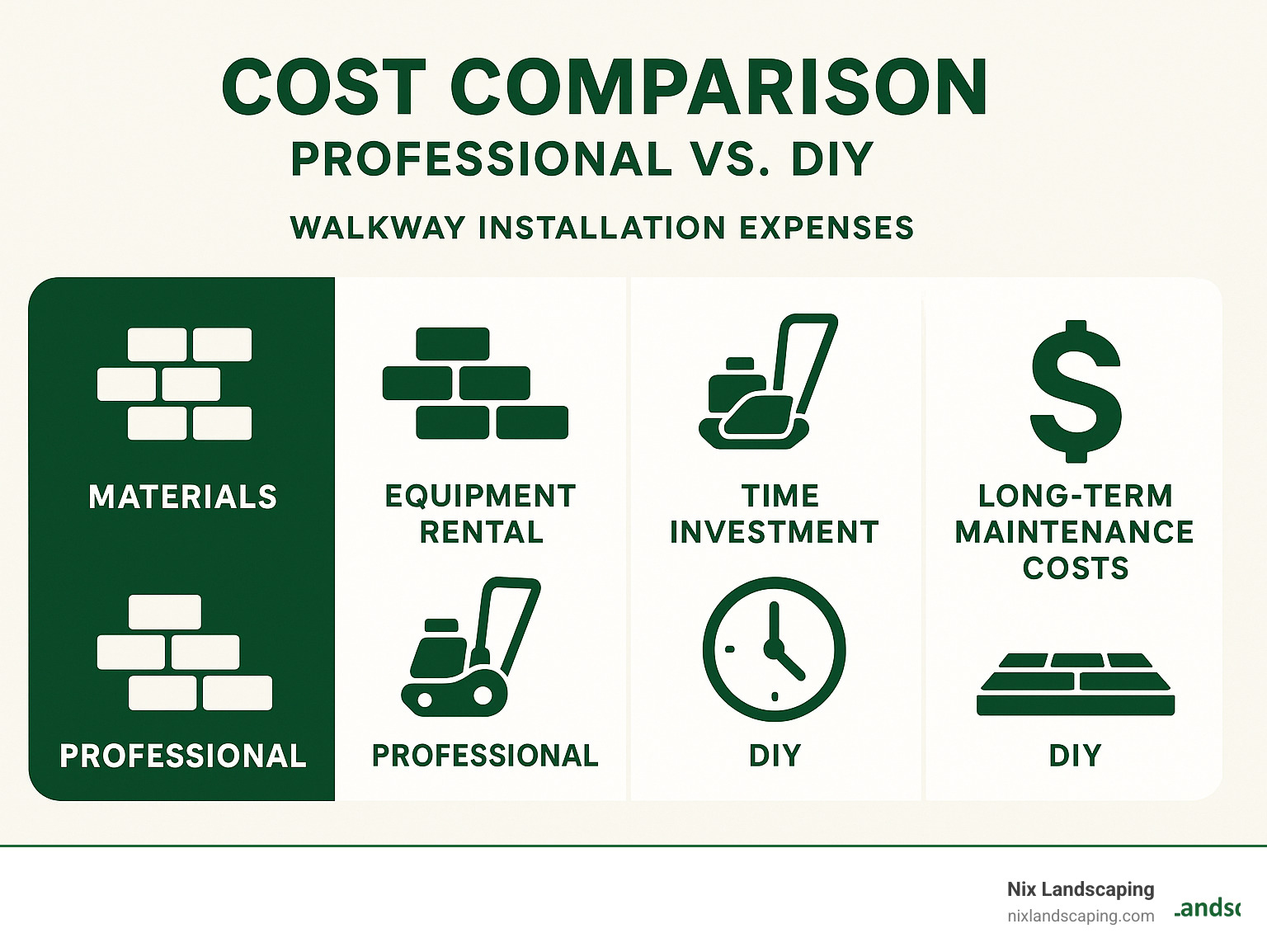
Cost Factors
Material selection drives pricing – basic concrete pavers start around $3-5 per square foot, premium natural stone hits $15-20, with clay brick at $6-12.
Pattern complexity affects labor costs. Simple running bond installs quickly, while herringbone or basket weave requires more time and precision.
Site conditions can impact budgets. Poor drainage, steep slopes, or limited access mean additional work. Rocky soil or heavy clay might need extra base prep.
For detailed cost breakdowns, check our Paver Walkway Installation Cost guide.
Professional Advantages
Warranty coverage provides minimum 2-year workmanship guarantees that DIY projects can’t match. Many manufacturers require professional installation to maintain material warranties.
Precision installation extends walkway lifespan dramatically. Proper excavation, base preparation, and edge restraints prevent the settling and cracking that plague amateur installations.
Materials & Design Choices for Your Walkway

Choosing materials can feel overwhelming, but experienced walkway paver contractors know how to match options to your home’s style, budget, and Indiana climate.
Concrete pavers offer incredible variety in colors, textures, and shapes while staying budget-friendly. Modern versions look surprisingly similar to natural stone but cost much less, serving families well for 25-50 years.
Clay brick pavers bring timeless appeal that handles freeze-thaw cycles beautifully, developing lovely patina over time. They complement both historic and modern homes perfectly.
Natural stone options like flagstone and bluestone offer best beauty and character. Each piece is unique, creating walkways with personality that last generations.
Permeable paver systems handle rainwater naturally, reduce puddles, and help garden plants thrive. Some cities offer tax breaks for eco-friendly options.
For detailed guidance, visit our Walkway Pavers Installation page.
Choosing Materials
Durability matters most in Indiana weather. Concrete pavers handle temperature swings well, natural stone weathers beautifully, and clay brick improves with age.
Style harmony with your architecture makes the difference between walkways that belong and afterthoughts. Traditional homes work well with brick or stone, while contemporary designs shine with clean-lined concrete pavers.
Popular Patterns
Running bond creates classic brick-like appearance with staggered joints that add strength. Herringbone patterns offer maximum interlocking strength and eye-catching visual movement. Basket weave combines perpendicular pavers for texture and traditional appeal.
Eco-Friendly Options
Permeable pavers provide stormwater management benefits, letting rainwater soak through instead of running into storm drains. Installation requires special base preparation that experienced contractors understand. Many projects qualify for LEED points and municipal incentives.
Installation Process & Timeline
Watching walkway paver contractors work reveals a precise sequence that determines whether your walkway lasts decades or needs repairs within years.
The process starts with site markup using spray paint to mark utilities and exact boundaries. Excavation follows, digging 6-10 inches deep depending on soil type while maintaining ¼-inch per foot slope for drainage.
Geotextile fabric goes down before stone, preventing soil from mixing with base materials. Base preparation involves layering and compacting crushed stone in multiple lifts using professional equipment.
The screed bed creates a perfectly smooth, level sand layer exactly one inch thick. Paver laying requires systematic work, maintaining consistent joints while checking level constantly.
Edge restraint installation keeps your walkway from creeping apart over time. Compaction seats each paver firmly, followed by polymeric sand application that creates stable, weed-resistant surfaces.
For complete hardscaping information, visit our Hardscape services page.
Timeline Breakdown
Most projects follow a two-day schedule. Day one focuses on foundation work – excavation, soil removal, and base preparation. Day two brings visual progress with screed bed preparation, paver installation, edge restraints, compaction, and sand application.
Weather affects timing, particularly rain. Quality contractors reschedule rather than compromise long-term performance.
Quality Indicators
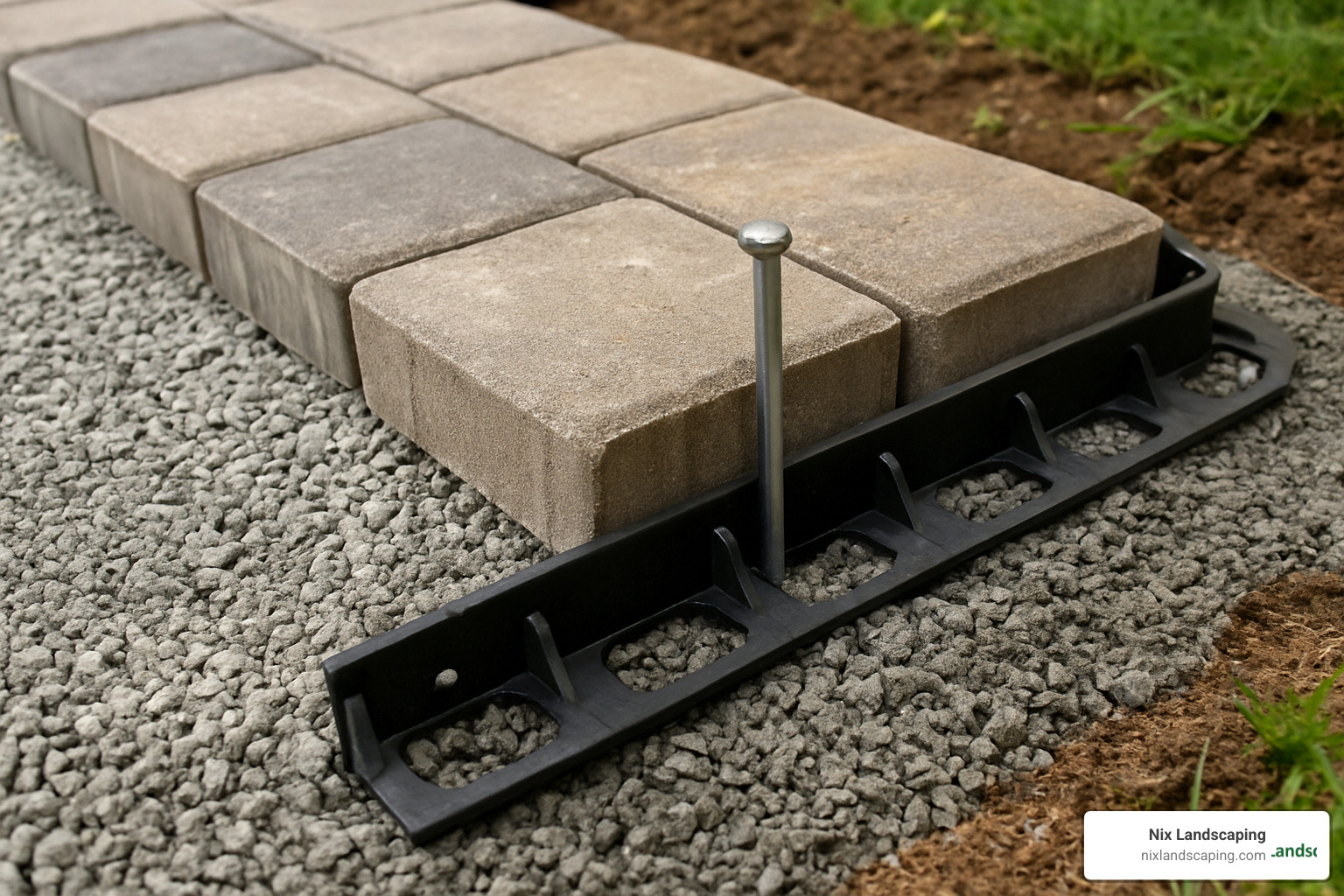
Level surfaces without rocking pavers indicate proper base work. Tight, consistent joints show attention to detail. Proper drainage becomes obvious during first rains – water should flow away without puddling. Clean edges with properly installed restraints create professional appearance.
How to Choose & Vet Top Walkway Paver Contractors
Finding the right walkway paver contractors requires treating selection like hiring any important professional. Too many homeowners get burned by contractors who disappear after payment.
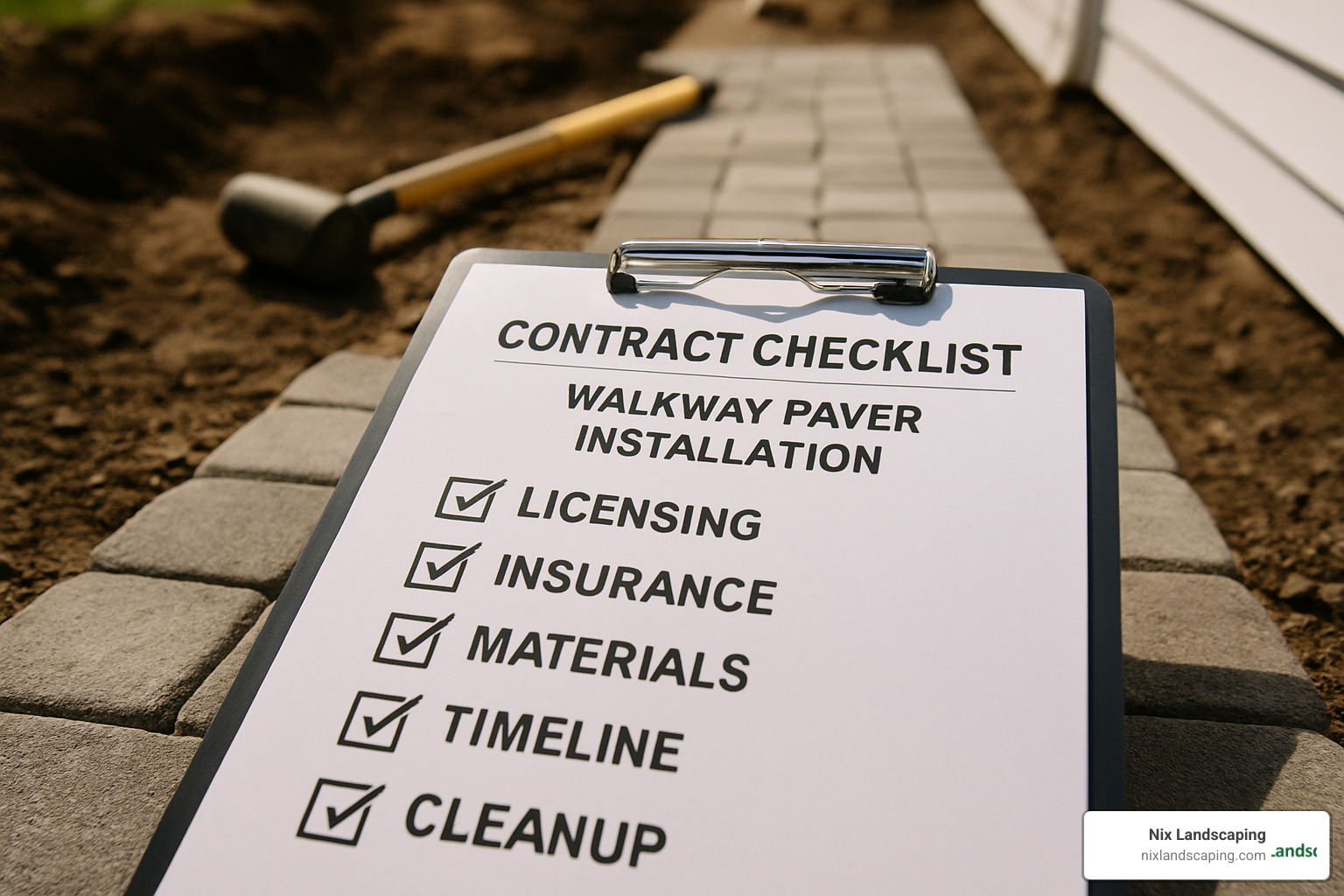
Licensing verification should be your starting point. Call your local building department to verify current licenses and complaint history.
Insurance documentation protects you from liability. Request certificates showing general liability coverage of at least $1 million and current workers’ compensation. Verify coverage directly with their carrier.
ICPI certification demonstrates specialized training in paver installation. While excellent contractors exist without this, it shows commitment to best practices. Verify through Scientific research on paver longevity.
Local references from recent projects provide valuable insights. Contact homeowners from projects completed within two years about work quality, communication, and reliability.
Written estimates separate professionals from amateurs. Quality contractors provide detailed specifications, labor breakdowns, timelines, and payment schedules.
Key Questions
Experience duration with your specific project type matters more than just years in business. Crew composition affects timeline and quality control. Base preparation specifications separate knowledgeable contractors from those who wing it.
Warranty terms vary dramatically. Quality professionals offer comprehensive minimum 2-year workmanship guarantees. Change order policies prevent cost overruns while allowing necessary modifications.
Red Flags
Large upfront deposits often indicate cash flow problems. Vague quotes without details make comparison impossible. Missing insurance proof exposes you to devastating liability.
High-pressure tactics suggest desperation. Quality contractors allow decision time and provide references without pressure. Door-to-door solicitation often indicates transient contractors who disappear when problems arise.
Thorough contractor vetting pays dividends through superior results and installations that actually last.
Maintenance, Lifespan & ROI
Professionally installed paver walkways require minimal maintenance while adding value year after year.
Weekly sweeping removes debris that might stain pavers or encourage weeds. Gentle rinsing with garden hoses keeps colors vibrant – pressure washing can damage joint sand.
Every few years, top-off joint sand as it settles naturally. Simply sweep new polymeric sand into joints and mist with water. Sealing remains optional but can improve color and stain protection every 3-5 years.
Winter care requires calcium-based de-icers instead of rock salt, and plastic shovels to prevent scratching.
Lifespan varies by material – concrete pavers last 25-50 years, while natural stone exceeds 100 years. Your ROI continues growing, with well-maintained walkways delivering 65-70% initial return and maintaining value appreciation.
For expanding outdoor spaces, consider our Patio Installation Services.
Seasonal Care
Spring brings annual inspection opportunities after freeze-thaw cycles. Summer focuses on prompt spill cleanup during peak outdoor season. Fall preparation includes joint inspection before cold weather. Winter protection uses proper tools and de-icing products.
Repair & Maintenance
Individual paver replacement showcases major advantages over solid concrete – replace single damaged pieces without affecting surrounding areas. Professional assessment helps evaluate structural integrity and recommend cost-effective solutions.
Frequently Asked Questions about Walkway Paver Projects
How much does a paver walkway cost per square foot?
Walkway paver contractors typically charge $10-$30 per square foot for complete installation. Concrete pavers offer excellent value at $10-$17 per square foot. Clay brick runs $12-$20, while natural stone costs $20-$32 per square foot.
Site conditions significantly affect pricing. Simple, accessible walkways with good drainage stay at lower ranges, while challenging conditions add complexity and cost. Pattern choice also matters – basic running bond installs efficiently, while intricate designs require more time.
How long does professional installation take?
Most walkway projects complete in 1-2 days. A typical 4×20-foot front walkway usually finishes in one day, assuming decent weather and no complications.
Weather affects timelines, particularly rain. We reschedule rather than compromise performance. Larger or complex walkways might extend to two days, especially with curves or multiple elevations.
Do I need to seal my walkway pavers?
Sealing is completely optional for most installations. Quality pavers perform beautifully for decades without sealing.
Main benefits include improved color retention for vibrant pavers and stain protection for light colors or heavy-use areas. Sealed surfaces resist oil and organic stains better but require reapplication every 3-5 years.
Most homeowners can skip initial sealing and add it later if desired. Unsealed pavers develop attractive natural weathering that many prefer.
Conclusion
Choosing the right walkway paver contractors creates beautiful, lasting improvements that add real value to your home. Professional installation versus DIY projects shows clear differences within the first few years, when proper base preparation and expert techniques prove their worth.
Professional planning accounts for drainage, soil conditions, and long-term performance. Experienced contractors understand how walkways fit into your outdoor space’s bigger picture, ensuring everything works harmoniously.
Personalized design helps steer overwhelming paver options. With countless materials, colors, and patterns available, experienced guides make selection enjoyable rather than stressful.
At Nix Landscaping, we’ve learned that the best projects start with understanding what you want from your outdoor space. Whether improving curb appeal, creating safer paths, or adding landscape character, we approach each project with fresh eyes and personalized solutions.
One-stop service eliminates coordination headaches. From initial consultation through installation and cleanup, single points of contact keep projects moving smoothly.
Nix Landscaping expertise comes from years working with Fishers homeowners who want quality results without stress. We understand Indiana climate and soil conditions affecting long-term performance.
Professional walkway paver contractors offer accountability that DIY projects can’t match – warranties, ongoing support, and confidence from knowing projects were done right initially.
Your walkway represents an investment in your home’s future, making you smile every time you approach your front door while quietly adding value.
For comprehensive outdoor services information, visit More info about our full outdoor services.
The right walkway connects more than spaces – it connects you to the joy of coming home to places that truly reflect your style and meet your needs.

