
Why Choosing the Right Retaining Wall Material Matters
Best retaining wall materials can make or break your outdoor project. The wrong choice leads to costly repairs, safety issues, and headaches down the road. The right material gives you decades of reliable performance while boosting your property value.
Quick Answer: Top Retaining Wall Materials
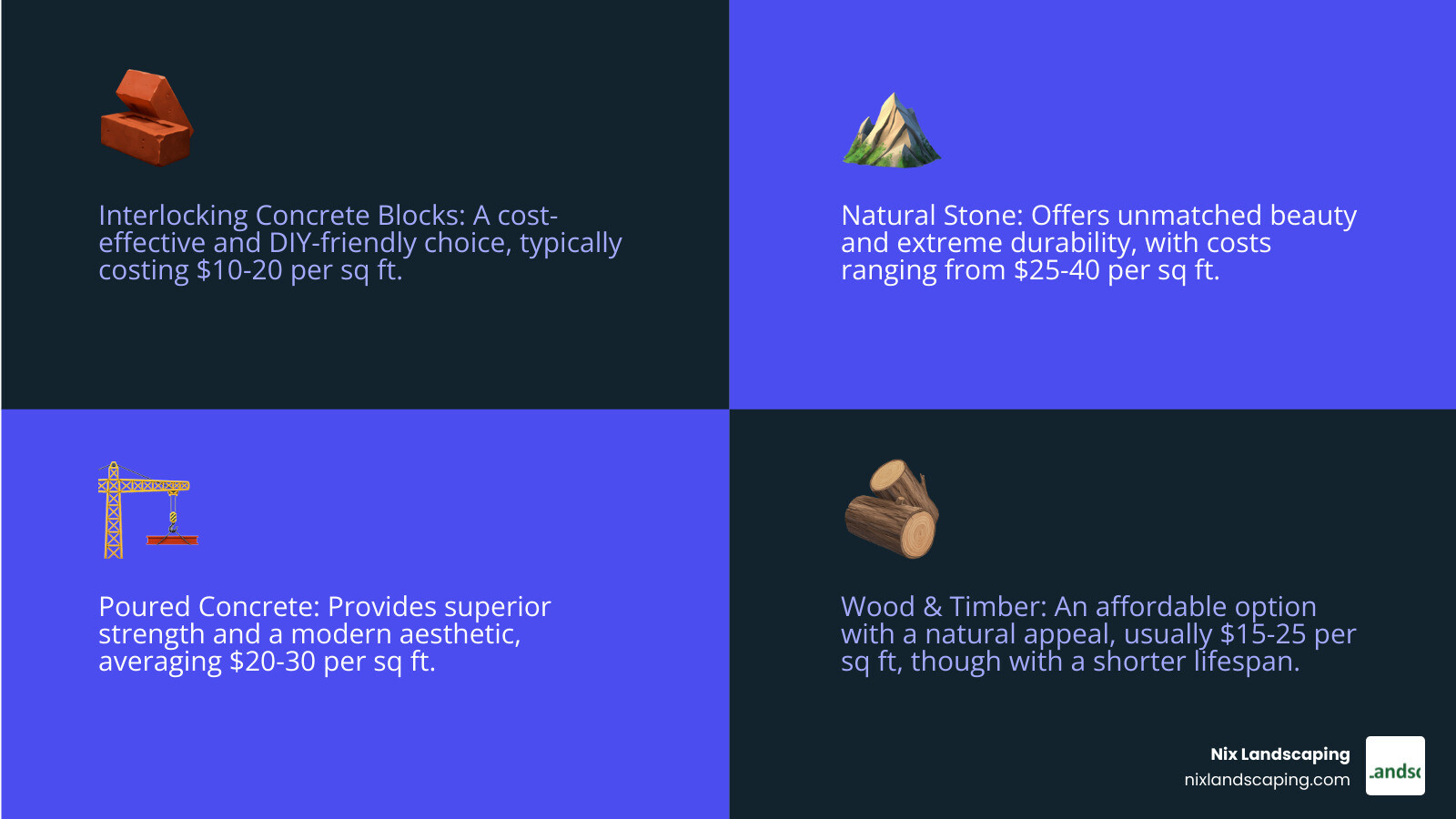
- Interlocking Concrete Blocks – Best for DIY projects ($10-20/sq ft)
- Natural Stone – Best for beauty and longevity ($25-40/sq ft)
- Poured Concrete – Best for strength and modern look ($20-30/sq ft)
- Timber/Wood – Best for budget and natural appeal ($15-25/sq ft)
Your retaining wall does more than just hold back soil. It protects your property from erosion, creates usable outdoor space, and adds serious curb appeal. With 24 billion tons of fertile soil lost to erosion every year, a well-built retaining wall becomes an investment in your land’s future.
The material you choose depends on your wall height, budget, design goals, and DIY comfort level. Walls under 4 feet offer more material flexibility, while taller structures need engineered solutions. Climate matters too – Indiana’s freeze-thaw cycles demand materials that can handle temperature swings without cracking or shifting.
I’m Kyle Nix, owner of Nix Landscaping in Fishers, Indiana, and I’ve installed hundreds of retaining walls using every material type. Through years of hands-on experience, I’ve learned which best retaining wall materials work in our local climate and which ones to avoid.
Glossary for Best retaining wall materials?:
Key Factors in Choosing Your Retaining Wall Material
Choosing the best retaining wall materials is critical for your project’s success. After building hundreds of retaining walls across Fishers, I know that a beautiful wall is useless if it fails due to poor planning. The right choice depends on your wall’s purpose, whether it’s a decorative garden border or a structural necessity to hold back a steep slope. This decision shapes everything from material selection to installation.
Key factors include:
- Wall height and structural support needs
- Budget and desired longevity, which you can explore in the cost of retaining wall installation
- Aesthetic coordination with your home and landscape
- Climate considerations, like Indiana’s demanding freeze-thaw cycles
- DIY feasibility versus professional installation, which may involve local retaining wall height regulations
How Wall Height and Purpose Influence Your Choice
Walls under 4 feet offer more flexibility than walls over 4 feet. Shorter walls are often gravity walls, relying on their own weight for stability. They are perfect for terraced gardens and gentle slopes, using materials like timber, interlocking blocks, or dry-stacked stone with minimal engineering requirements.
Once a wall exceeds 4 feet, the soil pressure increases dramatically, almost always requiring professional engineering. Taller walls need specialized techniques, including concrete footings below the frost line, advanced drainage, and geogrid reinforcement to prevent failure. While a retaining wall for a sloped yard can create usable space, it must be built correctly to be safe and effective.
Balancing Cost, Aesthetics, and Climate
This is where the art meets the science of retaining wall construction. Cost per square foot varies dramatically, but the cheapest option isn’t always the smartest long-term choice.
Material availability affects pricing, with local materials like concrete blocks often being more predictable in cost. Matching your home’s architecture creates visual harmony and increases property value. A rustic stone wall might clash with a modern home, so style is an important consideration.
Durability in Indiana weather is non-negotiable. Our freeze-thaw cycles can destroy materials that aren’t designed to handle them. Water freezes and expands in cracks, tearing walls apart. Finally, consider maintenance requirements, as they add to the lifetime cost of a wall. If budget is a primary concern, you can explore affordable retaining wall options that balance quality and price.
What are the Best Retaining Wall Materials? A Detailed Comparison
Each of the best retaining wall materials has its own strengths and ideal uses. Some are beautiful but high-maintenance, while others are reliable workhorses. Based on my experience building walls in the Fishers area, I’ve learned where each material shines. Let’s walk through the most popular choices to find the perfect fit for your project.
| Material | Average Installed Cost (per sq ft) | Average Lifespan (Years) | DIY-Friendliness | Maintenance | Best Use Cases |
|---|---|---|---|---|---|
| Interlocking Concrete Blocks | $10 – $20 | 50 – 100+ | High | Low | Garden beds, terracing, walls under 4 ft |
| Natural Stone | $25 – $40 | 100 – 1000+ | Low | Very Low | Feature walls, traditional/rustic designs, large projects |
| Poured Concrete | $20 – $30 | 50 – 100+ | Low | Low | Structural walls, modern designs, complex curves |
| Wood & Timber | $15 – $25 | 15 – 40 | Medium | Medium | Budget-friendly, natural look, small garden walls |
This table gives you the basics, but let’s dig deeper into what makes each material tick.
Concrete Blocks (Interlocking)
Interlocking concrete blocks are the Swiss Army knife of retaining walls: practical, versatile, and forgiving for first-time builders. They fit together like oversized LEGOs, making them a top choice for DIY enthusiasts.
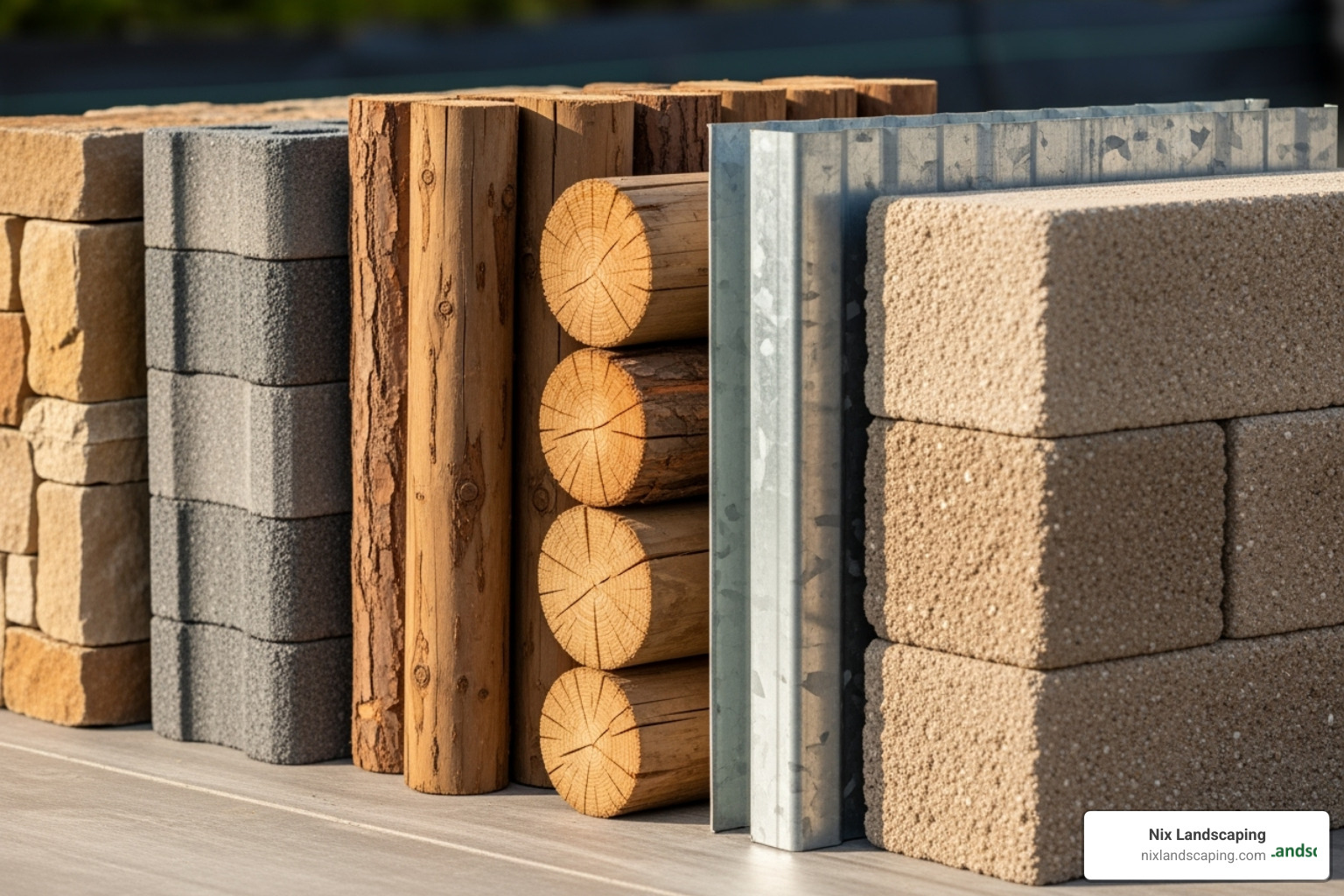
Their cost-effectiveness is hard to beat at $10-20 per square foot installed. The DIY-friendly design requires no mortar or special masonry skills. Modern blocks also offer incredible versatility in color and texture, allowing for straight or curved designs that can last 50 to 100 years.
The main trade-offs are a manufactured look (though modern textures mimic stone well) and height limitations. Without geogrid reinforcement for taller walls, you’re typically limited to walls under 4 feet.
Maintenance is simple: clear weep holes annually and perform an occasional power wash. Concrete blocks are ideal for garden beds, terracing, and defining outdoor spaces. You can see ideas for your backyard that showcase their versatility.
Natural Stone (Boulders, Fieldstone, Flagstone)
If concrete blocks are the practical choice, natural stone is the premium one. A well-built stone wall has a timeless, magical quality, looking as if it has been part of the landscape for generations.

The beauty factor is best, with each unique stone adding character and elegance. Durability is where stone truly shines, as a properly built wall can last for centuries, resisting rot, pests, and weather.
The reality check is the price tag of $25-40 per square foot installed. The cost reflects the material and the labor-intensive skill required to build with stone, which is an art form. Proper drainage is also critical to prevent water from destroying the wall from behind.
Maintenance is virtually non-existent. Natural stone is perfect for feature walls and projects where longevity is more important than budget. It can even be used to create a stunning stone wall that can incorporate a water feature.
Poured Concrete
Poured concrete is the strong, silent type among retaining wall materials. While it may not win beauty contests in its raw form, nothing beats its strength and structural integrity.
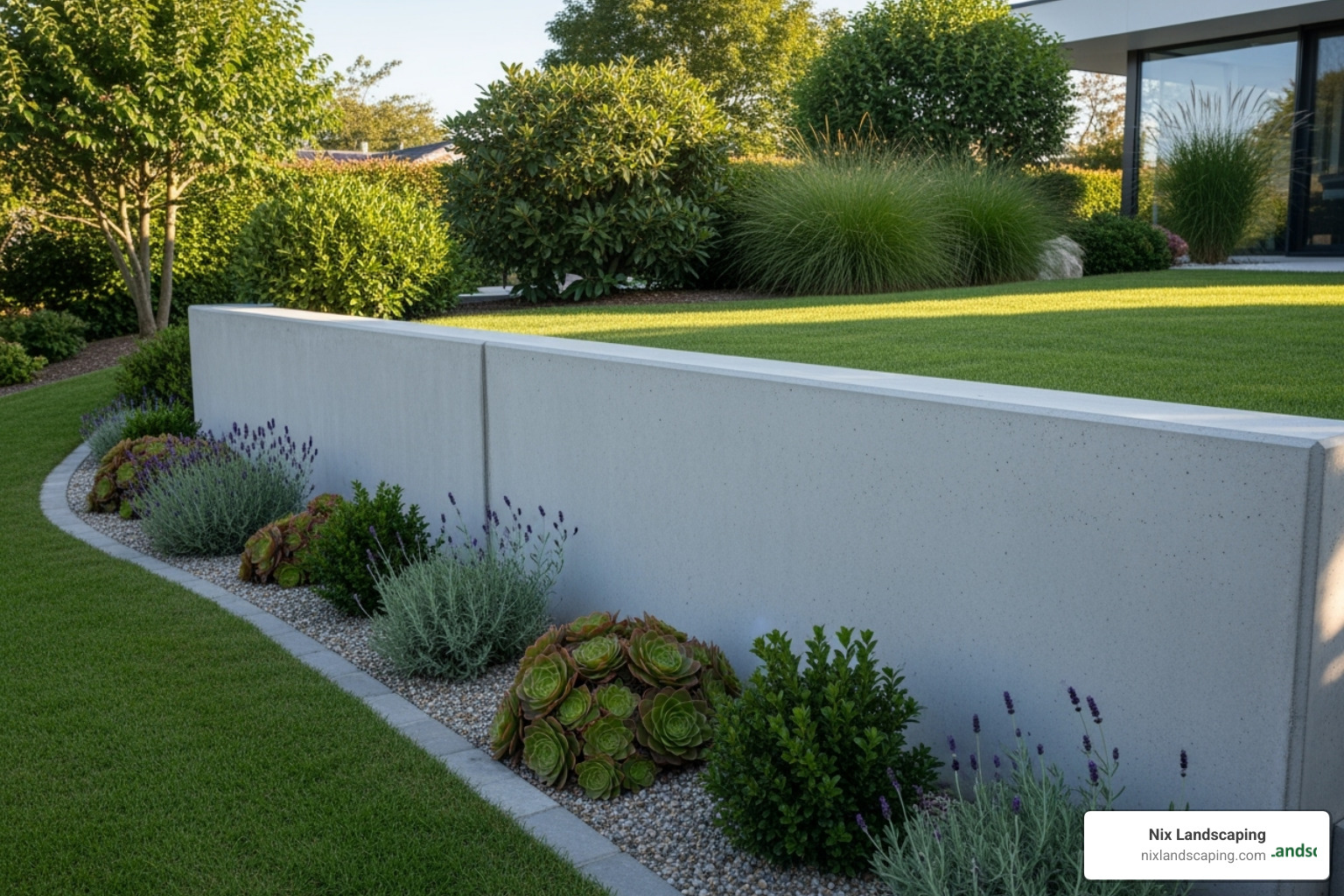
Strength is concrete’s superpower. Reinforced with rebar, it handles massive soil loads and offers impressive design flexibility, forming curves and angles impossible with other materials. The speed of construction can also be an advantage for large projects.
The downsides are that this is not a DIY project and requires skilled professionals. Cracking can be an issue without proper control joints, and the industrial look doesn’t suit every landscape.
At $20-30 per square foot installed, concrete is a mid-range option with low maintenance. It excels for tall structural walls and contemporary designs where maximum strength is the top priority.
Wood & Timber
Wood brings natural warmth to retaining walls and is often the most budget-friendly option for smaller projects. Timber walls have an approachable look that blends seamlessly into garden settings.
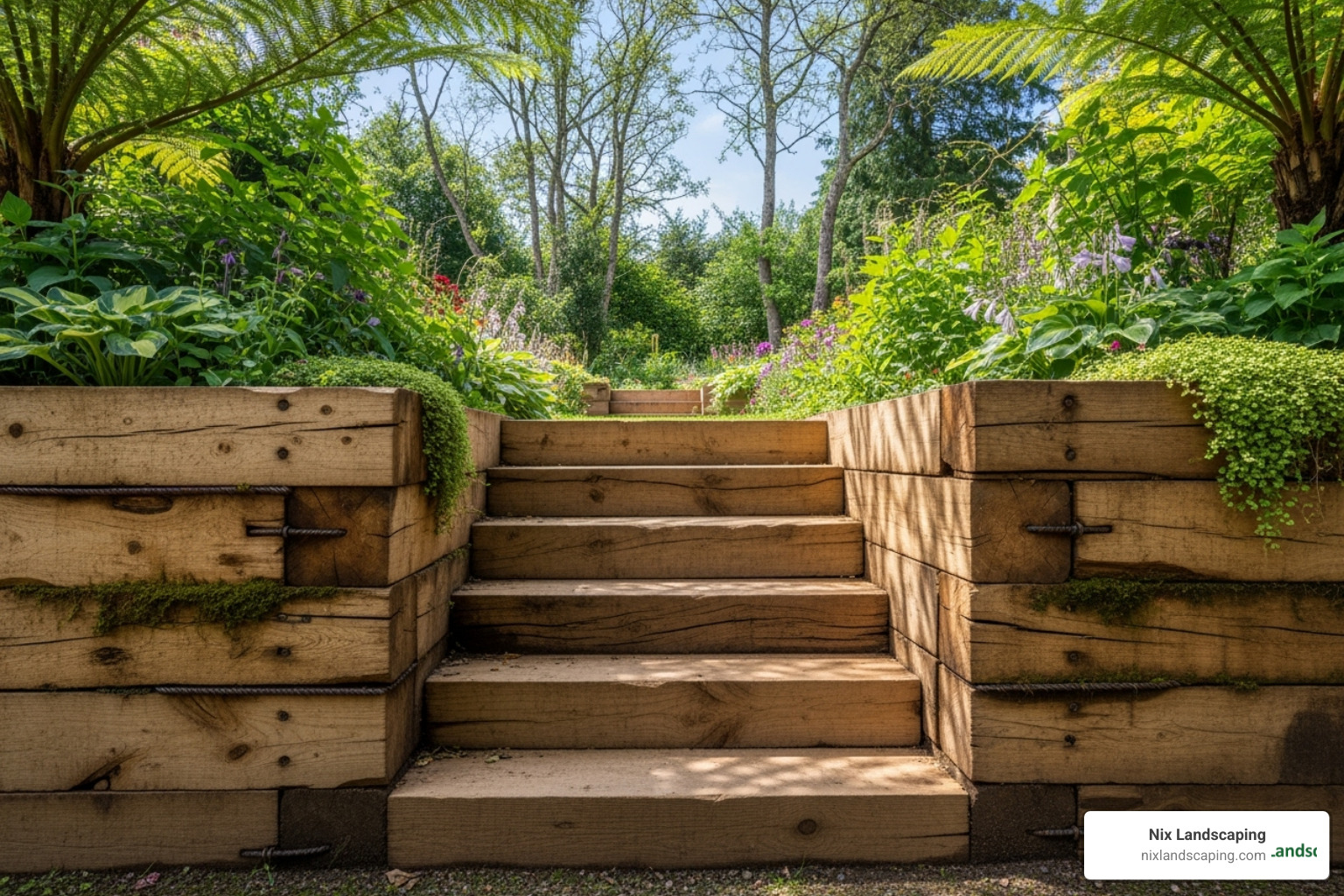
Affordability is wood’s biggest selling point at $15-25 per square foot installed. Its natural aesthetic and DIY-friendliness make it appealing for weekend warriors working on walls under 4 feet.
The main trade-off is longevity. Even pressure-treated timber typically lasts 15-40 years and is susceptible to rot and insects, especially in Indiana’s humid climate. There are also height limitations, as taller timber walls require significant engineering.
Maintenance is ongoing, requiring regular sealing and monitoring. Timber is best for small garden walls and raised beds where natural beauty is a priority. If you’re considering a DIY approach, you can learn how to build a basic retaining wall with our guide.
Building for Success: Beyond Just the Material
Choosing the best retaining wall materials is only half the battle. Proper installation is what ensures your wall lasts. I’ve seen expensive walls fail quickly due to poor drainage or an inadequate foundation. At Nix Landscaping, we know that longevity and structural integrity depend on the unseen details: the foundation, drainage system, and proper grading. These elements are the key to a wall that lasts for decades.
The Critical Role of Retaining Wall Drainage
Water is a retaining wall’s biggest enemy. Water building up behind the wall creates immense hydrostatic pressure, which can cause it to fail. A proper drainage system is non-negotiable. This includes gravel backfill to create a path for water, wrapped in filter fabric to prevent clogging. A perforated pipe at the base collects and directs water away, while weep holes in masonry walls provide an exit route. This system is a silent guardian, protecting your investment 24/7. You can learn more in our guide to retaining wall drainage solutions.
Foundations and Footings: The Unseen Hero
A retaining wall is only as strong as its foundation. Proper footings are essential to distribute weight and prevent shifting. For segmental block walls and dry-stacked stone, we build a deep, compacted gravel base for stability and drainage. For mortared or poured concrete walls, we pour reinforced concrete footings below the frost line to prevent damage from Indiana’s freeze-thaw cycles. The first course of blocks or stones must be perfectly level, as errors are magnified as the wall rises. We also build in a slight backward lean, or “batter,” to help the wall resist soil pressure. These details ensure a wall that lasts. Understanding how to build retaining walls correctly from the ground up is an investment in performance.
Frequently Asked Questions
Here are answers to common questions I get from homeowners in the Fishers area, based on years of hands-on experience.
What are the best retaining wall materials for a DIY project?
For DIY projects, some best retaining wall materials are more forgiving. Interlocking concrete blocks are a top choice; they stack like LEGOs without mortar and are widely available with clear instructions. Timber walls are another good option if you have basic carpentry skills. Pressure-treated pine is affordable and easy to work with, but be sure to use “dead men” anchors and pin the first course with rebar. Segmental retaining wall systems are a step up, often including pinning systems for more integrity. My advice: always plan properly, check local building codes, and never skip the drainage—it’s where most DIY walls fail. If you need inspiration, get ideas for your backyard project.
What are the best retaining wall materials for longevity?
For maximum longevity, some materials are built to outlast us all. Natural stone is the undisputed champion, with properly installed walls lasting for centuries with minimal maintenance. Poured concrete is a close second; a well-reinforced wall has a nearly indefinite lifespan, maintaining its structural integrity for decades. Concrete blocks are also very durable, lasting 50 to 100 years when installed correctly. However, the true secret to longevity is proper installation and drainage. A well-built block wall will outlast a poorly installed stone wall every time. In Indiana, the freeze-thaw cycles make stone and concrete excellent choices for their ability to handle temperature swings.
What is the most affordable retaining wall material?
When budget is a key factor, there are several smart options. Pressure-treated pine is often the most affordable at around $15 per square foot installed, offering a natural look. Interlocking concrete blocks are another great choice, costing $10 to $20 per square foot installed. They provide an excellent balance of affordability and durability. While raw concrete is cheap, the labor and formwork required make the installed cost higher. It’s important to consider the long-term cost. A cheaper timber wall may need replacing in 15-20 years, while a block wall can last over 50. Spending more upfront can save money in the long run. DIY installation can also cut costs, but be aware that fixing mistakes can be expensive. You can find affordable retaining wall options here to balance cost and value.
Conclusion: Making Your Rock-Solid Choice
Selecting the best retaining wall materials means finding the right balance between your budget, aesthetics, and practical needs. As we’ve seen, natural stone offers timeless beauty, poured concrete provides best strength, interlocking blocks deliver balanced value, and timber brings natural warmth. There is no single “best” material—only the best one for your specific project. Your home’s style, the slope’s demands, and your budget all play a role.
What matters most, regardless of material, is proper installation. A wall will fail without a solid foundation and good drainage, especially with Indiana’s freeze-thaw cycles. These elements are not optional; they are essential for a wall that lasts for decades. A well-built retaining wall is an investment that protects your property from erosion, creates usable space, and adds significant value to your home.
At Nix Landscaping, we specialize in turning challenging slopes into beautiful, functional outdoor spaces. If you need guidance on your project, from terraced gardens to serious erosion control, we’re here to help build a wall that is solid, beautiful, and built to last. Explore our retaining wall services and let’s start your project.

